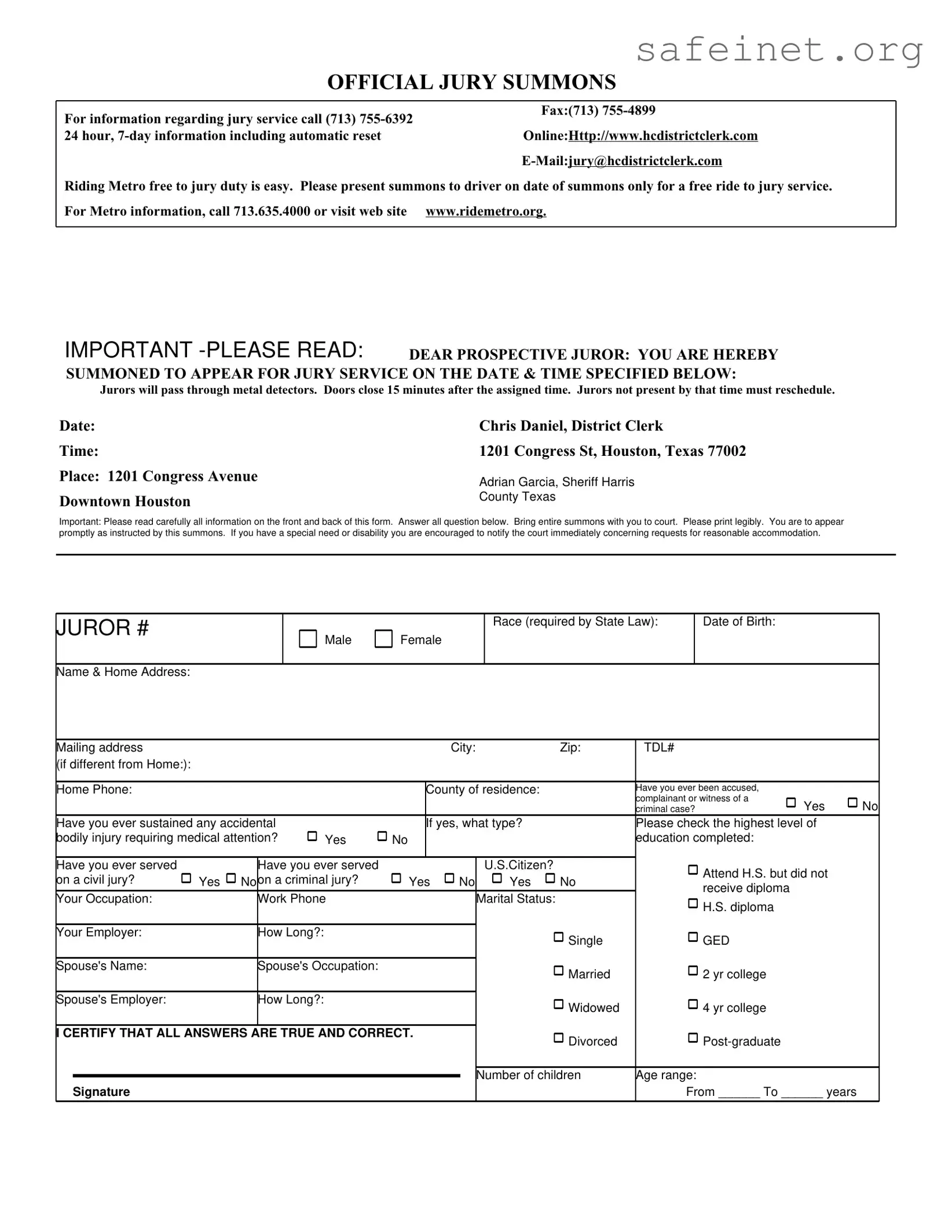
The Official Jury Summons form is a crucial document that every prospective juror must understand and complete accurately. This form serves as a formal notification, instructing individuals to appear for jury service on a specified date and time. It contains essential details such as the location of the court, the contact information for inquiries, and instructions for accessing transportation options, including free Metro rides for jurors. Importantly, the summons outlines the requirements for entering the courthouse, including security measures like metal detectors and the necessity to arrive on time. Jurors are encouraged to read all instructions carefully, as the form also includes personal information fields that must be filled out, such as name, address, and demographic details required by state law. Additionally, it prompts individuals to disclose any prior experiences related to criminal cases, medical conditions, and educational backgrounds. By signing the form, jurors affirm that their provided information is accurate, ensuring a smooth process for jury selection and service. Understanding the nuances of this form is vital for fulfilling civic duties effectively.

OFFICIALJURYSUMMONS
RidingMetrofreetojurydutyiseasy.Pleasepresentsummonstodriverondateofsummonsonlyforafreeridetojuryservice.
ForMetroinformation,call713.635.4000orvisitwebsite www.ridemetro.org.
IMPORTANT
SUMMONEDTOAPPEARFORJURYSERVICEONTHEDATE&TIMESPECIFIEDBELOW:
Jurorswillpassthroughmetaldetectors.Doorsclose15minutesaftertheassignedtime.Jurorsnotpresentbythattimemustreschedule.
Date: |
ChrisDaniel,DistrictClerk |
Time: |
1201CongressSt,Houston,Texas77002 |
Place:1201CongressAvenue |
Adrian Garcia, Sheriff Harris |
|
|
DowntownHouston |
County Texas |
|
Important: Please read carefully all information on the front and back of this form. Answer all question below. Bring entire summons with you to court. Please print legibly. You are to appear promptly as instructed by this summons. If you have a special need or disability you are encouraged to notify the court immediately concerning requests for reasonable accommodation.
JUROR # |
|
|
|
|
|
|
|
|
|
|
Race (required by State Law): |
|
Date of Birth: |
|
|||
|
|
|
|
Male |
Female |
|
|
|
|
|
|
|
|
|
|||
|
|
|
|
|
|
|
|
|
|
|
|
|
|
|
|||
|
|
|
|
|
|
|
|
|
|
|
|
|
|
|
|
|
|
Name & Home Address: |
|
|
|
|
|
|
|
|
|
|
|
|
|
|
|
|
|
|
|
|
|
|
|
|
|
|
|
|
|
|
|
|
|
|
|
Mailing address |
|
|
|
|
|
|
|
City: |
|
|
Zip: |
TDL# |
|
|
|||
(if different from Home:): |
|
|
|
|
|
|
|
|
|
|
|
|
|
|
|
|
|
|
|
|
|
|
|
|
|
|
|
|
|
|
|
|
|
||
Home Phone: |
|
|
|
|
|
|
County of residence: |
|
Have you ever been accused, |
|
|||||||
|
|
|
|
|
|
|
|
|
|
|
|
|
|
complainant or witness of a |
|
||
|
|
|
|
|
|
|
|
|
|
|
|
|
|
criminal case? |
Yes |
No |
|
Have you ever sustained any accidental |
|
|
If yes, what type? |
|
Please check the highest level of |
|
|||||||||||
bodily injury requiring medical attention? |
Yes |
No |
|
|
|
|
|
|
education completed: |
|
|||||||
|
|
|
|
|
|
|
|
|
|
|
|
|
|
|
|
|
|
Have you ever served |
|
|
Have you ever served |
|
|
|
|
|
U.S.Citizen? |
|
|
|
Attend H.S. but did not |
|
|||
on a civil jury? |
Yes |
No |
on a criminal jury? |
Yes |
No |
|
Yes |
No |
|
|
|
||||||
|
|
|
receive diploma |
|
|||||||||||||
Your Occupation: |
|
|
Work Phone |
|
|
|
|
Marital Status: |
|
|
|
|
|||||
|
|
|
|
|
|
|
|
|
H.S. diploma |
|
|||||||
|
|
|
|
|
|
|
|
|
|
|
|
|
|
|
|
|
|
|
|
|
|
|
|
|
|
|
|
|
|
|
|
|
|
|
|
Your Employer: |
|
|
How Long?: |
|
|
|
|
|
|
|
Single |
|
|
GED |
|
||
|
|
|
|
|
|
|
|
|
|
|
|
|
|
|
|
||
|
|
|
|
|
|
|
|
|
|
|
|
|
|
|
|
|
|
Spouse's Name: |
|
|
Spouse's Occupation: |
|
|
|
|
|
|
Married |
|
|
2 yr college |
|
|||
|
|
|
|
|
|
|
|
|
|
|
|
|
|
|
|
||
|
|
|
|
|
|
|
|
|
|
|
|
|
|
|
|
|
|
Spouse's Employer: |
|
|
How Long?: |
|
|
|
|
|
|
|
Widowed |
|
|
4 yr college |
|
||
|
|
|
|
|
|
|
|
|
|
|
|
|
|
|
|
||
|
|
|
|
|
|
|
|
|
|
|
|
|
|
||||
I CERTIFY THAT ALL ANSWERS ARE TRUE AND CORRECT. |
|
|
|
|
Divorced |
|
|
|
|||||||||
|
|
|
|
|
|
|
|
|
|
|
|
|
|
|
|
||
|
|
|
|
|
|
|
|
|
|
|
|
|
|
|
|
|
|
|
|
|
|
|
|
|
|
|
|
|
Number of children |
Age range: |
|
|
|||
|
|
|
|
|
|
|
|
|
|
|
|
|
|||||
|
Signature |
|
|
|
|
|
|
|
|
|
|
|
|
From ______ To ______ years |
|
||
| Fact Name | Description |
|---|---|
| Purpose of Summons | The Official Jury Summons serves to notify individuals that they are required to appear for jury duty on a specified date and time. |
| Contact Information | For questions regarding jury service, individuals can call (713) 755-6392 or send a fax to (713) 755-4899. |
| Online Resources | Additional information about jury service can be found online at www.hcdistrictclerk.com. |
| Free Metro Rides | Jurors can ride Metro for free to jury duty by presenting their summons to the driver on the date of service. |
| Metal Detectors | All jurors must pass through metal detectors upon arrival at the courthouse for security purposes. |
| Timeliness Requirement | Doors to the courthouse close 15 minutes after the assigned time. Late arrivals must reschedule their jury service. |
| Special Needs Accommodations | Individuals with special needs or disabilities are encouraged to notify the court in advance for reasonable accommodations. |
| Required Information | Jurors must provide personal information, including race, date of birth, and residential address, as mandated by state law. |
| Legal Compliance | Failure to comply with the summons may result in legal penalties, including fines or other consequences. |
| Governing Laws | The Official Jury Summons is governed by Texas Government Code, Title 1, Chapter 62, which outlines jury service requirements. |
Once you receive your Official Jury Summons form, it is important to fill it out accurately and completely. This ensures that you can fulfill your civic duty without any issues. Follow these steps to complete the form correctly.
After completing the form, bring the entire summons with you to court on the specified date. Make sure to arrive on time, as late arrivals may need to reschedule. If you have any special needs or require accommodations, notify the court as soon as possible.
What should I do if I receive an Official Jury Summons?
If you receive an Official Jury Summons, it is important to read the entire document carefully. Follow the instructions provided regarding the date and time you are required to appear. Make sure to bring the entire summons with you to court. If you have any questions, you can call the jury service hotline at (713) 755-6392.
Can I reschedule my jury service?
Yes, if you cannot attend on the specified date, you may need to reschedule. However, you must arrive at the courthouse on the original date and time to request a rescheduling. Doors close 15 minutes after the assigned time, so be sure to arrive promptly.
What if I have a disability or special need?
If you have a disability or special need, you are encouraged to notify the court as soon as possible. This allows them to make reasonable accommodations for your jury service. Contact the court using the information provided on the summons to discuss your needs.
Is there a way to get to the courthouse for free?
Yes, you can ride Metro for free to jury duty. Present your summons to the driver on the date of your service to receive a free ride. For more information about Metro services, call 713.635.4000 or visit their website at www.ridemetro.org.
What should I bring with me to jury duty?
Bring the entire Official Jury Summons with you to court. It is also advisable to bring any necessary identification and any items you may need for a potentially long wait, such as a book or snacks.
What happens if I do not show up for jury duty?
Failing to appear for jury duty can result in legal consequences. You may be held in contempt of court, which could lead to fines or other penalties. If you cannot attend, it is crucial to follow the rescheduling process as outlined in your summons.
How is my personal information used?
Your personal information on the jury summons is used solely for the purpose of jury selection and court proceedings. It is important to answer all questions truthfully and legibly. Your information is protected under privacy laws.
What if I have served on a jury before?
Having served on a jury before does not automatically exempt you from future jury duty. However, you will be asked about your previous service on the summons. The court will determine your eligibility based on the details you provide.
Not reading the instructions: Failing to carefully read all the information on the form can lead to mistakes.
Illegible handwriting: If answers are hard to read, it may cause delays or issues with processing.
Missing required information: Omitting details like race, date of birth, or address can result in rejection of the form.
Incorrectly answering yes/no questions: Misunderstanding questions about prior jury service or criminal cases can lead to complications.
Not bringing the entire summons: Forgetting to bring the full document to court can cause problems on the day of service.
Failing to indicate special needs: If you have a disability, not notifying the court can mean missing out on necessary accommodations.
Incorrect marital status: Misrepresenting your marital status can lead to confusion and additional questions.
Not providing contact information: Leaving out your phone number or email can make it hard for the court to reach you.
Forgetting to sign the form: A missing signature can render the form invalid.
Not checking for updates: Failing to verify any changes to your jury summons date or time can lead to missed appearances.
When you receive an Official Jury Summons, there are several other forms and documents that may accompany it or be necessary for your jury service. Understanding these documents can help ensure a smooth process as you prepare to fulfill this civic duty.
Being aware of these forms and documents can greatly enhance your experience as a juror. Each plays a role in facilitating your service and ensuring that you are adequately prepared for the responsibilities that lie ahead. If you have questions about any of these documents, do not hesitate to reach out for assistance.
The Official Jury Summons form shares similarities with the Subpoena, a legal document requiring an individual to appear in court or produce evidence. Both documents serve to compel attendance, ensuring that individuals fulfill their civic duties. While a jury summons calls individuals to serve as jurors, a subpoena can be issued for witnesses or document production, emphasizing the importance of participation in the judicial process.
Another document akin to the Official Jury Summons is the Notice to Appear. This notice informs individuals of a required appearance in court, similar to how a jury summons notifies potential jurors of their duty. Both documents outline specific dates and times for attendance, ensuring that individuals are aware of their obligations and the consequences of non-compliance.
The Court Order also bears resemblance to the Official Jury Summons. A court order is a directive issued by a judge, often requiring compliance with specific actions. Like a jury summons, it conveys the importance of attendance and adherence to legal procedures. Both documents aim to maintain order within the judicial system and uphold the rule of law.
The Affidavit of Service is another document that parallels the Official Jury Summons. This affidavit serves as proof that a summons or notice has been delivered to an individual. Both documents emphasize the importance of proper notification, ensuring that individuals are informed of their legal responsibilities and can prepare accordingly for their required appearances.
The Citation is similar to the Official Jury Summons in that it informs individuals of legal proceedings they must attend. Citations are often issued for minor offenses, while jury summonses pertain to civic duties. Both documents are critical in ensuring that individuals are aware of their legal obligations and can participate in the judicial process.
The Writ of Mandamus is another document that shares characteristics with the Official Jury Summons. This writ orders a government official or entity to perform a specific act, often related to fulfilling a duty. Like a jury summons, it underscores the necessity of compliance with legal obligations, highlighting the importance of participation in the judicial system.
The Complaint form is also comparable to the Official Jury Summons. A complaint initiates legal action and informs the defendant of the claims against them. Similarly, a jury summons informs potential jurors of their role in a trial. Both documents facilitate the legal process, ensuring that individuals are aware of their responsibilities and the need for participation.
The Notice of Hearing is akin to the Official Jury Summons in that it notifies individuals of an upcoming court proceeding. Both documents specify dates and times for attendance, ensuring that parties involved are aware of their obligations. This notification process is essential for maintaining the integrity of the judicial system.
The Release of Liability form can also be seen as similar to the Official Jury Summons. While the release form typically protects an organization from legal claims, it also requires individuals to acknowledge their participation in an event or activity. Both documents emphasize the importance of informed consent and awareness of legal responsibilities.
Finally, the Proof of Claim form resembles the Official Jury Summons in that it requires individuals to submit information related to a legal matter. This form is often used in bankruptcy proceedings, where creditors must assert their claims. Like a jury summons, it ensures that individuals are actively participating in the legal process and fulfilling their obligations.
When filling out the Official Jury Summons form, it is important to follow specific guidelines to ensure accuracy and compliance. Below is a list of things you should and shouldn't do.
Following these guidelines will help ensure a smooth jury service experience.
Understanding the Official Jury Summons form can be challenging, and several misconceptions often arise. Here are seven common misunderstandings and clarifications regarding the summons.
Being informed about these misconceptions can help individuals better understand their responsibilities and rights regarding jury duty. Always read the information provided on the summons carefully and reach out for clarification if needed.
Filling out and using the Official Jury Summons form is an important task that requires attention to detail. Here are some key takeaways to keep in mind:
Following these guidelines will help ensure a smooth experience during your jury service.