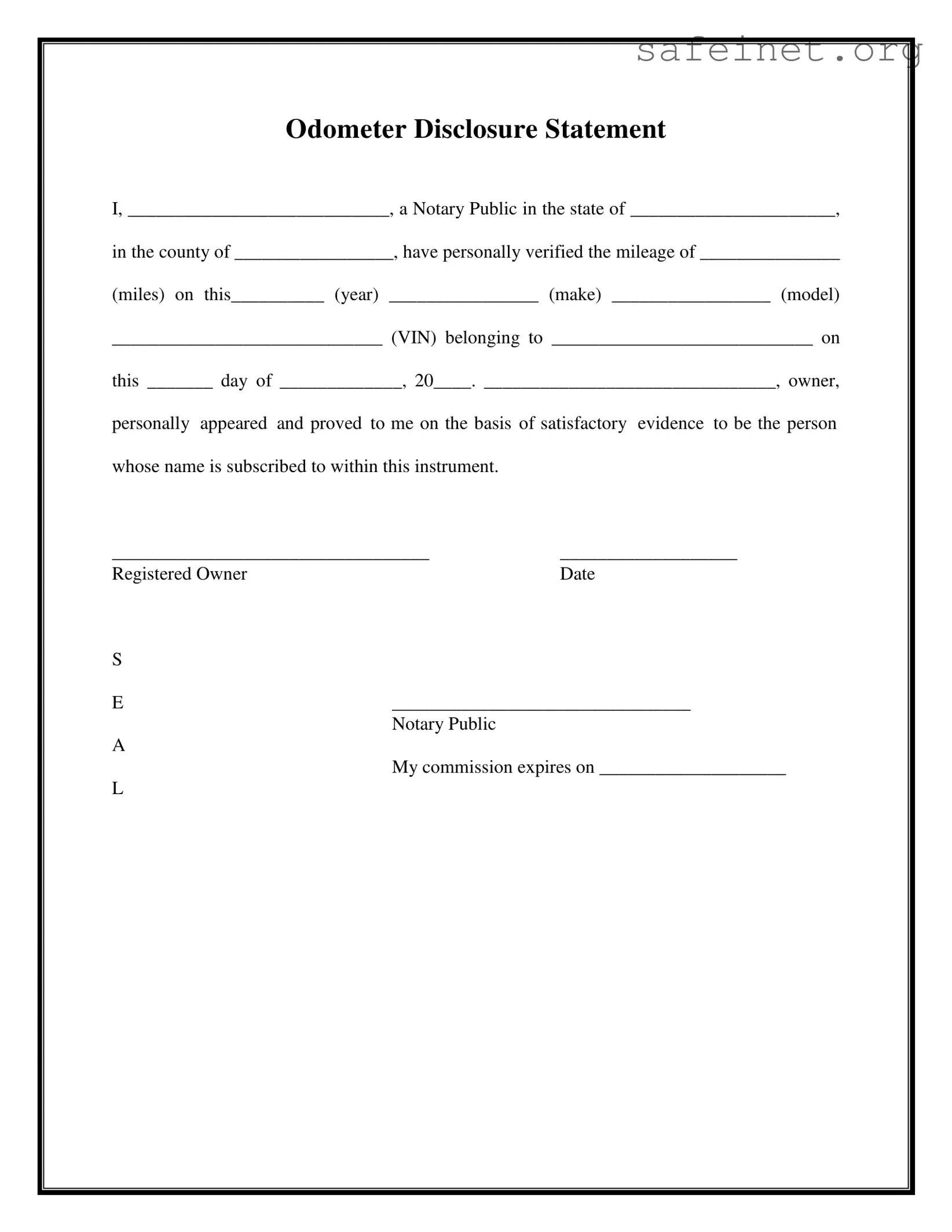
When it comes to buying or selling a vehicle, ensuring transparency about the vehicle's mileage is crucial. The Notarized Odometer Statement form serves as a key document in this process, providing a legally recognized declaration of the odometer reading at the time of transfer. This form not only includes essential details such as the vehicle's make, model, and Vehicle Identification Number (VIN), but it also requires the notarization of the statement, which adds an extra layer of authenticity. The statement is typically filled out by the seller, who must provide the current mileage and affirm their identity in front of a notary public. This process helps protect both the buyer and seller from potential disputes regarding the vehicle's history. Additionally, the form captures the date of the transaction, ensuring that all parties are clear about when the mileage was recorded. By adhering to this procedure, individuals can foster trust and accountability in their vehicle transactions.

ODOMETER DISCLOSURE STATEMENT
I, ____________________________, a Notary Public in the state of ______________________,
in the county of _________________, have personally verified the mileage of _______________
(miles) on this__________ (year) ________________ (make) _________________ (model)
_____________________________ (VIN) belonging to ____________________________ on
this _______ day of _____________, 20____. _______________________________, owner,
personally appeared and proved to me on the basis of satisfactory evidence to be the person whose name is subscribed to within this instrument.
__________________________________ |
___________________ |
Registered Owner |
Date |
S |
|
E |
________________________________ |
|
Notary Public |
A |
|
|
My commission expires on ____________________ |
L |
|
| Fact Name | Description |
|---|---|
| Purpose | The Notarized Odometer Statement is used to certify the mileage of a vehicle at the time of sale. |
| Notary Requirement | This form must be signed in the presence of a Notary Public to ensure authenticity. |
| State-Specific Forms | Different states may have their own versions of the form, following state-specific laws. |
| Governing Law | In many states, the use of this form is governed by the Uniform Commercial Code (UCC). |
| Vehicle Information | The form requires detailed information about the vehicle, including make, model, and VIN. |
| Owner Verification | The owner must personally appear before the Notary and provide satisfactory evidence of identity. |
| Date of Sale | The form includes the date of the transaction, which is important for record-keeping. |
| Legal Implications | Falsifying information on the form can lead to legal consequences, including fines or penalties. |
| Commission Expiration | The Notary must indicate their commission expiration date, ensuring they are authorized to notarize. |
| Record Keeping | Both the seller and buyer should keep a copy of the notarized statement for their records. |
Once you have the Notarized Odometer Statement form, you will need to complete it accurately. This form is essential for documenting the mileage of a vehicle during a sale or transfer. Follow these steps to fill it out correctly.
What is a Notarized Odometer Statement?
A Notarized Odometer Statement is a legal document that certifies the mileage of a vehicle at the time of sale. This form is typically required when transferring ownership of a vehicle to ensure transparency and prevent odometer fraud. The statement must be completed and signed in the presence of a notary public, who verifies the information and the identity of the seller.
Why do I need a Notarized Odometer Statement?
This statement is crucial for protecting both the buyer and the seller. It provides a record of the vehicle’s mileage at the time of transfer, which can be important for determining the vehicle’s value and for future resale. Many states require this document as part of the vehicle registration process to ensure compliance with odometer disclosure laws.
Who can complete the Notarized Odometer Statement?
The statement must be completed by the vehicle owner or seller. Once filled out, a notary public will need to witness the signing of the document. The notary verifies the identity of the signer and ensures that the information provided is accurate before affixing their seal to the document.
What information is required on the form?
The form requires specific details, including the vehicle's mileage, year, make, model, and Vehicle Identification Number (VIN). Additionally, the owner's name and the date of the transaction must be included. This information helps establish a clear record of the vehicle's history.
How do I find a notary public?
Notaries can often be found at banks, law offices, or public libraries. Many notaries also offer mobile services, meaning they can come to you. It's a good idea to call ahead and confirm their availability, as well as any fees they may charge for notarization services.
Is there a fee for notarizing the Odometer Statement?
Yes, there is usually a fee for notarization, which can vary depending on the notary public and your location. Some states have set maximum fees that notaries can charge, while others allow notaries to set their own rates. It’s advisable to inquire about the fee before your appointment.
What should I do after completing the Notarized Odometer Statement?
Once the Notarized Odometer Statement is completed and signed in front of a notary, both the buyer and the seller should keep a copy for their records. The seller may need to submit the original statement to the Department of Motor Vehicles (DMV) or the relevant authority when transferring the vehicle title. Always check your local regulations to ensure compliance.
Failing to provide accurate mileage. It's essential to ensure that the mileage recorded on the form matches the actual mileage of the vehicle. Inaccurate information can lead to legal issues.
Not having the form notarized correctly. The signature of the Notary Public must be present, along with the date and commission expiration. Without these, the document may not be valid.
Omitting important vehicle details. Each section, including the year, make, model, and VIN, must be filled out completely. Missing information can delay the process or cause complications.
Not signing the form. The registered owner must sign the document in front of the Notary Public. If this step is overlooked, the form will not be accepted.
Using an outdated version of the form. Always ensure you are using the most current version of the Notarized Odometer Statement form to avoid any issues with compliance.
When transferring ownership of a vehicle, several important documents accompany the Notarized Odometer Statement form. Each plays a crucial role in ensuring the transaction is clear and legally binding. Here’s a brief overview of these forms and documents.
Having these documents ready can streamline the process of transferring vehicle ownership. Each one serves a specific purpose, helping to protect both the buyer and seller in the transaction.
The Bill of Sale serves as a legal document that records the transfer of ownership of a vehicle from one party to another. Like the Notarized Odometer Statement, it includes essential details such as the buyer's and seller's information, the vehicle's make, model, and VIN. This document often requires signatures from both parties, confirming the sale and providing proof of the transaction, similar to how the Notarized Odometer Statement verifies mileage at the time of sale.
The Vehicle Title is another critical document in vehicle ownership. It establishes who legally owns the vehicle and contains vital information such as the VIN, make, model, and year. Similar to the Notarized Odometer Statement, the title may require notarization when being transferred to ensure authenticity and prevent fraud. Both documents serve to protect the interests of buyers and sellers in the vehicle transaction process.
The Application for Title is used when a new owner seeks to obtain a title for a vehicle. This document requests information about the vehicle and its previous ownership. Like the Notarized Odometer Statement, it requires accurate details about the vehicle's mileage and identification of the previous owner. Both documents help ensure that the transfer of ownership is recorded correctly with the state’s motor vehicle department.
The Lien Release is a document that indicates a lien on a vehicle has been satisfied. This is similar to the Notarized Odometer Statement in that it provides assurance to the new owner that the vehicle is free from any financial encumbrances. Both documents are essential during the sale process, as they clarify the vehicle's status and help prevent future disputes regarding ownership and liability.
The Power of Attorney for Vehicle Transactions allows one person to act on behalf of another in matters related to vehicle ownership. This document can be notarized, similar to the Notarized Odometer Statement, ensuring that the authority granted is legitimate. Both documents serve to facilitate the transfer of ownership and responsibilities associated with the vehicle, protecting the rights of all parties involved.
The Vehicle Registration is a document that proves a vehicle is registered with the state. It includes similar information to the Notarized Odometer Statement, such as the VIN and owner details. While the registration does not verify mileage, it is essential for legal operation on public roads. Both documents are crucial in establishing the vehicle's legal status and ownership history.
The Insurance Policy Declaration Page outlines the coverage details for a vehicle. While it does not directly relate to the transfer of ownership, it is important for verifying that a vehicle is insured, similar to how the Notarized Odometer Statement verifies mileage. Both documents are necessary for ensuring that a vehicle is legally compliant and protected against potential liabilities.
The Vehicle History Report provides a comprehensive overview of a vehicle's past, including accidents, title changes, and mileage records. This document complements the Notarized Odometer Statement by offering additional context regarding the vehicle's condition and history. Both documents work together to provide transparency and assurance to potential buyers about the vehicle's status.
The Dealer Invoice is a document that outlines the sale price and details of a vehicle purchased from a dealership. Similar to the Notarized Odometer Statement, it includes key information about the vehicle and the transaction. Both documents serve as proof of the sale and help establish the legitimacy of the vehicle's ownership and condition at the time of purchase.
When filling out the Notarized Odometer Statement form, it is crucial to ensure accuracy and completeness. Here’s a list of things you should and shouldn’t do:
By following these guidelines, you can help ensure that your Notarized Odometer Statement is filled out correctly and is legally binding.
Misconceptions about the Notarized Odometer Statement form can lead to confusion when buying or selling a vehicle. Here are four common misunderstandings:
Understanding these misconceptions can help streamline the vehicle transfer process and ensure compliance with state laws.
Filling out and utilizing the Notarized Odometer Statement form is essential for vehicle transactions. Here are some key takeaways to consider: