In the bustling landscape of New York's housing market, securing a room for rent can be both an exciting and daunting experience. The New York Room Rental Agreement form plays a crucial role in this process, serving as a written contract between landlords and tenants. This document outlines essential details such as the rental amount, payment due dates, and the duration of the rental period. It also specifies the responsibilities of both parties, including maintenance obligations and rules regarding the use of common areas. Furthermore, the agreement addresses important topics like security deposits, termination conditions, and the procedures for handling disputes. By clearly defining these aspects, the form helps to foster a transparent relationship between landlords and tenants, minimizing misunderstandings and ensuring that both parties are on the same page from the outset. Understanding this agreement is vital for anyone looking to navigate the complexities of renting a room in New York, as it not only protects the rights of both parties but also enhances the overall rental experience.
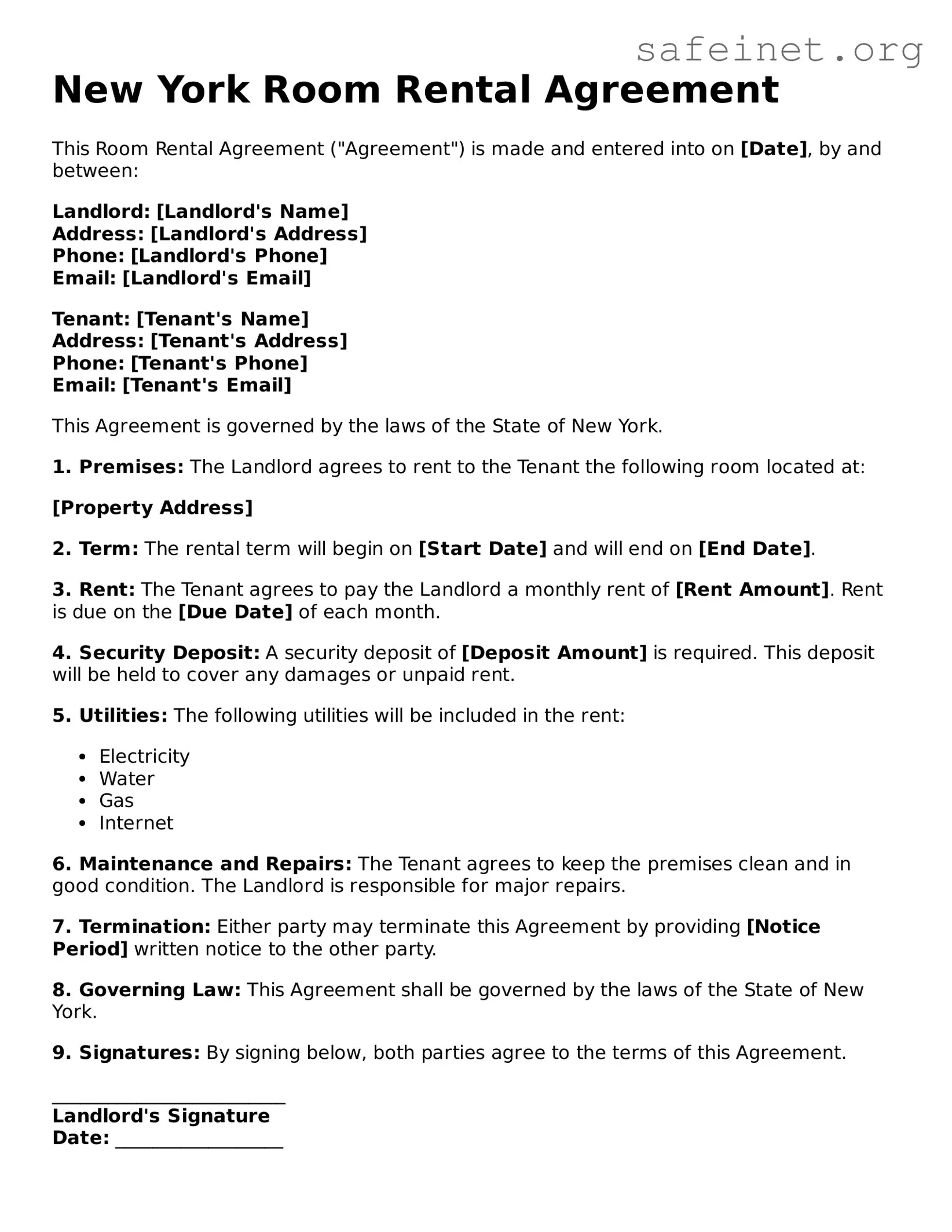
New York Room Rental Agreement
This Room Rental Agreement ("Agreement") is made and entered into on [Date], by and between:
Landlord: [Landlord's Name]
Address: [Landlord's Address]
Phone: [Landlord's Phone]
Email: [Landlord's Email]
Tenant: [Tenant's Name]
Address: [Tenant's Address]
Phone: [Tenant's Phone]
Email: [Tenant's Email]
This Agreement is governed by the laws of the State of New York.
1. Premises: The Landlord agrees to rent to the Tenant the following room located at:
[Property Address]
2. Term: The rental term will begin on [Start Date] and will end on [End Date].
3. Rent: The Tenant agrees to pay the Landlord a monthly rent of [Rent Amount]. Rent is due on the [Due Date] of each month.
4. Security Deposit: A security deposit of [Deposit Amount] is required. This deposit will be held to cover any damages or unpaid rent.
5. Utilities: The following utilities will be included in the rent:
6. Maintenance and Repairs: The Tenant agrees to keep the premises clean and in good condition. The Landlord is responsible for major repairs.
7. Termination: Either party may terminate this Agreement by providing [Notice Period] written notice to the other party.
8. Governing Law: This Agreement shall be governed by the laws of the State of New York.
9. Signatures: By signing below, both parties agree to the terms of this Agreement.
_________________________
Landlord's Signature
Date: __________________
_________________________
Tenant's Signature
Date: __________________
| Fact Name | Detail |
|---|---|
| Document Title | New York Room Rental Agreement |
| Governing Law | New York State Laws |
| Purpose | To outline the terms and conditions of renting a room in a residential property. |
| Parties Involved | Landlord and Tenant |
| Key Provisions | Rent amount, duration of the lease, security deposit, and maintenance responsibilities. |
| Termination Clause | Details the conditions under which either party may terminate the agreement. |
Filling out the New York Room Rental Agreement form is an important step in securing your living arrangement. This process ensures that all parties understand their rights and responsibilities. Follow these steps carefully to complete the form accurately.
After completing the form, make sure to keep a copy for your records. Both parties should retain their signed copies to refer back to as needed. This agreement will serve as a reference point for the duration of the rental period.
What is a New York Room Rental Agreement?
A New York Room Rental Agreement is a legal document that outlines the terms and conditions between a landlord and tenant for renting a room in a residential property. This agreement protects both parties by detailing the rights and responsibilities involved in the rental arrangement.
What should be included in the Room Rental Agreement?
The agreement should include essential details such as the names of the landlord and tenant, the address of the rental property, the rental amount, payment due dates, security deposit information, duration of the rental, and rules regarding common areas. Additionally, it should specify the conditions for terminating the agreement.
Is a security deposit required?
Yes, a security deposit is commonly required in New York. It serves as a financial safeguard for the landlord against potential damages or unpaid rent. The maximum amount typically allowed is one month's rent, and landlords must return the deposit within a specified timeframe after the tenant moves out, minus any legitimate deductions.
Can a landlord enter the rented room without notice?
No, landlords must provide reasonable notice before entering a tenant's rented room, except in emergencies. Generally, 24 hours' notice is considered reasonable. This protects the tenant's right to privacy while allowing the landlord to maintain the property.
How long does a Room Rental Agreement last?
The duration of the agreement can vary. It may be a fixed term, such as six months or one year, or it may be month-to-month. Both parties should agree on the length of the rental period before signing the agreement.
What happens if the tenant wants to terminate the agreement early?
If a tenant wishes to terminate the agreement early, they must review the terms outlined in the document. Typically, a written notice is required, and there may be penalties or conditions for early termination. Communication with the landlord is essential to avoid misunderstandings.
Are verbal agreements enforceable?
While verbal agreements can be enforceable, they are challenging to prove. It is always advisable to have a written agreement, as it provides clear evidence of the terms agreed upon. This helps prevent disputes and ensures that both parties understand their obligations.
What should I do if there is a dispute?
If a dispute arises, first attempt to resolve it directly with the other party. If that fails, consider mediation or legal consultation. Document all communications and keep records of any relevant agreements or notices. This documentation can be crucial if legal action becomes necessary.
Failing to provide accurate personal information. It’s essential to include correct names and contact details for all parties involved.
Not specifying the rental term. Clearly state the start and end dates of the rental period to avoid confusion.
Overlooking the security deposit details. Indicate the amount and terms for the return of the deposit.
Ignoring the rent payment method. Specify how and when rent payments should be made.
Neglecting to outline utilities and maintenance responsibilities. Clearly define who is responsible for which utilities and maintenance tasks.
Not including terms for termination. It’s important to state how either party can terminate the agreement.
Failing to sign the agreement. All parties must sign and date the document to make it legally binding.
Leaving out rules regarding guests. Specify any restrictions or requirements for guests to avoid potential issues.
Not reviewing the entire document before submission. Take the time to read through the agreement to catch any errors or omissions.
When renting a room in New York, several documents often accompany the Room Rental Agreement. These documents help clarify the terms of the rental and protect both the landlord and tenant. Here’s a list of common forms and documents that you may encounter:
Having these documents in place helps create a smoother rental experience. They provide clarity and protect the rights of everyone involved. Always ensure that you understand each document before signing or submitting it.
The New York Lease Agreement is a foundational document for anyone renting a residential property. Like the Room Rental Agreement, it outlines the terms and conditions of the rental arrangement between the landlord and tenant. Both documents specify the duration of the lease, the amount of rent due, and the responsibilities of each party. The Lease Agreement typically covers additional aspects such as security deposits, maintenance responsibilities, and rules regarding pets or guests, making it a more comprehensive option for long-term arrangements.
The New York Sublease Agreement is another document that shares similarities with the Room Rental Agreement. This agreement allows a tenant to rent out their leased property to another individual, known as the subtenant. Just like the Room Rental Agreement, it includes important details such as the rental amount, duration, and obligations of both the original tenant and the subtenant. This document is particularly useful when the original tenant needs to temporarily vacate the premises but wants to retain their lease rights.
The New York Month-to-Month Rental Agreement is a flexible option for those seeking short-term housing. Similar to the Room Rental Agreement, it outlines the rental terms, including the rent amount and payment schedule. However, this agreement does not commit either party to a long-term lease, allowing for greater freedom. Either party can terminate the agreement with proper notice, making it ideal for individuals who may need to relocate quickly.
The New York Roommate Agreement is designed for individuals sharing a living space. It resembles the Room Rental Agreement in that it details each person's responsibilities, such as rent payment and household chores. However, this agreement focuses more on the interpersonal aspects of cohabitation, including privacy expectations and conflict resolution methods. It helps prevent misunderstandings and ensures a harmonious living environment for all parties involved.
The New York Rental Application is a crucial document that precedes the signing of any rental agreement, including the Room Rental Agreement. It collects essential information from prospective tenants, such as employment history and creditworthiness. While it does not outline the rental terms, it is a vital step in the process, helping landlords determine if a potential tenant is a good fit for their property. This document sets the stage for a successful rental relationship.
The New York Security Deposit Agreement is often associated with rental agreements, including the Room Rental Agreement. This document details the terms surrounding the security deposit, including the amount required, the conditions for its return, and any deductions that may occur for damages. Like the Room Rental Agreement, it aims to protect both the landlord's property and the tenant's financial interests, ensuring clarity and fairness in the rental process.
When filling out the New York Room Rental Agreement form, attention to detail is crucial. Here are some important dos and don’ts to keep in mind:
By following these guidelines, you can help ensure a smooth rental experience. Taking the time to understand the agreement can prevent future misunderstandings and foster a positive relationship with your landlord.
There are several misconceptions surrounding the New York Room Rental Agreement form. Understanding these can help clarify the rights and responsibilities of both landlords and tenants. Below are eight common misconceptions:
Each rental agreement can vary significantly based on the specific terms negotiated between the landlord and tenant. It is essential to read each agreement carefully.
While verbal agreements may be made, having a written agreement provides legal protection for both parties. Written contracts help avoid misunderstandings.
Most landlords require a security deposit, which serves as protection against damages or unpaid rent. The amount and conditions for its return should be clearly outlined in the agreement.
Landlords must provide reasonable notice before entering a tenant's room, typically 24 hours. This ensures the tenant's right to privacy is respected.
When signed, these agreements are legally binding documents. Both parties are expected to adhere to the terms outlined within the agreement.
Tenants have the right to negotiate terms of the rental agreement. This can include rent amount, duration, and other specific conditions.
While most fees should be disclosed, some may not be explicitly stated in the agreement. Tenants should ask for clarification on any potential fees.
These agreements can apply to both short-term and long-term rentals. The terms should specify the duration of the rental arrangement.
Being aware of these misconceptions can lead to a more informed and smooth rental experience for both landlords and tenants.
When filling out and using the New York Room Rental Agreement form, it’s crucial to understand the following key points:
Taking these steps will help ensure a smoother rental experience for both landlords and tenants.