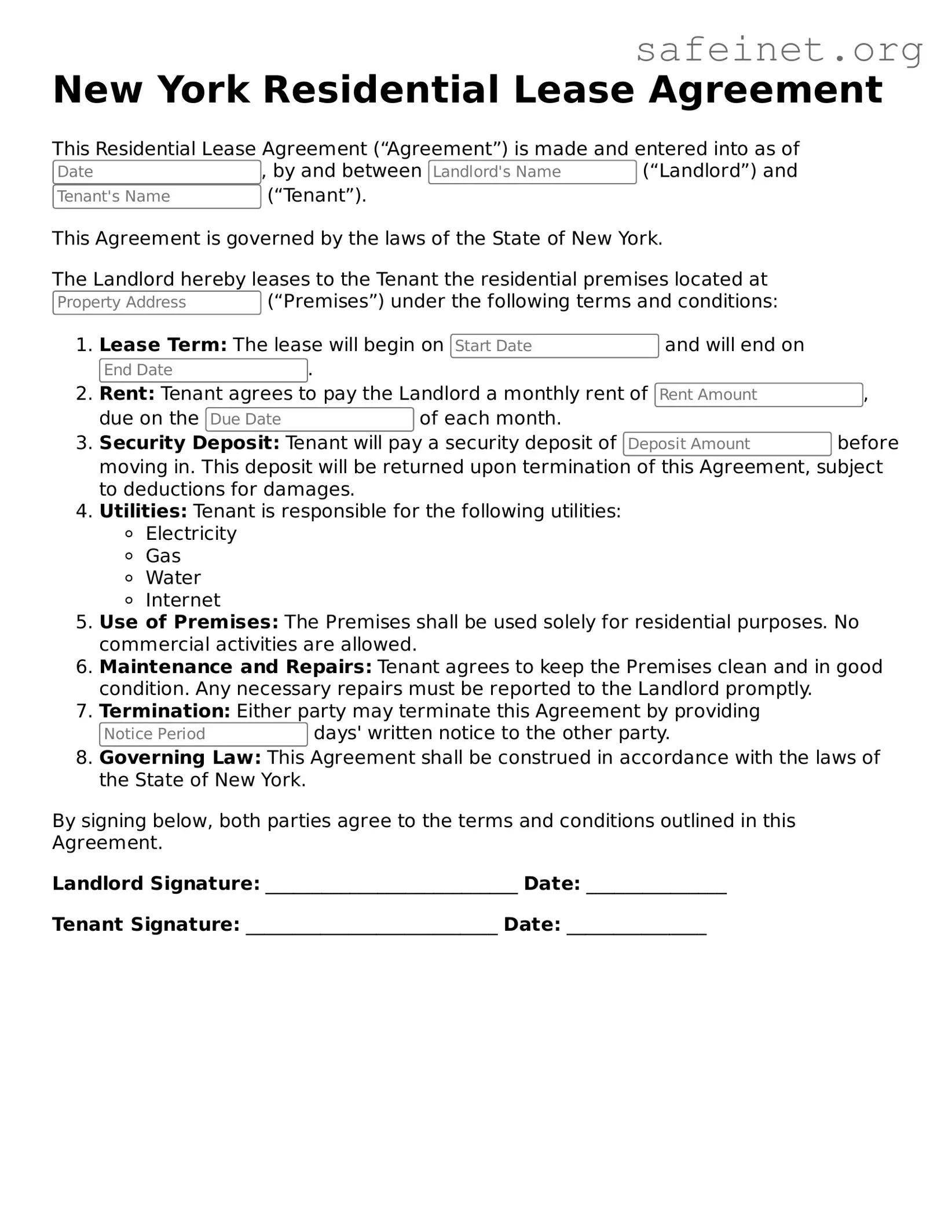
The New York Residential Lease Agreement is an essential document for both landlords and tenants, serving as a clear outline of the rental terms and conditions. This agreement typically includes crucial details such as the names of the parties involved, the rental property's address, and the duration of the lease. It specifies the monthly rent amount, payment due dates, and acceptable methods of payment. Additionally, the form addresses security deposits, maintenance responsibilities, and rules regarding pets or alterations to the property. By outlining the rights and obligations of both parties, this agreement helps prevent misunderstandings and provides a framework for resolving disputes. Understanding each section of the lease is important for ensuring a smooth rental experience and protecting both parties' interests.
New York Residential Lease Agreement
This Residential Lease Agreement (“Agreement”) is made and entered into as of , by and between (“Landlord”) and (“Tenant”).
This Agreement is governed by the laws of the State of New York.
The Landlord hereby leases to the Tenant the residential premises located at (“Premises”) under the following terms and conditions:
By signing below, both parties agree to the terms and conditions outlined in this Agreement.
Landlord Signature: ___________________________ Date: _______________
Tenant Signature: ___________________________ Date: _______________
| Fact Name | Description |
|---|---|
| Definition | A New York Residential Lease Agreement is a contract between a landlord and tenant outlining the terms of renting a residential property. |
| Governing Law | The lease is governed by New York State Real Property Law, specifically Article 7. |
| Duration | Residential leases typically have a fixed term, often one year, but can also be month-to-month. |
| Security Deposit | Landlords may require a security deposit, which cannot exceed one month's rent, according to New York law. |
| Rent Payment | The lease specifies the amount of rent due, payment methods, and the due date each month. |
| Repairs and Maintenance | The agreement outlines the responsibilities of both the landlord and tenant regarding property maintenance and repairs. |
| Termination Clause | The lease includes terms for termination, detailing how much notice is required to end the tenancy. |
Filling out the New York Residential Lease Agreement form is an essential step in establishing a rental arrangement. It involves providing accurate information about both the landlord and the tenant, as well as details about the property and the terms of the lease. Following these steps will help ensure that the form is completed correctly.
After completing the form, both the landlord and tenant should keep a signed copy for their records. This ensures that both parties have a clear understanding of their rights and responsibilities throughout the lease term.
What is a New York Residential Lease Agreement?
A New York Residential Lease Agreement is a legal document that outlines the terms and conditions under which a tenant agrees to rent a residential property from a landlord. This agreement typically includes details such as the duration of the lease, the amount of rent, security deposits, and the responsibilities of both the landlord and the tenant. It serves to protect the rights of both parties and provides a clear framework for the rental relationship.
What are the key components of a Residential Lease Agreement?
Several essential components must be included in a Residential Lease Agreement. These typically encompass the names of the landlord and tenant, the address of the rental property, the lease term (duration), the monthly rent amount, the security deposit details, and any specific rules or regulations regarding the property. Additionally, the agreement should outline the responsibilities of both parties, such as maintenance obligations and procedures for handling disputes.
How long does a typical lease last in New York?
In New York, lease agreements can vary in duration. The most common lease term is one year, but shorter or longer terms are also possible. Some landlords may offer month-to-month leases, which provide greater flexibility for tenants. It is essential for tenants to understand the lease duration as it impacts their commitment to the rental property and their rights regarding termination.
Can a landlord increase the rent during the lease term?
Generally, a landlord cannot increase the rent during the lease term unless the lease agreement explicitly allows for such an increase. If the lease is for a fixed term, the rent amount is typically locked in for that duration. However, upon renewal of the lease, landlords may propose a rent increase, which the tenant can negotiate. It is crucial for tenants to review their lease carefully to understand the terms regarding rent increases.
What rights do tenants have under a Residential Lease Agreement?
Tenants possess several rights under a Residential Lease Agreement. These rights include the right to a habitable living environment, the right to privacy, and the right to receive proper notice before any entry by the landlord. Additionally, tenants have the right to make necessary repairs in certain situations and to withhold rent if the landlord fails to address significant issues that affect their living conditions. Understanding these rights is vital for tenants to protect themselves.
What happens if a tenant wants to terminate the lease early?
If a tenant wishes to terminate the lease early, they should first review the lease agreement for any specific provisions regarding early termination. Many leases include a clause that outlines the procedure for breaking the lease, which may involve providing notice to the landlord and possibly paying a fee. If the lease does not address early termination, tenants may be liable for rent until the end of the lease term, unless they can negotiate a mutual agreement with the landlord.
Is a written lease agreement necessary in New York?
While verbal agreements can be legally binding, it is highly advisable for both landlords and tenants to enter into a written lease agreement. A written document provides clarity and serves as evidence of the agreed-upon terms, which can prevent misunderstandings and disputes. New York law does not require a written lease for agreements lasting less than one year, but having one is beneficial for all parties involved.
What should a tenant do if they believe their landlord has violated the lease?
If a tenant believes their landlord has violated the lease agreement, they should first document the issue thoroughly, including dates, times, and any communications with the landlord. The tenant should then attempt to resolve the matter directly with the landlord, as many disputes can be settled through open dialogue. If the issue persists, tenants may consider seeking legal advice or assistance from local tenant advocacy groups to understand their options and rights under the law.
Incomplete Information: Many individuals forget to fill out all required fields. Missing details can lead to confusion or disputes later on.
Incorrect Dates: It's common to miswrite the lease start and end dates. Double-checking these dates is crucial to avoid misunderstandings.
Neglecting Signatures: A lease is not valid without the necessary signatures. Both the landlord and tenant must sign the agreement for it to be enforceable.
Ignoring State Laws: Some people overlook specific New York regulations that apply to residential leases. Familiarizing oneself with local laws is essential.
Not Specifying Rent Payment Details: Clearly stating the amount of rent, due date, and payment method is vital. Ambiguities can lead to payment disputes.
Forgetting to Include Maintenance Responsibilities: It's important to outline who is responsible for repairs and maintenance. This helps prevent disagreements later.
Overlooking Pet Policies: If pets are allowed or not, this should be clearly stated. Misunderstandings about pet policies can cause issues between landlords and tenants.
Failing to Review the Entire Document: Rushing through the lease agreement can lead to missing critical clauses. Taking the time to read the entire document is essential for understanding rights and obligations.
When entering into a lease agreement in New York, several other forms and documents may be necessary to ensure a smooth rental process. Each of these documents serves a specific purpose and helps clarify the terms and responsibilities of both the landlord and the tenant.
Having these documents ready can streamline the rental process and prevent misunderstandings down the line. It’s important for both landlords and tenants to be familiar with these forms to protect their rights and responsibilities.
The New York Residential Lease Agreement is closely related to the Commercial Lease Agreement. While the former is designed for residential properties, the latter caters to businesses renting space for commercial purposes. Both documents outline the terms of occupancy, including rent amount, duration, and responsibilities of each party. They serve to protect the interests of landlords and tenants, ensuring clarity and legal compliance in the leasing process.
Another document similar to the Residential Lease Agreement is the Month-to-Month Rental Agreement. This type of lease offers more flexibility than a traditional lease, allowing tenants to stay on a month-to-month basis. Like the Residential Lease Agreement, it outlines rental terms, but it typically requires shorter notice periods for termination. This arrangement is beneficial for tenants who may not want to commit to a long-term lease.
The Sublease Agreement also shares similarities with the Residential Lease Agreement. In a sublease, the original tenant rents out their space to another individual, while still retaining their obligations to the landlord. Both documents specify the rights and responsibilities of the parties involved, ensuring that the original tenant remains accountable for the lease terms while allowing for additional occupants.
A Roommate Agreement is another document that resembles the Residential Lease Agreement. This agreement is often used when multiple individuals share a rental unit. It outlines each roommate's responsibilities regarding rent, utilities, and household chores. While it may not be a formal lease with the landlord, it serves to prevent disputes among roommates by clearly defining expectations and obligations.
The Lease Option Agreement provides a unique twist on the traditional lease. This document gives tenants the option to purchase the property at the end of the lease term. Similar to the Residential Lease Agreement, it includes terms about rent and maintenance responsibilities, but it also incorporates purchase price and conditions for the sale. This option can be appealing for tenants who wish to invest in their living space.
The Rental Application is another important document in the leasing process. Though it does not serve as a lease itself, it is often used in conjunction with the Residential Lease Agreement. This application gathers essential information about potential tenants, such as credit history and employment status. Landlords use this information to make informed decisions about whom to rent to, ensuring they select responsible tenants.
The Eviction Notice is also connected to the Residential Lease Agreement, albeit in a different context. If a tenant violates the lease terms, the landlord may issue this notice to inform the tenant of the lease breach. Both documents reference the terms of the lease, highlighting the importance of adhering to agreed-upon conditions. The eviction process must follow legal guidelines, ensuring that tenants are treated fairly.
Finally, the Security Deposit Agreement complements the Residential Lease Agreement by detailing the terms surrounding the deposit paid by tenants. This document specifies the amount required, the conditions for its return, and any deductions that may be made for damages. Like the lease agreement, it aims to protect both parties by clarifying financial expectations and responsibilities.
When filling out the New York Residential Lease Agreement form, it is important to follow certain guidelines to ensure accuracy and compliance. Here are some key points to consider:
Many people have misunderstandings about the New York Residential Lease Agreement form. Clarifying these misconceptions can help both landlords and tenants navigate their rental agreements more effectively. Here are seven common misconceptions:
Many assume that all lease agreements follow a standard format. In reality, each lease can vary significantly based on the property, the landlord's preferences, and local laws.
Some believe that a verbal agreement is enough to establish a lease. However, written agreements provide clarity and legal protection for both parties.
It is a common misconception that security deposits cannot be refunded. In New York, landlords must return the deposit unless there are valid deductions for damages or unpaid rent.
Many tenants think landlords have unrestricted access to their rental units. In New York, landlords must provide notice and have a valid reason for entry, except in emergencies.
Some individuals believe that lease terms are set in stone. However, many terms can be negotiated before signing, including rent and maintenance responsibilities.
It is often thought that tenants can leave a lease at any time without repercussions. Breaking a lease can lead to financial penalties or legal action, depending on the circumstances.
Many assume that any term included in a lease is legally binding. However, some terms may not be enforceable if they violate local or state laws.
Understanding these misconceptions can help both landlords and tenants make informed decisions regarding their lease agreements in New York.
When filling out and using the New York Residential Lease Agreement form, there are several important considerations to keep in mind. Below are key takeaways that can help ensure a smooth leasing process.
By paying attention to these key aspects, both landlords and tenants can foster a positive rental experience and mitigate potential issues down the line.