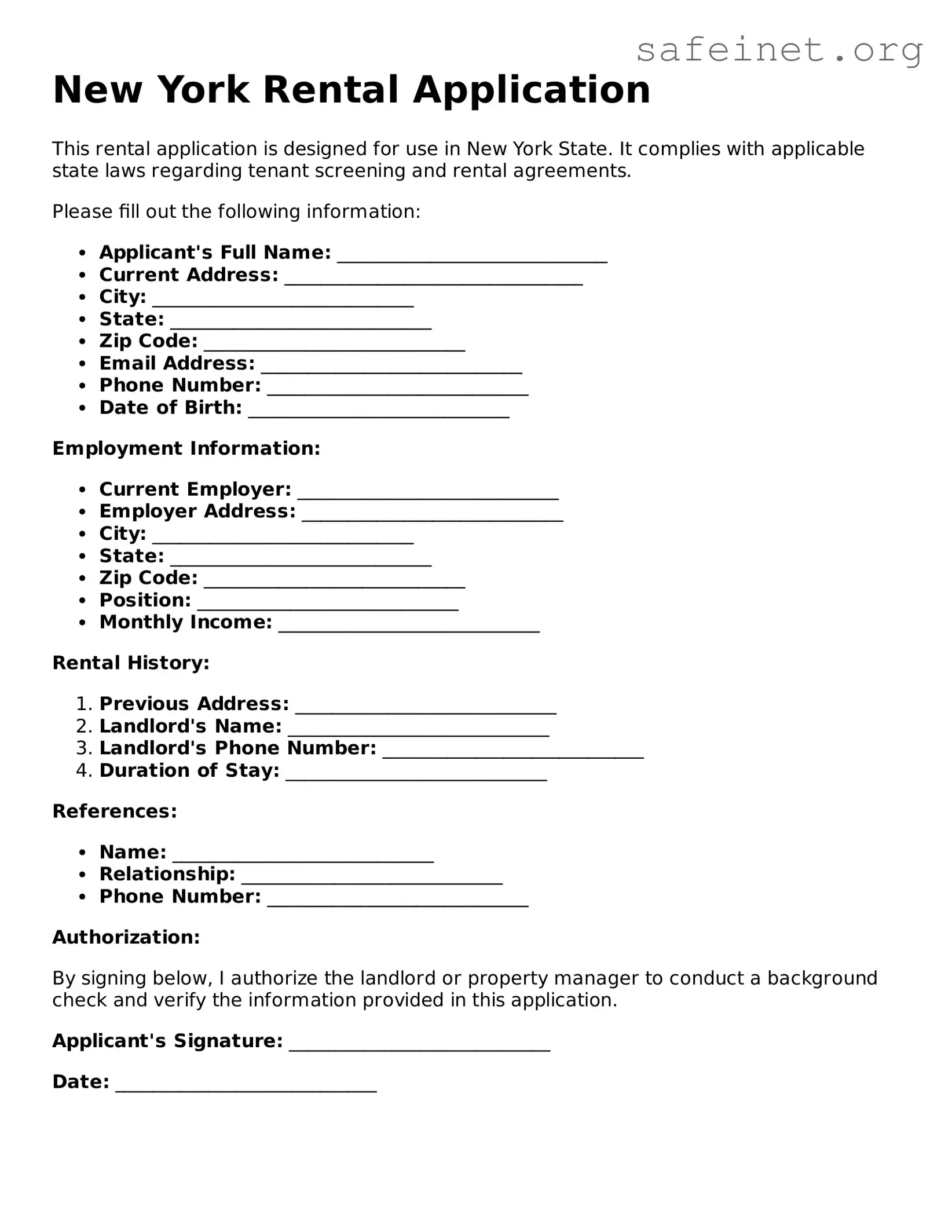
When seeking a new place to call home in New York, understanding the rental application form is a crucial step in the process. This document serves as a key tool for landlords and property managers to assess potential tenants. Typically, the form requires personal information such as the applicant's name, contact details, and Social Security number, which helps verify identity and creditworthiness. It also includes sections that inquire about employment history, income, and references, allowing landlords to gauge financial stability and reliability. Additionally, applicants may need to disclose their rental history, providing insight into their past behavior as tenants. Some forms might even ask for consent to conduct background and credit checks, ensuring that landlords make informed decisions. Completing this form accurately and thoroughly is essential, as it not only reflects the applicant's seriousness but also sets the stage for a successful rental experience.
New York Rental Application
This rental application is designed for use in New York State. It complies with applicable state laws regarding tenant screening and rental agreements.
Please fill out the following information:
Employment Information:
Rental History:
References:
Authorization:
By signing below, I authorize the landlord or property manager to conduct a background check and verify the information provided in this application.
Applicant's Signature: ____________________________
Date: ____________________________
| Fact Name | Description |
|---|---|
| Purpose | The New York Rental Application form is used by landlords to screen potential tenants. |
| Information Required | Applicants typically need to provide personal details, rental history, and income information. |
| Application Fee | Landlords may charge a non-refundable application fee, which is usually capped at $20. |
| Background Checks | Landlords often conduct background checks, including credit history and criminal records. |
| Fair Housing Laws | All rental applications must comply with federal and state fair housing laws to prevent discrimination. |
| Security Deposits | While not part of the application, landlords may require a security deposit upon lease signing. |
| Tenant Rights | Applicants have the right to know if their application is denied and the reasons for denial. |
| Governing Laws | The application process is governed by New York State Real Property Law, specifically sections 226 and 227. |
| Privacy Protection | Landlords must protect the personal information provided in the application from unauthorized access. |
| Lease Agreement | Approval of the rental application leads to the creation of a lease agreement, which outlines the terms of tenancy. |
Completing the New York Rental Application form is an essential step in securing your desired rental property. This form collects important information about your background, finances, and rental history, which landlords will review to make an informed decision. Follow these steps carefully to ensure that your application is filled out accurately and completely.
After completing the form, you will typically submit it along with any required fees or supporting documents. Be prepared to wait for a response, as landlords may take some time to process applications and conduct background checks.
What is a New York Rental Application form?
The New York Rental Application form is a document used by landlords and property managers to collect information from prospective tenants. This form typically includes sections for personal information, employment history, rental history, and references. It serves as a tool for assessing the suitability of an applicant for tenancy in a rental property.
What information is typically required on the application?
Applicants are usually required to provide personal details such as their full name, contact information, and Social Security number. Additionally, employment history, including the name of the employer, job title, and income, is often requested. Rental history, which includes previous addresses and landlord contact information, is also commonly included. Some applications may ask for personal references and consent for background checks.
Is there a fee associated with the rental application?
Many landlords charge an application fee to cover the costs of processing the application, which may include background checks and credit reports. This fee can vary significantly depending on the landlord or property management company. It is advisable for applicants to inquire about the fee before submitting their application.
How is the information on the application used?
Landlords use the information provided in the rental application to evaluate the applicant's creditworthiness and rental history. This assessment helps landlords make informed decisions about whom to rent to. The information can also be used to verify employment and income, ensuring that the applicant can afford the rent.
Can an application be denied, and what are common reasons for denial?
Yes, an application can be denied for various reasons. Common reasons include poor credit history, insufficient income, negative rental history, or failure to provide accurate information. Landlords are generally required to inform applicants of the reasons for denial, especially if it is based on information obtained from a credit report.
How long does the application process typically take?
The duration of the application process can vary widely. Typically, landlords may take anywhere from a few days to a week to process applications. Factors that influence this timeframe include the responsiveness of previous landlords and employers, the thoroughness of the background checks, and the overall volume of applications being processed at that time.
Failing to provide complete personal information. Always ensure your name, address, and contact details are accurate.
Not disclosing all sources of income. Include all forms of income, such as side jobs or government assistance, to give a full picture of your financial situation.
Leaving out previous rental history. Landlords often check this information. Provide details of past addresses, landlords, and duration of stay.
Ignoring credit history questions. Be honest about your credit score and any past issues. Misleading information can lead to application denial.
Not providing references. Include personal or professional references who can vouch for your character and reliability as a tenant.
Missing signatures or dates. Make sure to sign the application and date it. An unsigned application is often considered incomplete.
Overlooking the application fee. Many landlords require a fee to process your application. Ensure you include the correct amount.
Submitting the application without reviewing it. Take the time to double-check for errors or omissions. A thorough review can prevent delays.
When applying for a rental property in New York, the rental application form is just one piece of the puzzle. Several other documents are often required to provide a complete picture of your financial stability and rental history. Below are some commonly used forms and documents that may accompany the rental application.
Having these documents ready can streamline the application process and improve your chances of securing the rental you desire. Being prepared not only shows your seriousness as a tenant but also helps landlords make informed decisions.
The New York Rental Application form shares similarities with the Tenant Screening Application. Both documents serve to gather essential information about potential tenants, including their rental history, employment status, and financial background. The Tenant Screening Application often includes a consent section for background checks, which is crucial for landlords to assess the reliability of applicants. This ensures that landlords can make informed decisions based on the applicant's history and ability to fulfill lease obligations.
Another document comparable to the New York Rental Application is the Lease Agreement. While the Rental Application focuses on the applicant's qualifications, the Lease Agreement outlines the terms and conditions of the tenancy. Both documents require personal information and establish the framework for the landlord-tenant relationship. The Lease Agreement may reference the application as part of the vetting process, highlighting the importance of the information provided therein.
The Rental History Verification form is also similar. This document is often used by landlords to confirm the rental history provided in the New York Rental Application. It typically includes contact information for previous landlords and specific questions about the applicant's behavior and payment history. By cross-referencing this information, landlords can verify the accuracy of the applicant's claims, which helps in making a more informed decision.
The Employment Verification form aligns closely with the Rental Application as well. This document is used to confirm the applicant's employment status and income level, which are critical factors in determining their ability to pay rent. Both forms require detailed information about the applicant's job, including position, salary, and length of employment. This verification process helps landlords assess financial stability and reliability.
Similarly, the Credit Report Authorization form is related to the New York Rental Application. This document allows landlords to obtain a credit report to evaluate the applicant's financial history. The Rental Application often includes a section where applicants consent to a credit check, making it easier for landlords to assess their creditworthiness. This information is essential for understanding the applicant's financial behavior and responsibility.
The Guarantor Application form is another document that complements the New York Rental Application. If an applicant does not meet certain financial criteria, a guarantor may be required. This form collects information about the guarantor's financial status and willingness to take on the lease obligations if the tenant fails to do so. Both documents work together to ensure that the landlord has sufficient security in case of default.
Finally, the Background Check Consent form is similar in purpose to the New York Rental Application. This document seeks permission from the applicant to conduct a background check, which may include criminal history and eviction records. The Rental Application often incorporates this consent, allowing landlords to ensure the safety and suitability of tenants before entering into a lease agreement. Together, these documents create a comprehensive overview of the applicant's background and reliability.
When filling out the New York Rental Application form, there are important dos and don'ts to consider. Following these guidelines can help ensure your application is processed smoothly.
By adhering to these guidelines, you can improve your chances of securing a rental property in New York.
When it comes to the New York Rental Application form, there are several misconceptions that can lead to confusion. Here are four common misunderstandings:
Not all landlords or property management companies ask for the same details on their rental applications. Each may have unique requirements based on their policies or the specific property.
Submitting a rental application does not guarantee that you will be approved for the rental. Landlords review applications and may deny them based on various factors, such as credit history or income verification.
While many landlords charge application fees, it is possible to discuss these fees. Some landlords may be willing to negotiate or waive them under certain circumstances.
Applicants often believe that once they submit their application, they cannot make any changes. However, most landlords allow you to update your application if you provide the necessary information before a decision is made.
When filling out and utilizing the New York Rental Application form, several important considerations come into play. Understanding these aspects can streamline the process and enhance your chances of securing a rental. Here are some key takeaways:
By keeping these points in mind, you can navigate the New York Rental Application process more effectively and improve your chances of finding a suitable rental property.