When buying or selling property in New York, the Real Estate Purchase Agreement form plays a crucial role in the transaction process. This document outlines the terms and conditions agreed upon by both the buyer and the seller, ensuring that everyone is on the same page. Key aspects of the form include the purchase price, the closing date, and any contingencies that may affect the sale, such as inspections or financing. Additionally, it specifies what is included in the sale, such as appliances or fixtures, and details the responsibilities of each party. By clearly defining these elements, the agreement helps to prevent misunderstandings and protects the interests of both parties involved. Understanding this form is essential for anyone navigating the real estate market in New York, as it serves as the foundation for a successful property transaction.
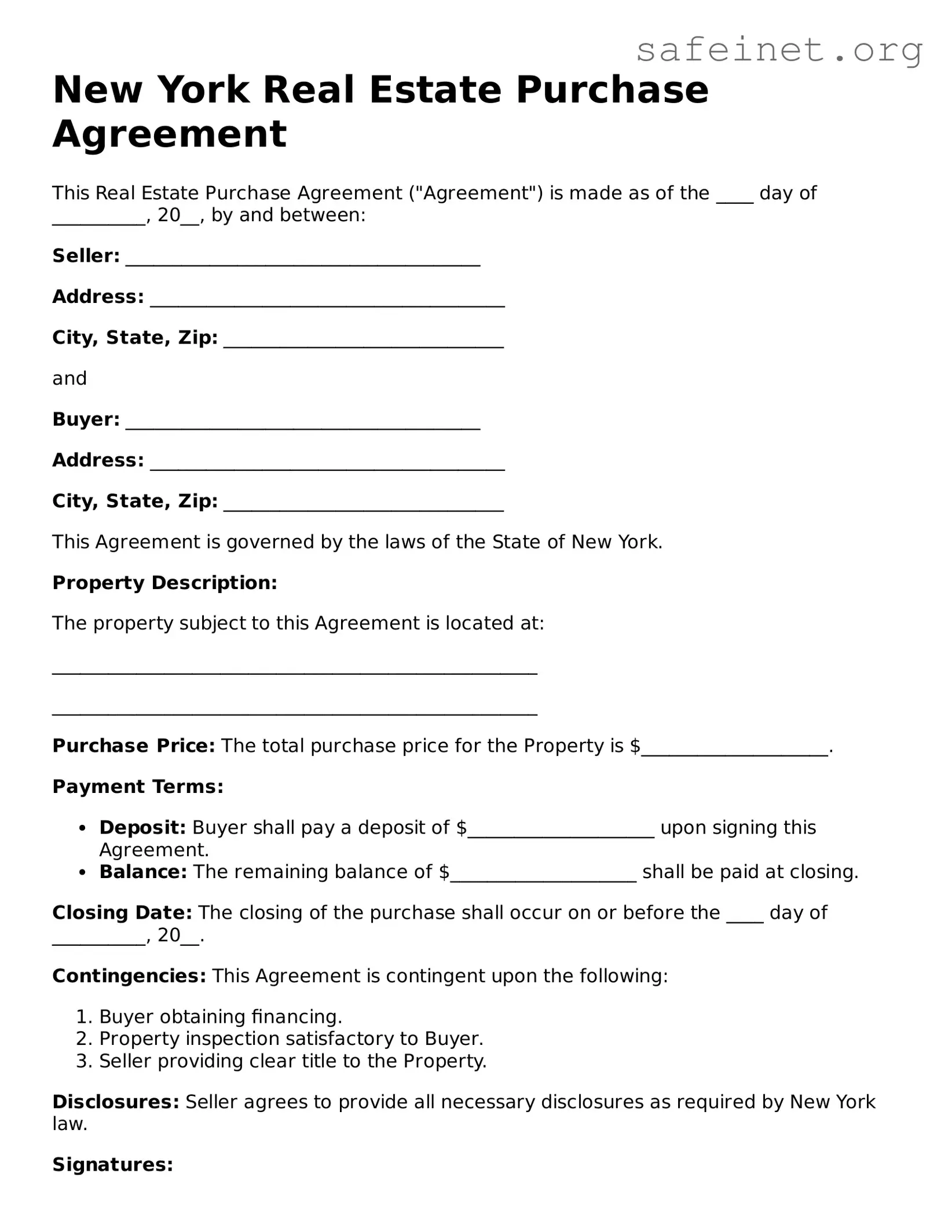
New York Real Estate Purchase Agreement
This Real Estate Purchase Agreement ("Agreement") is made as of the ____ day of __________, 20__, by and between:
Seller: ______________________________________
Address: ______________________________________
City, State, Zip: ______________________________
and
Buyer: ______________________________________
Address: ______________________________________
City, State, Zip: ______________________________
This Agreement is governed by the laws of the State of New York.
Property Description:
The property subject to this Agreement is located at:
____________________________________________________
____________________________________________________
Purchase Price: The total purchase price for the Property is $____________________.
Payment Terms:
Closing Date: The closing of the purchase shall occur on or before the ____ day of __________, 20__.
Contingencies: This Agreement is contingent upon the following:
Disclosures: Seller agrees to provide all necessary disclosures as required by New York law.
Signatures:
IN WITNESS WHEREOF, the parties hereto have executed this Agreement as of the date first above written.
Seller's Signature: ____________________________ Date: _____________
Buyer's Signature: ____________________________ Date: _____________
| Fact Name | Description |
|---|---|
| Purpose | The New York Real Estate Purchase Agreement is used to outline the terms of a real estate transaction between a buyer and a seller. |
| Governing Law | This agreement is governed by the laws of the State of New York. |
| Key Components | It typically includes details such as purchase price, property description, and closing date. |
| Contingencies | Buyers often include contingencies for financing, inspections, and other conditions that must be met. |
| Earnest Money | Buyers usually provide earnest money to show their commitment to the purchase. |
| Disclosure Requirements | Sellers must disclose any known issues with the property, such as lead paint or structural problems. |
| Legal Review | It is advisable for both parties to have the agreement reviewed by a legal professional before signing. |
After obtaining the New York Real Estate Purchase Agreement form, you will need to fill it out accurately. This document will guide the transaction between the buyer and seller. Follow these steps to complete the form correctly.
What is a New York Real Estate Purchase Agreement?
The New York Real Estate Purchase Agreement is a legal document that outlines the terms and conditions under which a buyer agrees to purchase a property from a seller. This agreement details the purchase price, payment terms, contingencies, and other essential elements of the transaction. It serves as a binding contract once both parties sign it, ensuring that everyone understands their rights and obligations.
What key elements should be included in the agreement?
Several crucial components must be present in the Real Estate Purchase Agreement. These include the names of the buyer and seller, a detailed description of the property, the purchase price, the closing date, any contingencies (such as financing or inspections), and provisions for deposits or earnest money. Additionally, it should specify who is responsible for closing costs and any repairs needed before the sale is finalized.
What are contingencies, and why are they important?
Contingencies are conditions that must be met for the sale to proceed. They protect both the buyer and seller by allowing the buyer to back out of the deal if certain criteria are not satisfied. Common contingencies include financing approval, satisfactory home inspections, and the sale of the buyer's current home. Including these in the agreement helps ensure that both parties are comfortable moving forward with the transaction.
How does the closing process work in New York?
The closing process in New York typically involves several steps. Once the purchase agreement is signed, both parties work toward fulfilling the contingencies outlined in the contract. After that, a closing date is set. During closing, both parties review and sign the necessary documents, and the buyer pays the purchase price. The seller then transfers ownership of the property to the buyer. It's often conducted in the presence of a real estate attorney to ensure everything is handled correctly.
Can I make changes to the agreement after it is signed?
Once the Real Estate Purchase Agreement is signed by both parties, it becomes a binding contract. However, changes can be made if both the buyer and seller agree to the modifications. It’s important to document any changes in writing and have both parties sign the revised agreement to avoid confusion or disputes later on.
What happens if one party breaches the agreement?
If one party fails to fulfill their obligations under the agreement, it is considered a breach of contract. The non-breaching party may have several options, including seeking damages, requesting specific performance (forcing the breaching party to fulfill their obligations), or terminating the agreement. The specific remedies available will depend on the circumstances of the breach and the terms outlined in the agreement.
Is it necessary to hire a lawyer for this agreement?
While it is not legally required to hire a lawyer to prepare or review a Real Estate Purchase Agreement in New York, it is highly recommended. A knowledgeable attorney can help ensure that the agreement is legally sound, protect your interests, and navigate any complexities that may arise during the transaction. This is especially important for first-time buyers or sellers who may be unfamiliar with the process.
What should I do if I have questions about the agreement?
If you have questions or concerns about the Real Estate Purchase Agreement, it’s best to consult with a real estate professional or an attorney. They can provide clarity on any specific terms, help you understand your rights and obligations, and guide you through the entire process. Don’t hesitate to seek assistance; it’s better to be informed than to face unexpected issues later on.
How can I obtain a New York Real Estate Purchase Agreement form?
You can obtain a New York Real Estate Purchase Agreement form through various sources. Many real estate websites offer templates that you can customize to suit your needs. Additionally, local real estate offices or attorneys can provide you with a form tailored to your specific situation. Ensure that any form you use complies with New York state laws and regulations.
Incomplete Information: One of the most common mistakes is failing to provide complete information. Buyers and sellers often overlook essential details such as full names, addresses, or contact information. This can lead to confusion and delays in the transaction.
Incorrect Property Description: Accurately describing the property is crucial. Errors in the legal description, such as incorrect lot numbers or failing to include necessary details, can result in disputes later on. Always double-check the property's address and any identifying features.
Neglecting Contingencies: Buyers frequently forget to include contingencies that protect their interests. Common contingencies include home inspections, financing, and appraisal clauses. Without these, buyers may find themselves locked into unfavorable terms.
Forgetting Signatures: A signed agreement is essential for its validity. Both parties must sign the document, and any missing signatures can render the agreement unenforceable. It is advisable to review the document carefully before submission.
Not Understanding Terms: Many individuals fill out the agreement without fully understanding the terms. Legal jargon can be confusing. It is important to clarify any ambiguous language to avoid misinterpretations that could lead to legal issues down the road.
When engaging in a real estate transaction in New York, several documents often accompany the Real Estate Purchase Agreement. Each document serves a specific purpose and helps facilitate the transaction process.
These documents work together to ensure a smooth transaction and protect the interests of both the buyer and seller. Understanding each document's role can help facilitate a successful real estate purchase.
The New York Lease Agreement is a document that outlines the terms under which a landlord allows a tenant to occupy a property. Like the Real Estate Purchase Agreement, it specifies important details such as the duration of the lease, rental payment amounts, and responsibilities for maintenance. Both documents serve to protect the rights of the parties involved and ensure clarity in the transaction, whether it is a rental or a purchase.
The New York Offer to Purchase is another document that shares similarities with the Real Estate Purchase Agreement. This form is used by a potential buyer to formally express interest in purchasing a property. It outlines the proposed terms, including the offer price and any contingencies. Both documents establish a framework for negotiations and set the stage for a potential transaction, ensuring that both parties understand their obligations.
The New York Counteroffer form is also akin to the Real Estate Purchase Agreement. When a seller receives an offer that they wish to modify, they can use this document to propose changes to the original terms. It maintains the same level of detail as the Purchase Agreement, addressing price, conditions, and timelines. Both documents facilitate communication and negotiation between buyers and sellers, helping to reach a mutually agreeable outcome.
The New York Closing Disclosure is a critical document that parallels the Real Estate Purchase Agreement in its role during the final stages of a real estate transaction. This form provides a detailed breakdown of the costs associated with the purchase, including loan terms, closing costs, and other financial obligations. Like the Purchase Agreement, it ensures that all parties are informed and can make educated decisions prior to finalizing the sale.
Lastly, the New York Title Report is similar to the Real Estate Purchase Agreement in that it plays a crucial role in the property transfer process. This document outlines the legal status of the property, including ownership history and any liens or encumbrances. Both documents are essential for safeguarding the interests of the buyer and ensuring a clear title transfer, thus preventing future disputes over property ownership.
When filling out the New York Real Estate Purchase Agreement form, it is essential to approach the task with care and attention to detail. Here are five important dos and don'ts to consider:
When it comes to the New York Real Estate Purchase Agreement form, several misconceptions often arise. Understanding these can help buyers and sellers navigate the process more effectively. Here’s a list of nine common misconceptions:
By dispelling these misconceptions, buyers and sellers can approach the New York Real Estate Purchase Agreement with greater confidence and clarity.
When filling out and using the New York Real Estate Purchase Agreement form, consider the following key takeaways: