The New York Power of Attorney for a Child form is a crucial legal document designed to grant a designated adult the authority to make decisions on behalf of a minor child in specific situations. This form becomes particularly important for parents or guardians who may need to temporarily delegate their responsibilities due to travel, medical emergencies, or other circumstances that prevent them from being present. It allows the appointed individual to make decisions related to education, healthcare, and general welfare, ensuring that the child's needs are met even in the absence of the parent or guardian. The form must be completed with care, as it requires the signatures of both the parent or guardian and a witness, and it is essential to specify the duration of the authority granted. Understanding the implications of this document is vital for anyone considering its use, as it provides a structured way to ensure that children receive the care and attention they require when their primary caregivers are unavailable.
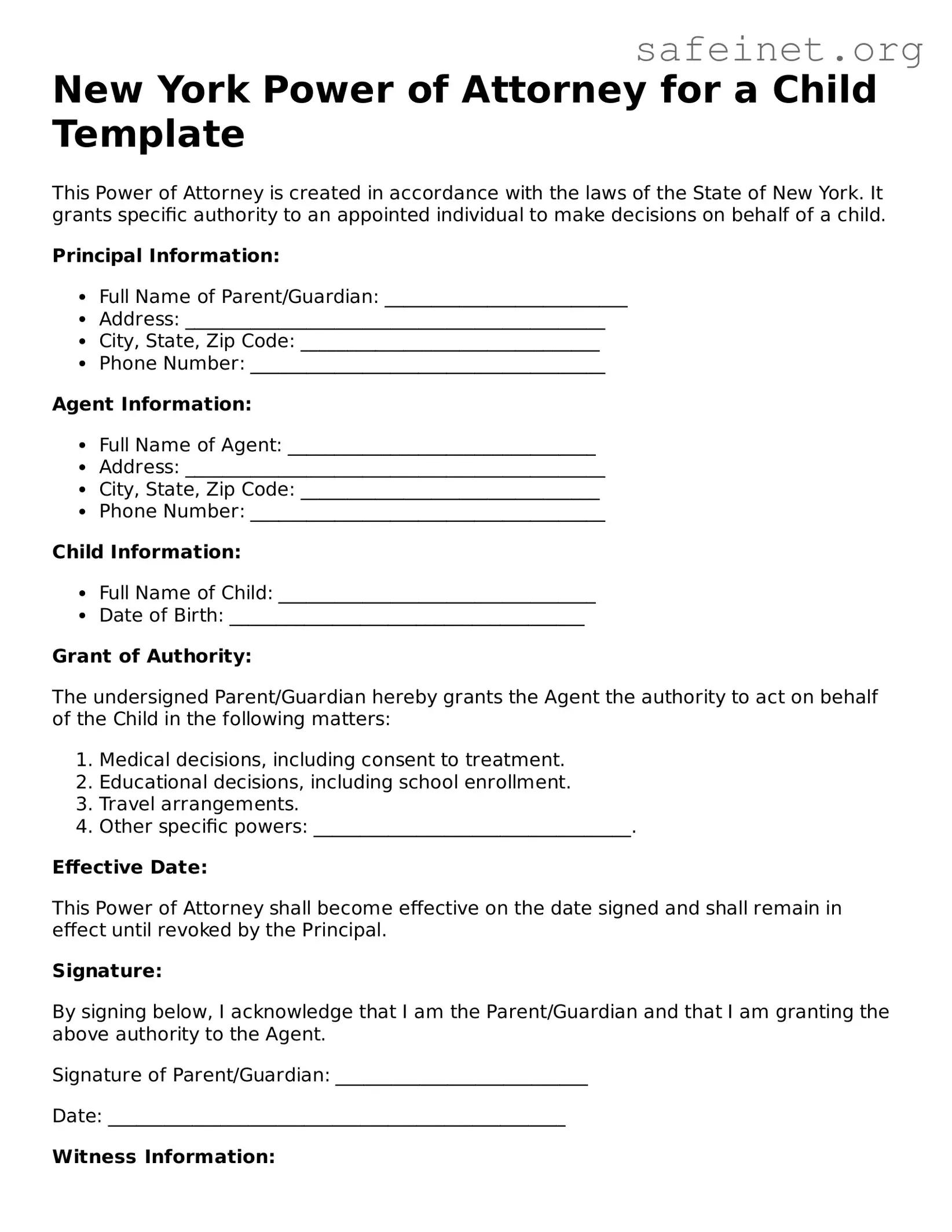
New York Power of Attorney for a Child Template
This Power of Attorney is created in accordance with the laws of the State of New York. It grants specific authority to an appointed individual to make decisions on behalf of a child.
Principal Information:
Agent Information:
Child Information:
Grant of Authority:
The undersigned Parent/Guardian hereby grants the Agent the authority to act on behalf of the Child in the following matters:
Effective Date:
This Power of Attorney shall become effective on the date signed and shall remain in effect until revoked by the Principal.
Signature:
By signing below, I acknowledge that I am the Parent/Guardian and that I am granting the above authority to the Agent.
Signature of Parent/Guardian: ___________________________
Date: _________________________________________________
Witness Information:
Witness Name: ______________________________________
Witness Signature: ___________________________________
Date: _______________________________________________
This document is intended to comply with New York State laws regarding Power of Attorney for a Child. It is recommended to consult with a legal professional for guidance specific to your situation.
| Fact Name | Description |
|---|---|
| Purpose | The New York Power of Attorney for a Child form allows a parent or guardian to designate another adult to make decisions on behalf of their child, particularly in situations where the parent cannot be present. |
| Governing Law | This form is governed by New York State's General Obligations Law, specifically Article 5, which outlines the powers and responsibilities associated with a Power of Attorney. |
| Duration | The authority granted through this form can be set for a specific period or until revoked by the parent or guardian, providing flexibility based on individual needs. |
| Requirements | The form must be signed by the parent or legal guardian in the presence of a notary public, ensuring that the document is legally binding and recognized by third parties. |
Filling out the New York Power of Attorney for a Child form is a straightforward process. Once completed, this document allows a designated individual to make decisions on behalf of a child in certain situations. Follow these steps to ensure the form is filled out correctly.
After completing these steps, the form is ready for use. It is advisable to keep a copy for personal records and provide copies to the designated individual and any relevant institutions, such as schools or healthcare providers.
What is a Power of Attorney for a Child in New York?
A Power of Attorney for a Child is a legal document that allows a parent or guardian to give another adult the authority to make decisions on behalf of their child. This can include decisions about healthcare, education, and other important aspects of a child's life. It's especially useful when a parent is unavailable, such as during travel or extended work commitments.
Who can be appointed as an agent in the Power of Attorney for a Child?
Any responsible adult can be appointed as an agent. This could be a relative, family friend, or neighbor. It's important to choose someone trustworthy and capable of handling the responsibilities that come with this role. The agent should be willing to take on these duties and understand the needs of the child.
How long does a Power of Attorney for a Child last?
The Power of Attorney for a Child can be set for a specific period or until a certain event occurs, such as the return of the parent. If no specific time frame is mentioned, it generally remains in effect until the child turns 18 or the parent revokes it. Parents should keep track of the document and its status.
Do I need to have the Power of Attorney for a Child notarized?
Yes, in New York, the Power of Attorney for a Child must be signed in the presence of a notary public. This adds a layer of authenticity and helps ensure that the document is legally valid. It’s also a good idea to keep copies of the signed document in a safe place.
Can I revoke the Power of Attorney for a Child once it is signed?
Yes, parents can revoke the Power of Attorney at any time. To do this, a written notice of revocation should be provided to the agent and any relevant parties. It's important to inform everyone involved so that there is no confusion about who has the authority to make decisions for the child.
What happens if the agent cannot fulfill their duties?
If the appointed agent is unable to fulfill their duties, the parent can appoint a new agent. This should be done through a new Power of Attorney document. It’s crucial to ensure that the new agent is informed and ready to take on the responsibilities of caring for the child.
Are there any limitations to the authority granted in the Power of Attorney for a Child?
Yes, the authority granted can be limited. Parents can specify what decisions the agent can make. For example, they might allow the agent to make medical decisions but not financial ones. Clearly outlining these limitations in the document can help avoid misunderstandings.
Is there a fee for creating a Power of Attorney for a Child?
Creating a Power of Attorney for a Child typically does not have a fee associated with it unless you seek legal assistance. Notary services may charge a small fee. It’s a good idea to check local rates if you need help with the process.
Failing to include the full names of both the child and the agent. It is essential to provide complete names to avoid confusion.
Not specifying the duration of the power of attorney. Clearly stating the time frame is crucial for legal clarity.
Leaving out the child's date of birth. This detail helps to confirm the identity of the child.
Not signing the form in the presence of a notary public. A notarized signature is often required for the document to be valid.
Forgetting to include the agent's contact information. Providing a phone number and address ensures the agent can be reached easily.
Overlooking the need for witnesses. Some jurisdictions require witnesses to sign the document alongside the notary.
Using outdated forms. Always ensure that the latest version of the form is being utilized to meet current legal standards.
Not reviewing the completed form for errors. Double-checking for typos or missing information can prevent potential issues.
When using the New York Power of Attorney for a Child form, several other documents may be required to ensure comprehensive legal coverage for the child’s welfare and activities. Each of these documents serves a specific purpose and helps clarify responsibilities and rights.
Having these documents prepared alongside the New York Power of Attorney for a Child form can facilitate smoother interactions and decision-making processes for caregivers. It is crucial to ensure that all necessary paperwork is in order to protect the child's best interests.
The New York Power of Attorney for a Child form shares similarities with the General Power of Attorney. Both documents grant authority to an individual to make decisions on behalf of another person. In the case of the General Power of Attorney, it typically covers a wide range of financial and legal matters, while the Power of Attorney for a Child specifically focuses on the care and welfare of a minor. This targeted approach allows parents to designate someone to handle specific responsibilities related to their child's upbringing, such as education and healthcare, while maintaining broader powers for other matters under a general form.
Another similar document is the Medical Power of Attorney. This form allows an individual to appoint someone else to make medical decisions on their behalf if they are unable to do so. Like the Power of Attorney for a Child, the Medical Power of Attorney is focused on health-related decisions. However, it specifically pertains to medical care for adults rather than children. Both forms emphasize the importance of having a trusted person available to make decisions when the primary caregiver cannot, ensuring that the individual's wishes are respected.
The Child Custody Agreement also shares some characteristics with the Power of Attorney for a Child. Both documents involve the care and welfare of a minor, but they serve different purposes. A Child Custody Agreement outlines the legal arrangement regarding where a child will live and who will make decisions about their upbringing. In contrast, the Power of Attorney for a Child allows a parent to delegate specific responsibilities temporarily. Both documents are essential for ensuring that a child's best interests are prioritized, but they operate within different legal frameworks.
The Guardianship Agreement is another document that bears resemblance to the Power of Attorney for a Child. A Guardianship Agreement establishes a legal relationship where one individual is appointed to care for a minor. This document is often used when parents are unable to care for their child due to various reasons. While both documents focus on child welfare, a Guardianship Agreement typically involves a more permanent arrangement compared to the temporary nature of a Power of Attorney for a Child.
The Consent to Travel form is also similar in that it involves parental consent regarding a child's welfare. This document is often required when a child is traveling with someone other than their parents. Like the Power of Attorney for a Child, the Consent to Travel form ensures that the individual responsible for the child has the necessary authority to make decisions during the trip. Both documents aim to protect the child's interests and ensure that appropriate care is provided while they are away from their primary guardians.
The Adoption Agreement shares similarities with the Power of Attorney for a Child in that both involve the legal care of a minor. An Adoption Agreement establishes a permanent legal relationship between the adoptive parents and the child. While the Power of Attorney for a Child is typically a temporary arrangement, it also involves making decisions regarding the child's welfare. Both documents highlight the importance of having a responsible adult in place to care for a child, albeit through different legal processes.
The Child Support Agreement is another relevant document, focusing on the financial responsibilities associated with raising a child. While the Power of Attorney for a Child allows someone to make decisions regarding a child's care, the Child Support Agreement ensures that financial support is provided for that child's upbringing. Both documents are crucial in ensuring that a child's needs are met, though they address different aspects of care and responsibility.
Lastly, the Special Needs Trust is similar in that it is designed to protect the welfare of a child, particularly those with disabilities. This document allows parents to set aside funds for their child's future care without jeopardizing their eligibility for government benefits. While the Power of Attorney for a Child focuses on decision-making authority, the Special Needs Trust is about financial planning for a child's long-term needs. Both documents underscore the importance of thoughtful preparation for a child's future, ensuring that their needs are adequately addressed.
When filling out the New York Power of Attorney for a Child form, there are several important considerations to keep in mind. Below is a list of things you should and shouldn't do to ensure the process goes smoothly.
Following these guidelines can help ensure that the Power of Attorney for a Child form is filled out correctly and meets all necessary requirements.
Here are seven misconceptions about the New York Power of Attorney for a Child form:
Many people believe this form is only necessary in urgent situations. However, it can be used for routine care and decisions when a parent is unavailable.
While notarization is recommended, it is not a strict requirement for the Power of Attorney for a Child form to be valid.
Non-relatives can also be granted power of attorney for a child. Friends or trusted caregivers can take on this responsibility.
This form does not last forever. It is typically valid until a specified date or until the parent revokes it.
Granting power of attorney does not mean a parent loses their rights. The parent retains all legal rights and responsibilities.
This form is valid in New York, but it may also be recognized in other states depending on local laws.
While legal advice can be helpful, parents can complete the form on their own without hiring an attorney.
When filling out and using the New York Power of Attorney for a Child form, consider the following key takeaways: