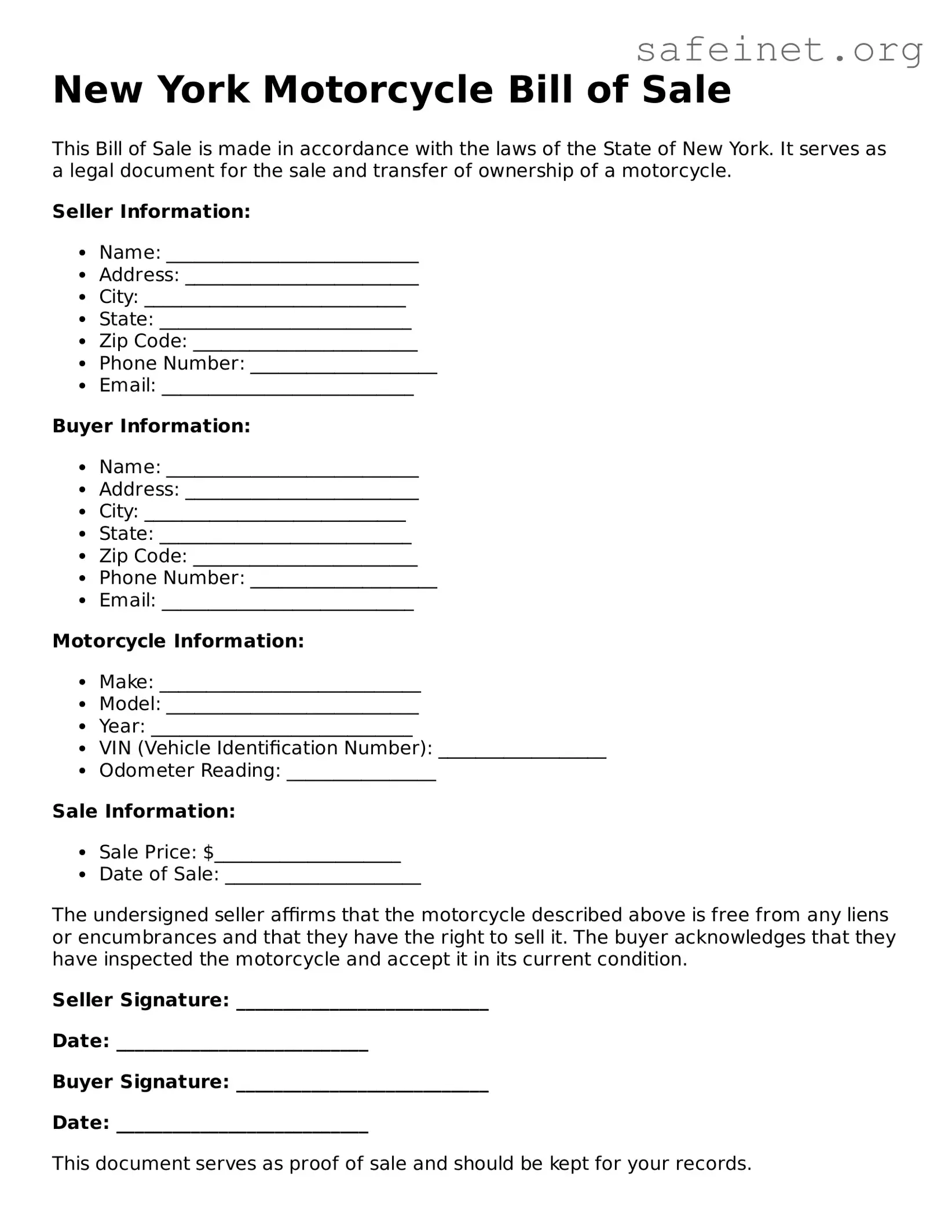
When purchasing or selling a motorcycle in New York, having a properly completed Motorcycle Bill of Sale form is essential for both parties involved in the transaction. This document serves as a legal record of the sale, outlining crucial details such as the motorcycle's make, model, year, and Vehicle Identification Number (VIN). It also includes the names and addresses of both the buyer and seller, along with the sale price and the date of the transaction. By providing a clear account of the sale, this form helps protect the interests of both parties and can serve as proof of ownership transfer. Additionally, it may be required for registering the motorcycle with the Department of Motor Vehicles (DMV) and for obtaining insurance. Understanding the components of the Motorcycle Bill of Sale form is vital for ensuring a smooth and legally compliant transaction.
New York Motorcycle Bill of Sale
This Bill of Sale is made in accordance with the laws of the State of New York. It serves as a legal document for the sale and transfer of ownership of a motorcycle.
Seller Information:
Buyer Information:
Motorcycle Information:
Sale Information:
The undersigned seller affirms that the motorcycle described above is free from any liens or encumbrances and that they have the right to sell it. The buyer acknowledges that they have inspected the motorcycle and accept it in its current condition.
Seller Signature: ___________________________
Date: ___________________________
Buyer Signature: ___________________________
Date: ___________________________
This document serves as proof of sale and should be kept for your records.
| Fact Name | Description |
|---|---|
| Purpose | The New York Motorcycle Bill of Sale form is used to document the sale of a motorcycle between a buyer and a seller. |
| Governing Law | This form is governed by New York State Vehicle and Traffic Law. |
| Required Information | The form must include details such as the motorcycle's make, model, year, VIN, and the sale price. |
| Signatures | Both the buyer and the seller must sign the form to validate the transaction. |
| Transfer of Ownership | Completing the Bill of Sale is crucial for transferring ownership and registering the motorcycle with the DMV. |
| Record Keeping | It is advisable for both parties to keep a copy of the Bill of Sale for their records. |
After obtaining the New York Motorcycle Bill of Sale form, you will need to fill it out carefully. This document will serve as proof of the sale and transfer of ownership of the motorcycle. Ensure that all details are accurate to avoid any complications in the future.
What is a New York Motorcycle Bill of Sale?
A New York Motorcycle Bill of Sale is a legal document that records the sale and transfer of ownership of a motorcycle from one party to another. This form includes essential details such as the motorcycle's make, model, year, Vehicle Identification Number (VIN), and the names and addresses of both the buyer and seller. It serves as proof of the transaction and can be crucial for registration and title transfer purposes.
Is a Bill of Sale required in New York when selling a motorcycle?
While a Bill of Sale is not strictly required by New York law for the sale of a motorcycle, it is highly recommended. Having a Bill of Sale protects both the buyer and seller by providing a clear record of the transaction. It can help resolve any disputes that may arise later and is often required by the Department of Motor Vehicles (DMV) when registering the motorcycle in the new owner's name.
What information should be included in the Bill of Sale?
A comprehensive Bill of Sale should include several key pieces of information. These include the full names and addresses of both the buyer and seller, the motorcycle's make, model, year, and VIN, the sale price, and the date of the transaction. Additionally, both parties should sign the document to validate the agreement. Including any warranties or conditions of the sale can also be beneficial.
Can I create my own Motorcycle Bill of Sale?
Yes, you can create your own Motorcycle Bill of Sale. However, it’s important to ensure that it includes all necessary information and complies with New York state requirements. There are templates available online that can guide you in drafting a proper document. Alternatively, you can also find pre-made forms at local DMV offices or legal stationery stores.
Do I need to have the Bill of Sale notarized?
No, notarization is not required for a Motorcycle Bill of Sale in New York. However, having the document notarized can add an extra layer of authenticity and protection. It may help in situations where proof of the transaction is necessary, such as disputes or when registering the motorcycle with the DMV.
What should I do with the Bill of Sale after the transaction?
After the transaction is complete, both the buyer and seller should keep a copy of the Bill of Sale for their records. The buyer will need it for registration and title transfer at the DMV. The seller should retain their copy as proof that they no longer own the motorcycle, which can be useful if any issues arise later. Keeping these records organized can save you headaches down the road.
Failing to include the date of the sale. This is crucial for record-keeping and legal purposes.
Not providing the full names and addresses of both the buyer and seller. Incomplete information can lead to disputes later on.
Omitting the VIN (Vehicle Identification Number). This number uniquely identifies the motorcycle and is essential for registration.
Incorrectly stating the purchase price. Ensure that the amount reflects the agreed-upon sale price to avoid tax issues.
Not signing the document. Both parties must sign the bill of sale to validate the transaction.
Using a generic template without ensuring it meets New York state requirements. Customizing the form can prevent legal complications.
Forgetting to include any disclosures about the motorcycle's condition. Honesty about defects can protect both parties.
Neglecting to keep a copy of the completed bill of sale. Both the buyer and seller should retain a copy for their records.
Not verifying that the motorcycle has a clear title. Ensure there are no liens or outstanding loans on the vehicle before completing the sale.
When buying or selling a motorcycle in New York, several forms and documents are often used alongside the Motorcycle Bill of Sale. Each of these documents serves a specific purpose to ensure a smooth transaction and proper registration of the vehicle.
Having these documents ready can help ensure that the transaction is completed efficiently and legally. It is important to check with local regulations for any additional requirements that may apply.
The New York Vehicle Bill of Sale is similar to the Motorcycle Bill of Sale in that both documents serve as proof of transfer of ownership for a vehicle. This form includes essential details such as the buyer's and seller's information, vehicle identification number (VIN), and purchase price. Both documents are important for registering the vehicle with the state and may be required by the Department of Motor Vehicles (DMV) to complete the registration process.
The New York Boat Bill of Sale also shares similarities with the Motorcycle Bill of Sale. It documents the sale and transfer of ownership of a boat, including details about the buyer, seller, and the boat itself, such as its hull identification number (HIN). Like the motorcycle version, this document is vital for registration purposes and may be necessary for the buyer to prove ownership and for the seller to demonstrate that they have relinquished ownership.
The New York Trailer Bill of Sale is another document that functions similarly to the Motorcycle Bill of Sale. This form records the sale of a trailer and includes information about the buyer, seller, and the trailer, including its VIN. Just as with motorcycles, this document is required for the new owner to register the trailer with the DMV, ensuring that ownership is properly documented and transferred.
Lastly, the New York Car Bill of Sale is akin to the Motorcycle Bill of Sale, as it also serves as evidence of the sale and transfer of a motor vehicle. This document captures the necessary details, such as the buyer's and seller's information, vehicle specifications, and sale price. Both forms are essential for legal ownership and registration, providing a clear record of the transaction for both parties involved.
When filling out the New York Motorcycle Bill of Sale form, it is important to approach the task with care. Here are some guidelines to help ensure a smooth process.
Things You Should Do:
Things You Shouldn't Do:
Understanding the New York Motorcycle Bill of Sale form is essential for both buyers and sellers in the motorcycle market. However, several misconceptions can lead to confusion. Below is a list of common misconceptions regarding this important document.
By dispelling these misconceptions, individuals can navigate the motorcycle buying and selling process more effectively, ensuring a smoother transaction and minimizing potential disputes.
When filling out and using the New York Motorcycle Bill of Sale form, consider the following key takeaways:
Following these guidelines will help ensure a smooth transaction and protect both parties involved.