In the realm of healthcare decision-making, the New York Living Will form stands out as a crucial document that empowers individuals to express their wishes regarding medical treatment in the event they become unable to communicate those preferences. This form allows a person to outline their desires concerning life-sustaining measures, such as resuscitation and artificial nutrition, ensuring that their values and beliefs guide the care they receive. By clearly stating preferences, individuals can alleviate the burden on family members during emotionally challenging times. The Living Will form is not only about personal autonomy; it also serves to facilitate conversations among loved ones and healthcare providers, making it easier to navigate complex medical situations. In New York, the form must be signed and witnessed to be legally valid, which emphasizes the importance of careful consideration and planning. Understanding the nuances of this document can provide peace of mind and clarity, reinforcing the idea that everyone has the right to make informed choices about their own healthcare.
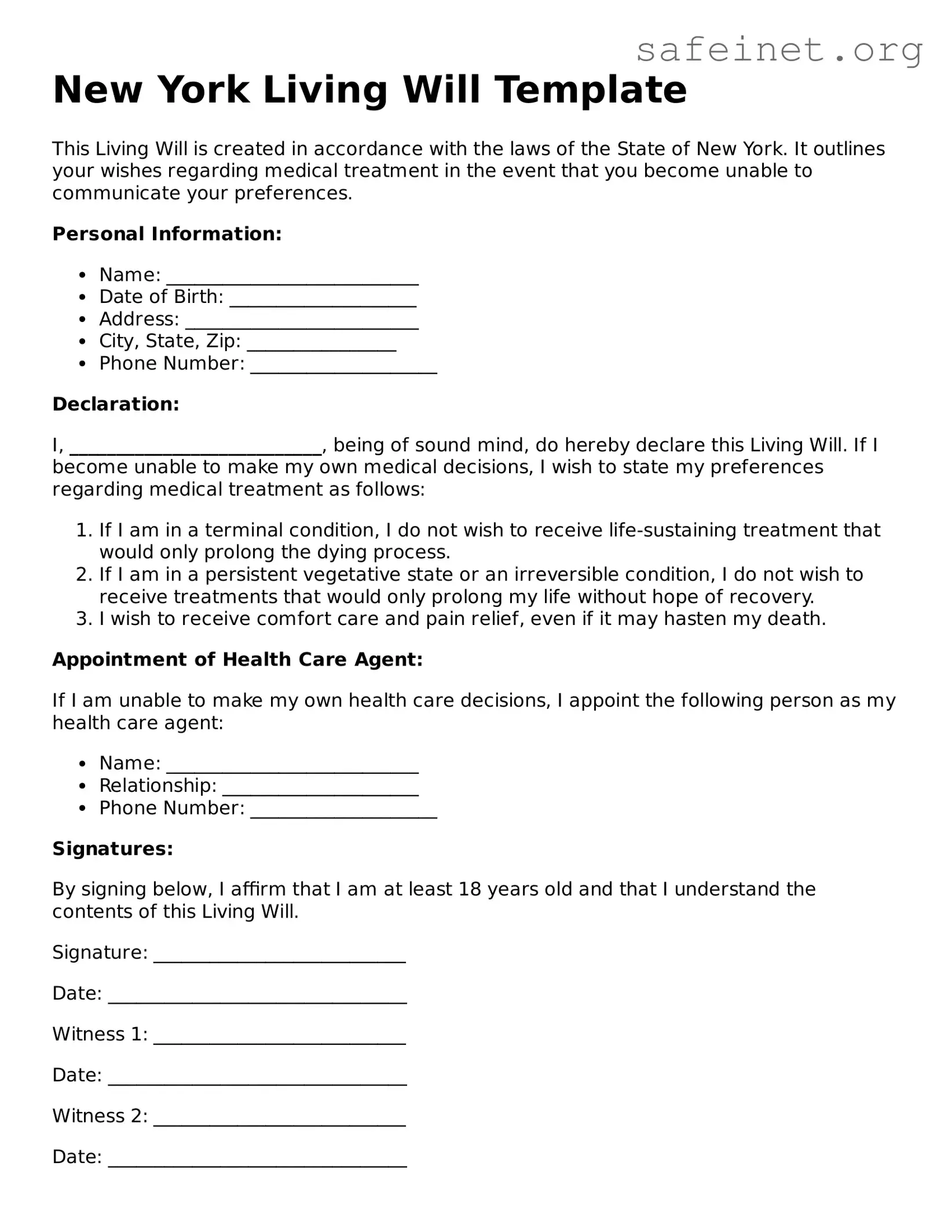
New York Living Will Template
This Living Will is created in accordance with the laws of the State of New York. It outlines your wishes regarding medical treatment in the event that you become unable to communicate your preferences.
Personal Information:
Declaration:
I, ___________________________, being of sound mind, do hereby declare this Living Will. If I become unable to make my own medical decisions, I wish to state my preferences regarding medical treatment as follows:
Appointment of Health Care Agent:
If I am unable to make my own health care decisions, I appoint the following person as my health care agent:
Signatures:
By signing below, I affirm that I am at least 18 years old and that I understand the contents of this Living Will.
Signature: ___________________________
Date: ________________________________
Witness 1: ___________________________
Date: ________________________________
Witness 2: ___________________________
Date: ________________________________
This document should be kept in a safe place and shared with your health care agent and family members to ensure your wishes are honored.
| Fact Name | Details |
|---|---|
| Definition | A New York Living Will is a legal document that outlines an individual's preferences for medical treatment in case they become unable to communicate their wishes. |
| Governing Law | The New York Living Will is governed by the New York Public Health Law, specifically Article 29-CC. |
| Eligibility | Any adult who is 18 years or older can create a Living Will in New York. |
| Signature Requirements | The document must be signed by the individual and witnessed by at least one person who is not a relative or a beneficiary. |
| Revocation | A Living Will can be revoked at any time by the individual, either verbally or in writing. |
| Healthcare Proxy | While a Living Will outlines treatment preferences, it is often used in conjunction with a Healthcare Proxy, which designates someone to make medical decisions on behalf of the individual. |
Filling out the New York Living Will form is an important step in making your healthcare wishes known. Once completed, you will have a document that clearly outlines your preferences regarding medical treatment in case you cannot communicate them yourself.
Once you have completed these steps, your Living Will is ready. Make sure to keep it in a safe place and inform your loved ones about its location.
What is a Living Will in New York?
A Living Will is a legal document that allows individuals to express their wishes regarding medical treatment in situations where they cannot communicate their preferences. This typically applies to end-of-life care or when someone is incapacitated. In New York, a Living Will can help ensure that your healthcare providers and loved ones understand your desires concerning life-sustaining treatment, resuscitation, and other critical medical decisions.
Who should create a Living Will?
Anyone over the age of 18 who wants to make their healthcare preferences known should consider creating a Living Will. This document is especially important for individuals with serious medical conditions, those undergoing significant medical procedures, or anyone who wants to ensure their values and wishes are respected in the event of a medical emergency.
How do I create a Living Will in New York?
Creating a Living Will in New York can be done by filling out a form that outlines your medical preferences. You can find templates online or consult with an attorney for assistance. It’s crucial to be clear and specific about your wishes. After completing the document, you should sign it in the presence of a witness, who must also sign the document. Keep copies in a safe place and share them with your healthcare provider and family members.
Is a Living Will the same as a Health Care Proxy?
No, a Living Will and a Health Care Proxy are not the same. While a Living Will outlines your specific medical treatment preferences, a Health Care Proxy designates a person to make healthcare decisions on your behalf if you are unable to do so. You can have both documents to ensure that your wishes are honored and that someone you trust is empowered to make decisions for you when needed.
Can I change or revoke my Living Will?
Yes, you can change or revoke your Living Will at any time, as long as you are mentally competent to do so. To revoke the document, you can destroy it or create a new Living Will that explicitly states your updated wishes. It’s a good practice to inform your healthcare providers and loved ones whenever you make changes to ensure everyone is aware of your current preferences.
What happens if I do not have a Living Will?
If you do not have a Living Will and become incapacitated, your healthcare providers will typically follow the standard medical protocols. This may lead to decisions being made by family members or, in some cases, by the courts. Without clear guidance from you, there is a risk that your preferences may not be honored, which can lead to stress and conflict among your loved ones during difficult times.
Where should I keep my Living Will?
It is important to store your Living Will in a safe yet accessible place. Keep a copy in your medical records, and consider giving copies to your primary care physician, family members, and anyone designated as your Health Care Proxy. Make sure that those close to you know where to find the document and understand your wishes, as this can help avoid confusion and ensure your preferences are respected when the time comes.
Not Being Specific About Preferences: Many individuals fail to clearly articulate their medical treatment preferences. Vague language can lead to confusion and may not reflect your true wishes.
Neglecting to Sign and Date: A common oversight is forgetting to sign and date the form. Without a signature, the document may not be considered valid.
Overlooking Witness Requirements: Some people do not realize that the Living Will must be witnessed. This step is crucial to ensure the document's legitimacy.
Failing to Discuss with Family: Not discussing your Living Will with family members can lead to misunderstandings. Open conversations can help ensure your wishes are respected.
Not Reviewing Regularly: Life circumstances change. Failing to review and update your Living Will can result in outdated wishes being followed.
A New York Living Will is an important document that outlines an individual's wishes regarding medical treatment in the event they become unable to communicate. However, it is often accompanied by other forms and documents that further clarify a person's health care preferences and decisions. Below are several key documents that can complement a Living Will.
These documents work together to ensure that an individual's health care preferences are respected and followed. It is advisable for individuals to discuss their wishes with family members and health care providers to ensure clarity and understanding of their choices.
A Durable Power of Attorney for Health Care is a document that allows you to designate someone to make medical decisions on your behalf if you become unable to do so. Like a Living Will, it focuses on your health care preferences, but it differs in that it empowers your chosen representative to act in real-time, making decisions based on your current medical situation. This document ensures that your wishes are respected even when you cannot communicate them directly.
A Do Not Resuscitate (DNR) order is another important document that complements a Living Will. It specifically addresses your wishes regarding resuscitation efforts in the event of cardiac arrest. While a Living Will outlines your overall health care preferences, a DNR focuses narrowly on the situation of cardiac arrest, allowing you to refuse life-saving measures that you do not wish to receive. This ensures that medical professionals are aware of your wishes in critical moments.
An Advance Directive is a broader category that includes both Living Wills and Durable Powers of Attorney for Health Care. It serves as a comprehensive guide to your health care preferences, encompassing your wishes about life-sustaining treatments, organ donation, and end-of-life care. By creating an Advance Directive, you provide clear instructions to your loved ones and medical providers, helping to prevent confusion during difficult times.
A Physician Orders for Life-Sustaining Treatment (POLST) form is another document that aligns with the intentions of a Living Will. It is designed for individuals with serious health conditions and translates their treatment preferences into actionable medical orders. Unlike a Living Will, which is more general, a POLST is a medical order that healthcare providers must follow. It provides immediate guidance for emergency medical personnel, ensuring your wishes are honored in urgent situations.
An Organ Donation Registration is a specific document that may accompany a Living Will. While a Living Will addresses your health care preferences, an Organ Donation Registration explicitly states your wishes regarding organ donation after your death. This ensures that your intentions are clear and legally recognized, allowing you to contribute to saving lives even after you pass away.
Finally, a Mental Health Care Directive is similar in nature to a Living Will but focuses specifically on mental health treatment preferences. This document allows you to express your wishes regarding psychiatric care, medications, and other treatments in the event you cannot communicate your desires. Like a Living Will, it aims to ensure that your preferences are respected, but it addresses the unique challenges associated with mental health care.
When filling out the New York Living Will form, it is important to follow certain guidelines to ensure that your wishes are clearly expressed. Below is a list of things you should and shouldn't do.
Understanding the New York Living Will form is essential for making informed decisions about healthcare preferences. However, several misconceptions can cloud the clarity of this important document. Here are seven common misunderstandings:
A Living Will specifically addresses healthcare decisions, while a Last Will and Testament outlines the distribution of assets after death.
People of all ages can benefit from a Living Will. Accidents and sudden illnesses can happen to anyone, making it wise to have a plan in place.
While consulting a lawyer is beneficial, individuals can also create a Living Will using templates and resources available online, provided they meet state requirements.
Individuals can modify or revoke their Living Will at any time, as long as they are of sound mind. It’s important to review and update the document as life circumstances change.
A Living Will can guide healthcare decisions in various settings, including nursing homes, hospice care, and even at home, ensuring that wishes are respected in all circumstances.
Without a Living Will, family members may face difficulties in making healthcare decisions, and disagreements can arise. A Living Will provides clear guidance, reducing confusion during critical times.
A Living Will can address various medical scenarios, including situations where a person is incapacitated but not necessarily at the end of life, such as during surgery or severe illness.
By clarifying these misconceptions, individuals can better understand the importance of having a Living Will and ensure their healthcare preferences are honored.
When considering the New York Living Will form, it’s essential to understand its purpose and how to fill it out effectively. Here are some key takeaways:
Filling out a Living Will is an important step in ensuring your healthcare preferences are respected. Take the time to understand the process and communicate your wishes clearly.