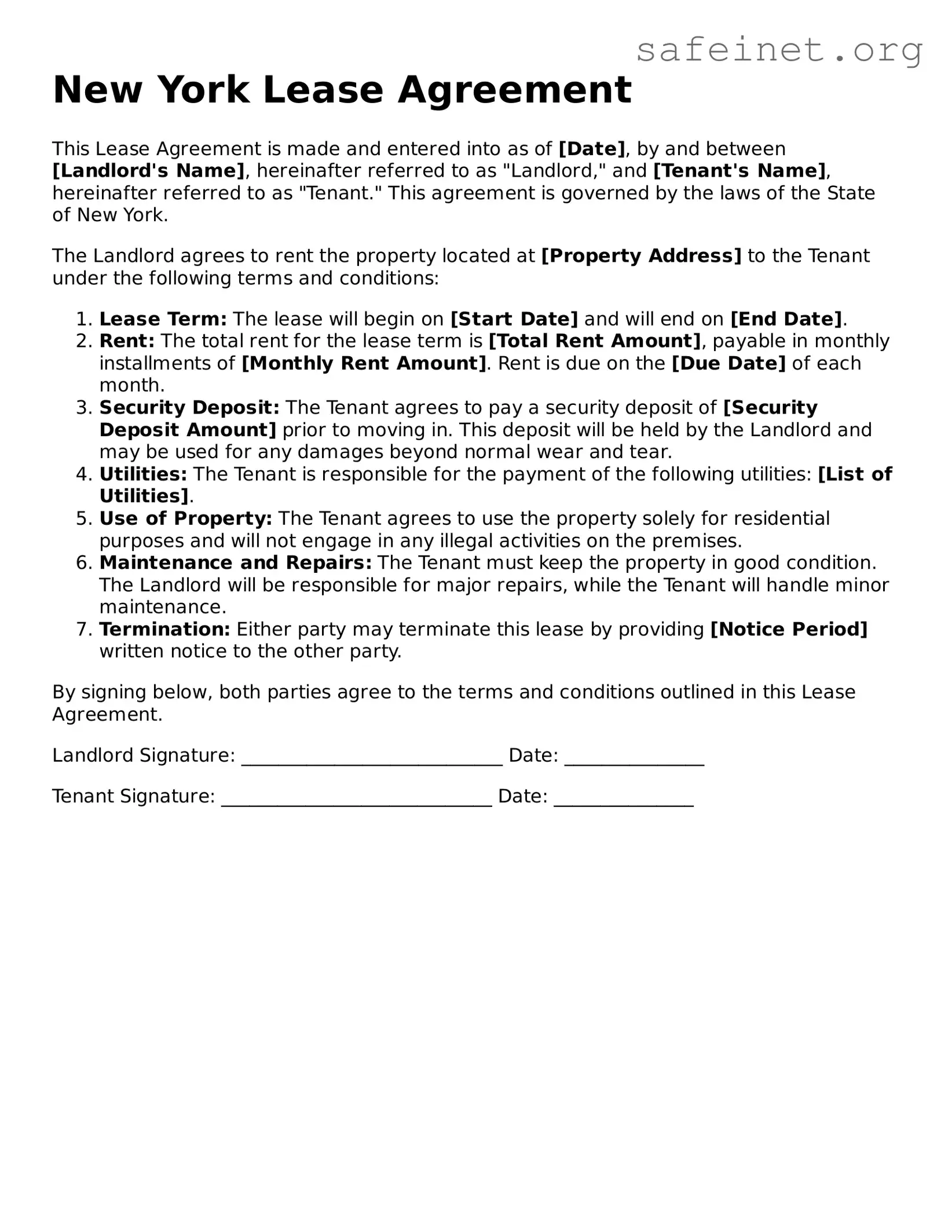
When entering into a rental arrangement in New York, understanding the New York Lease Agreement form is essential for both landlords and tenants. This document outlines the terms of the lease, including the duration, rent amount, and payment schedule, ensuring that both parties have a clear understanding of their responsibilities. It typically includes clauses related to security deposits, maintenance obligations, and rules regarding pets and subletting. Additionally, the lease may specify conditions for terminating the agreement, thus protecting the rights of both parties. By familiarizing themselves with this form, individuals can navigate the rental process more confidently, fostering a respectful and transparent relationship between landlords and tenants.
New York Lease Agreement
This Lease Agreement is made and entered into as of [Date], by and between [Landlord's Name], hereinafter referred to as "Landlord," and [Tenant's Name], hereinafter referred to as "Tenant." This agreement is governed by the laws of the State of New York.
The Landlord agrees to rent the property located at [Property Address] to the Tenant under the following terms and conditions:
By signing below, both parties agree to the terms and conditions outlined in this Lease Agreement.
Landlord Signature: ____________________________ Date: _______________
Tenant Signature: _____________________________ Date: _______________
| Fact Name | Description |
|---|---|
| Governing Law | The New York Lease Agreement is governed by New York State law. |
| Parties Involved | The lease involves a landlord and a tenant. |
| Duration of Lease | The lease can be for a fixed term or month-to-month. |
| Security Deposit | New York law regulates the amount and handling of security deposits. |
| Maintenance Responsibilities | The lease outlines maintenance responsibilities for both parties. |
| Termination Notice | Specific notice periods must be provided for lease termination. |
Filling out the New York Lease Agreement form is a crucial step in establishing the terms of a rental arrangement. Following these steps will help ensure that all necessary information is accurately captured and that both parties understand their rights and responsibilities.
Once the form is completed, both parties should retain a copy for their records. This helps ensure that everyone is on the same page regarding the lease terms and conditions.
What is a New York Lease Agreement?
A New York Lease Agreement is a legally binding document between a landlord and a tenant. It outlines the terms and conditions for renting a residential property in New York. This agreement includes details such as the rental amount, duration of the lease, and responsibilities of both parties.
What should be included in a New York Lease Agreement?
The lease should include essential information such as the names of the landlord and tenant, the address of the rental property, the lease term, the rent amount, payment due dates, security deposit details, and rules regarding pets and maintenance. Clear terms help prevent misunderstandings.
How long is a typical lease in New York?
Leases in New York typically range from one year to two years. However, month-to-month agreements are also common. The duration depends on the agreement between the landlord and tenant. It's important to clarify this before signing.
Can a landlord raise the rent during a lease?
Generally, a landlord cannot raise the rent during the term of a fixed lease unless the lease specifically allows for it. Rent increases are typically addressed at the end of the lease term. However, in a month-to-month lease, the landlord may increase rent with proper notice.
What is a security deposit, and how much can a landlord charge?
A security deposit is a sum of money collected by the landlord to cover potential damages or unpaid rent. In New York, the maximum amount a landlord can charge is typically one month's rent. This deposit must be returned within a specified time after the lease ends, minus any deductions for damages.
What happens if a tenant wants to break the lease early?
If a tenant wishes to break the lease early, they may face penalties. This could include losing the security deposit or having to pay rent until a new tenant is found. It's advisable to review the lease terms and communicate with the landlord to discuss options.
Are verbal agreements enforceable in New York?
While verbal agreements can be enforceable, they are often difficult to prove. It is always recommended to have a written lease agreement that clearly outlines the terms. This provides protection for both the landlord and tenant.
What rights do tenants have under a New York Lease Agreement?
Tenants in New York have several rights, including the right to a habitable living space, protection against discrimination, and the right to privacy. Landlords must provide proper notice before entering the property and cannot retaliate against tenants for exercising their rights.
What should a tenant do if they have a dispute with their landlord?
If a dispute arises, tenants should first try to resolve the issue through direct communication with the landlord. If that fails, they may seek mediation services or legal assistance. Keeping a record of all communications and agreements can be helpful in resolving disputes.
Not Reading the Entire Document: Many individuals rush through the lease agreement without fully understanding its terms. This can lead to surprises later on, such as unexpected fees or rules.
Incorrect Personal Information: Failing to provide accurate names, addresses, or contact information can create confusion. It’s essential to double-check these details to ensure they match official documents.
Missing Signatures: One common oversight is neglecting to sign the lease. Both parties must sign the document for it to be legally binding. Without signatures, the agreement may not hold up in court.
Ignoring Lease Duration: Some people overlook the start and end dates of the lease. Understanding the lease term is crucial, as it determines how long you are committed to the rental.
Overlooking Maintenance Responsibilities: The lease should clearly outline who is responsible for maintenance and repairs. Failing to review this section can lead to disputes later on.
Not Asking Questions: If something is unclear, many people hesitate to ask for clarification. It’s important to communicate with the landlord or property manager to ensure all terms are understood.
When entering into a lease agreement in New York, several additional forms and documents may be necessary to ensure clarity and protection for both landlords and tenants. Each of these documents serves a specific purpose, helping to outline responsibilities, rights, and expectations. Below is a list of commonly used forms that complement the New York Lease Agreement.
Utilizing these forms alongside the New York Lease Agreement can help create a smoother rental experience for both parties. They provide essential documentation that protects the rights and responsibilities of landlords and tenants alike, fostering a respectful and clear relationship.
The Rental Agreement is similar to the New York Lease Agreement in that both documents outline the terms and conditions under which a tenant can occupy a property. While the Lease Agreement typically covers a longer duration, the Rental Agreement may be more flexible, often covering a month-to-month arrangement. Both documents detail the rental amount, payment terms, and responsibilities of both parties, ensuring that expectations are clear from the outset.
The Sublease Agreement is another document that shares similarities with the New York Lease Agreement. This form allows a tenant to rent out their leased property to another individual, with the original lease terms still in effect. Both agreements require the landlord's consent and outline the rights and obligations of all parties involved. Like the Lease Agreement, the Sublease Agreement specifies the rental amount and duration, but it also addresses the relationship between the original tenant and the subtenant.
The Commercial Lease Agreement is akin to the New York Lease Agreement but is specifically designed for business properties. Both documents establish the rental terms, including duration and payment structure. However, the Commercial Lease Agreement often includes additional clauses related to business operations, such as zoning laws and permitted use of the space. Both agreements serve to protect the interests of the landlord and tenant while outlining their respective responsibilities.
The Roommate Agreement is another document that bears resemblance to the New York Lease Agreement. This form is used when multiple tenants share a rental property. Like the Lease Agreement, it details the rental terms, including how rent is split and responsibilities for shared spaces. However, the Roommate Agreement often includes specific provisions about shared utilities, chores, and conflict resolution, addressing the unique dynamics of living with others.
The Lease Extension Agreement is similar to the New York Lease Agreement in that it modifies an existing lease to extend its duration. Both documents maintain the original terms but may include updates or adjustments based on the current rental market or tenant needs. This agreement allows both parties to continue their relationship without the need to create an entirely new lease, providing continuity and stability.
The Lease Termination Agreement is another related document. This form outlines the process for ending a lease before its expiration date. Both the Lease Termination and the New York Lease Agreement include terms that protect the rights of both parties. The Lease Termination Agreement specifies the notice period required and any conditions for returning the security deposit, ensuring a smooth transition for both the landlord and tenant.
Finally, the Rental Application is similar to the New York Lease Agreement in that it is often a preliminary step in the leasing process. While the Lease Agreement formalizes the rental terms, the Rental Application gathers essential information about potential tenants. This document typically includes background checks, employment history, and references, helping landlords make informed decisions about who to rent to. Both documents play crucial roles in establishing a successful landlord-tenant relationship.
When filling out the New York Lease Agreement form, it's important to approach the task with care. Here are five things to keep in mind:
By following these guidelines, you can help ensure a smoother leasing process.
Understanding the New York Lease Agreement form can be challenging. Many people hold misconceptions that can lead to confusion or missteps. Here are five common misconceptions:
In reality, lease agreements can vary significantly based on the property type, location, and specific terms negotiated between the landlord and tenant. The New York Lease Agreement form is tailored to comply with state laws and address local conditions.
While a lease is a binding contract, it can be modified if both parties agree to the changes in writing. This flexibility allows landlords and tenants to adapt to unforeseen circumstances.
This is not accurate. In New York, landlords must return the security deposit within a specific timeframe after the lease ends, minus any deductions for damages or unpaid rent. Tenants should always receive an itemized list of any deductions.
While verbal agreements can be made, they are difficult to enforce. A written lease agreement provides clear terms and protections for both parties, reducing the potential for disputes.
This is a common misunderstanding. Landlords must provide reasonable notice, typically 24 hours, before entering a tenant's unit, except in emergencies. This right to privacy is important for tenant security.
By addressing these misconceptions, tenants and landlords can foster better relationships and ensure a smoother leasing experience.
Filling out and using the New York Lease Agreement form is an important process for both landlords and tenants. Here are some key takeaways to consider:
By paying attention to these details, both landlords and tenants can create a clear and enforceable lease agreement that protects their rights and responsibilities.