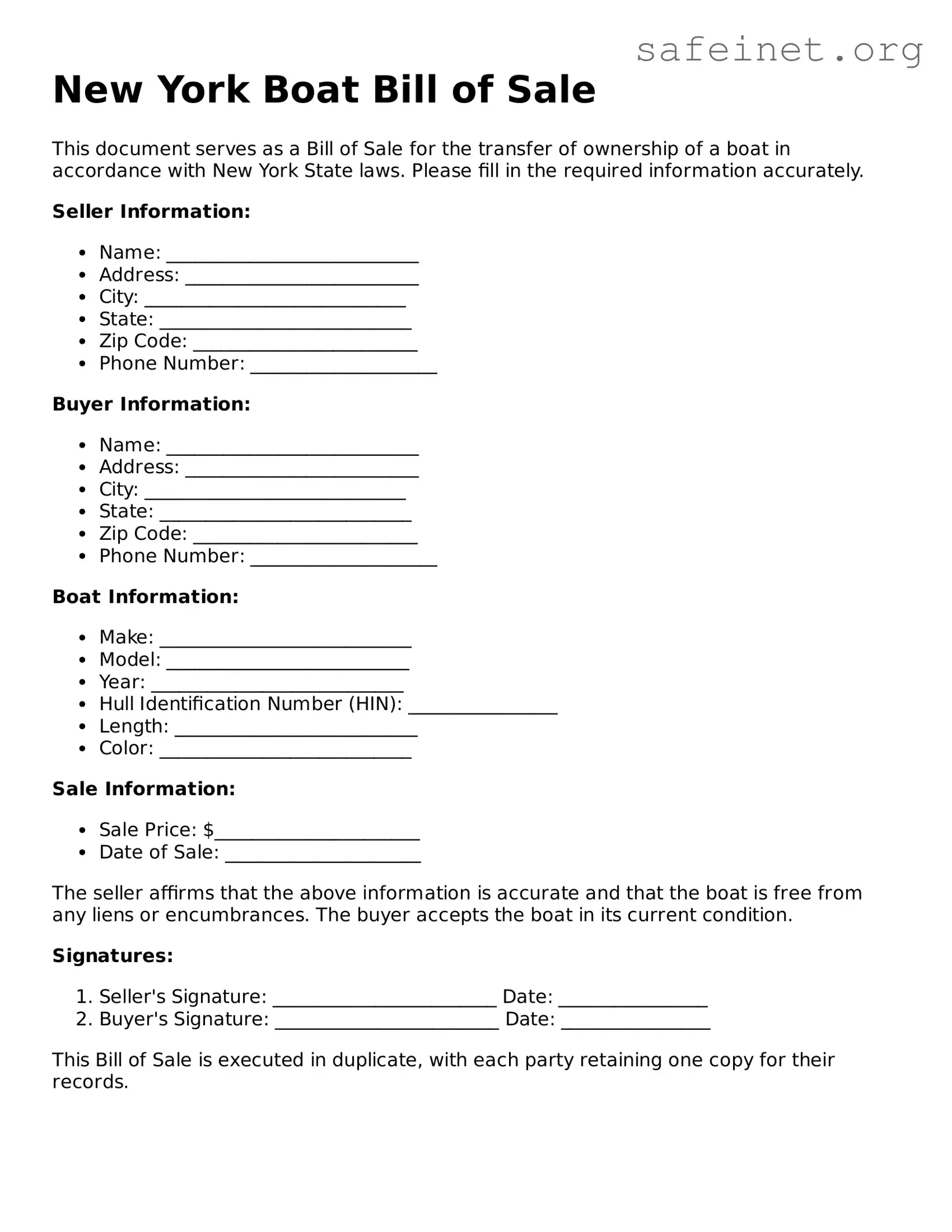
When it comes to buying or selling a boat in New York, having the right paperwork is essential for a smooth transaction. The New York Boat Bill of Sale form serves as a crucial document that outlines the details of the sale, protecting both the buyer and the seller. This form typically includes important information such as the names and addresses of both parties, a description of the boat, including its make, model, and identification number, and the sale price. Additionally, the document often requires signatures from both the buyer and seller, affirming their agreement to the terms of the sale. By providing a clear record of the transaction, this form not only facilitates the transfer of ownership but also helps in future registration and potential resale of the boat. Understanding the components of the Boat Bill of Sale form can empower individuals to navigate the buying and selling process with confidence.
New York Boat Bill of Sale
This document serves as a Bill of Sale for the transfer of ownership of a boat in accordance with New York State laws. Please fill in the required information accurately.
Seller Information:
Buyer Information:
Boat Information:
Sale Information:
The seller affirms that the above information is accurate and that the boat is free from any liens or encumbrances. The buyer accepts the boat in its current condition.
Signatures:
This Bill of Sale is executed in duplicate, with each party retaining one copy for their records.
| Fact Name | Description |
|---|---|
| Purpose | The New York Boat Bill of Sale serves as a legal document to transfer ownership of a boat from one party to another. |
| Governing Law | This document is governed by New York State laws, particularly those related to personal property transfers. |
| Required Information | Essential details include the names and addresses of both the seller and buyer, the boat's make, model, year, and hull identification number. |
| Consideration | The bill of sale should specify the purchase price or other consideration exchanged for the boat. |
| Signatures | Both the seller and buyer must sign the document to validate the transfer of ownership. |
| Notarization | Although not mandatory, notarizing the bill of sale can provide additional legal protection and verification. |
| Use for Registration | The completed bill of sale is often required for registering the boat with the New York State Department of Motor Vehicles. |
Filling out the New York Boat Bill of Sale form is an important step when buying or selling a boat. This document serves as proof of ownership transfer and helps protect both parties involved in the transaction. Once completed, the form will need to be signed and may require additional documentation for registration purposes.
What is a New York Boat Bill of Sale?
A New York Boat Bill of Sale is a legal document that records the transfer of ownership of a boat from one party to another. It serves as proof of purchase and includes essential details such as the buyer and seller's information, the boat's description, and the sale price. This document is crucial for registering the boat with the state and for any future transactions involving the vessel.
Why do I need a Boat Bill of Sale?
The Boat Bill of Sale is necessary for several reasons. First, it provides a written record of the transaction, protecting both the buyer and seller in case of disputes. Second, it is often required by the New York Department of Motor Vehicles (DMV) when registering the boat. Lastly, having a Bill of Sale can help establish ownership, which is important for insurance purposes and in the event of theft.
What information should be included in the Boat Bill of Sale?
A comprehensive Boat Bill of Sale should include the following information: the names and addresses of both the buyer and seller, the date of the sale, a detailed description of the boat (including make, model, year, and hull identification number), the sale price, and any terms or conditions of the sale. Additionally, both parties should sign and date the document to validate the transaction.
Is a notarized signature required for the Boat Bill of Sale?
While a notarized signature is not mandatory for a Boat Bill of Sale in New York, it is highly recommended. Having the document notarized adds an extra layer of authenticity and can help prevent disputes about the transaction. Notarization verifies the identities of the parties involved and confirms that they willingly signed the document.
Can I create my own Boat Bill of Sale?
Yes, you can create your own Boat Bill of Sale. However, it is essential to ensure that it includes all the necessary information and complies with New York state requirements. Many templates are available online, which can guide you in drafting a comprehensive and legally sound document. Make sure to customize it to fit your specific transaction.
What if the boat has a loan or lien on it?
If there is a loan or lien on the boat, it is crucial to resolve it before completing the sale. The seller should contact the lender to determine the payoff amount and ensure that the lien is released upon payment. The Boat Bill of Sale should indicate that the seller has the right to sell the boat free of any encumbrances. Buyers should always verify that the title is clear before finalizing the purchase.
Do I need to file the Boat Bill of Sale with the state?
In New York, you do not need to file the Boat Bill of Sale with the state. However, it is essential to keep a copy for your records. When registering the boat, you will need to present the Bill of Sale to the DMV, along with any other required documents, such as proof of identification and previous registration, if applicable.
How long should I keep the Boat Bill of Sale?
It is advisable to keep the Boat Bill of Sale for as long as you own the boat and for several years after selling it. This document serves as proof of ownership and can be useful for tax purposes or if any disputes arise regarding the sale. Keeping a well-organized record of all boat-related documents can save you time and stress in the future.
Incomplete Information: One common mistake is failing to provide all required details. Ensure you fill out the seller's and buyer's names, addresses, and contact information completely.
Incorrect Boat Description: Accurately describe the boat. Include the make, model, year, and hull identification number (HIN). Missing or incorrect details can lead to confusion.
Omitting the Sale Price: Always include the sale price. Leaving this blank can create issues later, especially for tax purposes.
Not Signing the Document: Both the seller and buyer must sign the form. A missing signature can render the document invalid.
Failure to Date the Form: Forgetting to include the date of the sale can complicate the transaction. Always provide the date to establish when the sale occurred.
Not Keeping a Copy: After filling out the form, it’s essential to keep a copy for your records. This can help resolve disputes in the future.
Ignoring State Requirements: Each state may have specific requirements for boat sales. Make sure you are aware of New York's regulations to avoid any legal issues.
When purchasing or selling a boat in New York, several documents may accompany the Boat Bill of Sale form. These documents serve to clarify ownership, ensure compliance with state regulations, and protect both parties involved in the transaction. Below is a list of common forms and documents associated with the Boat Bill of Sale.
Each of these documents plays a crucial role in ensuring a smooth and legally compliant transaction when buying or selling a boat in New York. It is advisable to gather and review all necessary paperwork to avoid potential issues in the future.
The New York Boat Bill of Sale form shares similarities with the general Bill of Sale, which is a legal document used to transfer ownership of personal property. Like the Boat Bill of Sale, a general Bill of Sale outlines the details of the transaction, including the buyer and seller's names, the description of the item, and the sale price. Both documents serve as proof of ownership and can protect both parties in case of disputes. The general Bill of Sale is versatile and can apply to various types of property, making it a foundational document in property transactions.
Another document similar to the Boat Bill of Sale is the Vehicle Bill of Sale. This form is specifically used for the transfer of motor vehicles. Much like the Boat Bill of Sale, it includes essential details such as the vehicle's make, model, year, and Vehicle Identification Number (VIN). Both documents require the signatures of the buyer and seller to validate the transaction. They also serve as evidence of ownership transfer, which is crucial for registering the vehicle or boat with the appropriate authorities.
The Motorcycle Bill of Sale is yet another document akin to the Boat Bill of Sale. It is designed for the sale of motorcycles and includes similar components, such as the buyer and seller's information, a description of the motorcycle, and the sale price. Both documents provide legal protection for both parties and help to establish a clear record of the transaction. In essence, they both facilitate the transfer of ownership and can be used for registration purposes.
The ATV Bill of Sale also parallels the Boat Bill of Sale in its purpose and structure. This document is used for all-terrain vehicles and includes pertinent details like the ATV's make, model, and identification number. Just like the Boat Bill of Sale, it requires signatures from both the buyer and seller. This ensures that both parties acknowledge the transaction and have a record of the sale, which can be crucial for future ownership claims or registrations.
The Snowmobile Bill of Sale serves a similar function for snowmobiles, mirroring the Boat Bill of Sale's format and purpose. It contains vital information about the snowmobile, such as its make, model, and engine number. Both documents emphasize the importance of clearly defining the terms of the sale and ensuring that ownership is legally transferred. The signatures of both parties validate the transaction, providing a safeguard against potential disputes.
The Trailer Bill of Sale is another document that aligns closely with the Boat Bill of Sale. It is used for the sale of trailers and includes details like the trailer's description and identification number. Like the Boat Bill of Sale, it requires both parties to sign, thereby confirming the transfer of ownership. This documentation is essential for registration and helps to prevent misunderstandings about ownership rights.
The Aircraft Bill of Sale also shares similarities with the Boat Bill of Sale, particularly in its role in transferring ownership. This document is specifically for aircraft and includes information such as the aircraft's make, model, and registration number. Both documents serve as legal proof of ownership transfer, and they require signatures from both the buyer and seller to be valid. This ensures clarity and protection for both parties involved in the transaction.
The Livestock Bill of Sale is another document that bears resemblance to the Boat Bill of Sale. It is used for the sale of livestock and includes details about the animals being sold, such as their breed and identification. Like the Boat Bill of Sale, it serves as a legal record of the transaction and requires signatures from both parties. This document helps to establish ownership rights and can be important for future sales or transfers.
Lastly, the Personal Property Bill of Sale is a broad document that can encompass various types of personal property transactions, including boats. Similar to the Boat Bill of Sale, it includes essential details about the item being sold, the buyer and seller's information, and the sale price. Both documents aim to provide a clear record of the transaction, ensuring that ownership is properly transferred and protecting the interests of both parties involved.
When filling out the New York Boat Bill of Sale form, attention to detail is crucial. Here are some important do's and don'ts to consider:
The New York Boat Bill of Sale form is often surrounded by misconceptions. Below are four common misunderstandings regarding this document.
This is incorrect. The Boat Bill of Sale is required for both new and used boats. It serves as proof of ownership transfer, regardless of the boat's age.
While notarization can provide additional legal protection, it is not a requirement for the Boat Bill of Sale in New York. The document can be valid with just the signatures of the buyer and seller.
This is misleading. The Boat Bill of Sale does not need to be filed with the state. However, both parties should keep a copy for their records.
In fact, the form should include important details such as the boat's make, model, year, and hull identification number. This information is crucial for accurately documenting the sale.
When it comes to buying or selling a boat in New York, the Boat Bill of Sale form is an essential document. Here are some key takeaways to keep in mind while filling it out and using it:
By following these guidelines, both buyers and sellers can ensure a smooth transaction when it comes to boat ownership in New York.