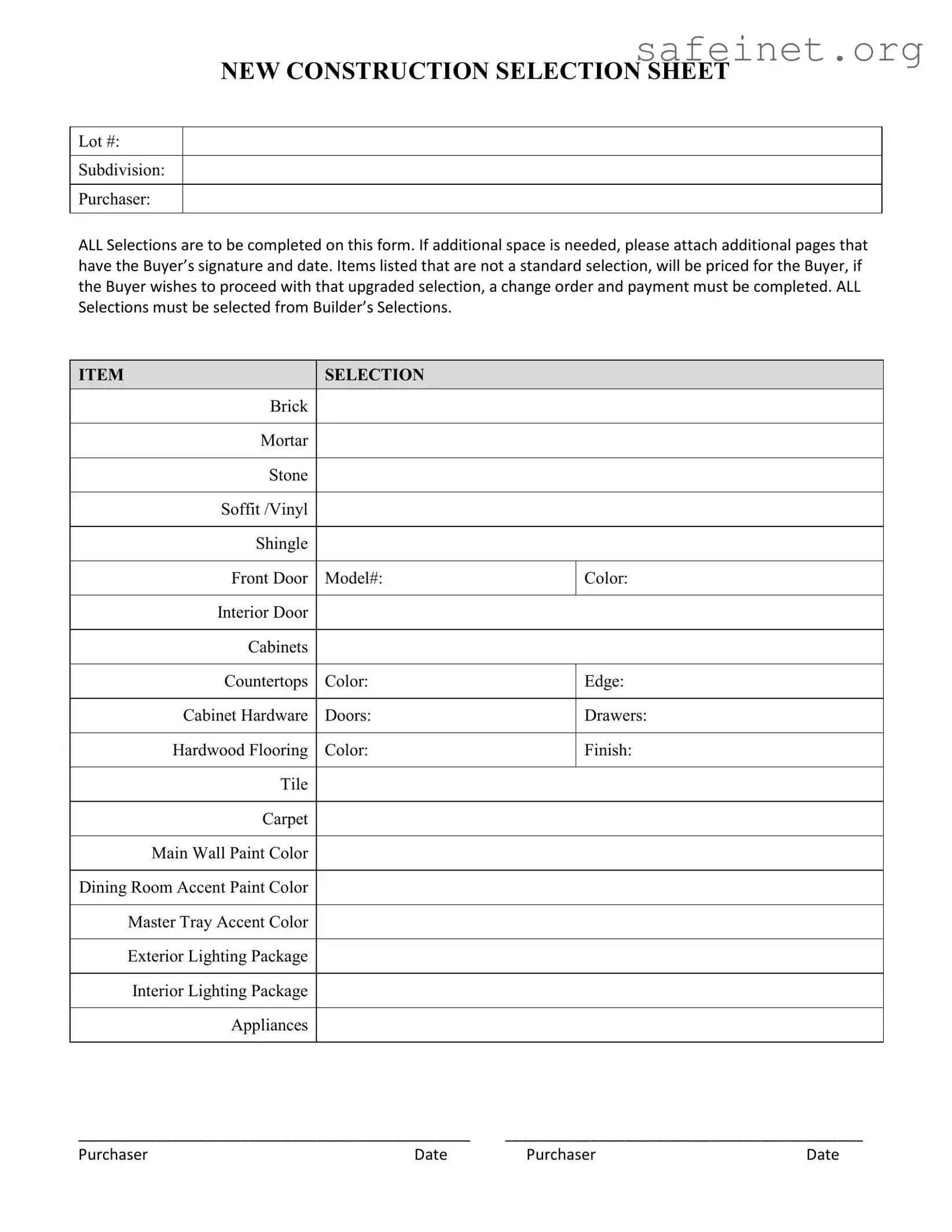
The New Construction Selection Sheet form serves as a vital tool for homebuyers embarking on the journey of building a new home. This comprehensive document captures all the essential selections that a purchaser must make during the construction process. It includes a variety of categories, such as exterior finishes like brick and stone, interior features like cabinetry and flooring, and essential components like appliances and lighting packages. Each item listed requires careful consideration, as selections must be made from the builder’s predefined options. If a buyer opts for upgrades that are not included as standard selections, additional pricing will apply, and proper documentation through a change order will be necessary. The form emphasizes the importance of clarity and organization, allowing buyers to specify their preferences while ensuring that all choices are recorded accurately. Spaces are provided for signatures and dates, underscoring the commitment of both parties to the selections made. This form not only streamlines the decision-making process but also ensures that the construction of a new home aligns closely with the buyer's vision and expectations.

NEW CONSTRUCTION SELECTION SHEET
Lot #:
Subdivision:
Purchaser:
ALL Selections are to be completed on this form. If additional space is needed, please attach additional pages that have the Buyer’s signature and date. Items listed that are not a standard selection, will be priced for the Buyer, if the Buyer wishes to proceed with that upgraded selection, a change order and payment must be completed. ALL Selections must be selected from Builder’s Selections.
|
ITEM |
SELECTION |
|
|
|
||
|
|
|
|
|
Brick |
|
|
|
|
|
|
|
Mortar |
|
|
|
|
|
|
|
Stone |
|
|
|
|
|
|
|
Soffit /Vinyl |
|
|
|
|
|
|
|
Shingle |
|
|
|
|
|
|
|
Front Door |
Model#: |
Color: |
|
|
|
|
|
Interior Door |
|
|
|
|
|
|
|
Cabinets |
|
|
|
|
|
|
|
Countertops |
Color: |
Edge: |
|
|
|
|
|
Cabinet Hardware |
Doors: |
Drawers: |
|
|
|
|
|
Hardwood Flooring |
Color: |
Finish: |
|
|
|
|
|
Tile |
|
|
|
|
|
|
|
Carpet |
|
|
|
|
|
|
|
Main Wall Paint Color |
|
|
|
|
|
|
|
Dining Room Accent Paint Color |
|
|
|
|
|
|
|
Master Tray Accent Color |
|
|
|
|
|
|
|
Exterior Lighting Package |
|
|
|
|
|
|
|
Interior Lighting Package |
|
|
|
|
|
|
|
Appliances |
|
|
|
|
|
|
______________________________________________ |
__________________________________________ |
||
Purchaser |
Date |
Purchaser |
Date |
| Fact Name | Description |
|---|---|
| Form Purpose | The New Construction Selection Sheet is used to document selections made by the purchaser for a new construction home. |
| Lot Information | Each form includes a designated Lot number and Subdivision name to identify the specific property. |
| Purchaser Details | The form requires the name of the purchaser to ensure that all selections are accurately attributed. |
| Selection Process | All selections must be completed on the form, with additional pages allowed if more space is needed. |
| Upgrade Options | Items not listed as standard selections will be priced for the buyer, requiring a change order for upgrades. |
| Builder’s Selections | All selections must come from the builder’s approved list to ensure consistency and quality. |
| Signature Requirement | The form must be signed and dated by the purchaser to validate the selections made. |
| Governing Laws | For state-specific forms, local real estate laws govern the use and requirements of this selection sheet. |
| Included Items | The form includes various categories such as flooring, paint colors, and appliances, allowing for detailed customization. |
Once you have gathered all necessary information, you are ready to fill out the New Construction Selection Sheet form. This form is essential for making your selections clear and organized. Ensure that you have the correct details at hand, as this will streamline the process of customizing your new home.
After completing all selections, both you and any co-purchaser should sign and date the form at the bottom. If you need more space for additional selections, attach extra pages with your signatures and dates. This ensures that your choices are documented accurately and thoroughly.
What is the purpose of the New Construction Selection Sheet form?
The New Construction Selection Sheet form is designed to help purchasers make selections for various elements of their new home. This includes items such as flooring, cabinetry, and paint colors. It ensures that all choices are documented and allows for any necessary upgrades to be processed through a change order.
How do I complete the form?
To complete the form, fill in your lot number, subdivision, and your name as the purchaser. Then, make your selections from the provided list of items. If you need more space, attach additional pages that include your signature and date. Ensure that all selections are made from the Builder’s Selections.
What if I want to choose an item that is not listed as a standard selection?
If you wish to select an item that is not a standard option, the builder will provide a price for that upgrade. If you decide to proceed with that selection, a change order and payment will be required to finalize the choice.
Are there any limitations on the selections I can make?
Yes, all selections must be made from the Builder’s Selections. This ensures that the materials and finishes are compatible with the construction process and meet quality standards.
What happens if I need to make changes after submitting the form?
Once you submit the form, any changes will require a new change order. It is important to communicate any changes as soon as possible to avoid delays in the construction process.
Do I need to sign the form?
Yes, you must sign the form to confirm your selections. If you use additional pages, those must also include your signature and date to be valid.
What should I do if I have questions about my selections?
If you have questions regarding your selections or the form, it is best to contact your builder or sales representative. They can provide clarification and assist you in making informed decisions.
Neglecting to fill out all required fields: The form requires specific information such as the lot number, subdivision, and purchaser details. Omitting any of these can lead to delays in processing.
Failing to use the Builder’s Selections: All selections must come from the Builder’s list. Choosing items outside this list can complicate the order and require additional paperwork.
Not signing and dating the form: Each purchaser must sign and date the form. Without these signatures, the selections may not be considered valid.
Ignoring the need for change orders: If a buyer wishes to upgrade to a non-standard selection, they must complete a change order and payment. Failing to do this can lead to misunderstandings and additional costs.
Overlooking the need for additional pages: If there isn’t enough space on the form for all selections, additional pages must be attached. Each page should also include the buyer’s signature and date to ensure it is recognized.
Not verifying color and model numbers: It is crucial to double-check that all color choices and model numbers are correct. Errors in this area can result in receiving the wrong items.
The New Construction Selection Sheet form serves as a vital tool in the home-building process, allowing buyers to outline their preferences for various elements of their new home. To complement this form, several other documents are commonly utilized to ensure a smooth and organized construction experience. Each of these documents plays a unique role in the overall process, helping to clarify expectations and formalize agreements.
Each of these documents plays a crucial role in the new construction process, ensuring that both buyers and builders are on the same page. By understanding these forms, buyers can navigate their home-building journey with greater confidence and clarity.
The New Construction Selection Sheet form shares similarities with the Purchase Agreement. Both documents serve as essential components in the home buying process. The Purchase Agreement outlines the terms of the sale, including price and contingencies, while the Selection Sheet focuses specifically on the choices made by the buyer regarding finishes and upgrades. Both documents require the buyer's signature and date, ensuring that the buyer acknowledges and agrees to the selections and terms laid out in each respective form.
Another document akin to the New Construction Selection Sheet is the Change Order form. This form is utilized when a buyer decides to make modifications to the original selections after the initial agreement has been signed. Just like the Selection Sheet, the Change Order details specific items and their associated costs. It also requires the buyer's signature, confirming their approval of the additional expenses incurred by these changes.
The Specification Sheet is another document that resembles the New Construction Selection Sheet. It typically provides detailed descriptions of the materials and finishes to be used in the construction of the home. While the Selection Sheet allows buyers to make choices, the Specification Sheet presents the standard offerings and can help buyers understand what is included in their selections. Both documents are crucial for ensuring clarity and mutual understanding between the builder and the buyer.
The Design Agreement is also similar in nature. This document outlines the design elements agreed upon by the buyer and builder, including architectural features and aesthetic choices. Like the Selection Sheet, the Design Agreement requires the buyer's input and approval, ensuring that their preferences are documented and acknowledged. Both documents work together to create a cohesive vision for the new home.
The Bid Proposal can be compared to the New Construction Selection Sheet as well. The Bid Proposal outlines the estimated costs for various aspects of the construction project, including labor and materials. While the Selection Sheet focuses on specific selections made by the buyer, the Bid Proposal provides a broader overview of the financial implications of those choices. Both documents are integral to the budgeting process for the buyer and help facilitate informed decision-making.
Finally, the Homeowner's Manual bears some resemblance to the New Construction Selection Sheet. This manual typically includes information about the home’s features, maintenance tips, and warranty details. While the Selection Sheet focuses on the initial choices made during the construction process, the Homeowner's Manual serves as a guide for the buyer once they take possession of the home. Both documents aim to enhance the buyer's experience and understanding of their new property.
When filling out the New Construction Selection Sheet form, it’s important to approach the process thoughtfully. Here’s a list of dos and don’ts to guide you:
By following these guidelines, you can ensure a smoother process in your new construction journey.
Understanding the New Construction Selection Sheet form is crucial for a smooth home-building experience. However, several misconceptions can lead to confusion. Here are eight common misunderstandings:
Addressing these misconceptions can help streamline the process and ensure that all parties are on the same page. It is essential to approach the New Construction Selection Sheet with clarity and attention to detail.
When completing the New Construction Selection Sheet form, it is essential to keep several key points in mind to ensure a smooth process. Below are important takeaways to consider: