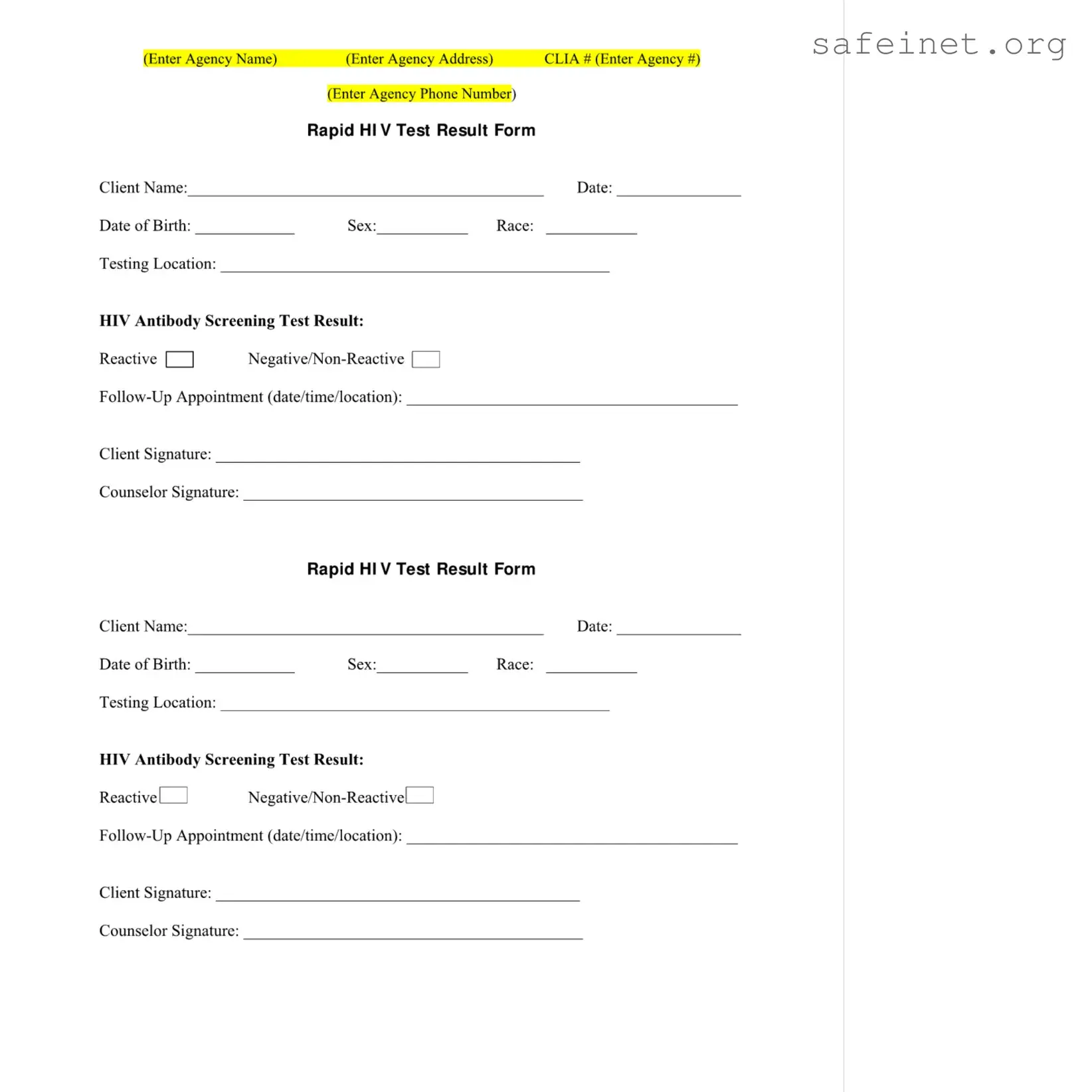
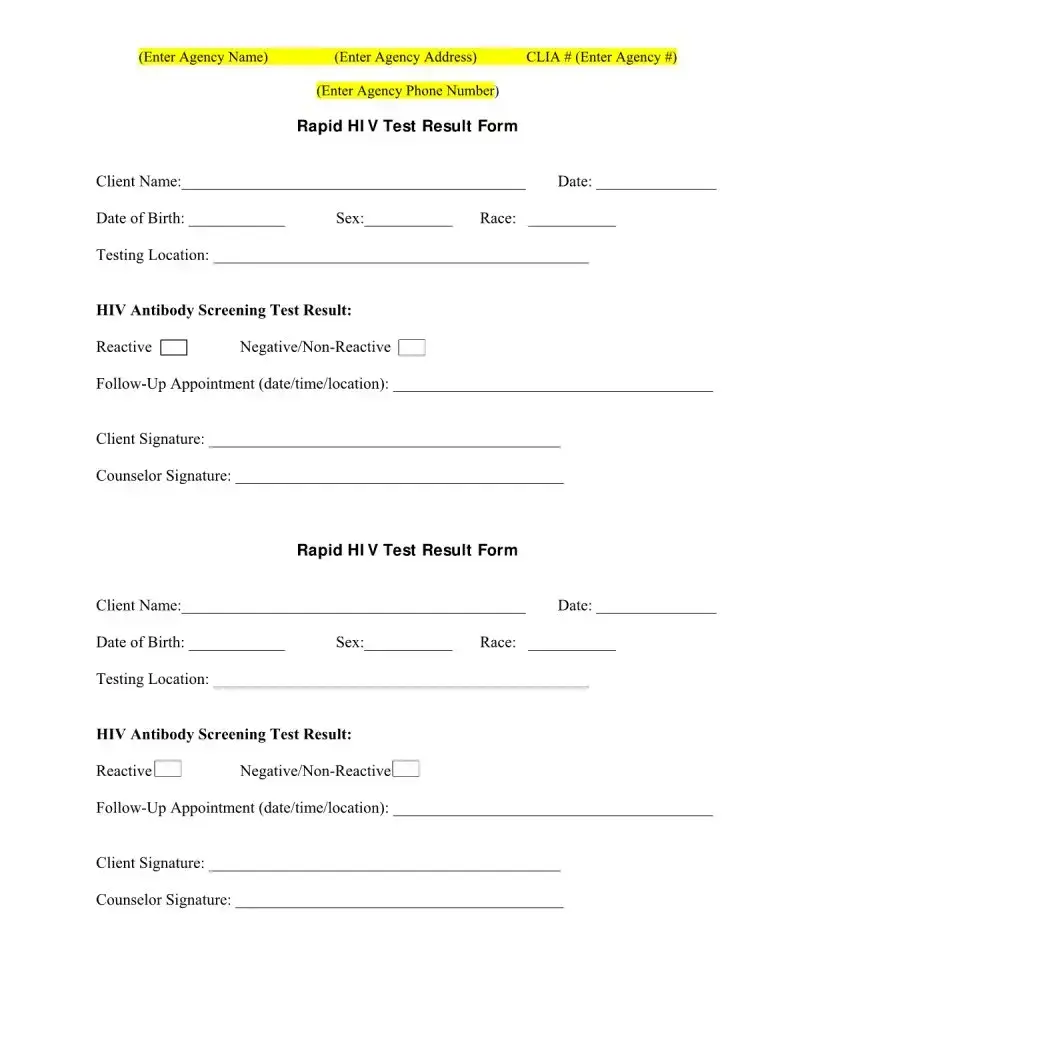
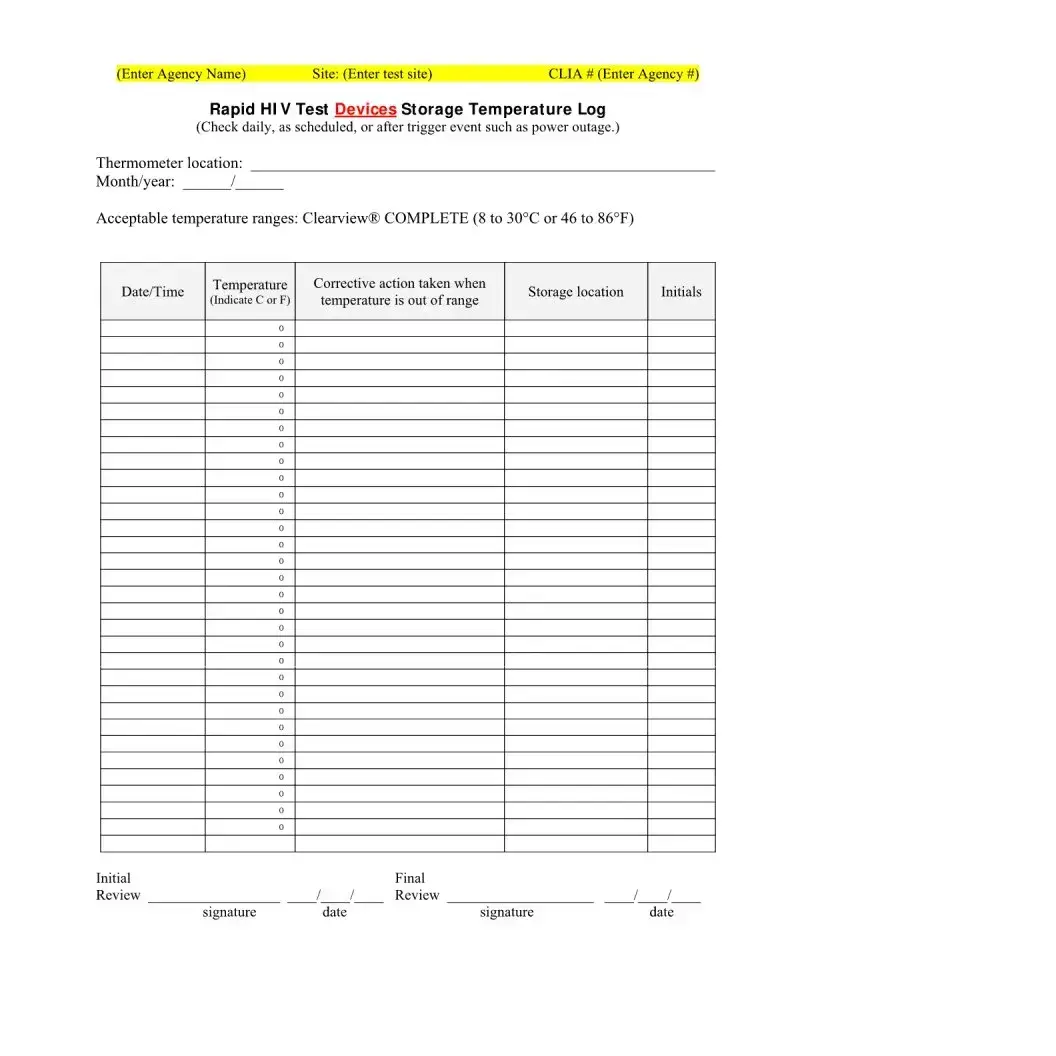
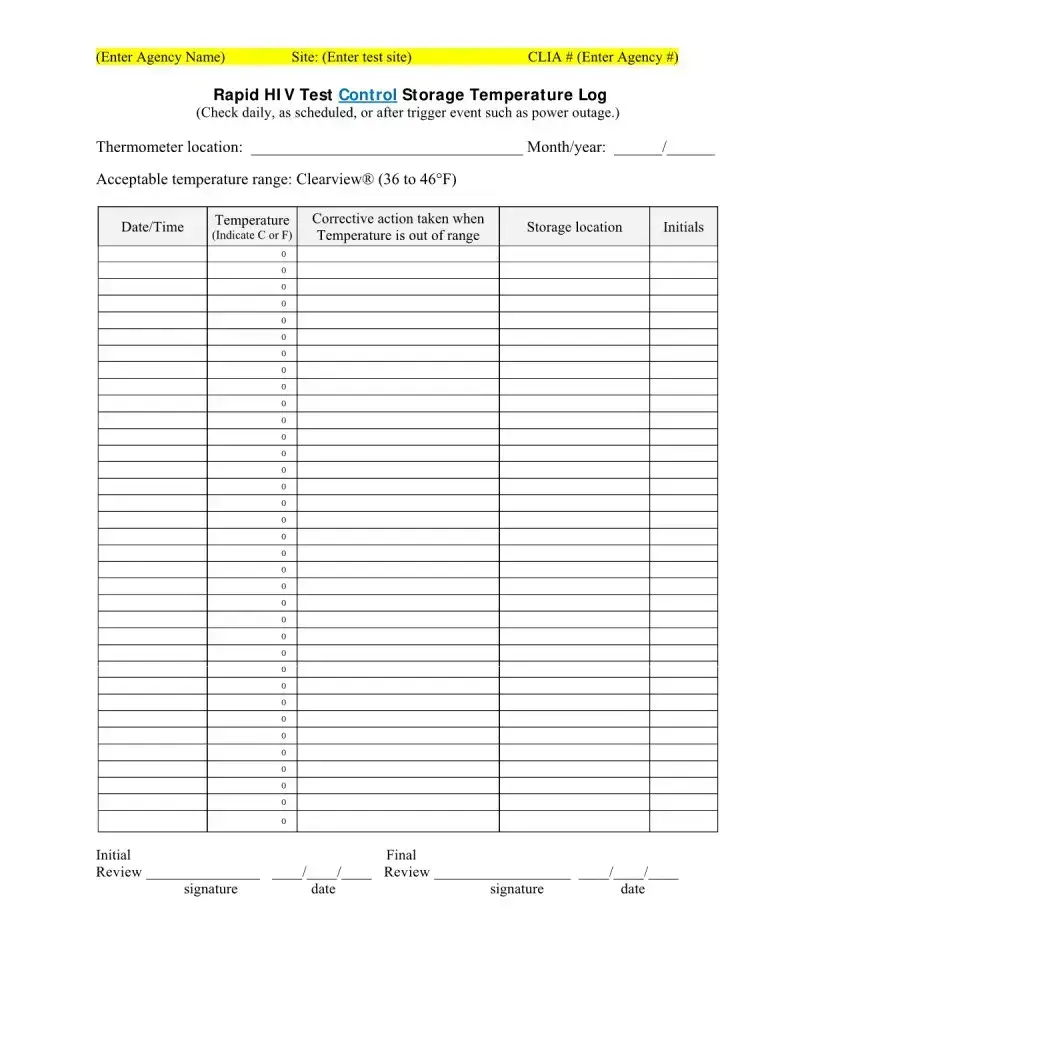
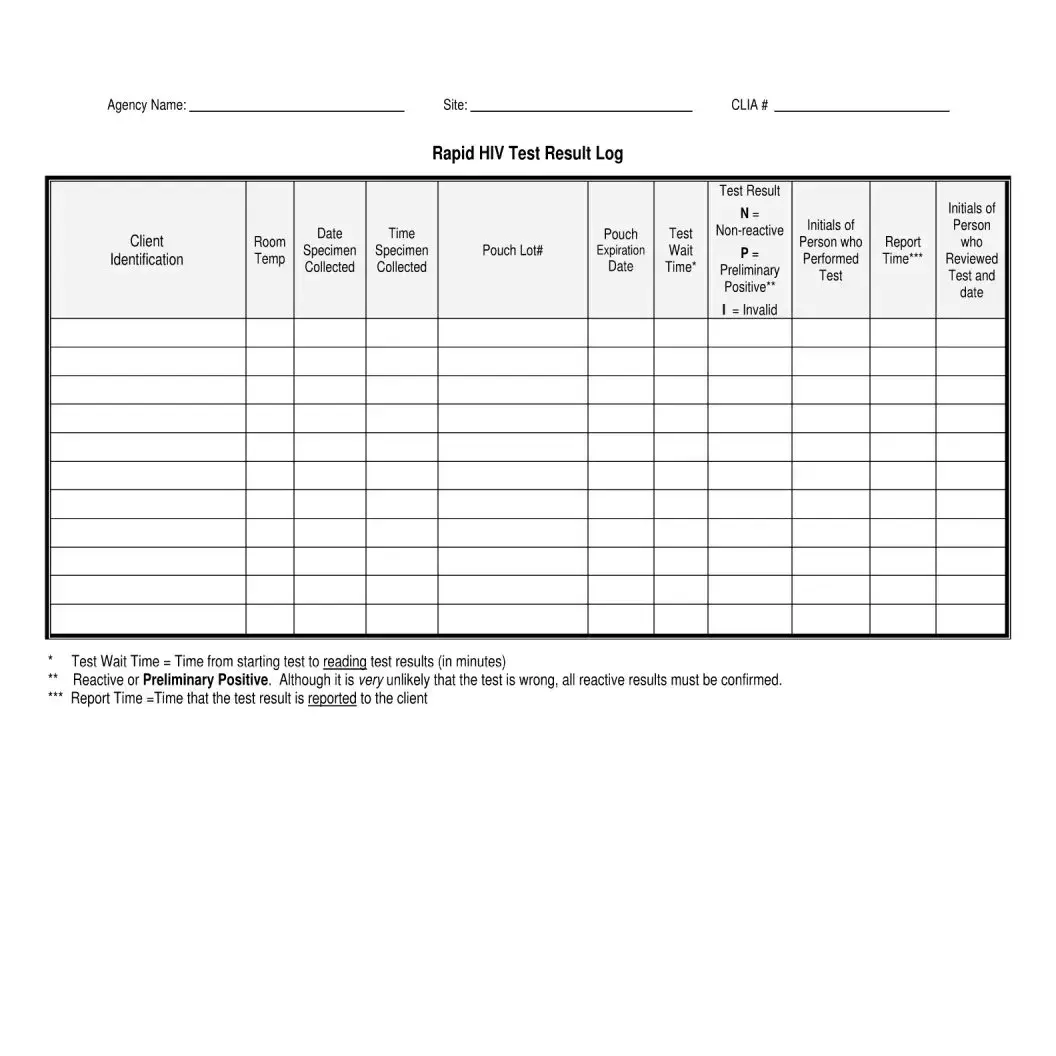
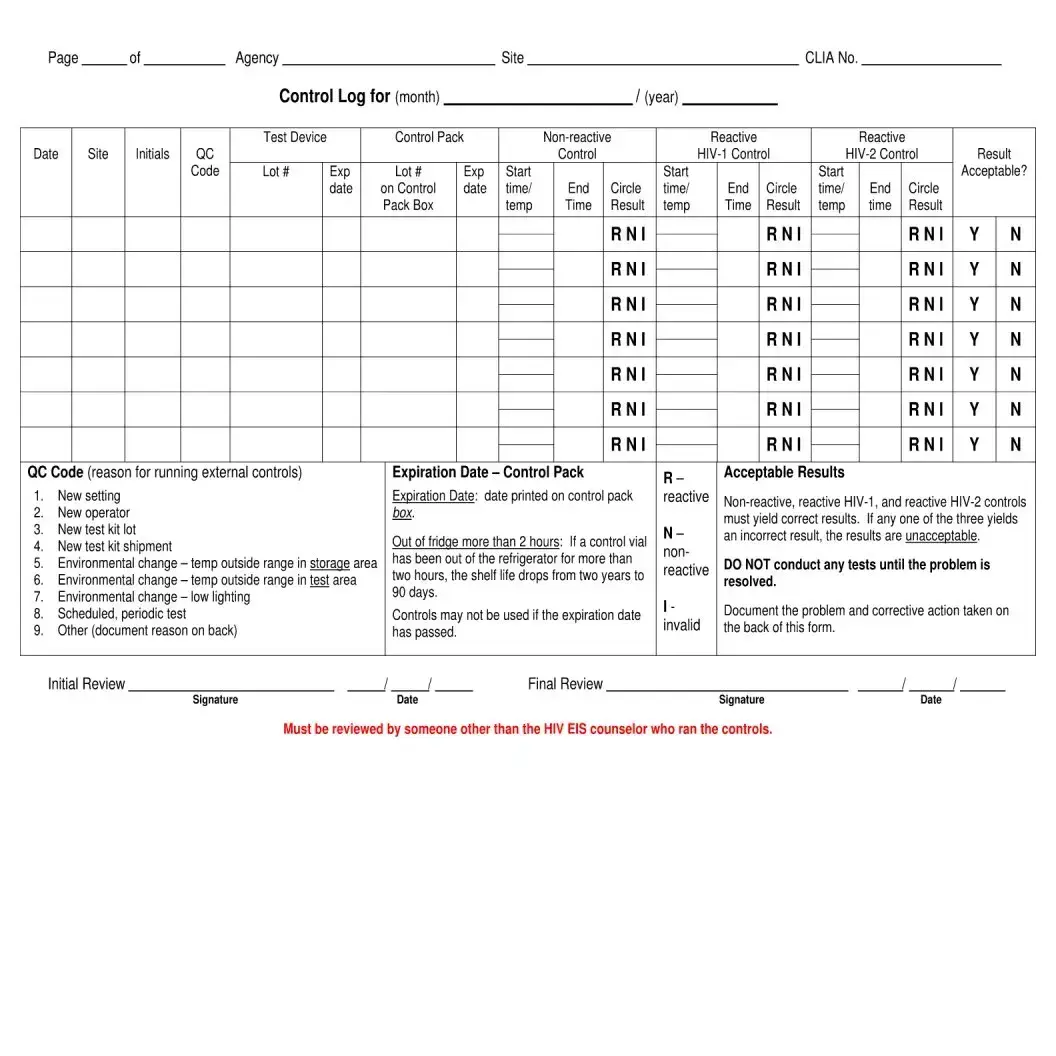
Receiving a negative HIV test result can bring a sense of relief and clarity. The Negative HIV Test form is an essential document that captures important information about the testing process and the individual being tested. This form includes the client's name, date of birth, race, and the location where the test was conducted. It clearly indicates the HIV antibody screening test result, which can either be reactive or non-reactive. Additionally, the form provides space for follow-up appointments, ensuring that clients have access to continued support and care. Both the client and the counselor must sign the form, confirming the results and the counseling provided. The document also contains storage temperature logs for the testing devices, which help maintain the integrity of the tests. Proper documentation is crucial for both the client’s health and the agency’s compliance with regulations. Understanding the elements of this form can empower individuals to take charge of their health and make informed decisions moving forward.

| Fact Name | Details |
|---|---|
| Client Information | The form requires client details such as name, date of birth, sex, and race to ensure accurate identification and record-keeping. |
| Testing Location | The form must specify the testing location, which helps in tracking where the test was conducted and maintaining compliance with local regulations. |
| Test Result Categories | The HIV Antibody Screening Test Result section includes options for Reactive and Negative/Non-Reactive results, guiding follow-up actions based on the outcome. |
| Follow-Up Appointment | A section for scheduling follow-up appointments is included, ensuring clients receive necessary support and further testing if needed. |
| Governing Laws | State-specific forms may be governed by laws such as the Health Insurance Portability and Accountability Act (HIPAA) and local public health regulations, ensuring client confidentiality and accurate reporting. |
Once you have gathered the necessary information, you can proceed to fill out the Negative HIV Test form. This form requires specific details about the client, the testing location, and the test results. It is important to ensure that all sections are accurately completed to facilitate proper documentation and follow-up care.
What is a Negative HIV Test Form?
The Negative HIV Test Form is an official document that indicates a person's result from an HIV antibody screening test. When someone tests negative or non-reactive, it means that the test did not detect the HIV antibodies in their blood. This form typically includes essential information such as the client's name, date of birth, race, testing location, and the date of the test. Additionally, it may outline the need for a follow-up appointment to discuss the results and any further steps, if necessary.
How is the Negative HIV Test Form used?
This form serves multiple purposes. First, it provides the client with a record of their test results, which can be crucial for personal health management. Second, it acts as a communication tool between the testing agency and the client, ensuring that both parties are aware of the results. Finally, it is often used for documentation and reporting purposes within healthcare systems, helping to track testing outcomes and improve public health initiatives.
What should I do if my test result is negative?
If you receive a negative HIV test result, it is essential to continue monitoring your health and practicing safe behaviors to reduce the risk of HIV transmission. This may include regular testing, especially if you engage in high-risk activities or have multiple partners. Additionally, consider discussing your results with a healthcare provider who can offer guidance on maintaining overall sexual health and may suggest routine screenings for other sexually transmitted infections (STIs).
Can a negative result be wrong?
While it is uncommon for a negative HIV test result to be inaccurate, it is not impossible. Factors such as the timing of the test in relation to potential exposure to HIV can affect the accuracy of results. If a person has been exposed to HIV recently, it may take time for the body to produce detectable antibodies, leading to a false negative result. Therefore, if you have concerns or believe you may have been exposed to HIV, consult a healthcare professional for advice on retesting and further evaluation.
Incomplete Client Information: Failing to fill out the client's name, date of birth, or testing location can lead to confusion and miscommunication.
Incorrect Date Entries: Entering the wrong date on the form can complicate record-keeping and follow-up appointments.
Missing Signatures: Not obtaining the necessary signatures from both the client and the counselor can invalidate the test results.
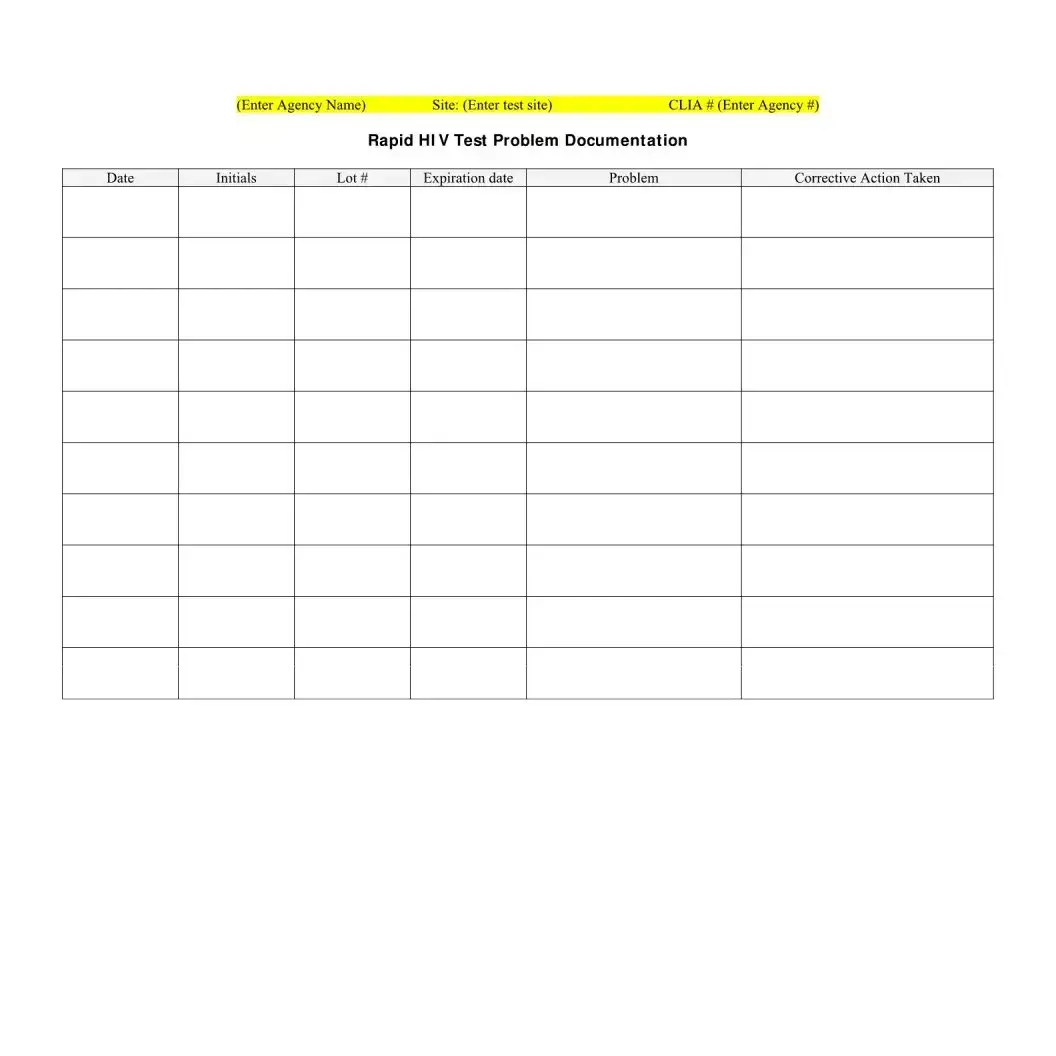
Improper Temperature Logging: Neglecting to check and record the storage temperatures for test devices can affect test accuracy.
Incorrect Test Result Marking: Mislabeling the test result as reactive instead of negative or vice versa can lead to unnecessary anxiety or incorrect follow-up actions.
Failure to Schedule Follow-Up: Not including a follow-up appointment can hinder proper client care and necessary next steps.
Inaccurate Temperature Range Checks: Not adhering to the acceptable temperature ranges can compromise the integrity of the test.
Omitting Test Wait Time: Failing to document the time taken to read test results can create discrepancies in testing protocols.
Not Using Correct CLIA Number: Entering an incorrect CLIA number can lead to regulatory issues and affect the validity of the test.
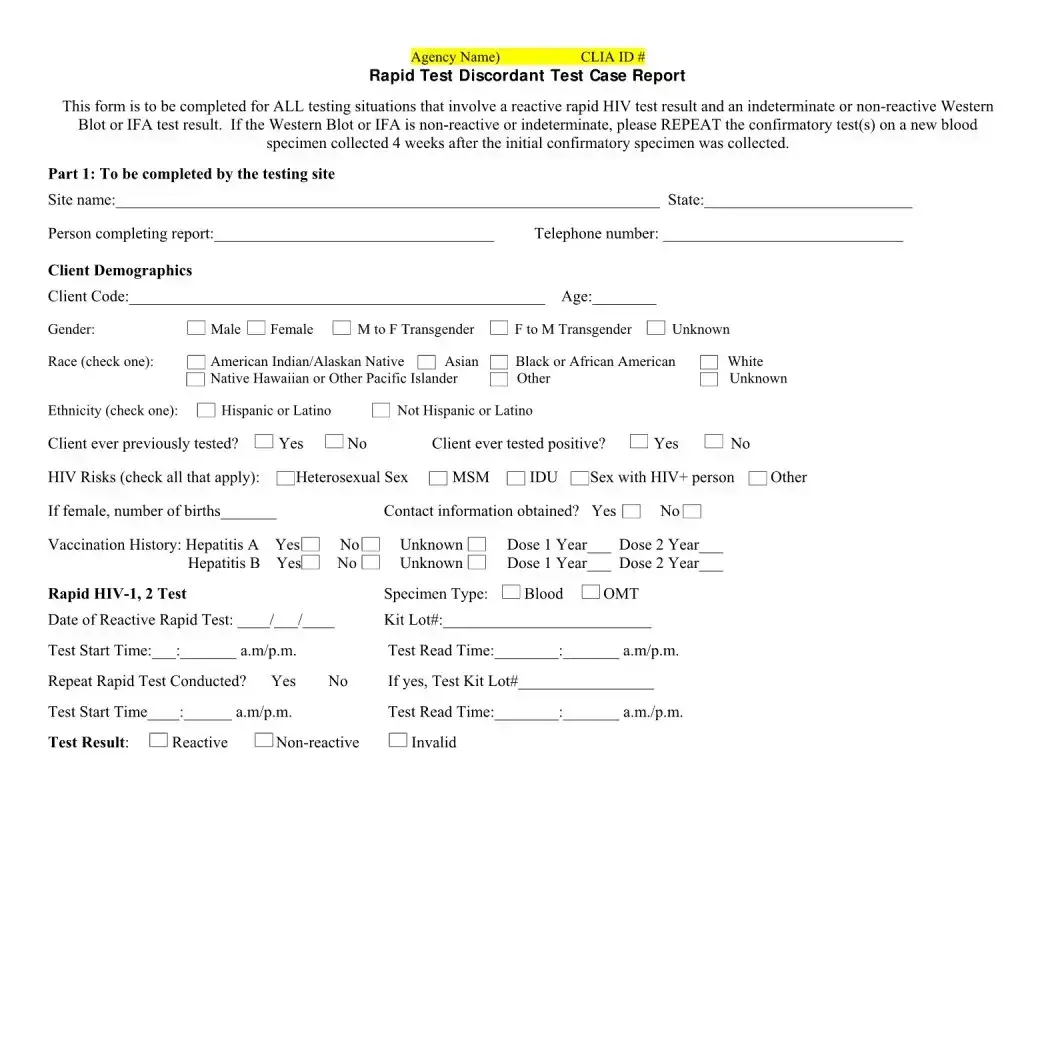
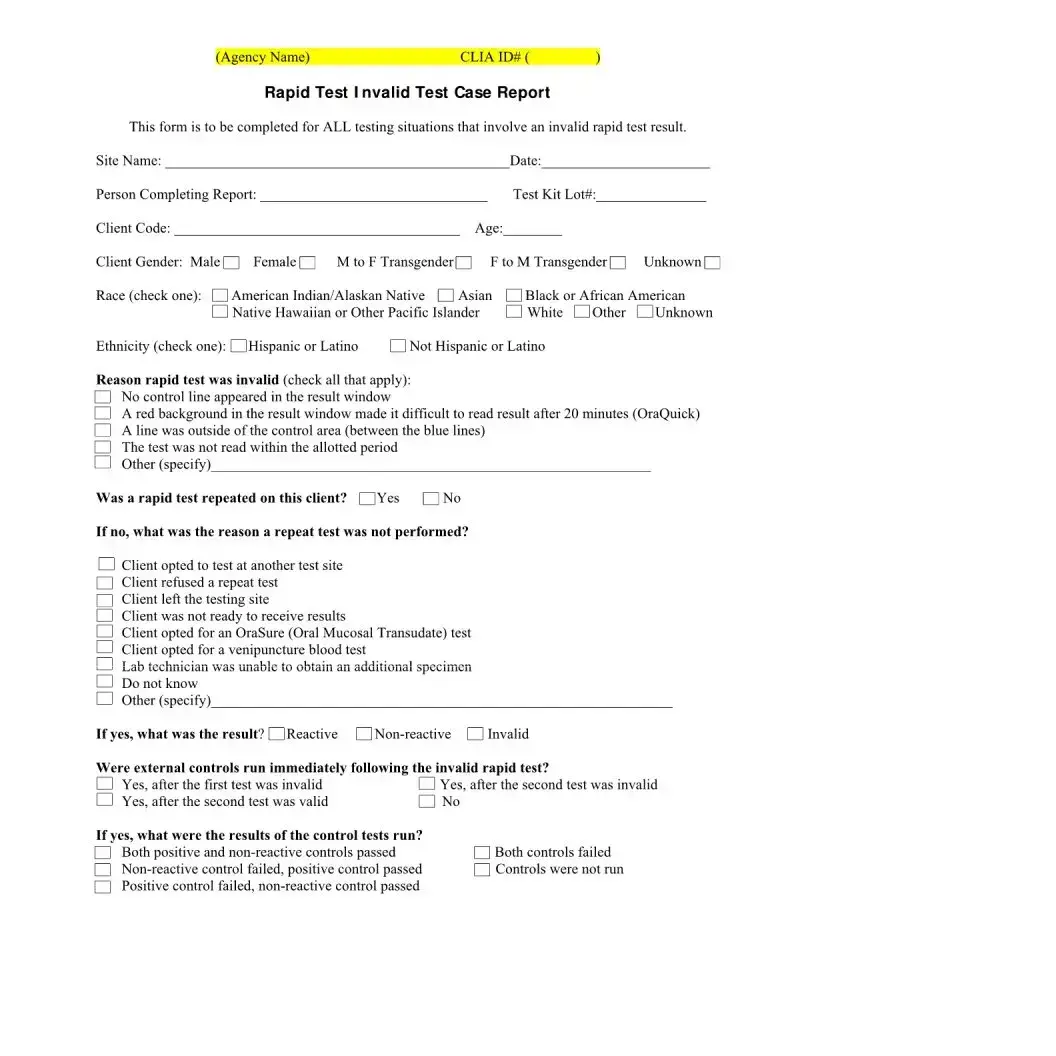
When someone receives a negative HIV test result, there are often other important documents involved in the testing process. These forms help ensure that the testing is done properly and that all necessary information is recorded. Below are a few key documents that are commonly used alongside the Negative HIV Test form.
These documents work together to create a comprehensive picture of the testing process. They help ensure accuracy, accountability, and support for individuals undergoing HIV testing.
The Negative HIV Test form shares similarities with a medical test result form, which documents the outcomes of various health assessments. Like the HIV test form, a medical test result form typically includes the patient’s name, date of birth, and the specific test conducted. Both documents provide a clear result, indicating whether the test is positive or negative, and often include follow-up recommendations. This ensures that patients receive the necessary information to understand their health status and any subsequent steps they may need to take.
Another document akin to the Negative HIV Test form is the vaccination record. This record serves to confirm that an individual has received certain vaccinations, detailing the vaccine type, date administered, and the healthcare provider's signature. Similar to the HIV test form, it emphasizes the importance of tracking health information over time. Both documents aim to ensure that individuals are aware of their health history, which can be critical for future medical decisions and public health considerations.
A third document that mirrors the Negative HIV Test form is the consent form for medical procedures. This form typically outlines the procedure, associated risks, and the patient’s agreement to proceed. Like the HIV test form, it requires the patient’s signature, affirming their understanding of the information presented. Both documents are essential for maintaining transparency in healthcare, ensuring that patients are informed participants in their medical care.
Lastly, a laboratory requisition form is another document similar to the Negative HIV Test form. This form is used to request specific tests and includes patient information, the tests being ordered, and the physician’s details. Both forms require clear and accurate patient identification to ensure proper processing and results. They also emphasize the importance of accurate record-keeping in healthcare, helping to facilitate communication between patients, healthcare providers, and laboratories.
When filling out the Negative HIV Test form, it is crucial to follow specific guidelines to ensure accuracy and compliance. Below are essential dos and don'ts to consider:
Adhering to these guidelines will help ensure that the Negative HIV Test form is completed accurately and efficiently. Prompt and correct completion is vital for both compliance and client care.
Misconceptions about the Negative HIV Test form can lead to confusion and anxiety. Here are seven common misunderstandings:
Understanding these misconceptions can help individuals make informed decisions about their health and testing practices.
When filling out and using the Negative HIV Test form, it is important to keep the following key takeaways in mind: