
The NCAA bracket form plays a crucial role in the excitement surrounding college basketball's March Madness. Each spring, millions of fans eagerly fill out their brackets, predicting the outcomes of the tournament's games. This form typically includes spaces for teams, matchups, and rounds, allowing participants to chart their path from the first round to the championship game. Players often analyze team statistics, player performances, and historical data to make informed choices. The thrill of competition is heightened as friends, family, and coworkers share their brackets, often engaging in friendly rivalries. Whether for fun or serious competition, the NCAA bracket form serves as a key tool for fans to showcase their basketball knowledge and enjoy the tournament to the fullest.
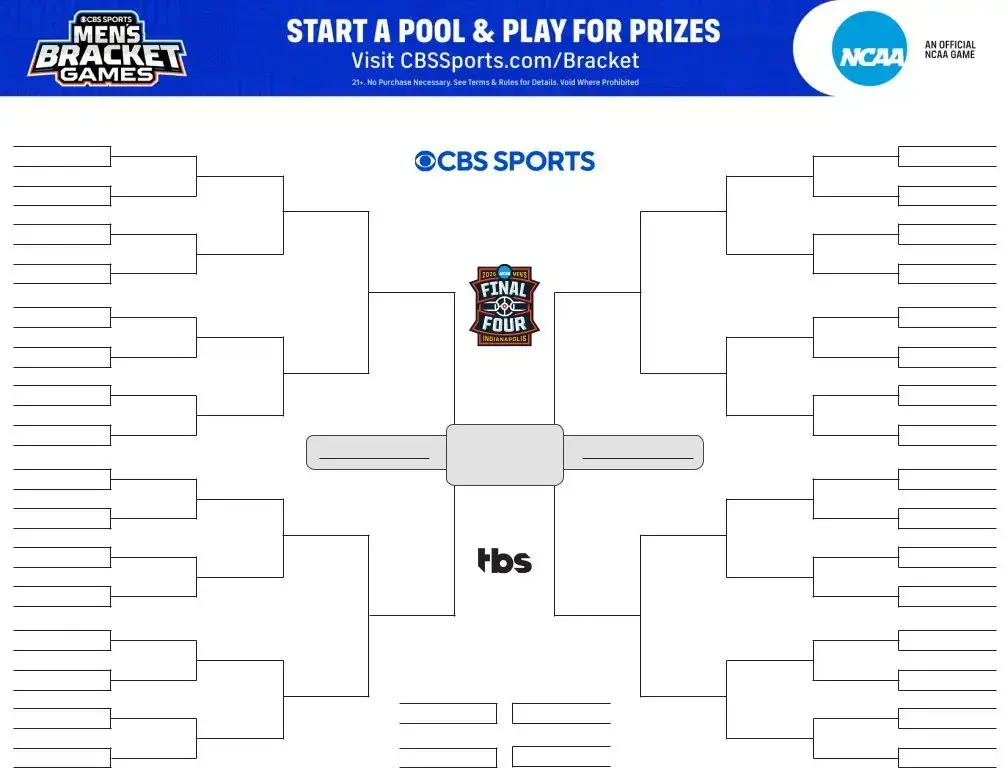
First Round |
Second Round |
Sweet 16 |
Elite 8 |
Final Four |
National Championship |
Final Four |
Elite 8 |
Sweet 16 |
Second Round |
First Round |
March |
March |
March |
March |
April 4 |
April 6 |
April 4 |
March |
March |
March |
March |
2026 Men’s NCAA Bracket
National
Championship
Indianapolis, IN
April 6
First Four
March
| Fact Name | Description |
|---|---|
| Eligibility Requirements | Participants must meet specific eligibility criteria set by the NCAA, including academic standards and amateur status. |
| Brackets Structure | The NCAA bracket consists of 68 teams, with a single-elimination format leading to the championship game. |
| State-Specific Regulations | Each state may have its own laws governing sports betting and bracket participation, such as the Unlawful Internet Gambling Enforcement Act. |
| Submission Deadlines | Brackets must be submitted by a specified deadline, typically before the tournament begins, to ensure eligibility for prizes and recognition. |
Filling out the NCAA bracket form involves a series of straightforward steps. Once completed, you will have a clear layout of your predictions for the tournament. This guide will help you navigate the process efficiently.
What is the NCAA bracket form?
The NCAA bracket form is a tool used to track and predict the outcomes of the NCAA basketball tournament. It allows fans to fill in their predictions for each game, from the first round all the way to the championship. This form is popular among sports enthusiasts, as it adds an extra layer of excitement to the tournament.
How do I fill out the NCAA bracket form?
To fill out the bracket, start by selecting the teams you think will win each matchup. You will fill in your predictions for each round, moving through the tournament until you select a champion. Make sure to consider team performance, injuries, and matchups when making your choices. Once completed, you can save or submit your bracket as required by the contest or pool you are participating in.
Can I edit my bracket after submitting it?
Most contests allow you to edit your bracket until the tournament begins. Once the first game starts, however, your selections are typically locked in. It’s important to double-check your choices before the tournament kicks off. If you're participating in a pool, check the specific rules, as they can vary.
Are there any strategies for filling out my bracket?
Yes, several strategies can enhance your chances of success. Research team statistics, player performance, and historical data. Some people prefer to go with their favorite teams, while others may choose to select based on seedings. Remember, upsets are common in the tournament, so don’t be afraid to take calculated risks!
Is there a deadline for submitting my bracket?
Yes, there is usually a deadline for submitting your bracket. This deadline is typically set for the start of the first game of the tournament. Be sure to check the specific rules of the contest or pool you are entering, as they may have different submission guidelines.
What happens if a game is canceled or postponed?
If a game is canceled or postponed, the outcome for that game will generally be treated as a loss for all brackets. However, rules can vary depending on the contest you are participating in. Always review the specific guidelines for your pool to understand how they handle such situations.
Can I participate in multiple brackets?
Yes, you can fill out multiple brackets for different contests or pools. This can be a fun way to explore different strategies and predictions. However, be mindful that each bracket should follow the rules of the specific contest you are entering. Just ensure that you keep track of your submissions to avoid confusion.
Not researching teams: Many people fill out their brackets based on team names or colors without considering team performance, injuries, or statistics.
Ignoring seed matchups: Higher-seeded teams often have a better chance of winning. Failing to recognize this can lead to poor predictions.
Overvaluing upsets: While upsets can happen, picking too many lower-seeded teams to advance can significantly decrease overall accuracy.
Following popular trends: Some people may choose teams based on what they hear from friends or media, rather than their own analysis.
Neglecting the importance of location: Teams playing closer to home often perform better due to fan support and familiarity with the environment.
Not considering coaching experience: Coaches with a strong track record in the tournament can influence a team's success. Ignoring this factor is a common mistake.
Underestimating the impact of injuries: Last-minute injuries can change the dynamics of a game. Failing to stay updated can lead to poor choices.
Rushing the process: Taking time to analyze matchups and statistics is crucial. A rushed decision often results in missed opportunities.
Not reviewing past performance: Examining how teams have performed in previous tournaments can provide valuable insights for making informed choices.
The NCAA bracket form is a popular document used during the NCAA basketball tournament. However, several other forms and documents often accompany it to facilitate various aspects of the tournament experience. Below is a list of these documents, each serving a unique purpose.
Each of these documents plays a vital role in enhancing the NCAA tournament experience, ensuring that participants are informed, engaged, and able to enjoy the excitement of the competition.
The NCAA bracket form shares similarities with a tournament entry form, commonly used in various sports and competitions. Both documents serve as a means for participants to officially register their intent to compete or predict outcomes. Just as the NCAA bracket allows fans to submit their picks for each game, a tournament entry form requires participants to list their chosen teams or players, establishing a clear record of their selections for later verification and scoring.
Another document that resembles the NCAA bracket form is a betting slip. Betting slips are utilized in sports wagering, allowing individuals to place bets on specific outcomes. Like the bracket form, a betting slip requires participants to make selections based on their predictions. Both documents also involve a level of strategy, as participants analyze teams or players to make informed choices that could lead to winning outcomes.
The survey form is another document that shares characteristics with the NCAA bracket form. Surveys often ask respondents to make choices or rank preferences, similar to how participants select teams in a bracket. Both documents aim to gather information based on individual preferences, whether for entertainment or data collection purposes. The interactive nature of both formats encourages engagement and participation.
Event registration forms are akin to the NCAA bracket form, as they both require individuals to commit to a specific event. While the bracket form focuses on predicting outcomes in a tournament, an event registration form gathers details about participants’ intentions to attend or compete. Both documents facilitate organization and planning, ensuring that participants are accounted for in the respective events.
Another comparable document is a competition entry form, often used in contests and sweepstakes. Much like the NCAA bracket, this form allows individuals to submit their entries for a chance to win. Participants must provide their selections or guesses, and the outcome determines the winners. Both forms create a sense of anticipation and excitement as participants await results.
Job application forms also bear resemblance to the NCAA bracket form in that they require individuals to make selections and provide information. Just as participants fill out their bracket with chosen teams, job applicants select their skills and experiences to present to potential employers. Both documents are crucial in determining outcomes—whether it’s winning a tournament or securing a job interview.
Lastly, a product order form can be compared to the NCAA bracket form. Both documents require individuals to make choices based on preferences, whether it’s selecting teams in a tournament or choosing products to purchase. Each form serves as a tool for organizing selections, and both involve a transaction of sorts—whether it’s predicting a game’s outcome or purchasing an item. The common thread is the act of making informed decisions based on available options.
Filling out an NCAA bracket can be an exciting and sometimes overwhelming task. To help you navigate this process smoothly, here are some important dos and don’ts to keep in mind.
By following these guidelines, you can create a more thoughtful and engaging bracket. Good luck, and enjoy the tournament!
Here are nine common misconceptions about the NCAA bracket form:
Many believe that every team has the same chance of winning, but this isn't true. Teams are seeded based on their performance, which affects their likelihood of advancing.
Some think that with enough research, they can create a flawless bracket. However, upsets are common in the tournament, making perfection nearly impossible.
While knowledge of the sport helps, anyone can participate. Bracket filling can be fun, regardless of expertise.
People often assume the bracket format remains unchanged. In reality, it can vary based on the number of teams and tournament structure.
Many think that all tournament games occur at neutral locations. Some games do take place at the home arenas of higher-seeded teams, impacting the outcome.
While selecting higher-seeded teams seems logical, upsets are frequent. A balanced approach often yields better results.
Some believe that brackets are only for sports fans. However, they can be a fun activity for anyone, including casual viewers.
Many think that after submitting a bracket, they cannot make changes. However, some platforms allow adjustments before the tournament starts.
While luck plays a role, informed decisions based on statistics and trends can significantly improve chances of winning.
Filling out and using the NCAA bracket form can enhance your experience during the tournament. Here are some key takeaways to consider: