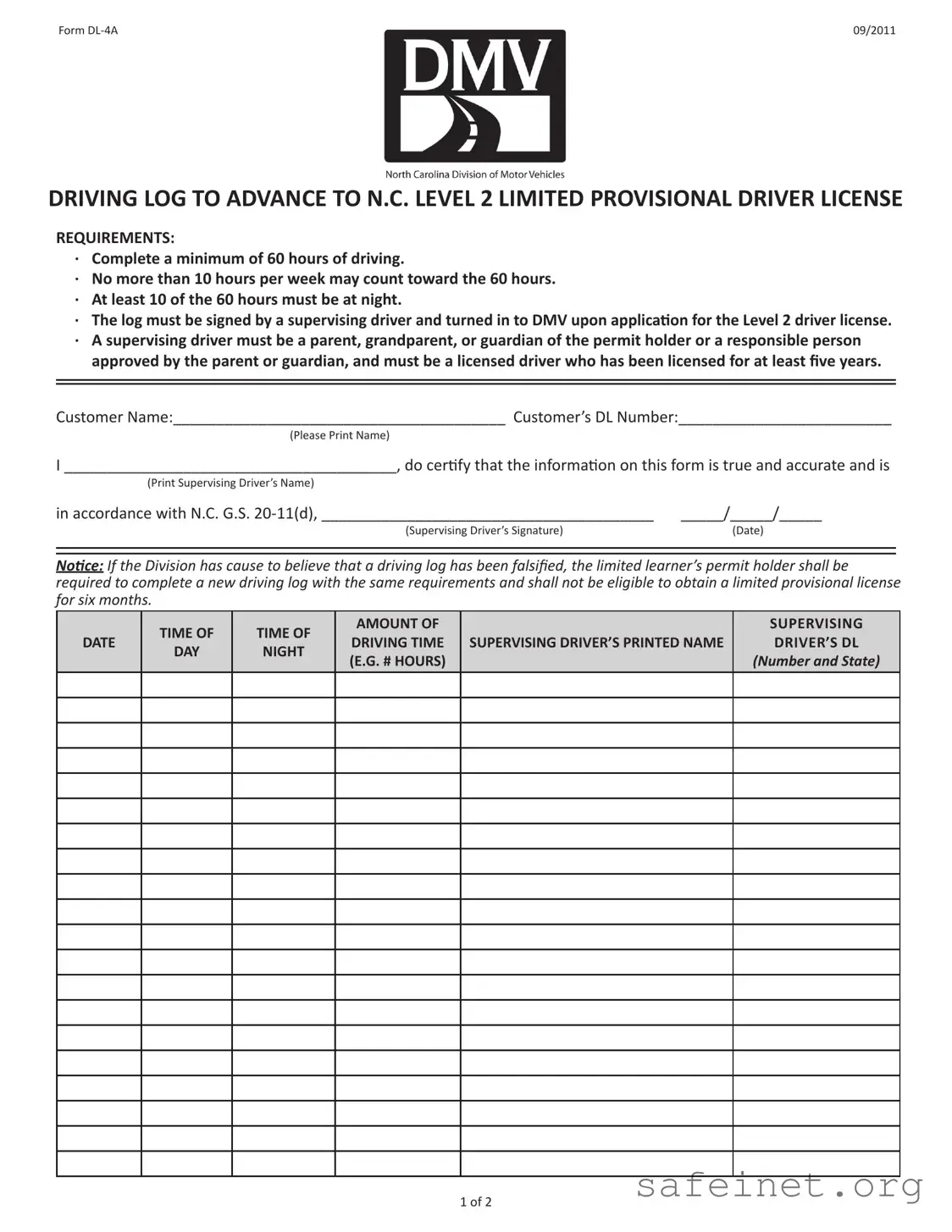
The NC DL 4A form serves as a crucial tool for young drivers in North Carolina who are working towards obtaining their Level 2 Limited Provisional Driver License. This form documents the driving experience required for applicants under the state's graduated licensing program. To successfully advance, a minimum of 60 hours of driving must be completed, with no more than 10 hours per week contributing to this total. Importantly, at least 10 of those hours should occur during nighttime driving. The form must be signed by a supervising driver, who can be a parent, grandparent, or guardian, or another responsible adult approved by the permit holder's family. This supervising driver must have held a valid license for at least five years. Upon application for the Level 2 license, the completed driving log is submitted to the Department of Motor Vehicles (DMV). It is essential to ensure the accuracy of the information provided, as any falsification may lead to the need for a new log and a six-month delay in obtaining the provisional license.
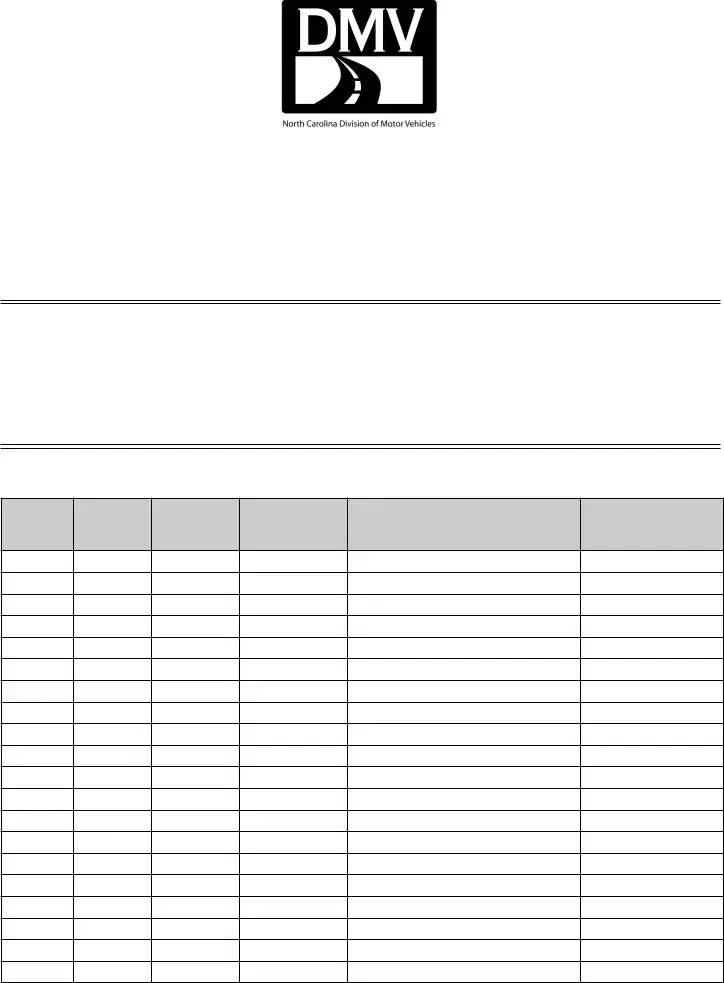
Form |
09/2011 |
DRIVING LOG TO ADVANCE TO N.C. LEVEL 2 LIMITED PROVISIONAL DRIVER LICENSE
REQUIREMENTS:
·Complete a minimum of 60 hours of driving.
·No more than 10 hours per week may count toward the 60 hours.
·At least 10 of the 60 hours must be at night.
·The log must be signed by a supervising driver and turned in to DMV upon applicaion for the Level 2 driver license.
·A supervising driver must be a parent, grandparent, or guardian of the permit holder or a responsible person approved by the parent or guardian, and must be a licensed driver who has been licensed for at least ive years.
Customer Name:_______________________________________ Customer’s DL Number:_________________________
(Please Print Name)
I _______________________________________, do cerify that the informaion on this form is true and accurate and is
(Print Supervising Driver’s Name)
in accordance with N.C. G.S. |
_____/_____/_____ |
(Supervising Driver’s Signature) |
(Date) |
Noice: If the Division has cause to believe that a driving log has been falsiied, the limited learner’s permit holder shall be required to complete a new driving log with the same requirements and shall not be eligible to obtain a limited provisional license for six months.
DATE
TIME OF
DAY
TIME OF
NIGHT
AMOUNT OF
DRIVING TIME (E.G. # HOURS)
SUPERVISING DRIVER’S PRINTED NAME
SUPERVISING
DRIVER’S DL
(Number and State)
1 of 2
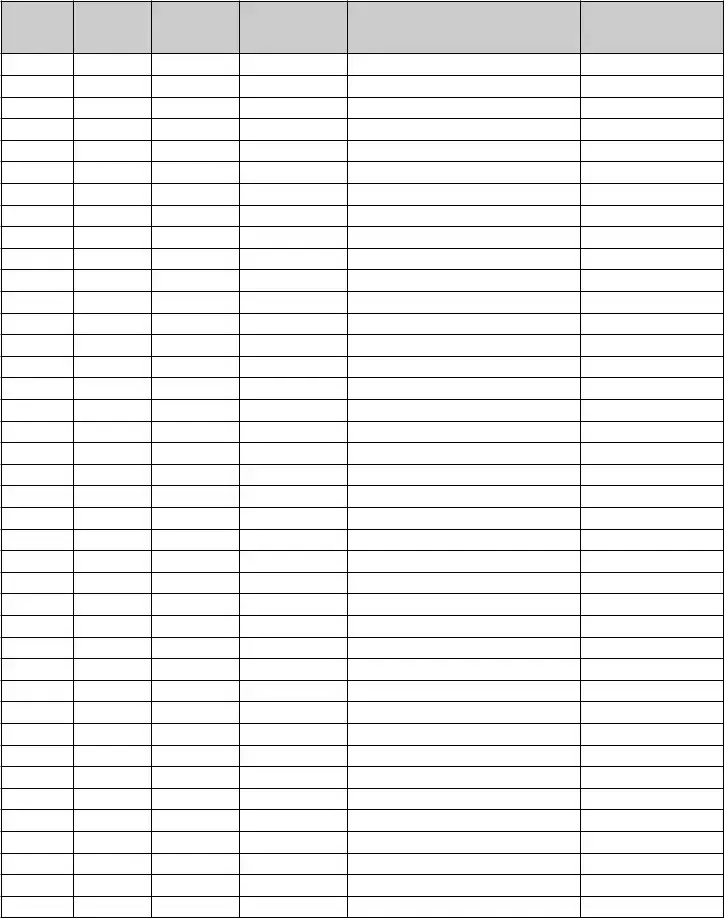
Form |
09/2011 |
DATE
TIME OF
DAY
TIME OF
NIGHT
AMOUNT OF
DRIVING TIME (E.G. # HOURS)
SUPERVISING DRIVER’S PRINTED NAME
SUPERVISING
DRIVER’S DL
(Number and State)
Total Day Hours Driven:_________ Total Night Hours Driven:_________ |
Grand Total:_________ |
2 of 2
| Fact Name | Details |
|---|---|
| Form Title | Driving Log to Advance to N.C. Level 2 Limited Provisional Driver License |
| Form Version | 09/2011 |
| Driving Hours Requirement | A minimum of 60 hours of driving is required. |
| Weekly Limit | No more than 10 hours may count toward the 60 hours in a week. |
| Night Driving Requirement | At least 10 of the 60 hours must be completed at night. |
| Supervising Driver | Must be a parent, grandparent, guardian, or an approved responsible person who has been licensed for at least five years. |
| Submission Requirement | The log must be signed by the supervising driver and submitted to the DMV when applying for the Level 2 driver license. |
| Governing Law | N.C. G.S. 20-11(d) |
Filling out the NC DL-4A form is an essential step in advancing to a Level 2 Limited Provisional Driver License in North Carolina. This form helps document your driving experience, ensuring that you meet the necessary requirements. Below are the steps to complete the form accurately.
Once you have filled out the form completely, make sure to have it signed by the supervising driver before submitting it to the DMV. This documentation is crucial for moving forward in the licensing process.
What is the purpose of the NC DL-4A form?
The NC DL-4A form is a driving log that helps individuals document their driving hours as they work towards obtaining a Level 2 Limited Provisional Driver License in North Carolina. This form is essential for tracking the required 60 hours of driving experience, which includes at least 10 hours of night driving. Completing this log accurately is crucial for meeting the state’s requirements for transitioning from a learner's permit to a provisional license.
What are the specific requirements for filling out the driving log?
To fill out the driving log correctly, the individual must complete a minimum of 60 hours of driving. No more than 10 of those hours can be counted in any given week. Out of the total driving hours, at least 10 must occur at night. Each entry must include the date, time of day, amount of driving time, and the supervising driver’s printed name and driver’s license number. Additionally, the supervising driver must sign the log, confirming the accuracy of the information recorded.
Who can be a supervising driver for the NC DL-4A form?
A supervising driver must be a parent, grandparent, or guardian of the permit holder. Alternatively, a responsible adult approved by the parent or guardian can also serve in this role. It is important that the supervising driver holds a valid driver’s license and has been licensed for at least five years. This ensures that the learner receives guidance from someone with sufficient driving experience.
What happens if the driving log is found to be falsified?
If the Division of Motor Vehicles suspects that the driving log has been falsified, the learner’s permit holder will be required to complete a new driving log that meets the same requirements. In such cases, the individual will not be eligible to obtain a limited provisional license for six months. This strict policy underscores the importance of honesty and accuracy in documenting driving hours.
How do I submit the NC DL-4A form once it is completed?
Once the driving log is fully completed and signed by the supervising driver, it must be submitted to the DMV when applying for the Level 2 driver license. It is advisable to keep a copy of the log for personal records before submission. Ensuring that all required information is accurate and complete will help facilitate a smoother application process.
Neglecting to Log All Required Hours: One common mistake is failing to complete the minimum of 60 hours of driving. Remember, not only must you reach this total, but at least 10 of those hours should be at night. Keep track of each session diligently.
Exceeding Weekly Driving Limits: Another frequent error is counting more than 10 hours of driving in a single week. This can lead to disqualification of your log. Plan your driving sessions accordingly to stay within the limits.
Forgetting Signatures: The log must be signed by a supervising driver. Omitting this critical signature can delay or even prevent your application from being processed. Make sure your supervising driver is available to sign after each driving session.
Incorrectly Identifying the Supervising Driver: The supervising driver must meet specific criteria. They should be a parent, grandparent, or guardian, or another responsible adult approved by the parent or guardian. Ensure that the person you list meets these requirements.
Inaccurate Information: Falsifying any information on the log can lead to severe consequences, including a six-month waiting period for a new log. Always provide true and accurate details. Double-check everything before submission.
Overlooking the Total Hours: At the end of the log, you need to calculate and record the total day and night hours driven. Forgetting to do this can result in incomplete documentation. Take a moment to ensure all totals are correctly filled in.
The NC DL-4A form is essential for advancing to a Level 2 Limited Provisional Driver License in North Carolina. To ensure a smooth application process, several other forms and documents are often required. Below is a list of these important documents.
Gathering these forms and documents promptly will facilitate a smoother application process for the Level 2 Limited Provisional Driver License. Ensure all information is accurate and complete to avoid delays.
The NC DL 4A form is similar to the Learner's Permit Log, which is often required in various states for new drivers. Like the DL 4A, this log tracks the hours a learner has spent driving under supervision. It also mandates a minimum number of nighttime driving hours, ensuring that new drivers gain experience in different conditions. Both forms emphasize the importance of a supervising driver, who must meet specific criteria, such as being a licensed driver for a certain period.
Another document that shares similarities is the Driving Practice Log. This log is used in many jurisdictions to document the practice hours a learner accumulates before obtaining a full license. Similar to the DL 4A, it requires signatures from supervising drivers and often includes sections for daytime and nighttime driving hours. The goal is to ensure that learners are well-prepared for solo driving by logging their practice time effectively.
The Parent/Guardian Driving Agreement also resembles the NC DL 4A form. This document outlines the responsibilities of both the learner and the supervising driver. It typically requires the parent or guardian to acknowledge their role in the learner's driving education. Like the DL 4A, it reinforces the importance of supervision and may include a section for documenting practice hours.
The Certificate of Completion for Driver Education is another related document. This certificate is often required to show that a learner has completed a driver education course. While it does not track driving hours like the DL 4A, it serves as a prerequisite for applying for a limited provisional license, emphasizing the importance of formal training in addition to practical experience.
The Road Test Application is similar in that it is a step toward obtaining a full driver's license. While the DL 4A focuses on logging practice hours, the Road Test Application involves scheduling a driving test to demonstrate proficiency. Both documents are essential milestones in the process of becoming a licensed driver, ensuring that learners have met specific requirements before advancing.
The Driver's License Application is another important document that parallels the NC DL 4A. This application is submitted when a learner is ready to apply for a full license after completing the required practice hours. While the DL 4A tracks the learner's progress, the Driver's License Application formalizes the transition to independent driving, requiring documentation of completed driving logs.
The Supervised Driving Log, used in some states, is also akin to the NC DL 4A. This log serves to track the driving hours completed under supervision and often includes similar requirements for nighttime driving. Both documents aim to ensure that new drivers receive adequate practice and are ready for the responsibilities of driving independently.
The Teen Driver Contract is another document that shares a purpose with the DL 4A. This contract outlines expectations and rules for teen drivers, often requiring parental supervision during the learner's driving period. While it does not document driving hours, it emphasizes the role of the supervising driver, similar to the requirements laid out in the DL 4A.
Finally, the Completion Certificate for Behind-the-Wheel Training resembles the NC DL 4A in that it signifies the successful completion of a driving program. This certificate may be required when applying for a provisional license, similar to how the DL 4A verifies that a learner has met the necessary driving hours. Both documents serve as proof of a learner's readiness to progress in their driving journey.
When filling out the NC DL-4A form, it is essential to follow specific guidelines to ensure the application is processed smoothly. Here are seven important do's and don'ts to keep in mind:
Following these guidelines will help facilitate the process of obtaining a Level 2 Limited Provisional Driver License in North Carolina.
Misconceptions about the NC DL 4A form can lead to confusion regarding the requirements for obtaining a Level 2 Limited Provisional Driver License in North Carolina. Below are some common misconceptions and clarifications:
In reality, the log must be filled out chronologically, reflecting the actual times and dates of driving sessions.
This is incorrect. A maximum of 10 hours per week can count towards the required 60 hours.
At least 10 of the 60 hours must be specifically designated as night driving hours.
The supervising driver must be a parent, grandparent, or guardian, or another responsible adult approved by the parent or guardian, who has been licensed for at least five years.
The log must be submitted to the DMV at the time of application for the Level 2 driver license.
If the log is found to be falsified, the learner's permit holder must complete a new log and will be ineligible for a limited provisional license for six months.
The supervising driver must be present during all driving sessions to ensure safety and compliance with the requirements.
Hours must be recorded accurately without rounding. Each session should reflect the exact time spent driving.
A signature from the supervising driver is mandatory to certify the accuracy of the log.
Here are some key takeaways about filling out and using the Nc Dl 4A form:
Keep these points in mind to ensure a smooth process when using the Nc Dl 4A form.