The Michigan Tractor Bill of Sale form serves as a crucial document for anyone involved in the buying or selling of tractors in the state. This form provides a clear record of the transaction, detailing essential information such as the buyer's and seller's names, addresses, and contact information. It also outlines the specifics of the tractor being sold, including its make, model, year, and Vehicle Identification Number (VIN). By documenting the sale price and any terms of the sale, the form helps protect both parties by establishing legal ownership and reducing the potential for disputes. In addition, the Michigan Tractor Bill of Sale may include sections for disclosures about the tractor's condition, ensuring that buyers are fully informed before completing the transaction. Overall, this form is an important tool that facilitates a smooth transfer of ownership while providing necessary legal protections for both buyers and sellers.
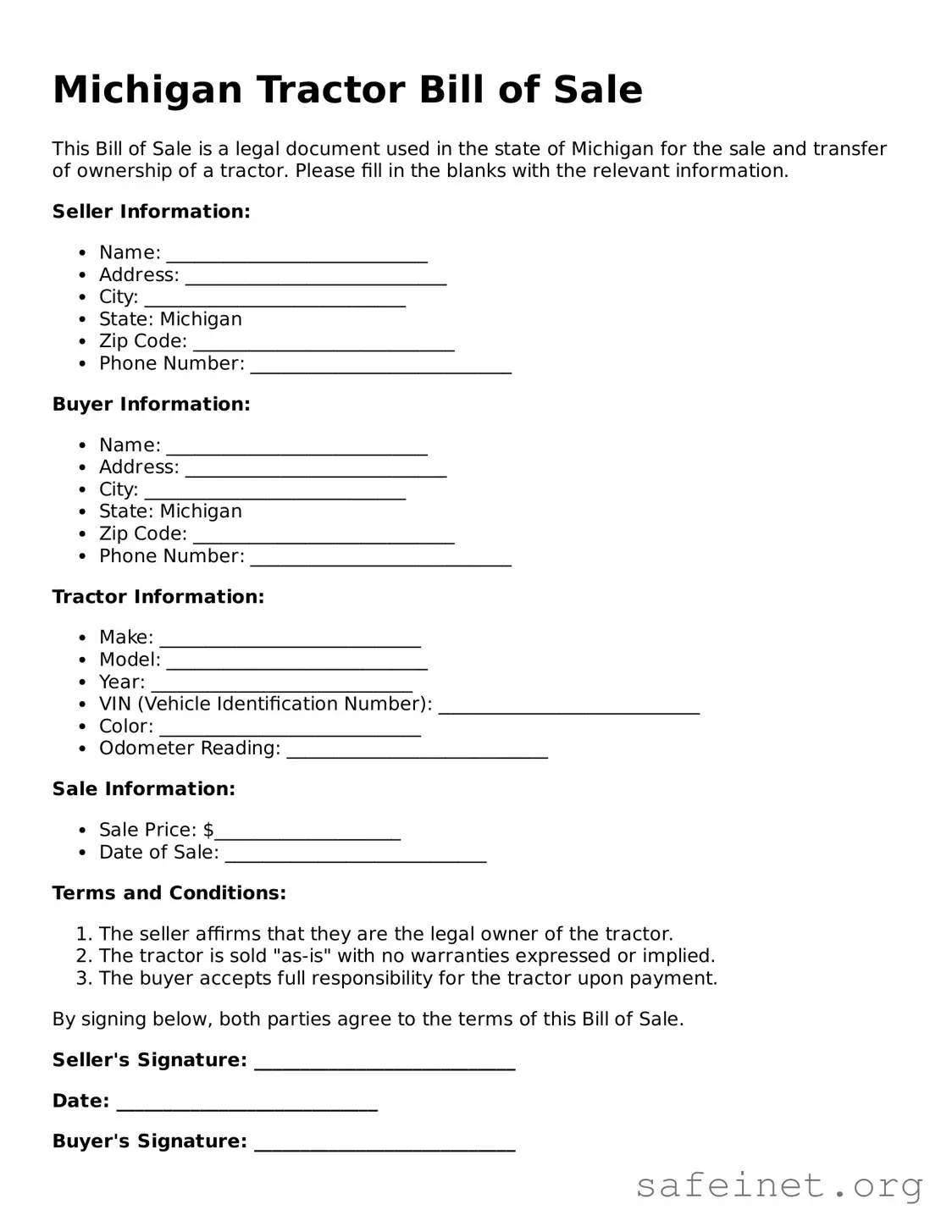
Michigan Tractor Bill of Sale
This Bill of Sale is a legal document used in the state of Michigan for the sale and transfer of ownership of a tractor. Please fill in the blanks with the relevant information.
Seller Information:
Buyer Information:
Tractor Information:
Sale Information:
Terms and Conditions:
By signing below, both parties agree to the terms of this Bill of Sale.
Seller's Signature: ____________________________
Date: ____________________________
Buyer's Signature: ____________________________
Date: ____________________________
| Fact Name | Description |
|---|---|
| Purpose | The Michigan Tractor Bill of Sale form serves as a legal document to transfer ownership of a tractor from one party to another. |
| Governing Law | This form is governed by Michigan state laws regarding the sale and transfer of personal property. |
| Required Information | The form must include details such as the names and addresses of the buyer and seller, the tractor's make, model, year, and Vehicle Identification Number (VIN). |
| Signatures | Both the seller and buyer must sign the document to validate the transaction and confirm the transfer of ownership. |
| Consideration | The form should specify the purchase price or other consideration exchanged for the tractor. |
| Record Keeping | It is advisable for both parties to keep a copy of the signed bill of sale for their records, as it may be needed for future reference. |
| Notarization | While notarization is not required, having the document notarized can add an extra layer of authenticity and protection for both parties. |
After obtaining the Michigan Tractor Bill of Sale form, it's important to accurately complete it to ensure a smooth transfer of ownership. This document serves as a record of the sale and should be filled out carefully to avoid any potential issues in the future.
What is a Michigan Tractor Bill of Sale form?
The Michigan Tractor Bill of Sale form is a legal document that serves as proof of the sale and transfer of ownership of a tractor from one party to another. This form includes important details such as the names and addresses of the buyer and seller, a description of the tractor, the purchase price, and the date of the transaction. It is essential for both parties to keep a copy for their records, as it can be used for registration purposes and to establish ownership in case of disputes.
Why is a Bill of Sale necessary when buying or selling a tractor in Michigan?
A Bill of Sale is necessary for several reasons. First, it provides a clear record of the transaction, which can help prevent misunderstandings between the buyer and seller. Second, it is often required for registration and titling purposes with the Michigan Secretary of State. Without this document, the new owner may face challenges when trying to register the tractor or prove ownership. Additionally, having a Bill of Sale can protect both parties in case of any legal issues that may arise after the sale.
What information should be included in the Michigan Tractor Bill of Sale?
The Michigan Tractor Bill of Sale should include specific information to ensure it is complete and legally binding. Key details to include are the full names and addresses of both the buyer and seller, a detailed description of the tractor (including make, model, year, and Vehicle Identification Number or VIN), the sale price, and the date of the transaction. Both parties should sign the document to acknowledge their agreement to the terms of the sale. It is also advisable to note any warranties or conditions related to the sale.
Do I need to have the Bill of Sale notarized?
In Michigan, it is not a requirement for a Bill of Sale to be notarized. However, having the document notarized can add an extra layer of security and authenticity to the transaction. A notary public can verify the identities of the parties involved and witness the signing of the document. This can be especially useful if there are any disputes in the future, as it provides an official record of the agreement.
Where can I obtain a Michigan Tractor Bill of Sale form?
You can obtain a Michigan Tractor Bill of Sale form from various sources. Many online legal document services provide customizable templates that you can fill out according to your specific needs. Additionally, local offices of the Michigan Secretary of State may have physical copies available. It is also possible to create your own Bill of Sale using a simple template, as long as it includes all the necessary information to ensure it is valid and enforceable.
Failing to include the correct date of the sale. Ensure the date reflects when the transaction occurred.
Not providing accurate buyer and seller information. Include full names and addresses for both parties.
Omitting the tractor identification number (VIN). This number is crucial for tracking ownership.
Incorrectly stating the purchase price. Double-check the amount to avoid disputes later.
Leaving out the condition of the tractor. Clearly describe any existing issues or repairs needed.
Not signing the document. Both the buyer and seller must sign for the sale to be valid.
Using illegible handwriting. Ensure all entries are clear and easy to read.
Failing to keep a copy of the bill of sale. Both parties should retain a signed copy for their records.
Not checking local requirements for additional documentation. Some areas may require extra forms.
Ignoring witness signatures if required. Some transactions may need a witness for validation.
The Michigan Tractor Bill of Sale is a crucial document for anyone involved in the sale or purchase of a tractor in Michigan. However, several other forms and documents may accompany this transaction to ensure all legal and regulatory requirements are met. Below is a list of related documents that are often used in conjunction with the Michigan Tractor Bill of Sale.
These documents collectively help streamline the process of buying or selling a tractor in Michigan. Ensuring that all necessary paperwork is completed can protect both parties and facilitate a smooth transaction.
The Michigan Vehicle Bill of Sale serves a similar purpose as the Tractor Bill of Sale. It documents the transfer of ownership of a vehicle from one party to another. This form includes essential details such as the vehicle's make, model, year, and Vehicle Identification Number (VIN), along with the buyer's and seller's information. Both forms protect the interests of both parties by providing a written record of the transaction.
The General Bill of Sale is another document that shares similarities with the Tractor Bill of Sale. This form can be used for various types of personal property, including equipment, furniture, and other goods. Like the Tractor Bill of Sale, it includes details about the item being sold, the sale price, and the parties involved. It serves as a legal proof of the transaction and can help resolve disputes that may arise later.
The Boat Bill of Sale is also comparable to the Tractor Bill of Sale. This document is specifically designed for the sale of boats and watercraft. It captures similar information, such as the boat's make, model, and hull identification number. Both forms aim to ensure a clear transfer of ownership and provide necessary details to register the boat with state authorities.
The Motorcycle Bill of Sale functions in much the same way as the Tractor Bill of Sale. This document is tailored for the sale of motorcycles and includes pertinent information like the motorcycle's make, model, year, and VIN. Both documents serve as a legal record of the sale and are often required for registration purposes in various states.
The Equipment Bill of Sale is relevant for transactions involving heavy machinery and other equipment. This document outlines the specifics of the equipment being sold, including its make, model, and condition. Just like the Tractor Bill of Sale, it provides a formal record of the transaction, ensuring that both parties have clarity regarding the sale.
The Firearm Bill of Sale is another document that shares similarities. It is used when buying or selling firearms. This form captures essential details about the firearm, including its make, model, and serial number, as well as information about the buyer and seller. Both the Firearm Bill of Sale and the Tractor Bill of Sale serve to document the transfer of ownership and protect the interests of both parties involved.
The Mobile Home Bill of Sale is comparable in its function to the Tractor Bill of Sale. This document is specifically designed for the sale of mobile homes. It includes information about the mobile home, such as its make, model, and serial number, along with details about the buyer and seller. Both forms are crucial for establishing a clear transfer of ownership and are often required for registration with state authorities.
Lastly, the Livestock Bill of Sale is similar in that it is used for the sale of livestock. This document records important details about the animals being sold, including their breed, age, and identification numbers if applicable. Like the Tractor Bill of Sale, it helps ensure a legal transfer of ownership and can serve as proof of the transaction in case of future disputes.
When filling out the Michigan Tractor Bill of Sale form, it is important to ensure that the process is smooth and accurate. Below is a list of things you should and shouldn't do to help guide you through this task.
Things You Should Do:
Things You Shouldn't Do:
By following these guidelines, you can help ensure that the bill of sale is completed correctly, making the transaction smoother for everyone involved.
Misconceptions about the Michigan Tractor Bill of Sale form can lead to confusion for both buyers and sellers. Here are seven common misunderstandings:
Understanding these misconceptions can help ensure a smoother transaction process when buying or selling a tractor in Michigan.
When filling out and using the Michigan Tractor Bill of Sale form, consider the following key takeaways: