Creating a comprehensive employee handbook is an essential step for any business operating in Michigan. This document serves as a vital resource for both employers and employees, outlining workplace policies, procedures, and expectations. It typically includes sections on company culture, employee rights, and responsibilities, as well as guidelines for conduct, attendance, and performance evaluations. Additionally, the handbook may cover important topics such as benefits, compensation, and procedures for addressing grievances. By providing clear information, the Michigan Employee Handbook form helps foster a positive work environment and ensures that everyone is on the same page regarding company policies. Employers can customize this form to reflect their unique values and operational needs, while employees can refer to it for guidance on various aspects of their employment. Ultimately, a well-crafted employee handbook not only protects the rights of workers but also helps businesses maintain compliance with state and federal regulations.
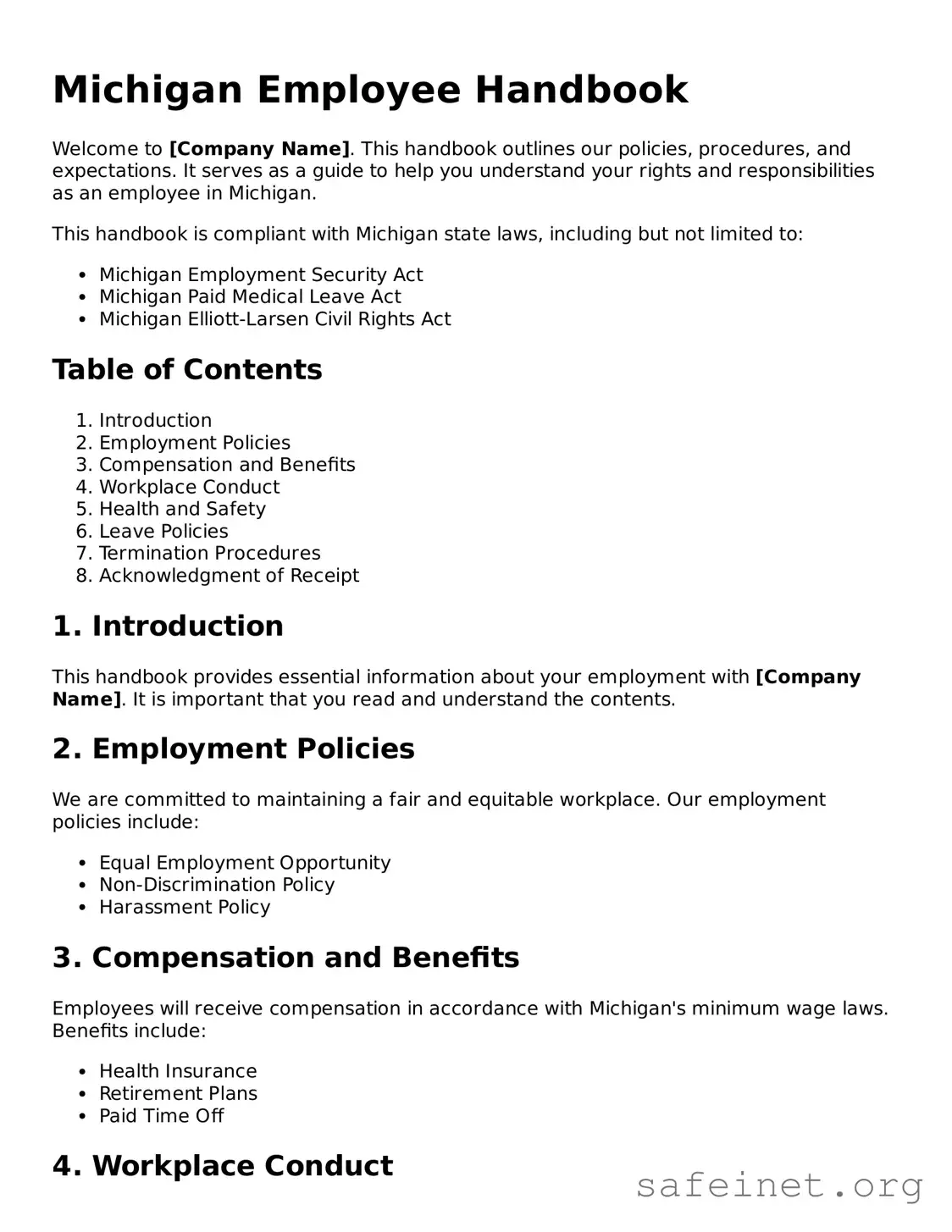
Michigan Employee Handbook
Welcome to [Company Name]. This handbook outlines our policies, procedures, and expectations. It serves as a guide to help you understand your rights and responsibilities as an employee in Michigan.
This handbook is compliant with Michigan state laws, including but not limited to:
Table of Contents
1. Introduction
This handbook provides essential information about your employment with [Company Name]. It is important that you read and understand the contents.
2. Employment Policies
We are committed to maintaining a fair and equitable workplace. Our employment policies include:
3. Compensation and Benefits
Employees will receive compensation in accordance with Michigan's minimum wage laws. Benefits include:
4. Workplace Conduct
We expect all employees to maintain a professional demeanor. This includes:
5. Health and Safety
Your safety is our priority. Employees must adhere to all safety regulations and report any hazards immediately.
6. Leave Policies
Employees are entitled to various types of leave, including:
7. Termination Procedures
Termination of employment may occur for various reasons, including:
8. Acknowledgment of Receipt
By signing below, you acknowledge that you have received and read the Michigan Employee Handbook.
Employee Name: ____________________________
Date: ____________________________________
| Fact Name | Description |
|---|---|
| Purpose | The Michigan Employee Handbook serves as a guide for employees, outlining company policies, procedures, and expectations. |
| Governing Law | This handbook is governed by Michigan labor laws, including the Michigan Employment Security Act and the Michigan Workforce Opportunity Wage Act. |
| Mandatory Contents | Employers are encouraged to include essential topics such as anti-discrimination policies, workplace safety, and employee benefits. |
| Distribution Requirement | Employers must provide the handbook to all employees and ensure that they acknowledge receipt and understanding of its contents. |
Completing the Michigan Employee Handbook form is an important step in ensuring that all necessary information is documented properly. This process helps to clarify expectations and responsibilities within the workplace. Follow these steps to fill out the form accurately.
After submitting the form, you will receive a confirmation that it has been processed. This will help ensure that you are fully informed about your rights and responsibilities at work.
What is the Michigan Employee Handbook form?
The Michigan Employee Handbook form is a document designed to outline the policies, procedures, and expectations of an employer regarding their employees. This handbook serves as a guide for employees to understand their rights and responsibilities within the workplace. It typically includes information on workplace conduct, benefits, leave policies, and other important employment guidelines specific to Michigan law.
Why is it important for employers to have an Employee Handbook?
An Employee Handbook is crucial for employers as it helps establish clear expectations and standards for behavior. It can protect the employer legally by providing documented policies that can be referenced in case of disputes. Additionally, having a comprehensive handbook fosters a positive workplace culture by ensuring that all employees are aware of company policies and procedures.
What should be included in the Michigan Employee Handbook?
A well-rounded Employee Handbook should include several key components. These often encompass an introduction to the company, an overview of employment policies, workplace conduct guidelines, anti-discrimination and harassment policies, compensation and benefits information, leave policies, and procedures for addressing grievances. It may also address safety protocols and any specific state regulations relevant to Michigan employees.
How often should the Employee Handbook be updated?
Regular updates to the Employee Handbook are essential. Employers should review the handbook at least annually or whenever there are significant changes in employment law, company policies, or organizational structure. Keeping the handbook current ensures that employees have access to the most accurate information and helps mitigate potential legal issues.
Do employees need to sign the Employee Handbook?
While it is not legally required for employees to sign the Employee Handbook, it is a good practice to have them acknowledge receipt of the document. This acknowledgment can serve as proof that employees have been informed of the policies and procedures outlined in the handbook. It can also help prevent misunderstandings regarding workplace expectations.
Can an Employee Handbook be used in legal disputes?
Yes, an Employee Handbook can be a valuable tool in legal disputes. If a conflict arises regarding workplace policies or employee conduct, the handbook can serve as evidence to demonstrate what the employer's expectations were. However, it is important that the handbook is clear, consistent, and legally compliant to be effective in such situations.
Filling out the Michigan Employee Handbook form can seem straightforward, but many people trip up along the way. Here are eight common mistakes to avoid:
Not reading the instructions carefully. Many individuals skip the guidelines, leading to incomplete or incorrect submissions.
Missing signatures. Forgetting to sign the form can delay processing and create unnecessary complications.
Providing outdated information. Always double-check your personal details, such as address and contact numbers, to ensure accuracy.
Ignoring deadlines. Submitting the form late can result in missed opportunities or even disciplinary action.
Using unclear language. Avoid vague terms. Be specific about your job title, responsibilities, and any relevant details.
Not asking questions. If something isn’t clear, reach out for clarification. It’s better to ask than to guess.
Overlooking company policies. Familiarize yourself with the employee handbook before filling out the form to ensure you understand all the policies.
Neglecting to keep a copy. Always retain a copy of your completed form for your records. This can be invaluable in case of disputes.
By avoiding these common pitfalls, you can ensure that your experience with the Michigan Employee Handbook form is smooth and hassle-free. Take your time, review your information, and don’t hesitate to seek help when needed.
When creating a Michigan Employee Handbook, it’s important to consider several other forms and documents that can complement it. These documents help clarify policies, protect both employees and employers, and ensure a smooth workplace environment.
By utilizing these forms alongside the Michigan Employee Handbook, employers can create a comprehensive framework that supports both their business needs and their employees' rights. Keeping everything organized will lead to a more efficient workplace.
The Michigan Employee Handbook is similar to the Employee Manual, which serves as a comprehensive guide for employees regarding company policies, procedures, and expectations. Both documents outline the rights and responsibilities of employees and employers, ensuring that everyone understands the workplace rules. The Employee Manual often includes sections on workplace behavior, dress code, and attendance policies, much like the Michigan Employee Handbook.
Another comparable document is the Company Policy Guide. This guide focuses on specific policies that govern various aspects of employment, such as anti-discrimination, harassment, and safety protocols. While the Employee Handbook provides a broader overview, the Company Policy Guide delves deeper into particular areas, ensuring employees are well-informed about their rights and the company’s stance on critical issues.
The Onboarding Packet is another document that shares similarities with the Michigan Employee Handbook. This packet is typically provided to new hires and contains essential information about the company, its culture, and the expectations for new employees. Like the Employee Handbook, the Onboarding Packet aims to help employees acclimate to their new work environment and understand the company’s policies from the outset.
The Code of Conduct is a vital document that aligns closely with the Michigan Employee Handbook. It outlines the ethical standards and behavioral expectations for employees. Both documents emphasize the importance of maintaining a respectful and professional workplace, detailing the consequences of failing to adhere to these standards. The Code of Conduct often complements the Employee Handbook by providing specific examples of acceptable and unacceptable behavior.
Job Descriptions are another document that shares a relationship with the Employee Handbook. While the handbook provides an overview of company policies, job descriptions detail the specific roles, responsibilities, and expectations for each position within the organization. This clarity helps employees understand their duties and how they fit into the larger company framework, much like the guidance offered in the Employee Handbook.
The Performance Review Process document is also similar, as it outlines how employee performance will be evaluated. Both the Performance Review Process and the Employee Handbook aim to foster communication between employees and management. They provide guidance on what is expected for success within the company and how employees can achieve their professional goals.
Lastly, the Benefits Summary is a document that parallels the Michigan Employee Handbook. It details the benefits available to employees, such as health insurance, retirement plans, and paid time off. While the Employee Handbook may touch on these topics, the Benefits Summary provides a more in-depth look at what employees can expect in terms of compensation and support, ensuring that they are well-informed about their entitlements.
When filling out the Michigan Employee Handbook form, it’s important to follow certain guidelines to ensure accuracy and compliance. Here’s a list of what you should and shouldn’t do:
By following these guidelines, you can help ensure that your completion of the Michigan Employee Handbook form goes smoothly. Taking a careful approach will benefit both you and your employer.
Understanding the Michigan Employee Handbook form is crucial for both employers and employees. However, several misconceptions can lead to confusion. Here are ten common misunderstandings about this important document:
By addressing these misconceptions, both employers and employees can better appreciate the value of the Michigan Employee Handbook form, fostering a positive and informed workplace environment.
When filling out and using the Michigan Employee Handbook form, several important points should be considered. Here are six key takeaways:
By following these takeaways, organizations can create an effective Employee Handbook that supports a positive workplace environment.