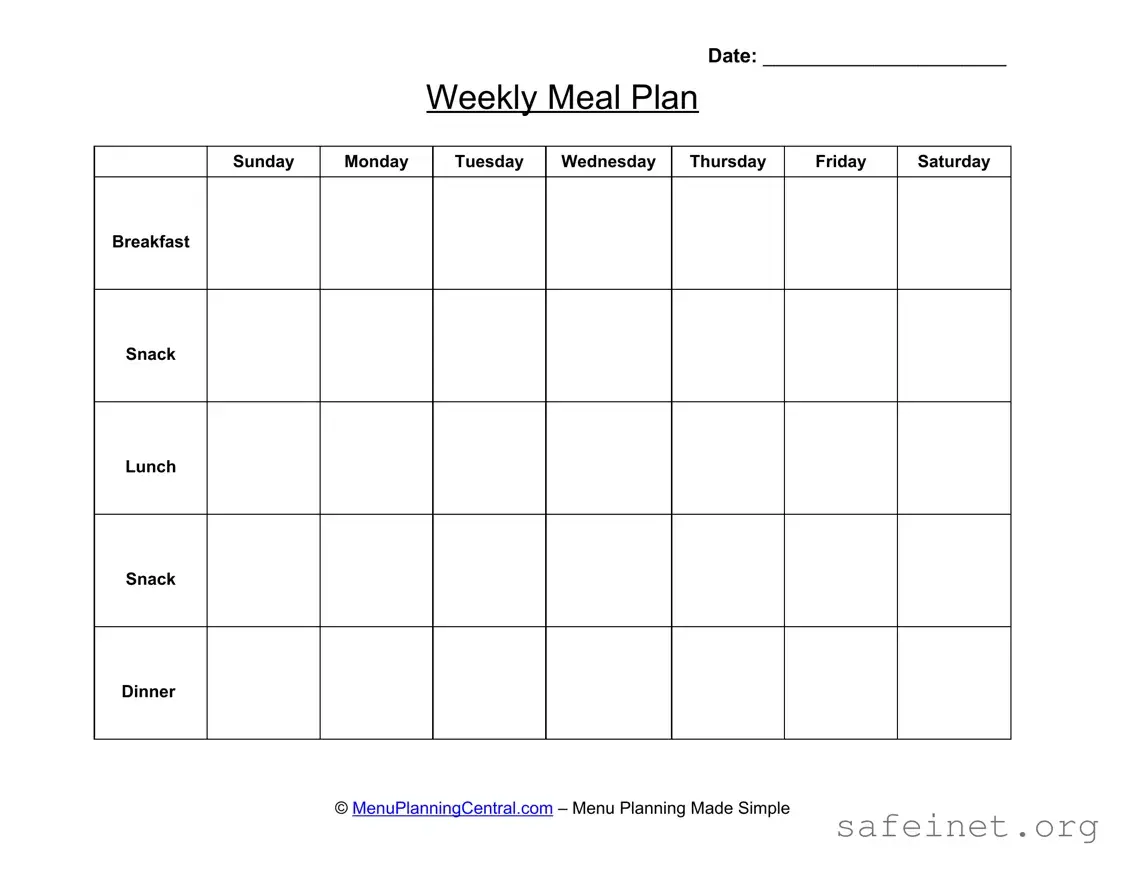
The Menu Planner form is a practical tool designed to streamline your weekly meal preparation, making it easier to organize and plan nutritious meals for the entire week. This form includes designated spaces for each day of the week, allowing you to outline your breakfast, lunch, dinner, and snacks. By filling out the form, you can visualize your meal choices, ensuring a balanced diet and reducing the likelihood of last-minute unhealthy options. The structured layout encourages thoughtful planning, helping you to consider variety and nutrition while accommodating your family's preferences. With this form, meal planning becomes a simple and efficient process, transforming the way you approach your weekly cooking routine.
Date: ______________________
Weekly Meal Plan
Sunday
Monday
Tuesday
Wednesday
Thursday
Friday
Saturday
Breakfast
Snack
Lunch
Snack
Dinner
©MenuPlanningCentral.com – Menu Planning Made Simple
| Fact Name | Description |
|---|---|
| Date | The form includes a space for the date to help track meal planning over time. |
| Weekly Meal Plan | This form is designed to outline meals for an entire week, from Sunday to Saturday. |
| Meal Categories | Each day has designated slots for breakfast, lunch, dinner, and snacks. |
| Organization | The structured layout promotes easy organization and quick reference. |
| Customization | Users can tailor the meal plan to fit dietary preferences and nutritional needs. |
| Governing Law | This form is applicable under general meal planning guidelines and does not have state-specific laws. |
| Ease of Use | The simplicity of the form allows anyone to create a meal plan without prior experience. |
After you have gathered all necessary information, you can proceed to fill out the Menu Planner form. This form will help organize your weekly meals efficiently, making it easier to plan and prepare your meals ahead of time.
What is the Menu Planner form used for?
The Menu Planner form is designed to help individuals and families organize their meals for the week. By filling out this form, you can plan your breakfast, lunch, dinner, and snacks for each day. This can make grocery shopping easier and ensure that you have a balanced diet throughout the week.
How do I fill out the Menu Planner form?
To fill out the Menu Planner form, start by writing the date at the top. Then, for each day of the week, list your planned meals in the designated sections for breakfast, lunch, dinner, and snacks. Consider your dietary preferences and any special occasions that may affect your meal choices. This structured approach can help you stay organized and make meal preparation more efficient.
Can I use the Menu Planner form for dietary restrictions?
Absolutely! The Menu Planner form is flexible and can accommodate various dietary restrictions. If you or someone in your household has specific dietary needs, simply plan meals that align with those requirements. You can also use the form to ensure that you include a variety of food groups, making it easier to maintain a balanced diet.
Is there a way to make changes to my meal plan after I’ve filled out the form?
Yes, you can certainly make changes to your meal plan after filling out the form. If you realize that a particular meal doesn’t work for you, simply cross it out and write in a new option. The goal is to create a plan that suits your needs, so feel free to adapt it as necessary throughout the week.
How can using the Menu Planner form benefit my grocery shopping?
Using the Menu Planner form can significantly streamline your grocery shopping experience. By planning your meals in advance, you can create a detailed shopping list based on the ingredients you need. This helps you avoid impulse purchases and ensures that you have everything required to prepare your meals. Additionally, it can save time and reduce food waste by allowing you to buy only what you will use.
Inaccurate Date Entry: Many individuals neglect to fill in the date correctly. This oversight can lead to confusion regarding meal planning for the week. A simple mistake in the date can affect grocery shopping and meal preparation.
Omitting Meals: Some users forget to plan for all meals throughout the week. Skipping breakfast or lunch can result in unbalanced nutrition and last-minute decisions that may not align with dietary goals.
Failure to Include Snacks: Snacks are often overlooked in meal planning. By not incorporating snacks, individuals may find themselves feeling hungry between meals, leading to unhealthy eating choices.
Lack of Variety: Repeating the same meals week after week can lead to boredom and dissatisfaction with one’s diet. A diverse menu not only enhances enjoyment but also ensures a broader range of nutrients.
The Menu Planner form is a useful tool for organizing meals throughout the week. It helps individuals and families plan their food intake, ensuring balanced nutrition and efficient grocery shopping. Several other documents can complement the Menu Planner form to enhance meal planning and preparation.
Using these additional documents alongside the Menu Planner form can enhance meal organization and improve overall efficiency in meal preparation. Together, they create a comprehensive system for managing food and nutrition effectively.
The Menu Planner form shares similarities with the Grocery List. Both documents serve to streamline meal preparation and ensure that all necessary ingredients are on hand. While the Menu Planner focuses on what meals will be prepared throughout the week, the Grocery List translates those meal plans into a concrete list of items to purchase. This connection helps individuals efficiently manage their shopping trips and minimize food waste.
Another document akin to the Menu Planner is the Meal Prep Schedule. This schedule outlines when specific meals will be cooked and stored for later use. Like the Menu Planner, it emphasizes organization and efficiency. By detailing the preparation times and methods for each meal, it complements the Menu Planner by ensuring that the planned meals are not only conceptualized but also executed effectively.
The Recipe Binder is another related document. This binder houses various recipes that can be utilized in the weekly meal plan. While the Menu Planner organizes when meals will be served, the Recipe Binder provides the actual cooking instructions. Together, they create a seamless flow from planning to preparation, allowing for a diverse and enjoyable dining experience.
Similar to the Menu Planner is the Food Inventory List. This document tracks what food items are already available in the pantry and refrigerator. By comparing this list with the Menu Planner, individuals can avoid unnecessary purchases and make better use of what they already have. This practice not only saves money but also encourages creativity in meal preparation.
The Shopping List Template also mirrors the Menu Planner's purpose. While the Menu Planner outlines the meals for the week, the Shopping List Template organizes the items needed to prepare those meals. By having both documents, individuals can ensure they have everything required for their planned meals, making grocery shopping more efficient and less stressful.
The Dietary Preferences Checklist is another document that aligns with the Menu Planner. This checklist allows individuals to note any dietary restrictions or preferences, such as vegetarian or gluten-free options. By incorporating this checklist into the meal planning process, individuals can ensure that their weekly menu is not only enjoyable but also meets their nutritional needs and personal preferences.
Another similar document is the Weekly Calendar. This calendar can be used to visualize meal times alongside other daily activities. By integrating meal planning into a broader schedule, individuals can better manage their time and ensure that meals fit seamlessly into their week. This holistic approach to planning can lead to improved consistency in meal preparation.
Lastly, the Cooking Schedule shares a connection with the Menu Planner. This document lays out specific times for cooking each meal, which can be particularly helpful for busy individuals. By aligning cooking times with the planned meals, it ensures that everything is ready when needed, thereby enhancing the overall dining experience and reducing last-minute stress.
When filling out the Menu Planner form, keep these tips in mind to ensure clarity and accuracy.
By following these guidelines, you can create a clear and effective Menu Planner that meets everyone's needs.
Here are five common misconceptions about the Menu Planner form:
Many people believe that the Menu Planner form is designed solely for chefs or culinary experts. In reality, it is a useful tool for anyone looking to organize their meals, regardless of cooking experience.
Some think that using the form demands advanced knowledge of meal preparation. However, the form is straightforward and can accommodate simple meal ideas as well as more complex recipes.
While larger households may find the form helpful for coordinating meals, individuals and small families can also benefit from planning their meals to save time and reduce food waste.
People often assume that there is a strict format for completing the Menu Planner form. In truth, users can adapt it to their preferences, making it flexible and user-friendly.
Some individuals believe the form is limited to weekly meal planning. However, it can be used for any time frame, whether daily, weekly, or even monthly, depending on individual needs.
Here are some key takeaways for filling out and using the Menu Planner form: