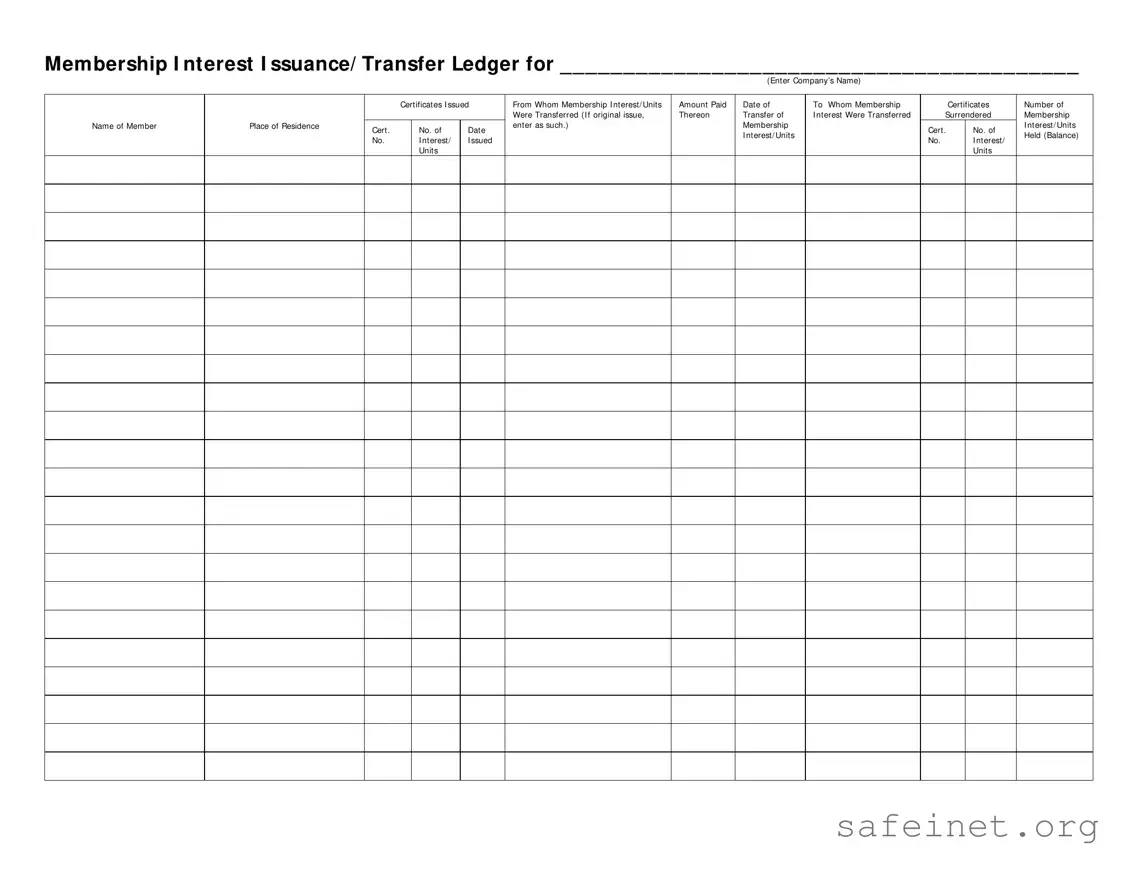
The Membership Ledger form serves as a critical document for tracking the issuance and transfer of membership interests within a company. This form captures essential details such as the company's name, the certificates issued, and the parties involved in each transaction. It provides a structured way to record the amount paid for membership interests, the dates of issuance and transfer, and the names and residences of the members. Additionally, it includes fields for the certificate numbers and the balance of membership interests held by each member. By maintaining accurate records through this form, companies can ensure transparency and compliance in their membership transactions, which is vital for both operational integrity and legal accountability.

Membership I nt erest I ssuance/ Transfer Ledger for _ _ _ _ _ _ _ _ _ _ _ _ _ _ _ _ _ _ _ _ _ _ _ _ _ _ _ _ _ _ _ _ _ _ _ _ _ _ _ _ _
(Enter Company’s Name)
|
|
|
Certificates I ssued |
From Whom Membership I nterest/ Units |
Amount Paid |
Date of |
To Whom Membership |
||
|
|
|
|
|
|
Were Transferred (I f original issue, |
Thereon |
Transfer of |
I nterest Were Transferred |
Name of Member |
Place of Residence |
Cert . |
|
No. of |
Date |
enter as such.) |
|
Membership |
|
|
|
|
|
|
I nterest/ Units |
|
|||
|
|
No. |
|
I nterest/ |
I ssued |
|
|
|
|
|
|
|
|
|
|
|
|||
|
|
|
|
Units |
|
|
|
|
|
|
|
|
|
|
|
|
|
|
|
Certificates
Surrendered
Cert . |
No. of |
No. |
I nterest/ |
|
Units |
|
|
Number of Membership
I nterest/ Units Held (Balance)
| Fact Name | Description |
|---|---|
| Purpose | The Membership Ledger form tracks the issuance and transfer of membership interests in a company, ensuring accurate records of ownership. |
| Information Required | Users must provide details such as the company name, certificates issued, membership interest amounts, transfer dates, and member information. |
| Governing Laws | In the United States, the governing laws may vary by state. Typically, state corporate laws dictate the requirements for maintaining a membership ledger. |
| Record Keeping | Maintaining an accurate ledger is crucial. It serves as a legal document that can be referenced in disputes or for compliance purposes. |
| Transfer Process | The form must be completed whenever a membership interest is transferred, ensuring that all parties involved are properly documented. |
After completing the Membership Ledger form, you will need to ensure all information is accurate and complete. This form will help track the membership interests and their transfers within your organization. Make sure to double-check all entries before submission.
What is the Membership Ledger form used for?
The Membership Ledger form is designed to track the issuance and transfer of membership interests or units within a company. It helps maintain an accurate record of who holds membership interests and the details surrounding any transfers.
What information do I need to provide on the form?
You will need to enter the company’s name, details about certificates issued, the amount paid for membership interests, the date of transfer, and the names and addresses of the members involved. This ensures that all relevant data is captured for record-keeping.
How do I fill out the 'Certificates Issued' section?
In the 'Certificates Issued' section, list the certificate numbers corresponding to the membership interests being issued. Make sure to include the date of issuance and the name of the member receiving the interests.
What if I am transferring membership interests?
If you are transferring membership interests, you need to fill out the 'Transfer of Interest' section. Include the name of the member transferring the interests, the name of the new member, and the certificate numbers involved in the transfer.
Can I use the form for multiple transfers?
Yes, you can use the Membership Ledger form for multiple transfers. Just ensure that each transfer is clearly documented with the relevant details for each transaction. Clarity is key to maintaining accurate records.
What should I do if I lose a certificate?
If a certificate is lost, you should report it and follow your company’s procedure for issuing a replacement. Document this in the ledger to maintain an accurate record of membership interests.
Is there a specific format for entering dates?
While there is no strict format, it is best to use a consistent style, such as MM/DD/YYYY. This helps avoid confusion and keeps records uniform.
How do I calculate the balance of membership interests?
The balance of membership interests can be calculated by taking the total number of interests issued and subtracting any interests that have been surrendered or transferred. This gives you the current holdings of each member.
Who should I contact if I have questions about the form?
If you have questions about the Membership Ledger form, reach out to your company’s contract specialist or administrative office. They can provide guidance and clarify any uncertainties you may have.
Do I need to keep copies of the completed forms?
Yes, it is important to keep copies of all completed forms for your records. This ensures that you have a reliable reference for future transactions and can verify membership interests when needed.
Incomplete Company Name: Failing to fill in the company's name can lead to confusion and complications. Always ensure the company name is fully entered at the top of the form.
Incorrect Certificate Numbers: Entering the wrong certificate numbers can cause discrepancies in records. Double-check each number before submitting the form.
Missing Dates: Omitting dates when certificates were issued or transferred can create issues in tracking membership interests. It is crucial to fill in all relevant dates accurately.
Inaccurate Amounts Paid: Providing incorrect amounts paid for membership interests can lead to financial discrepancies. Ensure that the amounts are precise and match the records.
Neglecting to Sign: Forgetting to sign the form can result in it being deemed invalid. Always remember to sign and date the form before submission.
The Membership Ledger form is essential for tracking membership interests and transfers within an organization. Alongside this form, several other documents often play a critical role in managing membership records and ensuring compliance with regulations. Below is a list of related forms and documents commonly used in conjunction with the Membership Ledger form.
Each of these documents contributes to the overall management of membership records, ensuring clarity and compliance within the organization. Properly maintaining these forms alongside the Membership Ledger helps streamline operations and fosters a transparent membership process.
The Membership Application form is similar to the Membership Ledger form in that both documents track membership details. The Membership Application form collects essential information from new members, such as their name, contact information, and the type of membership they are applying for. This information is crucial for maintaining accurate records of who belongs to the organization. In contrast, the Membership Ledger form serves as a record of membership interests issued and transferred, providing a historical account of each member's status over time.
The Membership Transfer Agreement is another document that parallels the Membership Ledger form. This agreement outlines the terms and conditions under which membership interests can be transferred from one member to another. While the Membership Ledger records the actual transfers that occur, the Membership Transfer Agreement establishes the legal framework for these transactions. Both documents work together to ensure that membership changes are handled properly and transparently.
The Member Roster serves a similar purpose to the Membership Ledger by listing all current members and their respective details. This document typically includes names, contact information, and membership status. While the Membership Ledger focuses on the financial aspects of membership interests, the Member Roster provides a straightforward overview of who is part of the organization, making it easier to manage communications and engagement efforts.
The Certificate of Membership is also akin to the Membership Ledger form, as it represents proof of membership and ownership of interests. Each certificate is issued to a member and indicates the number of membership interests they hold. The Membership Ledger tracks these certificates, noting when they are issued or transferred. Together, these documents ensure that members have the necessary proof of their status within the organization.
The Financial Statement for Members shares similarities with the Membership Ledger in that it provides financial insights related to membership interests. This document outlines the financial contributions made by members, including amounts paid for membership interests. While the Membership Ledger records the transactions of membership interests, the Financial Statement gives a broader view of the financial health of the organization as it relates to its members.
The Meeting Minutes document is another relevant comparison. It captures the discussions and decisions made during meetings, including those related to membership issues. While the Membership Ledger focuses on the individual transactions of membership interests, the Meeting Minutes provide context and rationale for any changes or decisions affecting the membership. Both documents help maintain transparency and accountability within the organization.
Lastly, the Membership Policy document is similar to the Membership Ledger form in that it outlines the rules and regulations governing membership. This document details eligibility criteria, membership benefits, and the process for transferring interests. While the Membership Ledger keeps a record of the actual transactions, the Membership Policy sets the standards and expectations for all members, ensuring everyone understands their rights and responsibilities.
When filling out the Membership Ledger form, it is important to be careful and thorough. Here are some guidelines to help you complete the form correctly:
Following these guidelines will help ensure that the Membership Ledger form is filled out correctly and efficiently. Your attention to detail is appreciated and will help maintain accurate records.
Understanding the Membership Ledger form is essential for anyone involved in managing membership interests. However, several misconceptions often arise. Here are five common misunderstandings:
By clearing up these misconceptions, individuals can better navigate the Membership Ledger form and ensure compliance with membership regulations.
When filling out and using the Membership Ledger form, consider the following key takeaways: