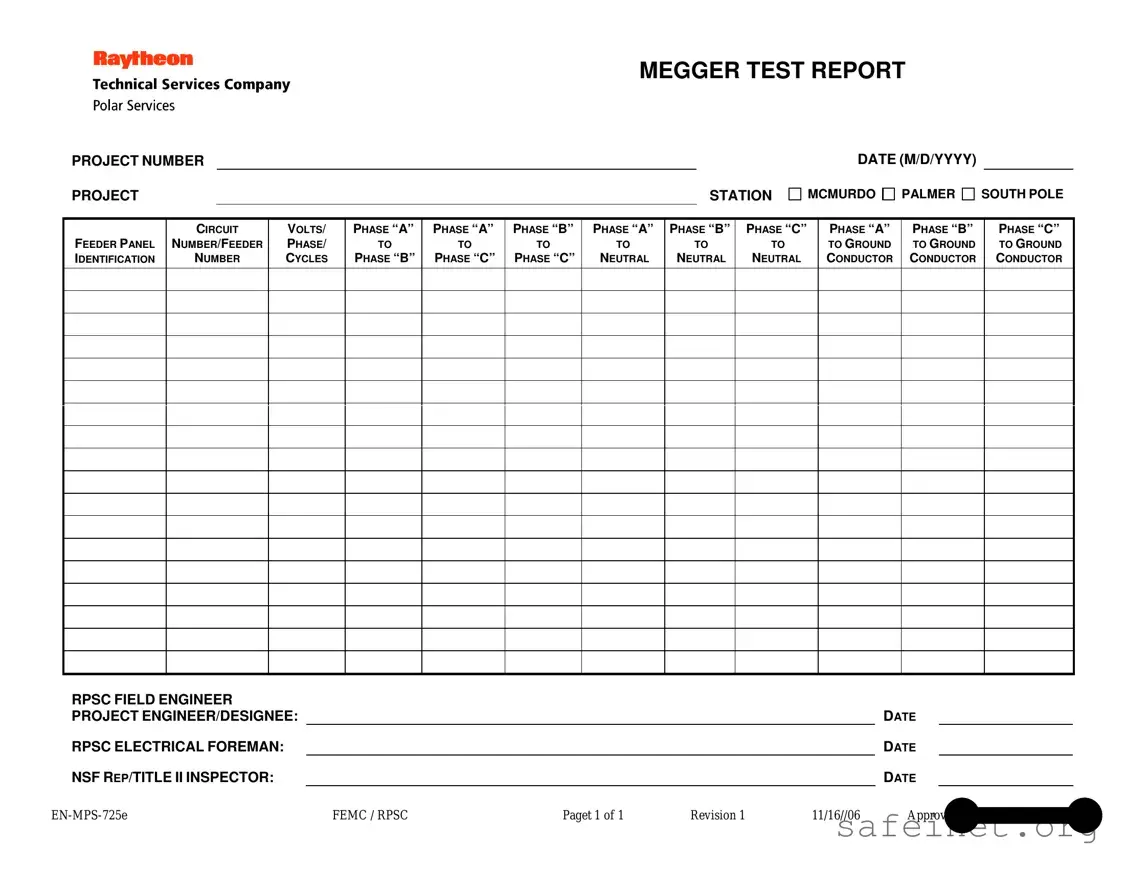
The Megger Test form is an essential document in electrical testing, providing a comprehensive overview of insulation resistance measurements for various circuits. This form is used to record critical data, including project numbers, station locations, and specific dates, ensuring accurate tracking of tests conducted at sites such as McMurdo, Palmer, and the South Pole. It details feeder panel identification and circuit numbers, allowing engineers to pinpoint the exact systems under evaluation. The form captures voltage readings across different phases, including phase-to-phase and phase-to-neutral measurements, which are crucial for assessing the integrity of electrical systems. Additionally, it includes ground conductor readings, providing a complete picture of the electrical environment. The involvement of key personnel, such as the RPSC field engineer and the electrical foreman, is documented with their signatures and dates, reinforcing accountability and traceability. This structured approach not only aids in compliance with safety standards but also facilitates effective communication among project stakeholders.
MEGGER TEST REPORT
PROJECT NUMBER
PROJECT |
|
STATION |
DATE (M/D/YYYY)
MCMURDO PALMER SOUTH POLE
FEEDER PANEL IDENTIFICATION
CIRCUIT
NUMBER/FEEDER
NUMBER
VOLTS/
PHASE/
CYCLES
PHASE “A”
TO
PHASE “B”
PHASE “A”
TO
PHASE “C”
PHASE “B”
TO
PHASE “C”
PHASE “A”
TO
NEUTRAL
PHASE “B”
TO
NEUTRAL
PHASE “C”
TO
NEUTRAL
PHASE “A”
TO GROUND CONDUCTOR
PHASE “B”
TO GROUND CONDUCTOR
PHASE “C”
TO GROUND CONDUCTOR
RPSC FIELD ENGINEER |
|
|
|
|
|
|
PROJECT ENGINEER/DESIGNEE: |
|
|
|
|
DATE |
|
RPSC ELECTRICAL FOREMAN: |
|
|
|
|
DATE |
|
NSF REP/TITLE II INSPECTOR: |
|
|
|
|
DATE |
|
FEMC / RPSC |
Paget 1 of 1 |
Revision 1 |
11/16//06 |
Approved by Wayne L. Cornell |
||
| Fact Name | Details |
|---|---|
| Project Identification | The Megger Test Report includes a project number and station name, ensuring proper documentation and tracking. |
| Date Format | The date is required in the format of Month/Day/Year (M/D/YYYY) for clarity and consistency. |
| Voltage Measurements | It captures voltage measurements between phases, neutral, and ground, which are critical for assessing electrical safety. |
| Responsible Personnel | Signatures from the RPSC Field Engineer, Project Engineer/Designee, Electrical Foreman, and NSF Representative ensure accountability. |
| Revision History | The report includes a revision number and date, indicating the most current version of the document. |
Completing the Megger Test form requires careful attention to detail. Accurate information is essential for proper documentation of the test results. Follow the steps outlined below to ensure that the form is filled out correctly.
What is the purpose of the Megger Test form?
The Megger Test form is used to document the results of insulation resistance testing for electrical systems. It helps ensure that electrical equipment is functioning safely and effectively by measuring the resistance of insulation between conductive parts and the ground. This information is critical for maintaining safety standards and preventing electrical failures.
What information is required on the Megger Test form?
The form requires several key pieces of information, including the project number, project station, date, and feeder panel identification. Additionally, it includes circuit numbers, voltage, and phase measurements. Each phase's insulation resistance to other phases, neutral, and ground must also be recorded to provide a comprehensive overview of the system's insulation integrity.
Who is responsible for filling out the Megger Test form?
The form should be completed by the RPSC field engineer or the project engineer/designee. It is essential that the person filling out the form is knowledgeable about the testing process and the electrical system being tested to ensure accurate and reliable results.
How often should the Megger Test be performed?
The frequency of Megger testing depends on various factors, including the type of equipment, environmental conditions, and industry standards. Generally, it is recommended to conduct these tests annually or whenever significant changes or maintenance occur in the electrical system. Regular testing helps identify potential issues before they become serious problems.
What should be done with the completed Megger Test form?
Once the Megger Test form is completed, it should be reviewed and signed by the responsible personnel, including the RPSC electrical foreman and any relevant inspectors. The signed form should then be kept on file for reference and compliance purposes. Proper documentation is crucial for safety audits and ensuring ongoing maintenance of electrical systems.
Incomplete Project Information: Failing to fill out the project number, project station, or date can lead to confusion. Ensure all relevant details are accurately provided.
Incorrect Identification of Panels: Mislabeling the feeder panel identification or circuit number can cause serious issues in tracking and managing electrical systems.
Omitting Voltage and Phase Details: Not specifying the voltage, phase, or cycles can hinder the test's effectiveness. Always include these critical measurements.
Errors in Phase Measurements: Mistakes in recording phase-to-phase or phase-to-neutral readings can result in inaccurate test results. Double-check these values.
Neglecting Grounding Information: Failing to provide details about phase-to-ground measurements can overlook potential safety hazards. Always include these readings.
Missing Signatures: Not obtaining the necessary signatures from the RPSC field engineer, project engineer, or electrical foreman can render the report incomplete.
Using Outdated Forms: Submitting a form that is not the latest version can lead to compliance issues. Always ensure you are using the most current form available.
The Megger Test form is an essential document used in electrical testing to ensure safety and functionality. Several other forms and documents often accompany this report, each serving a specific purpose in the testing and documentation process. Below is a list of these related documents.
These documents collectively enhance the reliability and safety of electrical systems. They ensure that all necessary information is available for review and that proper procedures are followed throughout the testing process.
The Megger Test form is similar to an Electrical Inspection Report. Both documents serve to assess the integrity and safety of electrical systems. An Electrical Inspection Report typically includes details about the components inspected, the findings, and any recommendations for repairs or improvements. Like the Megger Test form, it emphasizes the importance of documenting electrical conditions to ensure compliance with safety standards.
Another comparable document is the Circuit Testing Report. This report focuses on the performance of specific circuits under various conditions. It includes measurements such as voltage, current, and resistance, similar to the Megger Test form's measurements of insulation resistance. Both documents aim to provide a clear picture of electrical performance and safety.
The Equipment Maintenance Log is also similar to the Megger Test form. This log tracks the maintenance activities performed on electrical equipment, including testing results. Both documents highlight the importance of regular testing and maintenance to prevent electrical failures. They serve as records that can be referenced for future inspections or audits.
A Safety Inspection Checklist shares similarities with the Megger Test form as well. This checklist is used to evaluate the safety of electrical installations. It typically includes sections for documenting findings and corrective actions. Like the Megger Test, it emphasizes the need for thorough documentation to ensure safety compliance.
The Test and Tag Report is another related document. This report is used to document the testing of electrical appliances and equipment for safety compliance. It includes details about the tests performed and the results, similar to the Megger Test form. Both documents are essential for maintaining electrical safety standards in various environments.
Lastly, the Compliance Certification Document is similar to the Megger Test form. This document certifies that electrical systems meet specific regulatory standards. It often includes test results and compliance details. Like the Megger Test form, it serves as an official record that can be used to demonstrate adherence to safety regulations.
When filling out the Megger Test form, it's important to follow certain guidelines to ensure accuracy and compliance. Here are five things to do and avoid:
Understanding the Megger Test is important for electrical safety and efficiency. However, several misconceptions exist about this testing method. Here are six common misconceptions:
Clearing up these misconceptions can help ensure that Megger Tests are conducted effectively and safely, leading to better electrical system management.
When filling out and using the Megger Test form, it’s important to keep several key points in mind to ensure accuracy and clarity. Here are some essential takeaways: