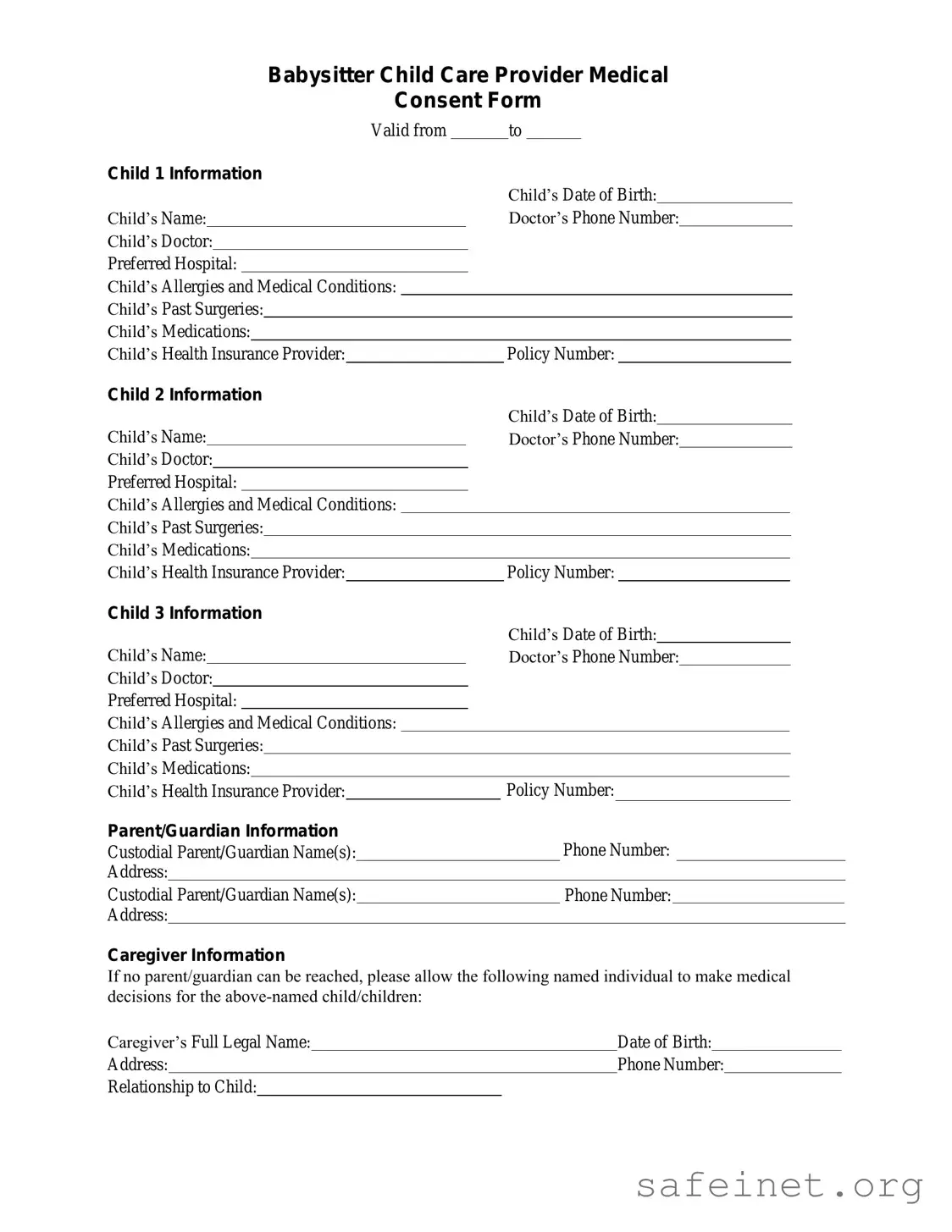
When parents or guardians leave their children in the care of a babysitter, ensuring that those caregivers have the necessary information to make informed medical decisions is crucial. The Medical Consent Babysitter form serves as a vital tool in this process, outlining essential details about each child’s health. This form typically includes sections for multiple children, allowing parents to provide information such as the child’s name, date of birth, doctor’s contact details, and any allergies or medical conditions. It also captures past surgeries and current medications, which are important for any caregiver to know in case of an emergency. Additionally, the form designates preferred hospitals and outlines the health insurance provider, ensuring that proper medical care can be accessed swiftly. In the event that a parent or guardian cannot be reached, the form allows for the appointment of a caregiver who can make medical decisions on behalf of the children. This includes authorizing the use of life-saving devices, sharing personal information with emergency personnel, and arranging for ambulance transport if necessary. By filling out this form, parents not only safeguard their children’s health but also provide peace of mind for both caregivers and themselves.
|
|
|
|
|
|
|
|
Babysitter Child Care Provider Medical |
|
||||||||||||||||||||
|
|
|
|
|
|
|
|
|
|
Consent Form |
|
||||||||||||||||||
|
|
|
|
|
|
|
|
|
|
Valid from |
|
|
|
to |
|
|
|
||||||||||||
Child 1 Information |
|
|
|
|
|
|
|
|
|
|
|
|
|
||||||||||||||||
|
|
|
|
|
|
|
|
|
|
|
|
|
|
|
|
|
|
Child’s Date of Birth: |
|
|
|||||||||
Child’s Name: |
|
|
Doctor’s Phone Number: |
|
|||||||||||||||||||||||||
|
|
|
|
|
|
|
|
|
|
|
|
|
|
|
|
|
|||||||||||||
Child’s Doctor: |
|
|
|
|
|
|
|
|
|
|
|
|
|
|
|
||||||||||||||
Preferred Hospital: |
|
|
|
|
|
|
|
|
|
|
|
|
|
|
|
||||||||||||||
Child’s Allergies and Medical Conditions: |
|
|
|
|
|
|
|
|
|
|
|
|
|
|
|||||||||||||||
Child’s Past Surgeries: |
|
|
|
|
|
|
|
|
|
|
|
|
|
|
|||||||||||||||
Child’s Medications: |
|
|
|
|
|
|
|
|
|
|
|
|
|
|
|||||||||||||||
Child’s Health Insurance Provider: |
|
|
Policy Number: |
|
|
||||||||||||||||||||||||
Child 2 Information |
|
|
|
|
|
|
|
|
|
|
|
|
|
||||||||||||||||
|
|
|
|
|
|
|
|
|
|
|
|
|
|
|
|
|
|
Child’s Date of Birth: |
|
|
|||||||||
Child’s Name: |
|
|
|
|
|
|
|
Doctor’s Phone Number: |
|
||||||||||||||||||||
Child’s Doctor: |
|
|
|
|
|
|
|
|
|
|
|
|
|
|
|
||||||||||||||
|
|
|
|
|
|
|
|
|
|
|
|
|
|||||||||||||||||
Preferred Hospital: |
|
|
|
|
|
|
|
|
|
|
|
|
|
|
|
||||||||||||||
Child’s Allergies and Medical Conditions: |
|
|
|
|
|
|
|
|
|
|
|
|
|
|
|||||||||||||||
Child’s Past Surgeries: |
|
|
|
|
|
|
|
|
|
|
|
|
|
|
|||||||||||||||
Child’s Medications: |
|
|
|
|
|
|
|
|
|
|
|
|
|
|
|||||||||||||||
Child’s Health Insurance Provider: |
|
|
Policy Number: |
|
|
||||||||||||||||||||||||
Child 3 Information |
|
|
|
|
|
|
|
|
|
|
|
|
|
||||||||||||||||
|
|
|
|
|
|
|
|
|
|
|
|
|
|
|
|
|
|
Child’s Date of Birth: |
|
|
|||||||||
Child’s Name: |
|
|
Doctor’s Phone Number: |
|
|||||||||||||||||||||||||
|
|
|
|
|
|
|
|
|
|
|
|
|
|
|
|
|
|
|
|
|
|
|
|
|
|||||
Child’s Doctor: |
|
|
|
|
|
|
|
|
|
|
|
|
|
|
|
||||||||||||||
|
|
|
|
|
|
|
|
|
|
|
|
|
|||||||||||||||||
Preferred Hospital: |
|
|
|
|
|
|
|
|
|
|
|
|
|
|
|
||||||||||||||
Child’s Allergies and Medical Conditions: |
|
|
|
|
|
|
|
|
|
|
|
|
|
|
|||||||||||||||
Child’s Past Surgeries: |
|
|
|
|
|
|
|
|
|
|
|
|
|
||||||||||||||||
Child’s Medications: |
|
|
|
|
|
|
|
|
|
|
|
|
|
|
|
||||||||||||||
Child’s Health Insurance Provider: |
|
|
Policy Number: |
|
|||||||||||||||||||||||||
Parent/Guardian Information |
|
|
|
|
|
|
|
|
|
|
|
|
|
||||||||||||||||
Custodial Parent/Guardian Name(s): |
|
|
|
|
Phone Number: |
|
|||||||||||||||||||||||
Address: |
|
|
|
|
|
|
|
|
|
|
|
|
|
|
|
||||||||||||||
Custodial Parent/Guardian Name(s): |
|
|
|
|
Phone Number: |
|
|||||||||||||||||||||||
Address: |
|
|
|
|
|
|
|
|
|
|
|
|
|
|
|
||||||||||||||
Caregiver Information
If no parent/guardian can be reached, please allow the following named individual to make medical decisions for the
Caregiver’s Full Legal Name: |
|
|
Date of Birth: |
|
|||
Address: |
|
|
Phone Number: |
||||
|
|
|
|
|
|
|
|
Relationship to Child: |
|
|
|
|
|
||

Minor Medical Consent |
|
In case of an emergency, I grant permission to |
to make medical decisions |
for my child/children until one parent/guardian can be reached. Medical decisions I authorize the above named individual to make include:
□ Sharing personal information about my child/children with emergency personnel. □ Authorizing use of
□ Authorizing use of an ambulance for transport. □ Other:
Parent/Guardian Name: |
|
Signature: |
|
Date: |
|
|
Witness Name: |
|
Signature: |
|
Date: |
|
|
Parent/Guardian Name: |
|
Signature: |
|
Date: |
|
|
Witness Name: |
|
Signature: |
|
Date: |
|
|
In case of an emergency, I agree to make medical decisions for the above named child/children until one parent/guardian can be reached.
Caregiver Name: |
|
Signature: |
Date: |
|
Witness: |
||
|
|
|
|
|
|
|
|
Witness Name: |
|
|
Signature: |
Date: |
|
|
|
|
|
|
|
|
|
|
|
| Fact Name | Description |
|---|---|
| Purpose of the Form | The Medical Consent Babysitter form is designed to grant permission for a caregiver to make medical decisions for children in the absence of a parent or guardian. |
| Information Required | The form collects essential information, including the child's medical history, allergies, and contact details for parents or guardians, ensuring that caregivers have necessary medical information at hand. |
| Legal Standing | In many states, such as California and New York, this form operates under the principle of implied consent, allowing caregivers to act in the best interest of a child during emergencies. |
| Emergency Protocol | By signing the form, parents authorize caregivers to make critical medical decisions, such as calling for an ambulance or using life-saving devices, until a parent or guardian can be contacted. |
Filling out the Medical Consent Babysitter form is an important step in ensuring that your child receives the necessary medical care in case of an emergency. This form provides essential information about your child's health and authorizes a caregiver to make medical decisions if you cannot be reached. Here’s how to complete the form step by step.
What is the purpose of the Medical Consent Babysitter form?
The Medical Consent Babysitter form is designed to provide essential medical information about your child or children to caregivers in case of an emergency. It allows a designated individual to make medical decisions on behalf of your child if you cannot be reached. This form ensures that caregivers have access to critical details such as allergies, medications, and emergency contacts, which can be vital for prompt medical care.
What information is required for each child on the form?
For each child, the form requires specific details including the child's name, date of birth, doctor’s contact information, preferred hospital, allergies, medical conditions, past surgeries, current medications, health insurance provider, and policy number. This comprehensive information helps caregivers make informed decisions regarding medical care in emergencies.
Who can make medical decisions for my child if I am unavailable?
The form allows you to designate a caregiver who can make medical decisions for your child if neither parent or guardian can be reached. This individual’s full legal name, date of birth, address, phone number, and relationship to the child must be provided. It is important to choose someone you trust to act in your child's best interest during emergencies.
What permissions are granted to the designated caregiver?
The form grants the designated caregiver permission to make various medical decisions, including sharing personal information with emergency personnel, authorizing the use of life-saving medical devices, and arranging for ambulance transport if necessary. You may also specify any additional medical decisions you authorize the caregiver to make.
How do I ensure the form is valid and effective?
To ensure the form is valid, it must be signed by both parents or guardians and witnessed. It is also important to keep the form updated with current information regarding your child’s health and your designated caregiver. Providing copies to the caregiver and keeping one on file at home can help facilitate quick access in an emergency.
Filling out the Medical Consent Babysitter form can be a straightforward process, but several common mistakes can lead to complications in emergencies. Here are eight mistakes to avoid:
Failing to provide complete information for each child can hinder medical personnel from delivering necessary care. Ensure that all sections for each child are filled out accurately.
Providing an incorrect phone number for the child’s doctor can delay medical treatment. Double-check the contact information to ensure it is current.
Overlooking this section can have serious consequences. Be thorough in listing any allergies or medical conditions to ensure safety.
It is essential to include multiple emergency contacts. Failing to do so can result in delays in reaching someone who can make decisions on behalf of the child.
Providing incorrect policy numbers or insurance provider details can complicate access to medical services. Verify all insurance information before submission.
All required signatures must be present. A missing signature could render the form invalid, leaving caregivers without the authority to make medical decisions.
As children grow and their medical needs change, it is crucial to keep the form updated. Regularly review and revise the information as necessary.
If a parent or guardian cannot be reached, the designated caregiver's information must be complete. Ensure that this person is aware of their responsibilities and can be contacted easily.
By avoiding these mistakes, parents and guardians can help ensure that their children receive the best possible care in emergencies. Always take the time to review the form thoroughly before submitting it.
When preparing for a babysitter to care for your children, having the right documents in place is crucial. Alongside the Medical Consent Babysitter form, several other forms can help ensure that your child's care is managed effectively and safely. Below is a list of commonly used documents that can complement the medical consent form.
Having these forms prepared can streamline communication and enhance the overall safety and well-being of your children while in the care of a babysitter. It’s always better to be proactive and ensure that everyone involved is well-informed and ready to handle any situation that may arise.
The Medical Consent Babysitter form shares similarities with the Child Medical Consent form. Both documents allow parents or guardians to authorize another individual to make medical decisions for their child in case of an emergency. They typically require details about the child's medical history, allergies, and emergency contacts. This ensures that caregivers have the necessary information to act quickly and responsibly in critical situations.
Another related document is the Emergency Medical Authorization form. Like the Medical Consent Babysitter form, it grants permission for medical treatment when a parent or guardian cannot be reached. This form often includes sections for listing medical conditions, medications, and emergency contacts. Its primary purpose is to ensure that medical professionals can provide care without delay during emergencies.
The School Medical Authorization form is also similar. Parents fill out this form to allow school staff to administer medications or make medical decisions for their children during school hours. It requires information about the child’s health, medications, and emergency contacts, mirroring the structure of the Medical Consent Babysitter form. This ensures that children receive necessary care while at school.
The Child Care Medical Consent form serves a similar purpose as well. This document allows daycare providers to make medical decisions for children in their care. It typically includes sections for the child’s medical history, allergies, and emergency contacts. The aim is to provide caregivers with the information they need to act in the best interest of the child during emergencies.
The Authorization for Treatment form is another document that resembles the Medical Consent Babysitter form. This form is often used in medical settings to allow healthcare providers to treat minors when parents are unavailable. It contains similar information regarding the child’s health and emergency contacts, ensuring that timely medical care can be provided.
The Parental Consent for Medical Treatment form is also comparable. This document allows parents to authorize specific medical treatments for their child when they are not present. It includes details about the child’s medical history and emergency contacts, ensuring that caregivers can make informed decisions in urgent situations.
The Health Care Proxy form has similarities as well. While it is typically used for adults, it allows individuals to designate someone to make medical decisions on their behalf. In the case of minors, a parent can designate a caregiver to act in their stead during emergencies. This ensures that the designated individual has the authority to make critical decisions when needed.
Finally, the Minor’s Medical Release form is relevant. This document allows parents to give permission for a minor to receive medical treatment without a parent present. It includes sections for the child’s medical history and emergency contacts. Like the Medical Consent Babysitter form, it prioritizes the child’s health and well-being by ensuring that medical care can be provided without unnecessary delays.
When filling out the Medical Consent Babysitter form, it is essential to ensure accuracy and clarity. Here are five things to do and not to do:
Here are six common misconceptions about the Medical Consent Babysitter form:
Filling out the Medical Consent Babysitter form is essential for ensuring your child's safety while in the care of a babysitter. Here are key takeaways to consider:
Taking these steps will help ensure that your children receive prompt and appropriate medical care if needed.