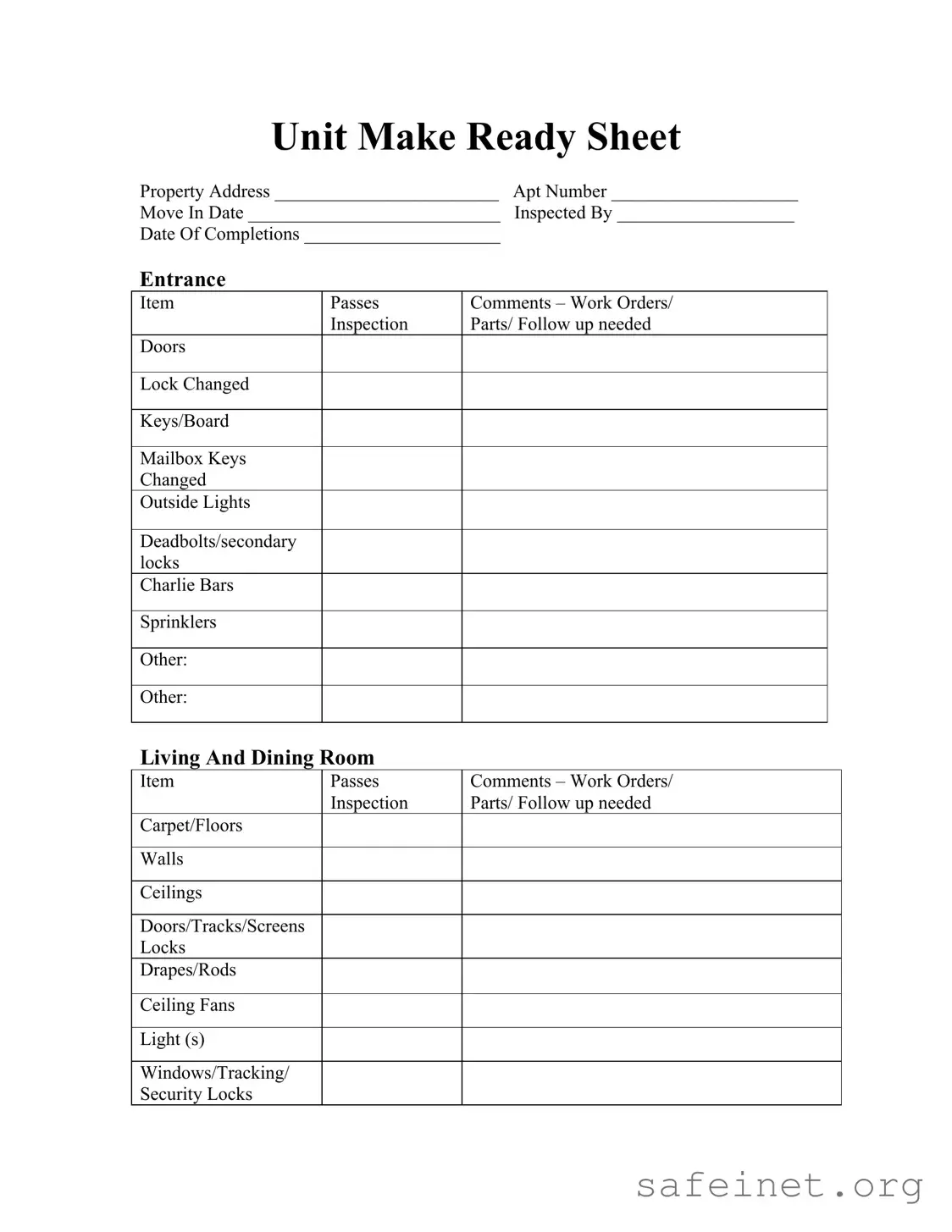
The Make Ready Checklist form serves as a vital tool in ensuring that rental units are fully prepared for new tenants. This comprehensive document covers various aspects of a property, from the entrance to individual rooms, and even includes outdoor areas. Each section prompts inspectors to evaluate specific items, such as doors, windows, and appliances, and allows for detailed comments on any necessary work orders or follow-ups. The checklist addresses critical elements like safety features, including locks and smoke alarms, as well as aesthetic considerations, such as paint and flooring. By meticulously documenting the condition of each area, this form helps property managers maintain high standards and provides transparency for both landlords and tenants. Ultimately, the Make Ready Checklist is not just about meeting legal requirements; it’s about creating a welcoming and functional living environment for new residents.
Unit Make Ready Sheet
Property Address ________________________ Apt Number ____________________
Move In Date ___________________________ Inspected By ___________________
Date Of Completions _____________________
Entrance
Item |
Passes |
Comments – Work Orders/ |
|
Inspection |
Parts/ Follow up needed |
Doors |
|
|
|
|
|
Lock Changed |
|
|
|
|
|
Keys/Board |
|
|
|
|
|
Mailbox Keys |
|
|
Changed |
|
|
Outside Lights |
|
|
|
|
|
Deadbolts/secondary |
|
|
locks |
|
|
Charlie Bars |
|
|
|
|
|
Sprinklers |
|
|
|
|
|
Other: |
|
|
|
|
|
Other: |
|
|
|
|
|
Living And Dining Room
Item |
Passes |
Comments – Work Orders/ |
|
Inspection |
Parts/ Follow up needed |
Carpet/Floors |
|
|
|
|
|
Walls |
|
|
|
|
|
Ceilings |
|
|
|
|
|
Doors/Tracks/Screens |
|
|
Locks |
|
|
Drapes/Rods |
|
|
|
|
|
Ceiling Fans |
|
|
|
|
|
Light (s) |
|
|
|
|
|
Windows/Tracking/ |
|
|
Security Locks |
|
|
Patio/Balcony/Door
Item |
Passes |
Comments – Work Orders/ |
|
Inspection |
Parts/ Follow up needed |
Railings/Fence |
|
|
|
|
|
Floor |
|
|
|
|
|
Outside Lights |
|
|
|
|
|
Entrance Door |
|
|
Painted/Exterior |
|
|
Outside Closets |
|
|
|
|
|
Patio Door/Screen |
|
|
|
|
|
Other: |
|
|
|
|
|
Kitchen
Item |
Passes |
Comments – Work Orders/ |
|
Inspection |
Parts/ Follow up needed |
Stove/Drawer |
|
|
|
|
|
Burners |
|
|
|
|
|
Drip Pan |
|
|
Oven Door |
|
|
|
|
|
Racks |
|
|
|
|
|
Oven Liner |
|
|
Refrigerator/Rack/ |
|
|
Condensate Plate |
|
|
Light |
|
|
|
|
|
Crisper |
|
|
Thermostat |
|
|
|
|
|
Racks |
|
|
|
|
|
Dishwasher/Operating/ |
|
|
Leaking |
|
|
Basket |
|
|
|
|
|
Racks |
|
|
|
|
|
Wheels |
|
|
Sink/Stopper/Leaking |
|
|
Washer |
|
|
|
|
|
|
|
|
|
|
|
Seats |
|
|
Sprayer |
|
|
Strainer |
|
|
|
|
|
Aerator |
|
|
|
|
|
Disposal/Leaking |
|
|
Kitchen Continued
Item |
Passes |
Comments – Work Orders/ |
|
Inspection |
Parts/ Follow up needed |
Moisture Anywhere |
|
|
|
|
|
Range/Hood/Filter/Fan |
|
|
|
|
|
Walls |
|
|
|
|
|
Ceilings |
|
|
|
|
|
Floor/Tile |
|
|
|
|
|
Cabinets/Counter |
|
|
|
|
|
Lighting/Outlets/ |
|
|
Switchplates/GFI’s |
|
|
HVAC Vents |
|
|
|
|
|
Windows/Screens/ |
|
|
Locks/Pins |
|
|
Drawers |
|
|
|
|
|
Other: |
|
|
|
|
|
Other: |
|
|
|
|
|
Bedroom 1
Item |
Passes |
Comments – Work Orders/ |
|
Inspection |
Parts/ Follow up needed |
Walls |
|
|
|
|
|
Ceilings |
|
|
|
|
|
Carpets/Floors |
|
|
|
|
|
Doors/Stops |
|
|
|
|
|
Windows/Locks/ |
|
|
Screens/Pins |
|
|
Drapes/Rods |
|
|
|
|
|
Lighting/Outlets |
|
|
|
|
|
Closets/Doors |
|
|
|
|
|
A/C / Vents |
|
|
|
|
|
Other: |
|
|
|
|
|
Other: |
|
|
|
|
|
Bedroom 2
Item |
Passes |
Comments – Work Orders/ |
|
Inspection |
Parts/ Follow up needed |
Walls |
|
|
|
|
|
Ceilings |
|
|
|
|
|
Carpets/Floors |
|
|
|
|
|
Doors/Stops |
|
|
|
|
|
Windows/Locks/ |
|
|
Screens/Pins |
|
|
Drapes/Rods |
|
|
|
|
|
Lighting/Outlets |
|
|
|
|
|
Closets/Doors |
|
|
|
|
|
A/C / Vents |
|
|
|
|
|
Other: |
|
|
|
|
|
Other: |
|
|
|
|
|
Bedroom 3
Item |
Passes |
Comments – Work Orders/ |
|
Inspection |
Parts/ Follow up needed |
Walls |
|
|
|
|
|
Ceilings |
|
|
|
|
|
Carpets/Floors |
|
|
|
|
|
Doors/Stops |
|
|
|
|
|
Windows/Locks/ |
|
|
Screens/Pins |
|
|
Drapes/Rods |
|
|
|
|
|
Lighting/Outlets |
|
|
|
|
|
Closets/Doors |
|
|
|
|
|
A/C / Vents |
|
|
|
|
|
Other: |
|
|
|
|
|
Other: |
|
|
|
|
|
Hallways
Item |
Passes |
Comments – Work Orders/ |
|
Inspection |
Parts/ Follow up needed |
|
|
|
Air Handler |
|
|
|
|
|
Air Filter/Sticker |
|
|
|
|
|
Fire Extinguisher |
|
|
|
|
|
Smoke Alarm |
|
|
|
|
|
Ceilings |
|
|
|
|
|
Walls |
|
|
|
|
|
Carpet/Floors |
|
|
|
|
|
Closet/Doors |
|
|
|
|
|
Lighting/Outlets |
|
|
|
|
|
Other: |
|
|
|
|
|
Other: |
|
|
|
|
|
Bathroom 1
Item |
Passes |
Comments – Work Orders/ |
|
Inspection |
Parts/ Follow up needed |
|
|
|
Walls |
|
|
|
|
|
Ceiling |
|
|
Floor/Tiles |
|
|
|
|
|
Bath Tile/Grout |
|
|
|
|
|
Shower/Tub |
|
|
|
|
|
Toilette/Seat |
|
|
|
|
|
Check Plumbing/ |
|
|
Stopper |
|
|
|
|
|
Vent Fan |
|
|
|
|
|
Cabinet/Counter |
|
|
|
|
|
Sink |
|
|
|
|
|
Doors/Stops |
|
|
|
|
|
Lighting/Outlets/GFI’s |
|
|
|
|
|
Med Cab/Mirrors |
|
|
|
|
|
Towel Bars/Shower |
|
|
Rods |
|
|
|
|
|
Heater |
|
|
Mold/Mildew |
|
|
|
|
|
Fans |
|
|
|
|
|
Leaks |
|
|
|
|
|
Other |
|
|
|
|
|
Bathroom 2
Item |
Passes |
Comments – Work Orders/ |
|
Inspection |
Parts/ Follow up needed |
|
|
|
Walls |
|
|
|
|
|
Ceiling |
|
|
|
|
|
Floor/Tiles |
|
|
|
|
|
Bath Tile/Grout |
|
|
|
|
|
Shower/Tub |
|
|
|
|
|
Toilette/Seat |
|
|
|
|
|
Check Plumbing/ |
|
|
Stopper |
|
|
|
|
|
Vent Fan |
|
|
|
|
|
Cabinet/Counter |
|
|
Sink |
|
|
|
|
|
Doors/Stops |
|
|
|
|
|
Lighting/Outlets/GFI’s |
|
|
|
|
|
Med Cab/Mirrors |
|
|
|
|
|
Towel Bars/Shower |
|
|
Rods |
|
|
|
|
|
Heater |
|
|
|
|
|
Mold/Mildew |
|
|
|
|
|
Fans |
|
|
|
|
|
Leaks |
|
|
|
|
|
Other |
|
|
|
|
|
| Fact Name | Description |
|---|---|
| Purpose | The Make Ready Checklist form is designed to ensure that a rental unit is thoroughly inspected and prepared for new tenants. It covers various areas of the property, including the kitchen, bedrooms, and bathrooms. |
| Inspection Areas | This checklist includes multiple sections, each addressing specific areas of the unit. Items such as doors, windows, appliances, and plumbing fixtures are evaluated for functionality and safety. |
| Comments Section | For each item inspected, there is a comments section. This allows inspectors to note any issues that need addressing, which can help streamline repairs and maintenance before new tenants move in. |
| Legal Requirement | In many states, landlords are required to maintain rental properties in a habitable condition. The Make Ready Checklist helps ensure compliance with local housing laws and regulations. |
| Completion Date | The form requires a date of completion. This is important for record-keeping and can be useful in disputes regarding the readiness of the unit for occupancy. |
| State-Specific Forms | Some states may have specific requirements for the Make Ready Checklist under landlord-tenant laws. It’s essential to consult local regulations to ensure compliance. |
Completing the Make Ready Checklist form is an important step in preparing a unit for a new tenant. This checklist ensures that all necessary inspections and repairs are documented, facilitating a smooth transition for the incoming resident. Follow the steps below to accurately fill out the form.
What is the purpose of the Make Ready Checklist form?
The Make Ready Checklist form is designed to ensure that a rental unit is fully prepared for a new tenant. It provides a comprehensive list of items to inspect and verify before the tenant moves in. This helps property managers and maintenance teams identify necessary repairs and maintenance tasks, ensuring a smooth transition for the new resident.
Who is responsible for filling out the Make Ready Checklist?
The checklist is typically filled out by the property manager or maintenance staff. They conduct a thorough inspection of the unit and note any issues that need to be addressed. This responsibility ensures that all aspects of the unit are evaluated before a tenant takes possession.
What items are included in the Make Ready Checklist?
The checklist covers various areas of the unit, including entrances, living and dining rooms, bedrooms, kitchens, bathrooms, and hallways. Each section lists specific items to inspect, such as doors, windows, appliances, and plumbing fixtures. Comments can be added for any work orders or follow-ups needed, ensuring nothing is overlooked.
How does the checklist help with maintenance?
The checklist serves as a valuable tool for tracking maintenance needs. By documenting the condition of each item, property managers can prioritize repairs and ensure that everything is in working order before the tenant arrives. This proactive approach minimizes future issues and enhances tenant satisfaction.
What should be done if an item fails inspection?
If an item fails inspection, it should be noted in the comments section of the checklist. The property manager or maintenance staff should then create a work order to address the issue. Timely follow-up is crucial to ensure that repairs are completed before the tenant's move-in date.
Is there a specific timeline for completing the Make Ready Checklist?
Yes, the Make Ready Checklist should be completed well in advance of the tenant's move-in date. Ideally, inspections and any necessary repairs should be finalized at least a few days before the new resident arrives. This timeline allows for any unexpected issues to be resolved, ensuring a seamless move-in experience.
Neglecting to Fill in Basic Information: Failing to complete essential fields such as the property address, apartment number, or move-in date can lead to confusion and delays in processing.
Inconsistent Use of Terminology: Using different terms for the same items can create misunderstandings. Consistency in language is crucial for clear communication.
Skipping the 'Passes' Section: Not marking whether items pass inspection can lead to oversight of necessary repairs. Each item should be thoroughly evaluated.
Insufficient Comments: Providing vague or no comments for items needing work orders can hinder effective follow-up. Detailed notes help ensure all issues are addressed.
Ignoring Follow-Up Needs: Failing to indicate follow-up actions needed for specific items can result in unresolved issues, affecting tenant satisfaction.
Overlooking Safety Items: Not checking essential safety features like smoke alarms and fire extinguishers can create serious risks for future occupants.
Inadequate Inspection of Common Areas: Focusing solely on individual units while neglecting hallways and shared spaces can lead to a poor overall living environment.
Failure to Document Condition: Not documenting the condition of items accurately can lead to disputes over damages or repairs when tenants move out.
Rushing Through the Checklist: Hurrying to complete the checklist can result in missed items or incomplete evaluations. Taking time ensures thoroughness.
Not Involving All Relevant Parties: Failing to have all necessary personnel involved in the inspection can lead to oversights. Collaboration ensures a comprehensive review.
The Make Ready Checklist form is an essential tool for ensuring that a rental unit is prepared for new tenants. Several other documents complement this checklist, helping to streamline the process and maintain clear communication among property managers, maintenance staff, and tenants. Below is a list of related forms and documents that are often utilized alongside the Make Ready Checklist.
Using these documents in conjunction with the Make Ready Checklist can enhance the efficiency of the move-in process and foster positive relationships between landlords and tenants. Clear documentation helps protect everyone involved and ensures that expectations are met.
The Move-In Inspection Checklist serves a similar purpose to the Make Ready Checklist. It is designed to document the condition of a rental unit before a new tenant moves in. This checklist focuses on identifying any existing damages or maintenance issues that need to be addressed. By comparing the two, one can see that both documents aim to ensure that the unit is in good condition, but the Move-In Inspection Checklist may include additional tenant-specific concerns, such as personal preferences regarding cleanliness or minor repairs.
The Maintenance Request Form also shares similarities with the Make Ready Checklist. While the Make Ready Checklist is used before a tenant moves in, the Maintenance Request Form is utilized after a tenant has already occupied the unit. Both documents emphasize the importance of documenting issues that require attention, but the Maintenance Request Form is more focused on ongoing maintenance needs rather than preparing a unit for a new occupant.
The Property Condition Report is another document that aligns closely with the Make Ready Checklist. This report is often used by property managers to assess the overall state of a property. Like the Make Ready Checklist, it includes detailed observations about various aspects of the property, such as plumbing, electrical systems, and general cleanliness. The primary difference lies in its broader scope, as it may cover multiple units or common areas, while the Make Ready Checklist zeroes in on a specific unit.
The Tenant Move-Out Checklist is akin to the Make Ready Checklist in that it documents the condition of a unit, but it is utilized when a tenant vacates the property. This checklist serves to identify any damages or necessary repairs before the unit is prepared for the next occupant. Both checklists aim to maintain the property’s condition and ensure that any issues are addressed promptly, though the Tenant Move-Out Checklist focuses on the departure phase rather than the arrival phase.
The Inspection Report, often used by inspectors or property management, has a similar function to the Make Ready Checklist. It provides a detailed assessment of a property’s condition, including safety features, structural integrity, and compliance with local regulations. While the Make Ready Checklist is specific to preparing a unit for a new tenant, the Inspection Report may cover a wider range of issues, including long-term maintenance concerns and compliance with housing codes.
The Safety Inspection Checklist is another document that parallels the Make Ready Checklist. It focuses specifically on safety features within the property, such as smoke detectors, carbon monoxide detectors, and fire extinguishers. Both documents aim to ensure the property is safe for occupants. However, the Safety Inspection Checklist is more narrowly focused on safety compliance, while the Make Ready Checklist encompasses a broader range of living conditions and maintenance issues.
Lastly, the Inventory Checklist is similar in that it documents the contents and condition of the unit at the time of move-in. This checklist often includes items such as appliances and furniture, noting their condition and any existing wear and tear. While the Make Ready Checklist focuses on the physical state of the unit itself, the Inventory Checklist provides a comprehensive overview of the items within the unit, ensuring both the landlord and tenant are aware of the property’s contents at the start of the lease.
When filling out the Make Ready Checklist form, it’s important to ensure accuracy and thoroughness. Here are six tips to keep in mind:
Understanding the Make Ready Checklist form is crucial for ensuring a smooth transition for new tenants. However, several misconceptions can lead to confusion. Here are five common misunderstandings:
By addressing these misconceptions, everyone involved can better understand the importance of the Make Ready Checklist form and ensure a successful move-in experience for new tenants.
Using the Make Ready Checklist form effectively ensures that a rental unit is prepared for new tenants. Here are some key takeaways to keep in mind:
By following these takeaways, you can help ensure a smooth transition for new tenants and maintain the quality of your rental property.