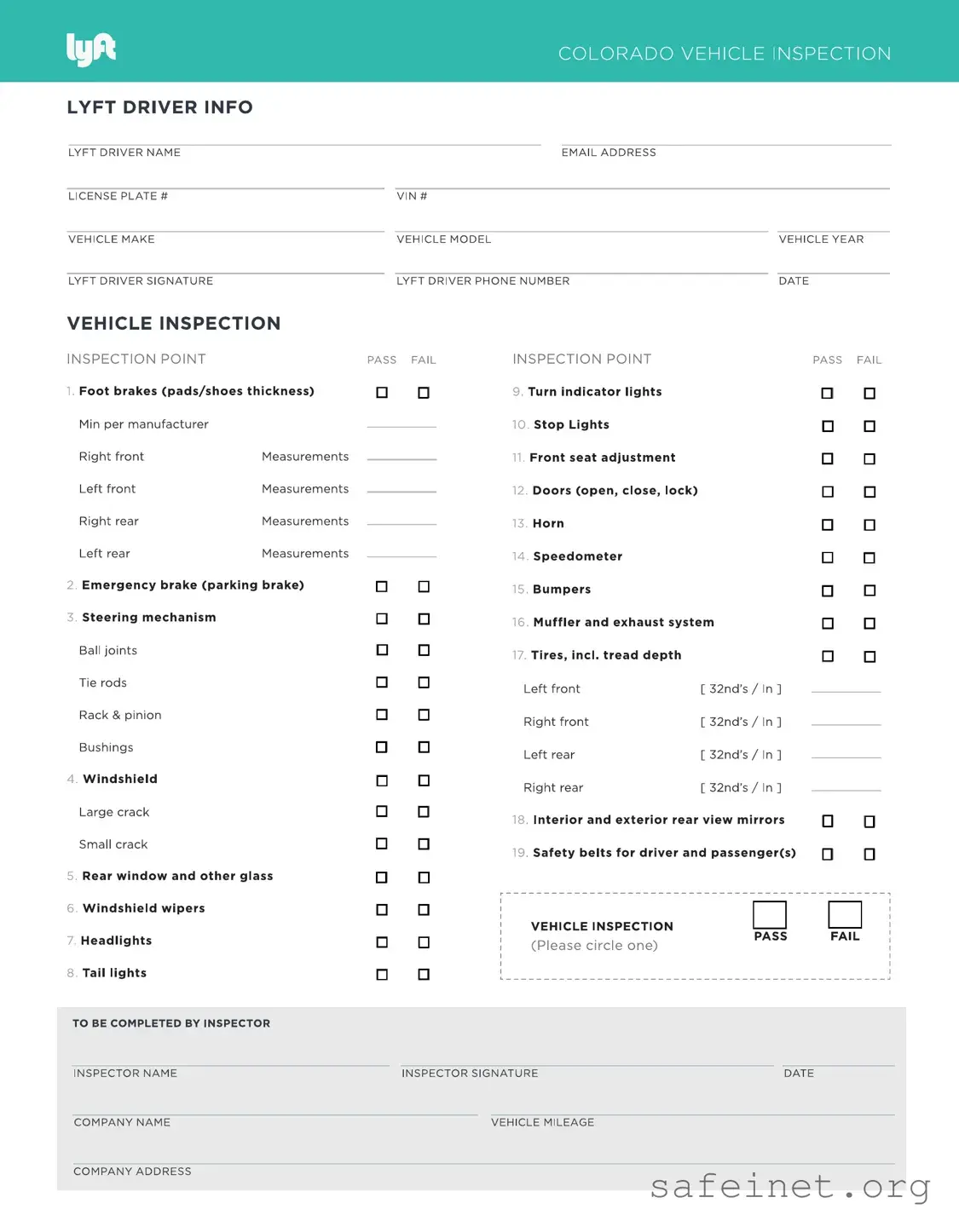
The Lyft Inspection form is a crucial document for drivers who wish to operate under the Lyft platform. It serves as a checklist to ensure that vehicles meet safety and operational standards before hitting the road. This form covers various aspects of the vehicle, including the condition of brakes, lights, tires, and windshield wipers, among other essential components. Additionally, it requires drivers to confirm that their vehicle is free from any major cosmetic damage and that all necessary equipment, such as a spare tire and jack, is present. Completing this inspection not only helps maintain a safe environment for passengers but also protects drivers from potential liability issues. Understanding the details and requirements of the Lyft Inspection form is vital for anyone looking to drive for the platform, as compliance is mandatory for approval to drive. Properly filling out this form can significantly impact a driver’s experience and success with Lyft.
| Fact Name | Description |
|---|---|
| Purpose | The Lyft Inspection Form is designed to ensure that vehicles meet safety and operational standards for rideshare services. |
| Frequency of Inspection | Vehicles must undergo inspections at least once a year to remain compliant with Lyft's requirements. |
| Inspection Locations | Inspections can be performed at authorized Lyft inspection centers or licensed mechanics. |
| Required Documentation | Drivers must provide proof of vehicle registration, insurance, and a valid driver's license during the inspection. |
| Safety Checklist | The form includes a checklist that covers brakes, tires, lights, and other critical safety components. |
| State-Specific Forms | Some states have specific inspection forms that comply with local regulations, such as California Vehicle Code § 2800. |
| Submission Process | After completing the inspection, drivers must submit the form electronically through the Lyft driver app. |
| Consequences of Non-Compliance | Failure to pass the inspection may result in temporary suspension from the Lyft platform until the issues are resolved. |
| Inspection Fees | Fees for inspections vary by location and provider, and drivers are responsible for these costs. |
| Additional Inspections | In certain circumstances, such as accidents or major repairs, additional inspections may be required before returning to service. |
Once you have the Lyft Inspection form ready, you will need to complete it accurately to ensure your vehicle meets the necessary requirements. Follow these steps carefully to fill out the form correctly.
After filling out the form, you will need to submit it according to the instructions provided. Make sure to keep a copy for your records.
What is the Lyft Inspection form?
The Lyft Inspection form is a document that verifies your vehicle meets Lyft's safety and operational standards. Completing this form is essential for drivers to ensure their vehicle is safe for passengers and complies with local regulations.
Why do I need to complete the Lyft Inspection form?
Completing the Lyft Inspection form is crucial for maintaining a safe environment for both drivers and passengers. It helps ensure that your vehicle is in good working condition, which is a requirement to drive for Lyft. Safety is a top priority for the company, and this form is part of that commitment.
How do I obtain the Lyft Inspection form?
You can obtain the Lyft Inspection form through the Lyft driver app or the Lyft website. Simply log in to your account, navigate to the vehicle section, and look for the inspection requirements. You may also be able to get a physical copy from a certified mechanic or inspection station.
What information do I need to provide on the form?
The form typically requires information about your vehicle, including the make, model, year, and VIN (Vehicle Identification Number). You will also need to document the results of the inspection conducted by a certified mechanic, including any repairs made or issues found.
Who can perform the inspection for the Lyft Inspection form?
The inspection must be conducted by a certified mechanic or an inspection station authorized by Lyft. It is important to choose someone who is familiar with Lyft's requirements to ensure that your vehicle passes the inspection.
What happens if my vehicle does not pass the inspection?
If your vehicle does not pass the inspection, you will need to address the issues identified by the mechanic. After making the necessary repairs, you can have the vehicle re-inspected. Only once it passes can you submit the form and continue driving for Lyft.
How often do I need to complete the Lyft Inspection form?
Lyft typically requires drivers to complete the inspection annually. However, if you experience any significant repairs or changes to your vehicle, it may be necessary to complete the inspection sooner. Always check the latest guidelines in your driver app for specific requirements.
Where do I submit the completed Lyft Inspection form?
Once you have completed the inspection and filled out the form, you can submit it through the Lyft driver app. Follow the prompts to upload the document, and make sure to keep a copy for your records.
What should I do if I have questions about the inspection process?
If you have questions about the inspection process or the form itself, you can reach out to Lyft's support team through the app or website. They can provide guidance and clarify any concerns you may have about the inspection requirements.
Incomplete Information: Many drivers fail to fill out all required fields. This can lead to delays in the inspection process. Make sure every section is completed, including personal details and vehicle information.
Incorrect Vehicle Details: Entering the wrong vehicle make, model, or year is a common mistake. Double-check your vehicle's registration to ensure accuracy. Even small errors can cause issues later.
Neglecting to Sign: Some drivers forget to sign the form. A signature is often required to validate the inspection. Without it, the form may be considered invalid.
Missing Required Documents: Failing to attach necessary documents, such as proof of insurance or registration, can lead to complications. Always ensure that all supporting documents are included with the form submission.
When preparing to drive for Lyft, several important documents and forms accompany the Lyft Inspection form. Each of these documents plays a crucial role in ensuring that drivers meet the necessary requirements and maintain safety standards. Below is a list of commonly used forms that drivers should be familiar with.
Understanding these documents and their purposes can help drivers navigate the onboarding process more effectively. Each form is designed to protect both the driver and the passengers, ensuring a safe and reliable rideshare experience.
The Lyft Inspection form is similar to the Uber Vehicle Inspection form, which also assesses the condition and safety of a vehicle before it can be used for ridesharing. Both forms require drivers to ensure that their vehicles meet specific safety standards, including checks on brakes, lights, tires, and other essential components. The goal is to ensure passenger safety and vehicle reliability, creating a similar structure and purpose for both documents.
Another comparable document is the taxi vehicle inspection report. Like the Lyft Inspection form, this report is used to evaluate whether a taxi meets local regulations and safety requirements. It typically includes a checklist of items that must be inspected, such as the condition of the body, interior, and mechanical systems. Both documents aim to protect passengers by ensuring that vehicles are in good working order.
The DOT Vehicle Inspection Report is another document that shares similarities with the Lyft Inspection form. This report is mandated by the Department of Transportation and focuses on the safety and operational readiness of commercial vehicles. Both forms require a thorough inspection and documentation of the vehicle’s condition, emphasizing safety and compliance with regulatory standards.
The Pre-Trip Inspection Checklist used by commercial drivers is also akin to the Lyft Inspection form. This checklist is a tool that drivers use to evaluate their vehicles before starting a trip. It covers various safety aspects, including lights, brakes, and fluid levels, similar to the Lyft form’s focus on ensuring that the vehicle is safe for passengers.
The DMV Vehicle Inspection form is another document that bears resemblance to the Lyft Inspection form. This form is often required for vehicle registration and renewal, focusing on compliance with state safety regulations. Both documents necessitate a thorough examination of the vehicle’s safety features, ensuring that it meets the necessary standards for operation on public roads.
The Rental Car Inspection form is also similar in purpose to the Lyft Inspection form. This document is used by rental companies to assess the condition of vehicles before they are rented out. Both forms involve checking various vehicle components and ensuring that they are functioning correctly, thereby ensuring the safety of users.
The Fleet Vehicle Inspection Checklist shares commonalities with the Lyft Inspection form as well. Companies that manage a fleet of vehicles use this checklist to ensure that all vehicles are maintained and safe for operation. Similar to the Lyft form, it includes detailed inspections of critical components and systems to uphold safety standards.
The School Bus Inspection form is another document that aligns with the Lyft Inspection form. This form is used to ensure that school buses meet safety regulations before they transport children. Both forms prioritize safety and require a detailed inspection of the vehicle’s essential features, reflecting a commitment to passenger well-being.
The Commercial Driver’s License (CDL) Pre-Trip Inspection form is also comparable. This form is used by drivers to check their vehicles before hitting the road. It covers many of the same areas as the Lyft Inspection form, ensuring that the vehicle is safe and compliant with regulations, thereby promoting safety for all road users.
Lastly, the Vehicle Maintenance Log can be seen as similar to the Lyft Inspection form. While it primarily tracks the maintenance history of a vehicle, it often includes sections for safety inspections and checks. Both documents emphasize the importance of regular maintenance and inspections to ensure that vehicles remain safe and reliable for drivers and passengers alike.
When filling out the Lyft Inspection form, it’s important to approach the task with care and attention to detail. This ensures that your vehicle meets the necessary requirements for ridesharing. Below are ten guidelines to help you navigate this process effectively.
By following these guidelines, you can enhance your chances of a smooth inspection process and ensure that your vehicle is ready for ridesharing with Lyft.
When it comes to the Lyft Inspection form, there are several misconceptions that can lead to confusion. Understanding the truth behind these misunderstandings is crucial for drivers and vehicle owners alike. Here’s a breakdown of ten common misconceptions:
Clearing up these misconceptions can help ensure a smoother experience for drivers and promote safety for everyone on the road. Be sure to stay informed and follow the guidelines set by Lyft.
When filling out and using the Lyft Inspection form, there are several important points to keep in mind. Understanding these can help ensure a smooth process for both drivers and the Lyft platform.
By following these takeaways, drivers can navigate the inspection process more effectively and maintain their eligibility to drive for Lyft.