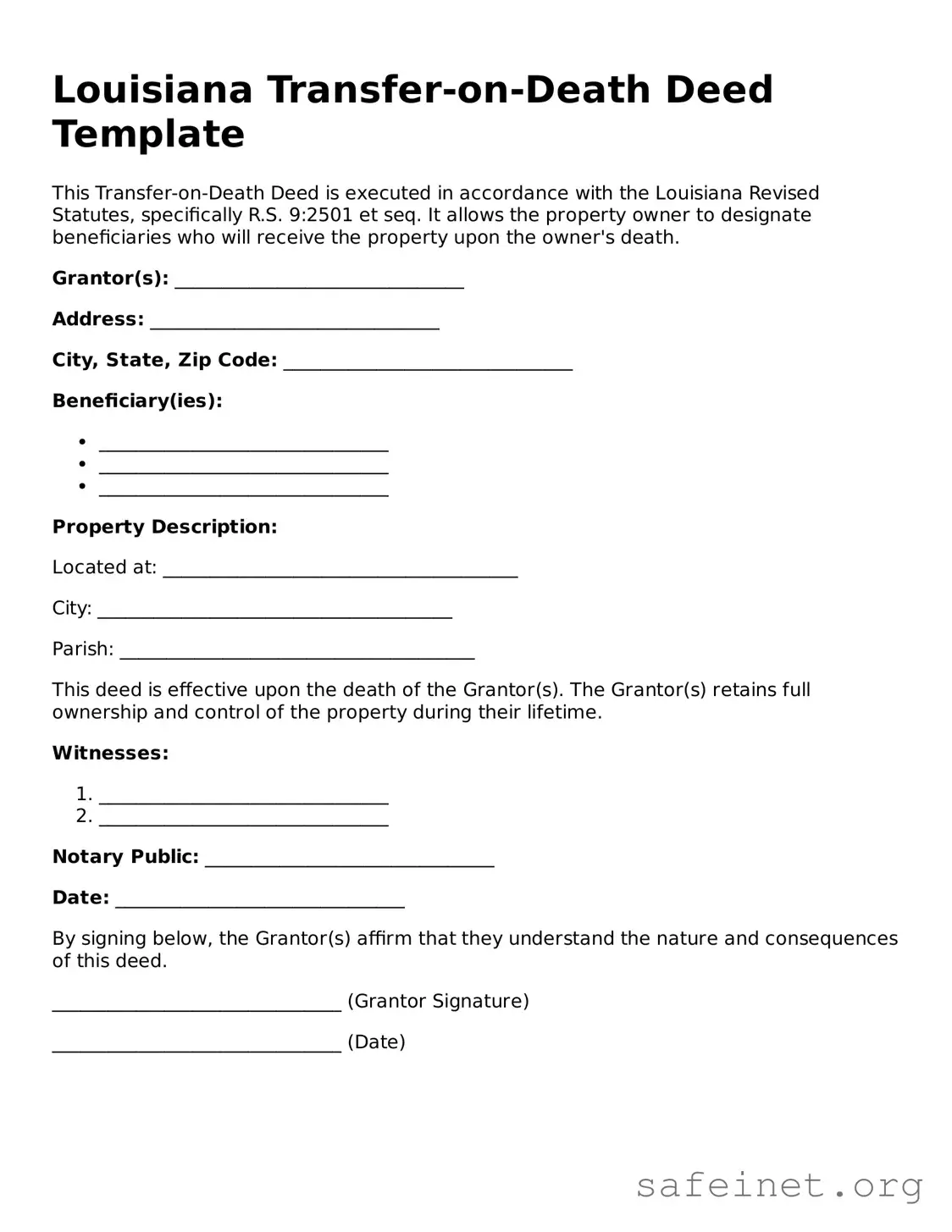
The Louisiana Transfer-on-Death Deed form serves as a valuable tool for property owners looking to simplify the transfer of real estate upon their passing. This legal instrument allows individuals to designate one or more beneficiaries who will automatically receive ownership of the property without the need for probate. By utilizing this form, property owners can maintain control over their assets during their lifetime while ensuring a smooth transition for their heirs. The form requires specific information, including the names of the property owner and beneficiaries, a clear description of the property, and the owner's signature. Additionally, it must be properly recorded with the appropriate parish clerk of court to be legally effective. This proactive approach not only helps to avoid potential disputes among heirs but also streamlines the process of transferring property after death, providing peace of mind for both the owner and their loved ones.
Louisiana Transfer-on-Death Deed Template
This Transfer-on-Death Deed is executed in accordance with the Louisiana Revised Statutes, specifically R.S. 9:2501 et seq. It allows the property owner to designate beneficiaries who will receive the property upon the owner's death.
Grantor(s): _______________________________
Address: _______________________________
City, State, Zip Code: _______________________________
Beneficiary(ies):
Property Description:
Located at: ______________________________________
City: ______________________________________
Parish: ______________________________________
This deed is effective upon the death of the Grantor(s). The Grantor(s) retains full ownership and control of the property during their lifetime.
Witnesses:
Notary Public: _______________________________
Date: _______________________________
By signing below, the Grantor(s) affirm that they understand the nature and consequences of this deed.
_______________________________ (Grantor Signature)
_______________________________ (Date)
| Fact Name | Description |
|---|---|
| Purpose | The Louisiana Transfer-on-Death Deed allows property owners to transfer real estate to beneficiaries upon their death without going through probate. |
| Governing Law | This deed is governed by Louisiana Revised Statutes, specifically R.S. 9:2501 to 9:2509. |
| Requirements | The deed must be in writing, signed by the property owner, and recorded in the parish where the property is located to be valid. |
| Revocation | A property owner can revoke the deed at any time before their death, allowing for changes in beneficiaries or property ownership. |
After obtaining the Louisiana Transfer-on-Death Deed form, it's important to carefully fill it out to ensure that your property is transferred according to your wishes. The following steps will guide you through the process of completing the form accurately.
What is a Transfer-on-Death Deed in Louisiana?
A Transfer-on-Death Deed (TOD) is a legal document that allows you to transfer ownership of real property to a designated beneficiary upon your death. This type of deed enables you to retain full control of your property during your lifetime. You can sell, lease, or mortgage the property without needing the beneficiary's consent. The transfer occurs automatically when you pass away, avoiding the probate process.
Who can be named as a beneficiary in a TOD Deed?
You can name one or more individuals as beneficiaries in your TOD Deed. Beneficiaries can be family members, friends, or even organizations. However, it's essential to ensure that the beneficiary is legally capable of receiving the property. If you name multiple beneficiaries, specify how the property will be divided among them. This clarity can prevent disputes later on.
How do I create and record a Transfer-on-Death Deed?
To create a TOD Deed, you must complete the appropriate form, which includes details about the property and the beneficiary. Once filled out, the deed must be signed in front of a notary public. After notarization, you should record the deed with the appropriate parish clerk of court's office where the property is located. This step is crucial, as recording the deed makes it legally effective and ensures that your wishes are honored.
Can I revoke a Transfer-on-Death Deed?
Yes, you can revoke a TOD Deed at any time before your death. To do this, you must create a new deed that explicitly states the revocation or execute a formal revocation document. It's important to record this revocation with the same parish clerk of court where the original TOD Deed was recorded. This ensures that your property records accurately reflect your current intentions regarding the transfer of ownership.
Failing to properly identify the property. It is crucial to include the correct legal description of the property being transferred. This includes the address and any relevant parcel number.
Not naming the beneficiaries correctly. Ensure that the names of the beneficiaries are spelled correctly and match their legal identification.
Omitting necessary signatures. All required parties must sign the deed, including the grantor and any witnesses if applicable.
Neglecting to date the form. A date is essential for establishing when the deed was executed, which can impact its validity.
Using outdated forms. Always use the most current version of the Transfer-on-Death Deed form to avoid issues with legality.
Not recording the deed. Failing to file the completed deed with the appropriate parish clerk's office can render it ineffective.
Forgetting to check for existing liens. Before transferring property, ensure there are no outstanding debts or liens that could complicate the transfer.
Not consulting with a legal expert. Many individuals overlook the importance of seeking legal advice, which can prevent mistakes and ensure compliance with state laws.
Inadequate understanding of the implications. Some people do not fully grasp how a Transfer-on-Death Deed affects their estate planning, potentially leading to unintended consequences.
Failing to communicate with beneficiaries. It is important to inform all beneficiaries about the deed and the property to avoid confusion or disputes later on.
The Louisiana Transfer-on-Death Deed is a valuable tool for estate planning, allowing property owners to designate beneficiaries who will receive their property upon their death without going through probate. To effectively utilize this deed, several other forms and documents may be necessary. Here are four commonly used documents that often accompany the Transfer-on-Death Deed.
Each of these documents plays a crucial role in the estate planning process, working together to ensure that property and assets are transferred smoothly and according to the property owner's wishes. Properly preparing and executing these forms can save time and reduce complications for beneficiaries in the future.
The Louisiana Transfer-on-Death Deed (TOD) form shares similarities with the Last Will and Testament. Both documents allow individuals to designate beneficiaries for their assets after death. However, while a will goes through probate, which can be a lengthy and costly process, a TOD deed allows for the direct transfer of property to the named beneficiaries without the need for probate. This feature makes the TOD deed a more streamlined option for transferring real estate upon death.
When filling out the Louisiana Transfer-on-Death Deed form, it is essential to follow certain guidelines to ensure accuracy and compliance. Below are nine important do's and don'ts to consider.
Many people have misunderstandings about the Louisiana Transfer-on-Death Deed form. Here are ten common misconceptions, along with explanations to clarify them.
This is not true. Any property owner in Louisiana can utilize this form, regardless of their financial status.
While this deed can help avoid probate for the transferred property, other assets may still go through the probate process.
Although it is advisable to record the deed promptly, it can be recorded at any time before the owner's death to be effective.
This is a misconception. The owner can revoke or change the deed at any time before their death.
Beneficiaries can choose to decline the property, allowing them to refuse any associated responsibilities.
This deed can be used for various types of real estate, including commercial properties and vacant land.
Only the property specifically mentioned in the deed will transfer; other properties will not be affected.
While the deed may avoid probate, there could still be tax consequences for the beneficiaries, such as property taxes or capital gains taxes.
Each state has its own laws regarding Transfer-on-Death Deeds. Louisiana has specific requirements that differ from other states.
A Transfer-on-Death Deed does not replace a will. It is still important to have a comprehensive estate plan that includes a will.
Understanding the Louisiana Transfer-on-Death Deed can simplify the process of transferring property after death. Here are some key takeaways to keep in mind: