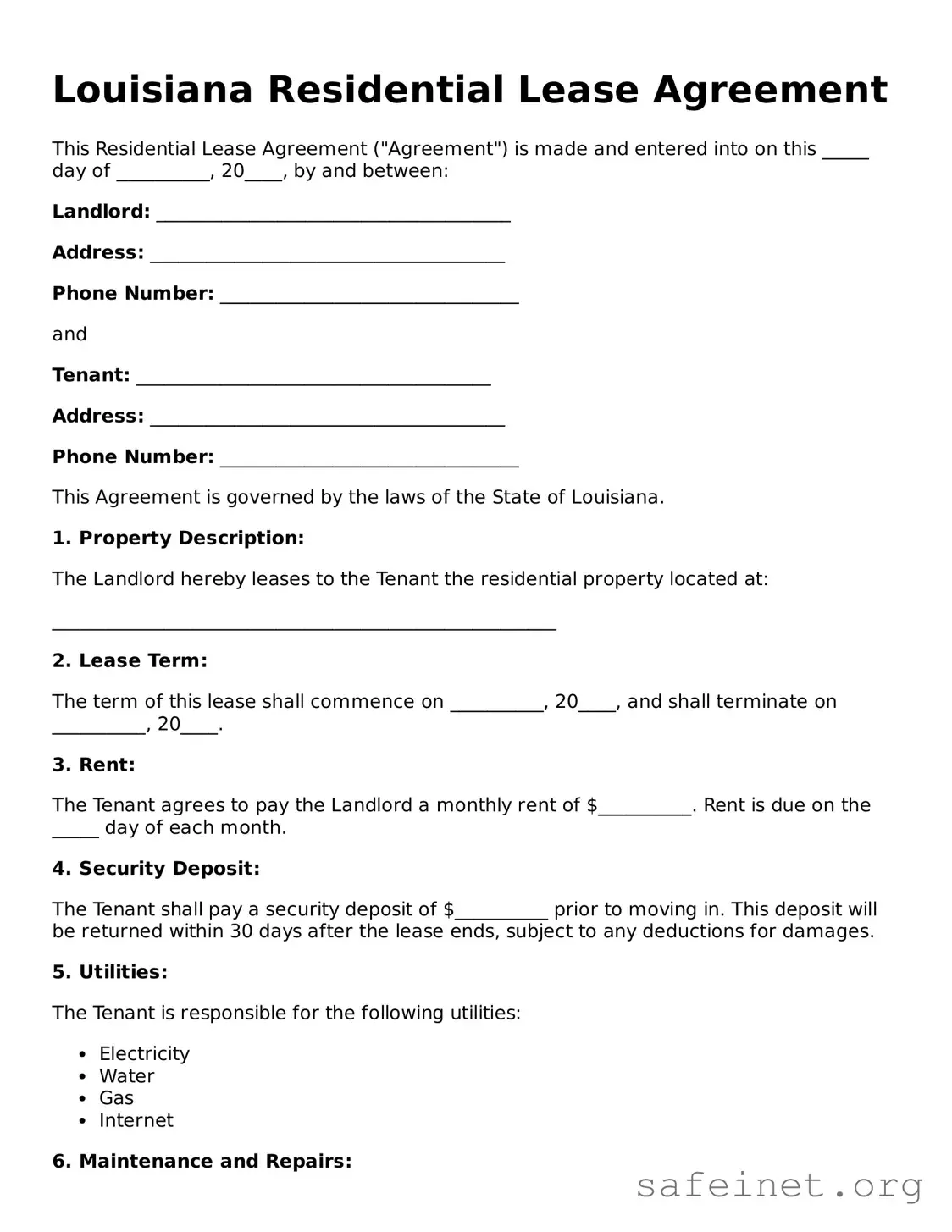
The Louisiana Residential Lease Agreement form serves as a crucial document in the rental process, outlining the terms and conditions between landlords and tenants. This agreement typically includes essential details such as the duration of the lease, the amount of rent due, and the responsibilities of both parties regarding maintenance and repairs. It also addresses security deposits, late fees, and the procedures for terminating the lease. Additionally, the form may specify rules related to pets, smoking, and alterations to the property. By clearly defining these aspects, the agreement aims to protect the rights of both landlords and tenants, fostering a transparent and fair rental relationship. Understanding the key components of this form is vital for anyone involved in renting residential property in Louisiana.
Louisiana Residential Lease Agreement
This Residential Lease Agreement ("Agreement") is made and entered into on this _____ day of __________, 20____, by and between:
Landlord: ______________________________________
Address: ______________________________________
Phone Number: ________________________________
and
Tenant: ______________________________________
Address: ______________________________________
Phone Number: ________________________________
This Agreement is governed by the laws of the State of Louisiana.
1. Property Description:
The Landlord hereby leases to the Tenant the residential property located at:
______________________________________________________
2. Lease Term:
The term of this lease shall commence on __________, 20____, and shall terminate on __________, 20____.
3. Rent:
The Tenant agrees to pay the Landlord a monthly rent of $__________. Rent is due on the _____ day of each month.
4. Security Deposit:
The Tenant shall pay a security deposit of $__________ prior to moving in. This deposit will be returned within 30 days after the lease ends, subject to any deductions for damages.
5. Utilities:
The Tenant is responsible for the following utilities:
6. Maintenance and Repairs:
The Tenant agrees to maintain the property in good condition and report any needed repairs to the Landlord promptly.
7. Termination:
Either party may terminate this lease by providing written notice at least _____ days prior to the intended termination date.
8. Governing Law:
This Agreement shall be governed by and construed in accordance with the laws of the State of Louisiana.
9. Signatures:
By signing below, both parties agree to the terms of this Residential Lease Agreement.
Landlord Signature: ___________________________ Date: __________
Tenant Signature: ____________________________ Date: __________
| Fact Name | Details |
|---|---|
| Governing Law | The Louisiana Residential Lease Agreement is governed by Louisiana Civil Code, specifically Articles 2668-2740. |
| Parties Involved | The agreement involves a landlord and a tenant, both of whom must be clearly identified in the document. |
| Lease Duration | The lease can be for a fixed term or month-to-month, depending on the agreement between the parties. |
| Security Deposit | Landlords may require a security deposit, which must comply with state limits and must be returned within a specified timeframe after the lease ends. |
| Maintenance Responsibilities | The lease should outline the responsibilities of both the landlord and tenant regarding property maintenance and repairs. |
| Termination Notice | Both parties must provide written notice to terminate the lease, with specific notice periods required by law. |
| Dispute Resolution | The agreement may include clauses for resolving disputes, such as mediation or arbitration, to avoid court proceedings. |
Filling out the Louisiana Residential Lease Agreement form is an important step in securing a rental property. Once you have completed the form, it will need to be signed by both the landlord and the tenant to make it official.
What is a Louisiana Residential Lease Agreement?
A Louisiana Residential Lease Agreement is a legal document that outlines the terms and conditions between a landlord and a tenant for renting a residential property. This agreement details the rights and responsibilities of both parties, including rent payment, maintenance obligations, and lease duration.
What should be included in the lease agreement?
The lease agreement should include essential elements such as the names of the landlord and tenant, property address, lease term, rent amount, payment due date, security deposit details, and rules regarding pets or alterations. Additionally, it may cover maintenance responsibilities and procedures for lease termination.
How long is a typical lease term in Louisiana?
In Louisiana, lease terms can vary widely. Most residential leases are for one year, but they can also be month-to-month or for shorter or longer durations. The specific term should be clearly stated in the lease agreement.
Can a landlord increase the rent during the lease term?
Generally, a landlord cannot increase the rent during the lease term unless the lease agreement explicitly allows for it. Any rent increase must comply with local laws and should be communicated to the tenant in writing, typically with advance notice.
What happens if a tenant wants to break the lease early?
If a tenant wishes to break the lease early, they should review the lease agreement for any early termination clauses. Often, tenants may be required to provide notice and may be responsible for paying rent until a new tenant is found or until the lease term ends.
Are there any specific laws governing residential leases in Louisiana?
Yes, Louisiana has specific laws that govern residential leases. These laws address various issues, including security deposits, eviction procedures, and tenant rights. It is important for both landlords and tenants to familiarize themselves with these laws to ensure compliance and protect their rights.
What should a tenant do if they encounter problems with their landlord?
If a tenant encounters problems with their landlord, such as maintenance issues or disputes over lease terms, they should first attempt to resolve the issue through direct communication. If that fails, tenants can seek assistance from local housing authorities or legal aid organizations. Documenting all communications and issues can also be beneficial if legal action becomes necessary.
Missing Tenant Information: Many people forget to include the full names of all tenants. Each tenant's name should be clearly listed to avoid confusion.
Incomplete Property Description: Failing to provide a complete address or description of the rental property can lead to misunderstandings about the lease's location.
Not Specifying Lease Term: Some individuals do not specify the start and end dates of the lease. This information is crucial for both parties to understand the duration of the agreement.
Ignoring Rent Payment Details: Rent amount, due date, and acceptable payment methods should be clearly stated. Omitting these details can cause payment issues later on.
Neglecting Security Deposit Information: It's important to outline the amount of the security deposit and the conditions for its return. This helps set clear expectations.
Overlooking Maintenance Responsibilities: Not detailing who is responsible for maintenance and repairs can lead to disputes. Clearly outline these responsibilities in the lease.
Failing to Include Signatures: Both parties must sign the lease for it to be valid. Some people forget to obtain the necessary signatures, which can invalidate the agreement.
When entering into a rental agreement in Louisiana, it's essential to have all necessary documents in place. Along with the Louisiana Residential Lease Agreement, several other forms can help clarify terms and protect the rights of both landlords and tenants. Here are some key documents that are often used in conjunction with the lease agreement:
Having these documents in place not only streamlines the rental process but also provides clarity and protection for both parties involved. It is always advisable to review each document carefully and ensure that all terms are understood before signing any agreements.
The Louisiana Commercial Lease Agreement is similar to the Residential Lease Agreement but is designed for commercial properties. It outlines the terms of renting a business space, including rent, duration, and maintenance responsibilities. Both agreements protect the rights of landlords and tenants, ensuring clear communication and expectations regarding the property use.
The Louisiana Rental Application form is another document closely related to the Residential Lease Agreement. It is typically completed by prospective tenants before entering into a lease. This application gathers essential information, such as employment history and creditworthiness, which helps landlords assess potential renters. Both documents work together to establish a tenant's suitability for a rental property.
The Louisiana Lease Termination Notice serves as a formal way for either party to end a lease agreement. This document specifies the intent to terminate the lease and outlines the required notice period. It is similar to the Residential Lease Agreement in that it addresses the terms of ending the rental relationship, ensuring both parties are aware of their obligations.
The Louisiana Move-In/Move-Out Checklist is also related to the Residential Lease Agreement. This document details the condition of the property at the beginning and end of a tenancy. It helps protect the security deposit by documenting any existing damages. Both the checklist and lease agreement emphasize the importance of property condition and tenant accountability.
The Louisiana Security Deposit Receipt is another important document. It provides proof of the security deposit paid by the tenant and outlines the conditions under which it may be withheld. This receipt aligns with the Residential Lease Agreement by ensuring transparency about financial transactions related to the rental property.
The Louisiana Sublease Agreement allows a tenant to rent out their leased property to another person. This document must align with the original Residential Lease Agreement, ensuring that the terms are consistent. Both agreements govern the rights and responsibilities of all parties involved, including the original tenant and the landlord.
The Louisiana Rental Renewal Agreement comes into play when a tenant wishes to extend their lease. This document outlines the new terms and conditions for the continued rental period. It serves a similar purpose to the Residential Lease Agreement by establishing clear expectations and responsibilities for both parties moving forward.
Lastly, the Louisiana Habitability Disclosure is a document that informs tenants about the condition of the property and any issues that may affect their living experience. It is similar to the Residential Lease Agreement in that it ensures tenants are aware of their rights to a safe and habitable living environment. Both documents aim to promote transparency and protect tenant welfare.
When filling out the Louisiana Residential Lease Agreement form, it is essential to approach the task with care. Here are five important considerations to keep in mind.
Many people have misunderstandings about the Louisiana Residential Lease Agreement form. Here are six common misconceptions:
This is not true. Each lease can be tailored to the specific needs of the landlord and tenant. While there are standard terms, individual agreements can vary significantly.
In Louisiana, written leases provide clear terms and protections for both parties. Verbal agreements can lead to misunderstandings and are harder to enforce.
In Louisiana, the law limits security deposits to one month's rent for most residential leases. Landlords cannot demand more than this amount.
While tenants have rights, withholding rent can lead to eviction. It's important to follow proper procedures and communicate any issues with the landlord.
Landlords must provide reasonable notice before entering a tenant's property, except in emergencies. Tenants have the right to privacy.
Not all leases automatically renew. Some have specific end dates, while others may have renewal clauses. Always check the terms of the lease.
Filling out and using the Louisiana Residential Lease Agreement form is an important step for both landlords and tenants. Here are some key takeaways to keep in mind:
By keeping these points in mind, both landlords and tenants can navigate the leasing process more effectively.