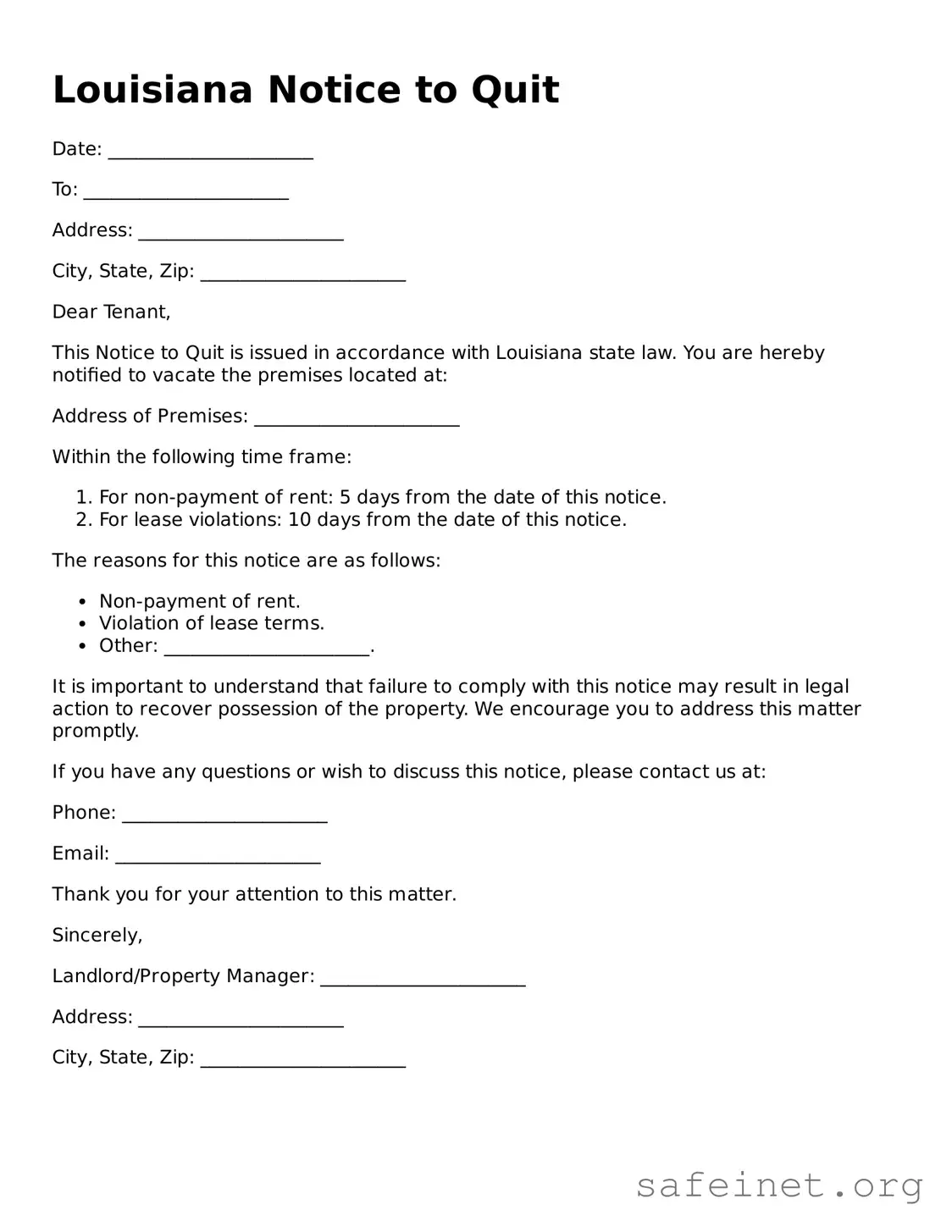
The Louisiana Notice to Quit form serves as an essential tool in the landlord-tenant relationship, particularly when a tenant fails to comply with lease terms. This document is typically issued when a landlord seeks to terminate a rental agreement due to specific violations, such as non-payment of rent or other breaches of the lease. The form outlines the reasons for the eviction, provides a clear timeline for the tenant to vacate the premises, and ensures that both parties understand their rights and responsibilities. It is crucial for landlords to follow the proper procedures when issuing this notice, as any missteps can lead to delays in the eviction process. Additionally, tenants should be aware of their options upon receiving a Notice to Quit, including the possibility of remedying the situation or contesting the eviction in court. Understanding the nuances of this form can help both landlords and tenants navigate the complexities of rental agreements in Louisiana.
Louisiana Notice to Quit
Date: ______________________
To: ______________________
Address: ______________________
City, State, Zip: ______________________
Dear Tenant,
This Notice to Quit is issued in accordance with Louisiana state law. You are hereby notified to vacate the premises located at:
Address of Premises: ______________________
Within the following time frame:
The reasons for this notice are as follows:
It is important to understand that failure to comply with this notice may result in legal action to recover possession of the property. We encourage you to address this matter promptly.
If you have any questions or wish to discuss this notice, please contact us at:
Phone: ______________________
Email: ______________________
Thank you for your attention to this matter.
Sincerely,
Landlord/Property Manager: ______________________
Address: ______________________
City, State, Zip: ______________________
| Fact Name | Description |
|---|---|
| Purpose | The Louisiana Notice to Quit form serves as a formal notification to tenants, informing them of the landlord's intent to terminate the rental agreement. |
| Governing Law | This form is governed by Louisiana Revised Statutes, specifically Title 9, Section 3251, which outlines the requirements for lease terminations. |
| Notice Period | In Louisiana, the notice period typically required is 5 days for non-payment of rent, while other lease violations may require a longer notice period. |
| Delivery Methods | The notice can be delivered in person, sent via certified mail, or posted on the tenant's door, ensuring the tenant receives the information. |
| Tenant Rights | Tenants have the right to respond to the notice and rectify any issues before the termination of the lease, depending on the circumstances. |
| Legal Consequences | Failure to comply with the Notice to Quit may lead to eviction proceedings, where the landlord may seek legal remedies to regain possession of the property. |
After obtaining the Louisiana Notice to Quit form, you will need to fill it out accurately. This form is essential for initiating the process of notifying a tenant to vacate the premises. Ensure you have all necessary information at hand before you begin.
Once you have filled out the form, the next step is to deliver it to the tenant. Ensure you follow the proper delivery methods as outlined by Louisiana law to ensure the notice is legally valid.
What is a Louisiana Notice to Quit form?
A Louisiana Notice to Quit form is a legal document that a landlord uses to inform a tenant that they must vacate the rental property. This notice is typically issued when a tenant has violated the terms of the lease or has not paid rent. It serves as a formal request for the tenant to leave the premises by a specified date.
When should a landlord use a Notice to Quit?
A landlord should use a Notice to Quit when a tenant fails to comply with lease terms, such as not paying rent or engaging in illegal activities. It can also be used for lease violations, including unauthorized pets or excessive noise. This notice is often the first step in the eviction process.
How much notice must be given to the tenant?
The required notice period can vary based on the reason for the eviction. Generally, a landlord must provide a minimum of five days' notice for non-payment of rent. For other lease violations, the notice period may be longer, typically ranging from 10 to 30 days, depending on the specific circumstances.
Does the Notice to Quit need to be in writing?
Yes, the Notice to Quit must be in writing. A verbal notice is not sufficient to initiate the eviction process. The written notice should clearly state the reason for the eviction and the deadline for the tenant to vacate the property.
What happens if the tenant does not leave by the deadline?
If the tenant does not vacate the property by the deadline specified in the Notice to Quit, the landlord may proceed with filing for eviction in the local court. This legal action can lead to a court hearing where a judge will decide whether the tenant must leave the property.
Can a tenant contest a Notice to Quit?
Yes, a tenant has the right to contest a Notice to Quit. They can present their case in court, arguing against the reasons provided in the notice. It is advisable for tenants to gather evidence and seek legal counsel if they choose to contest the eviction.
Is there a specific format for the Notice to Quit?
While there is no official state form, the Notice to Quit should include essential information such as the tenant's name, the address of the rental property, the reason for the notice, and the date by which the tenant must vacate. It is important to ensure that the notice is clear and legally compliant.
What if the tenant has already paid rent?
If the tenant has paid rent, the landlord cannot issue a Notice to Quit for non-payment. It is crucial for landlords to verify payment records before proceeding with any eviction notices. If there are disputes over payment, it may be necessary to resolve those issues before taking further action.
Can a tenant be evicted without a Notice to Quit?
Generally, a tenant cannot be evicted without a Notice to Quit. The notice is a legal requirement in Louisiana, and skipping this step could result in delays or complications in the eviction process. Proper notice is essential to ensure that the eviction is lawful.
Where can I find a Louisiana Notice to Quit form?
A Louisiana Notice to Quit form can often be found online through legal resources or local court websites. It is advisable to use a template that complies with Louisiana laws to ensure that all necessary information is included. Consulting with a legal professional can also provide guidance on obtaining the correct form.
Inaccurate Tenant Information: One common mistake is failing to provide correct names or addresses of the tenants. Always double-check the spelling and ensure that the address matches the lease agreement.
Missing Dates: Some individuals forget to include the date on which the notice is being issued. This date is crucial as it establishes the timeline for the eviction process.
Incorrect Reason for Eviction: A vague or inaccurate reason for the eviction can lead to complications. It's essential to clearly state the reason as per Louisiana law.
Failure to Sign: Neglecting to sign the notice is a frequent oversight. A signature validates the document and confirms that the landlord is the one issuing the notice.
Not Including Required Information: Essential details, such as the amount of rent owed or specific lease violations, should not be omitted. Including these details strengthens the notice.
Improper Delivery Method: Some landlords mistakenly believe that any delivery method is acceptable. In Louisiana, the notice must be delivered in a legally recognized manner, such as personal delivery or certified mail.
Ignoring Local Laws: Each parish may have specific requirements for eviction notices. Failing to adhere to these local regulations can invalidate the notice.
Not Keeping Copies: Many forget to keep a copy of the completed notice for their records. This can be important for future reference or legal proceedings.
Using an Outdated Form: Utilizing an old version of the Notice to Quit can lead to issues. Always ensure that you have the most current form available.
Neglecting to Provide a Response Time: It's important to specify how long the tenant has to respond or vacate. Without a clear timeframe, the notice may lack effectiveness.
In the context of landlord-tenant relationships in Louisiana, several documents often accompany the Notice to Quit form. These documents serve various purposes, such as providing legal clarity, outlining rights and responsibilities, and facilitating communication between parties. Below is a list of some commonly used forms and documents.
Understanding these documents can help both landlords and tenants navigate their rights and responsibilities more effectively. Familiarity with these forms enhances communication and can prevent disputes from escalating into legal issues.
The Louisiana Notice to Quit form shares similarities with the Eviction Notice, commonly used in many states. Both documents serve as formal notifications to tenants, informing them of the landlord's intent to terminate the lease agreement. While the Louisiana Notice to Quit typically specifies a time frame for vacating the premises, the Eviction Notice also outlines the reasons for eviction, such as non-payment of rent or lease violations. This clarity helps tenants understand the grounds for their potential displacement.
Another document akin to the Louisiana Notice to Quit is the Demand for Possession. This legal notice is often issued when a tenant fails to pay rent or violates lease terms. Like the Notice to Quit, the Demand for Possession demands that the tenant remedy the situation or vacate the property. However, the Demand for Possession may not always provide a specific time frame, depending on state laws, which can create confusion for tenants regarding their obligations.
The Three-Day Notice to Pay Rent or Quit is another document that mirrors the Louisiana Notice to Quit in its purpose. This notice specifically addresses situations where tenants have not paid their rent on time. It typically gives tenants a three-day period to either pay the overdue rent or vacate the property. While both notices compel tenants to take action, the Three-Day Notice is focused solely on rent issues, whereas the Louisiana Notice to Quit can encompass a broader range of lease violations.
In some states, the Notice of Termination serves a similar function to the Louisiana Notice to Quit. This document is used to formally terminate a rental agreement and can be issued for various reasons, including lease expiration or tenant misconduct. Like the Louisiana form, the Notice of Termination usually specifies a time frame for the tenant to vacate. However, the terminology and specific legal requirements can vary significantly from state to state, which may affect how tenants respond.
The Lease Termination Letter is another comparable document. This letter is often used by landlords to inform tenants that their lease will not be renewed. While the Louisiana Notice to Quit focuses on immediate eviction due to lease violations, the Lease Termination Letter typically indicates that the tenant must vacate by the end of the lease term. This distinction is crucial, as it allows tenants to plan their move without the immediate pressure of eviction.
Lastly, the Notice to Cure is similar to the Louisiana Notice to Quit in that it addresses lease violations. This notice informs tenants of specific issues that need to be resolved, such as unauthorized pets or property damage. The Notice to Cure typically provides a period during which the tenant must rectify the situation before further action, such as eviction, is taken. While the Louisiana Notice to Quit may lead directly to eviction, the Notice to Cure allows tenants an opportunity to correct their behavior, fostering a more collaborative approach to lease enforcement.
When filling out the Louisiana Notice to Quit form, it is important to follow specific guidelines to ensure the document is completed correctly. Here is a list of things you should and shouldn't do:
By adhering to these guidelines, you can help ensure that the process is handled properly and legally.
Understanding the Louisiana Notice to Quit form is crucial for both landlords and tenants. However, several misconceptions can lead to confusion and potential legal issues. Here are five common misconceptions:
Being informed about these misconceptions can help both landlords and tenants navigate the rental process more effectively. Understanding the rules and regulations surrounding the Notice to Quit can prevent misunderstandings and protect your rights.
When dealing with rental agreements in Louisiana, understanding the Notice to Quit form is essential for both landlords and tenants. Here are some key takeaways to keep in mind:
By understanding these key aspects, both landlords and tenants can navigate the eviction process more effectively and minimize misunderstandings.