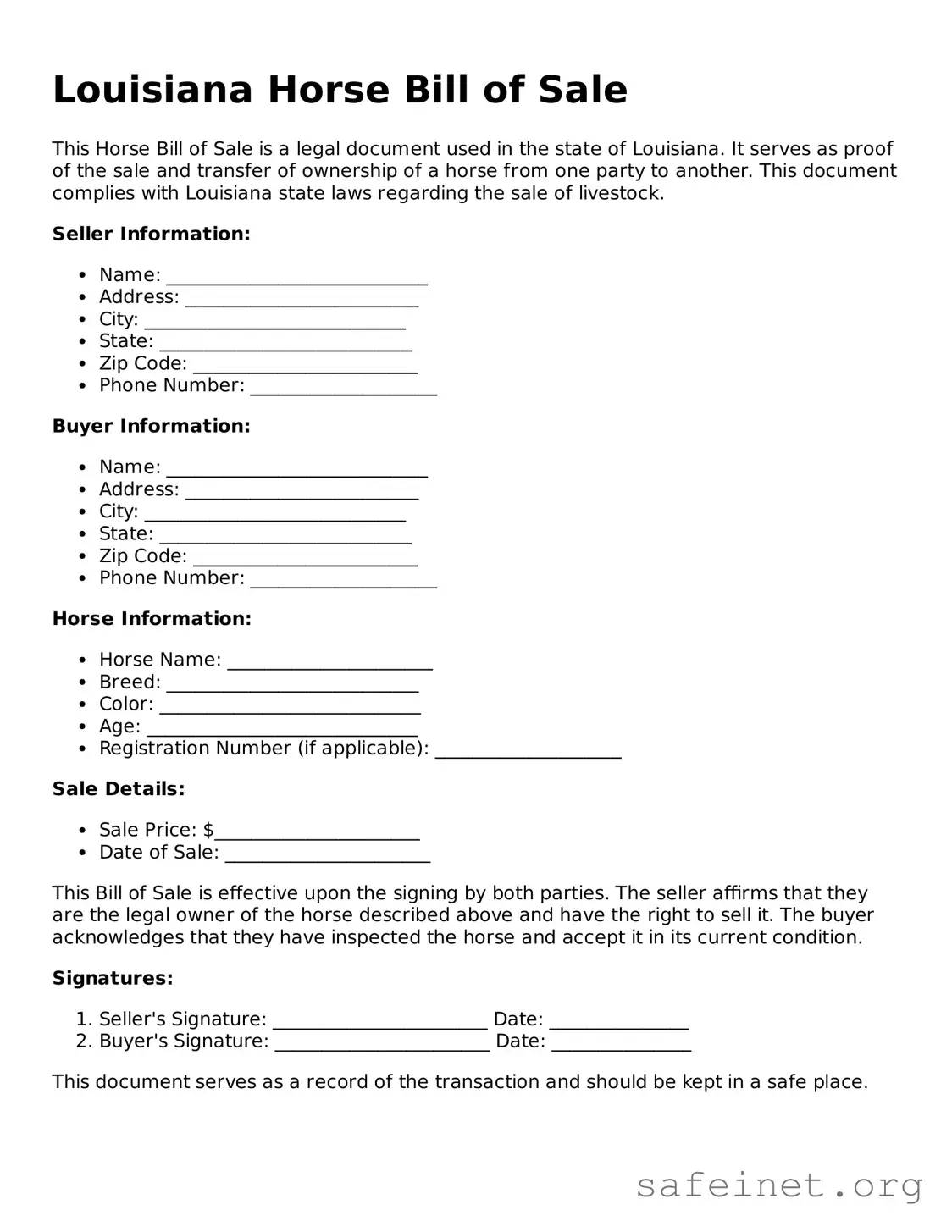
The Louisiana Horse Bill of Sale form serves as a crucial document in the transfer of ownership for horses within the state. This form outlines essential details such as the identities of both the seller and the buyer, along with a description of the horse being sold, including its breed, age, and any distinguishing features. Additionally, it typically includes the sale price and terms of payment, ensuring that both parties are clear about the financial aspects of the transaction. The form may also address any warranties or guarantees regarding the horse's health and soundness, providing protections for the buyer. By formalizing the sale, this document helps to prevent disputes and misunderstandings, making it an indispensable tool for horse owners and buyers alike. Proper completion and retention of the Horse Bill of Sale can facilitate a smoother transition of ownership and serve as a record for future reference.
Louisiana Horse Bill of Sale
This Horse Bill of Sale is a legal document used in the state of Louisiana. It serves as proof of the sale and transfer of ownership of a horse from one party to another. This document complies with Louisiana state laws regarding the sale of livestock.
Seller Information:
Buyer Information:
Horse Information:
Sale Details:
This Bill of Sale is effective upon the signing by both parties. The seller affirms that they are the legal owner of the horse described above and have the right to sell it. The buyer acknowledges that they have inspected the horse and accept it in its current condition.
Signatures:
This document serves as a record of the transaction and should be kept in a safe place.
| Fact Name | Description |
|---|---|
| Purpose | The Louisiana Horse Bill of Sale form is used to document the sale of a horse between a seller and a buyer. |
| Governing Law | This form is governed by Louisiana state law, specifically under the Louisiana Civil Code. |
| Identification | The form should include detailed identification of the horse, including breed, age, color, and any registration numbers. |
| Seller Information | The seller must provide their full name, address, and contact information. |
| Buyer Information | The buyer is also required to provide their full name, address, and contact information. |
| Purchase Price | The purchase price of the horse must be clearly stated in the form. |
| Signatures | Both the seller and the buyer must sign the form to validate the sale. |
| Witness or Notary | While not required, having a witness or notarization can add an extra layer of authenticity to the transaction. |
After obtaining the Louisiana Horse Bill of Sale form, ensure that you have all necessary information ready to accurately complete the document. This will facilitate a smooth transaction between the buyer and seller.
Once the form is completed, both parties should keep a copy for their records. This document serves as proof of the transaction and may be required for future reference.
What is a Louisiana Horse Bill of Sale form?
The Louisiana Horse Bill of Sale form is a legal document used to record the sale and transfer of ownership of a horse. This form provides essential details about the horse, the seller, and the buyer, ensuring that both parties have a clear understanding of the transaction. It serves as proof of ownership and can be crucial in case of disputes or questions regarding the horse's history.
Why is it important to have a Horse Bill of Sale?
Having a Horse Bill of Sale is important for several reasons. First, it protects both the buyer and the seller by documenting the terms of the sale. Second, it helps establish ownership, which is vital for registration and insurance purposes. Lastly, it can provide legal protection if any issues arise after the sale, such as disputes over the horse's health or condition.
What information is typically included in the form?
The form usually includes details such as the horse's name, breed, age, color, and any identifying marks. It also requires the seller's and buyer's names, addresses, and signatures. Additionally, the sale price and any specific terms or conditions related to the sale should be clearly stated.
Do I need a notary for the Horse Bill of Sale?
While a notary is not strictly required for a Horse Bill of Sale in Louisiana, having the document notarized can add an extra layer of legitimacy. A notary can verify the identities of the parties involved and confirm that they signed the document willingly. This can be beneficial if any disputes arise in the future.
Can I use a generic bill of sale for my horse?
While you can technically use a generic bill of sale, it is advisable to use a specific Horse Bill of Sale form. A tailored form addresses the unique aspects of horse transactions, such as health disclosures and warranties. Using a specific form can help prevent misunderstandings and ensure that all necessary information is included.
What if the horse has health issues or is sold "as-is"?
If the horse has known health issues, these should be disclosed in the Horse Bill of Sale. If the sale is "as-is," this should also be clearly stated in the document. This protects the seller from future claims regarding the horse's condition after the sale. However, it's essential for the buyer to conduct their own due diligence before completing the purchase.
How should I store the Horse Bill of Sale?
Once completed and signed, store the Horse Bill of Sale in a safe place. Keep both a physical copy and a digital copy for your records. This ensures that you have access to the document whenever needed, whether for registration, insurance, or in case of any future disputes.
Failing to include the complete name of the buyer and seller. It is essential to provide full legal names to avoid any confusion.
Not specifying the horse's identification details. This includes the horse's breed, age, color, and any unique markings. Accurate details help confirm the horse's identity.
Leaving out the purchase price. Clearly stating the amount ensures both parties understand the financial agreement.
Neglecting to include the date of sale. This date is crucial for record-keeping and establishing ownership transfer.
Not having the document witnessed or notarized. While not always required, having a witness or notary can add an extra layer of legitimacy to the transaction.
Forgetting to include any disclosures about the horse's health or history. Transparency regarding any known issues protects both parties.
Using vague language or unclear terms. Being precise in the wording helps prevent misunderstandings and disputes in the future.
When engaging in the sale or purchase of a horse in Louisiana, it is essential to have various forms and documents prepared. These documents help ensure that the transaction is clear, legal, and protects the interests of both the buyer and the seller. Below is a list of commonly used forms alongside the Louisiana Horse Bill of Sale form.
Having these documents prepared and understanding their significance can facilitate a smoother transaction. It is always advisable to consult with a professional to ensure that all necessary paperwork is completed accurately and thoroughly.
The Louisiana Horse Bill of Sale form is similar to a Vehicle Bill of Sale. Both documents serve as proof of transfer of ownership. Just as a Vehicle Bill of Sale details the specifics of the vehicle, including make, model, and VIN, the Horse Bill of Sale includes information about the horse, such as breed, age, and registration details. Each document provides essential information to protect both the seller and buyer in the transaction.
Another comparable document is the Boat Bill of Sale. Like the Horse Bill of Sale, it outlines the transfer of ownership from one party to another. The Boat Bill of Sale includes details like the boat's make, model, and hull identification number. Both documents help establish a clear record of ownership, ensuring that the buyer has legal rights to the property.
The Pet Bill of Sale is also similar. This document is used when transferring ownership of pets, such as dogs or cats. It includes details about the pet, including breed, age, and health status. Just like the Horse Bill of Sale, it provides a written record that can help resolve disputes regarding ownership or health guarantees.
The Livestock Bill of Sale shares similarities as well. It is used for the sale of farm animals and includes information about the livestock, such as species, breed, and health records. Both the Livestock and Horse Bills of Sale serve to document the sale, protecting both parties involved in the transaction.
A Real Estate Purchase Agreement can be compared to the Horse Bill of Sale in that both documents formalize a transaction. While the Real Estate Purchase Agreement deals with property, it also includes terms of sale, buyer and seller information, and conditions of the sale. Each document establishes clear expectations for the transfer of ownership.
The Equipment Bill of Sale is another relevant document. It is used for the sale of machinery or tools, detailing the equipment's specifications and condition. Similar to the Horse Bill of Sale, it serves as a legal record of the transaction, providing protection for both the buyer and seller.
The Motorcycle Bill of Sale is akin to the Horse Bill of Sale as well. This document outlines the transfer of ownership for motorcycles, including details such as make, model, and VIN. Both documents ensure that the buyer receives clear title to the property and that the seller is protected from future claims.
The Firearm Bill of Sale is also comparable. It records the sale of firearms, including details like make, model, and serial number. Like the Horse Bill of Sale, it provides a legal record of the transaction and can help prevent disputes over ownership.
Finally, the Business Bill of Sale is similar in that it documents the sale of a business or its assets. This document includes details about the business, such as its name, assets being sold, and terms of the sale. Both the Business and Horse Bills of Sale provide a clear record of the transaction, ensuring that both parties understand their rights and responsibilities.
When filling out the Louisiana Horse Bill of Sale form, it's important to approach the task with care. This document serves as a legal record of the sale and transfer of ownership of a horse. Below is a list of things you should and shouldn't do to ensure the process goes smoothly.
By following these guidelines, you can help ensure that the Bill of Sale is properly completed and serves its intended purpose effectively.
Here are some common misconceptions about the Louisiana Horse Bill of Sale form. Understanding these can help you navigate the process more easily.
Being aware of these misconceptions can help ensure a smoother transaction when buying or selling a horse in Louisiana.
When completing and utilizing the Louisiana Horse Bill of Sale form, consider the following key takeaways: