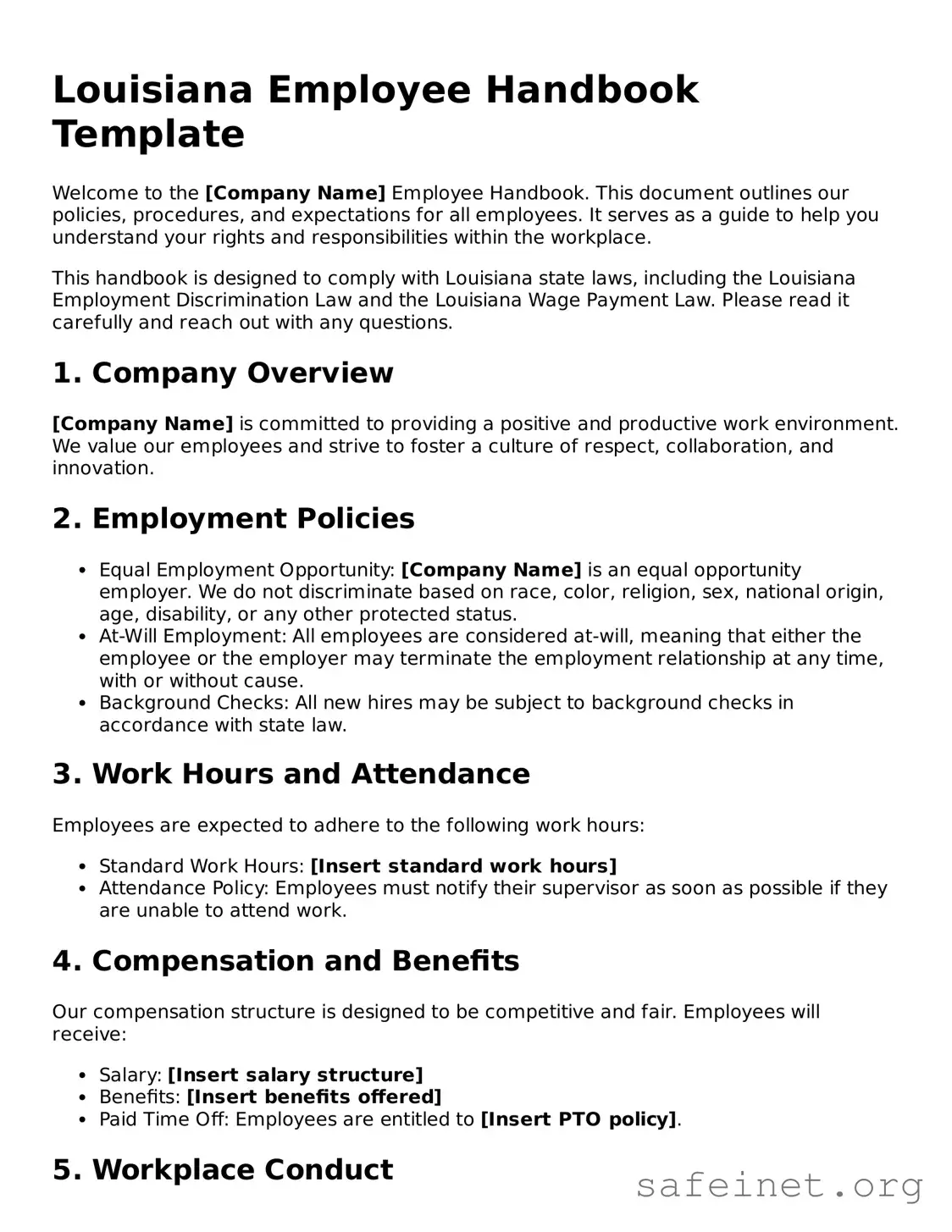
The Louisiana Employee Handbook form serves as a vital resource for employers and employees alike, outlining essential workplace policies and procedures. This document typically includes sections on employee rights, company expectations, and guidelines for conduct. It addresses important topics such as attendance, dress code, and workplace safety, ensuring that employees understand their responsibilities and the standards they are expected to uphold. Additionally, the handbook may cover benefits, leave policies, and procedures for reporting grievances or misconduct. By providing clear information on these aspects, the form helps create a transparent work environment, fostering mutual respect and understanding between employers and their staff. Overall, the Louisiana Employee Handbook form is an important tool for establishing a positive workplace culture while protecting both parties' interests.
Louisiana Employee Handbook Template
Welcome to the [Company Name] Employee Handbook. This document outlines our policies, procedures, and expectations for all employees. It serves as a guide to help you understand your rights and responsibilities within the workplace.
This handbook is designed to comply with Louisiana state laws, including the Louisiana Employment Discrimination Law and the Louisiana Wage Payment Law. Please read it carefully and reach out with any questions.
1. Company Overview
[Company Name] is committed to providing a positive and productive work environment. We value our employees and strive to foster a culture of respect, collaboration, and innovation.
2. Employment Policies
3. Work Hours and Attendance
Employees are expected to adhere to the following work hours:
4. Compensation and Benefits
Our compensation structure is designed to be competitive and fair. Employees will receive:
5. Workplace Conduct
We expect all employees to conduct themselves professionally. This includes:
6. Health and Safety
The safety of our employees is a priority. Employees must:
7. Acknowledgment of Receipt
By signing below, you acknowledge that you have received and read the [Company Name] Employee Handbook.
Employee Name: [Insert Employee Name]
Employee Signature: [Insert Signature]
Date: [Insert Date]
| Fact Name | Description |
|---|---|
| Purpose | The Louisiana Employee Handbook serves as a guide for employees regarding company policies and procedures. |
| Governing Law | The handbook is governed by Louisiana state employment laws, including the Louisiana Employment Security Law. |
| Contents | Typically includes sections on workplace conduct, benefits, and employee rights. |
| Mandatory Policies | Employers must include certain mandatory policies, such as anti-discrimination and harassment policies. |
| Employee Acknowledgment | Employees are often required to sign an acknowledgment form confirming receipt and understanding of the handbook. |
| Updates | Employers should regularly update the handbook to reflect changes in laws or company policies. |
| Distribution | The handbook should be distributed to all employees, both new hires and existing staff. |
| Legal Protection | A well-drafted handbook can provide legal protection for the employer by clarifying expectations and procedures. |
| Consultation | It is advisable for employers to consult legal counsel when drafting or revising the handbook. |
Completing the Louisiana Employee Handbook form requires attention to detail and careful consideration of the information being provided. Once the form is filled out, it will serve as an essential document for both the employer and employee, outlining expectations and policies.
What is the purpose of the Louisiana Employee Handbook form?
The Louisiana Employee Handbook form serves as a crucial document for employers in the state. It outlines the policies, procedures, and expectations for employees within an organization. This handbook helps ensure that employees understand their rights and responsibilities, as well as the company's rules. By providing clear guidelines, the handbook can foster a positive workplace environment and reduce misunderstandings between employers and employees.
Who should create the Employee Handbook?
Typically, the responsibility of creating the Employee Handbook falls to the employer or the human resources department. It's important that the handbook reflects the specific needs and culture of the organization. Employers may also consult with legal professionals to ensure compliance with state and federal laws. This collaboration can help avoid potential legal issues and create a more comprehensive handbook that addresses various workplace scenarios.
How often should the Employee Handbook be updated?
What should be included in the Employee Handbook?
An effective Employee Handbook should include a variety of essential topics. Key sections often cover company policies, employee rights, workplace conduct, and benefits. Specific areas to address may include anti-discrimination policies, harassment procedures, attendance expectations, and disciplinary actions. Additionally, including information about employee benefits, such as health insurance and leave policies, can provide employees with a comprehensive understanding of their entitlements and obligations.
Filling out the Louisiana Employee Handbook form is an important step for both employers and employees. However, mistakes can happen. Here are seven common errors to watch out for:
Incomplete Information: One of the most frequent mistakes is leaving sections blank. Ensure that all required fields are filled out completely to avoid delays in processing.
Incorrect Personal Details: Double-check that names, addresses, and contact information are accurate. Errors in personal details can lead to confusion and miscommunication.
Not Reading the Handbook: Some individuals may fill out the form without reviewing the handbook itself. Familiarizing yourself with the contents is crucial for understanding your rights and responsibilities.
Ignoring Policy Acknowledgment: Failing to sign or date the acknowledgment section can render the form incomplete. This step confirms that you have received and understood the handbook.
Missing Initials: Many forms require initials next to specific policies. Omitting these can lead to misunderstandings about which policies you agree to follow.
Submitting Without a Review: Rushing to submit the form without a final review can result in overlooked mistakes. Take a moment to go over everything before turning it in.
Not Keeping a Copy: After submission, failing to keep a copy of the completed form can create problems later. Always retain a copy for your records.
By being aware of these common mistakes, you can ensure that your Employee Handbook form is filled out correctly. This will help facilitate a smoother onboarding process and establish a clear understanding of workplace policies.
When managing employee relations and ensuring compliance with labor laws, several key documents complement the Louisiana Employee Handbook. Each of these documents serves a specific purpose, helping to create a structured and supportive work environment.
These documents work together to support a clear and organized approach to employee management. By utilizing them alongside the Louisiana Employee Handbook, employers can foster a fair and respectful workplace that benefits both employees and the organization as a whole.
The Louisiana Employee Handbook form shares similarities with the Employee Manual, which outlines company policies and procedures. Both documents serve as a guide for employees, detailing expectations regarding behavior, performance, and compliance with workplace rules. The Employee Manual often includes sections on workplace safety, employee rights, and disciplinary procedures, mirroring the structure and purpose of the Louisiana Employee Handbook.
Another comparable document is the Company Policy Guide. This guide provides a comprehensive overview of specific policies that govern workplace conduct. Like the Louisiana Employee Handbook, it addresses topics such as attendance, dress code, and harassment. Both documents aim to foster a clear understanding of company standards and promote a positive work environment.
The Orientation Manual is also similar, as it is typically provided to new hires during their onboarding process. This manual introduces employees to the company's culture, values, and operational procedures. Much like the Louisiana Employee Handbook, it serves as a resource for employees to familiarize themselves with their roles and responsibilities within the organization.
The Code of Conduct is another document that aligns closely with the Louisiana Employee Handbook. It outlines the ethical standards and behaviors expected from employees. Both documents emphasize the importance of integrity, respect, and accountability in the workplace, ensuring that employees understand the implications of their actions.
Additionally, the Safety Manual shares commonalities with the Louisiana Employee Handbook. This document focuses on workplace safety protocols and emergency procedures. Both emphasize the importance of maintaining a safe work environment and provide guidelines for reporting hazards or unsafe conditions.
The Employee Benefits Guide is another relevant document. It details the benefits available to employees, such as health insurance, retirement plans, and paid time off. Similar to the Louisiana Employee Handbook, this guide ensures that employees are aware of their entitlements and the procedures for accessing these benefits.
The Performance Evaluation Form also bears resemblance to the Louisiana Employee Handbook. This document outlines the criteria for assessing employee performance and provides a framework for feedback and development. Both documents aim to clarify expectations and promote continuous improvement in the workplace.
The Grievance Procedure Manual is similar as well. It details the steps employees can take to address workplace issues or disputes. Both documents emphasize the importance of open communication and provide a structured process for resolving conflicts, ensuring that employees feel heard and supported.
Finally, the Training and Development Plan complements the Louisiana Employee Handbook. This document outlines opportunities for professional growth and skill enhancement within the organization. Both emphasize the company’s commitment to employee development and provide resources for individuals seeking to advance their careers.
When filling out the Louisiana Employee Handbook form, it's essential to approach the task with care. Here are some helpful guidelines to consider:
Following these guidelines can help ensure that your experience with the Employee Handbook form is smooth and efficient. Taking the time to do it right reflects your professionalism and attention to detail.
Understanding the Louisiana Employee Handbook form is crucial for both employers and employees. However, several misconceptions often arise. Here’s a list of nine common misunderstandings about this important document:
Clarifying these misconceptions can help foster a better understanding of the role and importance of the Louisiana Employee Handbook. It’s essential for both employers and employees to recognize its value in promoting a positive workplace culture.
When filling out and using the Louisiana Employee Handbook form, keep the following key points in mind: