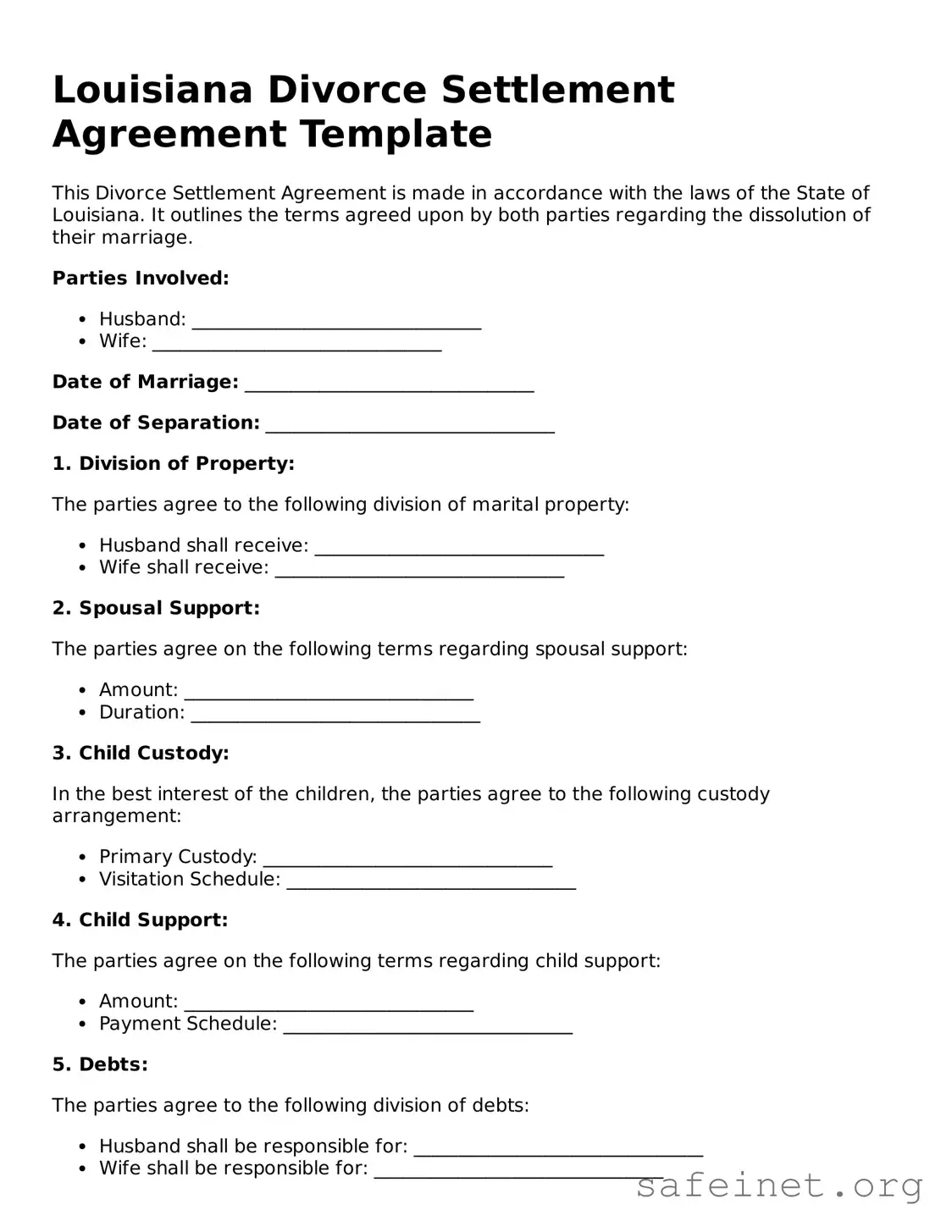
When navigating the complexities of divorce in Louisiana, a Divorce Settlement Agreement form serves as a crucial tool for couples seeking to finalize their separation. This document outlines the terms agreed upon by both parties regarding various important aspects of their marriage. Key components include the division of property, allocation of debts, child custody arrangements, and child support obligations. By clearly stating these terms, the form helps to minimize misunderstandings and disputes, providing a roadmap for both individuals as they transition into their new lives. Additionally, it can address spousal support, ensuring that both parties are aware of their financial responsibilities moving forward. Completing this form accurately is essential, as it becomes a binding agreement once filed with the court. Understanding its significance can empower individuals to approach their divorce with clarity and confidence.
Louisiana Divorce Settlement Agreement Template
This Divorce Settlement Agreement is made in accordance with the laws of the State of Louisiana. It outlines the terms agreed upon by both parties regarding the dissolution of their marriage.
Parties Involved:
Date of Marriage: _______________________________
Date of Separation: _______________________________
1. Division of Property:
The parties agree to the following division of marital property:
2. Spousal Support:
The parties agree on the following terms regarding spousal support:
3. Child Custody:
In the best interest of the children, the parties agree to the following custody arrangement:
4. Child Support:
The parties agree on the following terms regarding child support:
5. Debts:
The parties agree to the following division of debts:
6. Miscellaneous:
Any other agreements or considerations:
7. Governing Law:
This agreement shall be governed by the laws of the State of Louisiana.
Signatures:
By signing below, both parties agree to the terms outlined in this Divorce Settlement Agreement.
Husband's Signature: _______________________________ Date: ____________
Wife's Signature: _______________________________ Date: ____________
| Fact Name | Description |
|---|---|
| Governing Law | The Louisiana Divorce Settlement Agreement is governed by Louisiana Civil Code, specifically Articles 102 and 103. |
| Purpose | This form outlines the terms of a divorce settlement, including asset division, alimony, and child custody arrangements. |
| Filing Requirement | The agreement must be filed with the court as part of the divorce proceedings to be legally binding. |
| Mutual Agreement | Both parties must voluntarily agree to the terms outlined in the settlement for it to be valid. |
| Modification | Once signed and approved by the court, the agreement can only be modified by mutual consent or a court order. |
| Child Support | If children are involved, the agreement must include provisions for child support, following Louisiana guidelines. |
| Legal Representation | While not required, having legal representation is highly recommended to ensure that both parties understand their rights. |
| Enforcement | The terms of the agreement can be enforced through the court if one party fails to comply. |
Filling out the Louisiana Divorce Settlement Agreement form is an important step in your divorce process. Once completed, this form will help outline the terms of your divorce, including matters like property division, child custody, and support arrangements. After you fill it out, you will need to file it with the court and may need to attend a hearing.
What is a Louisiana Divorce Settlement Agreement form?
A Louisiana Divorce Settlement Agreement form is a legal document that outlines the terms and conditions agreed upon by both spouses during a divorce. This agreement typically covers various aspects such as property division, child custody, visitation rights, and spousal support. By formalizing these terms, the agreement helps to ensure that both parties understand their rights and responsibilities, potentially reducing conflicts in the future.
How do I complete the Divorce Settlement Agreement form?
Completing the Divorce Settlement Agreement form requires careful consideration of the issues at hand. Both spouses should openly discuss their needs and preferences regarding asset division, child custody arrangements, and any financial support. It is advisable to document these discussions in writing. Once both parties reach an agreement, they can fill out the form, ensuring that all relevant sections are completed accurately. Consulting with a legal professional can also provide guidance and ensure compliance with Louisiana law.
Is the Divorce Settlement Agreement legally binding?
Yes, once both parties sign the Louisiana Divorce Settlement Agreement form, it becomes a legally binding contract. This means that both spouses are obligated to adhere to the terms outlined in the agreement. However, it is important to note that the agreement must be approved by a judge in order to be enforceable. If either party fails to comply with the terms after the agreement is approved, the other party may seek legal remedies to enforce the agreement.
What happens if we cannot agree on the terms of the Divorce Settlement Agreement?
If spouses cannot reach an agreement on the terms of the Divorce Settlement Agreement, they may need to consider mediation or other dispute resolution methods. Mediation involves a neutral third party who can help facilitate discussions and negotiations. If mediation fails, the couple may need to go to court, where a judge will make decisions regarding the contested issues. This process can be lengthy and costly, so it is generally in both parties' best interests to try to reach an agreement outside of court.
When filling out the Louisiana Divorce Settlement Agreement form, individuals often encounter several common mistakes. Here are four key errors to avoid:
Many people forget to provide all required details. Missing names, addresses, or dates can lead to delays in processing.
Failing to accurately report income, assets, or debts can create issues later. It’s crucial to ensure that all financial information is complete and truthful.
Some overlook potential future circumstances, such as changes in income or living arrangements. Planning for these changes can prevent complications down the road.
Individuals sometimes neglect to review the specific legal requirements for their situation. Understanding these can help avoid unnecessary legal disputes.
By being aware of these common mistakes, individuals can ensure a smoother process when completing the Divorce Settlement Agreement form.
When navigating a divorce in Louisiana, several key documents may accompany the Divorce Settlement Agreement. Each of these documents serves a specific purpose and helps ensure that all aspects of the divorce are addressed comprehensively. Below is a list of commonly used forms and documents in this process.
Understanding these documents can significantly aid in the divorce process, ensuring that all necessary legal aspects are covered. Each form plays a crucial role in facilitating a smoother transition for both parties involved.
The Louisiana Child Custody Agreement is similar to the Divorce Settlement Agreement as both documents address the welfare of children involved in a divorce. This agreement outlines the arrangements for custody, visitation, and parenting responsibilities. It ensures that both parents understand their rights and obligations, promoting a stable environment for the children. Like the Divorce Settlement Agreement, it requires negotiation and mutual consent from both parties to be effective.
The Louisiana Child Support Agreement also shares similarities with the Divorce Settlement Agreement. This document focuses specifically on the financial responsibilities of each parent towards their children after separation. It details the amount of support, payment schedule, and any additional expenses that may arise. Both documents aim to secure the best interests of the children while ensuring that parents fulfill their financial obligations.
The Louisiana Property Settlement Agreement is akin to the Divorce Settlement Agreement in that it deals with the division of marital assets and debts. This document outlines how property will be divided between spouses, including real estate, bank accounts, and personal belongings. Both agreements require careful consideration and negotiation to ensure a fair distribution, minimizing potential conflicts during the divorce process.
The Louisiana Spousal Support Agreement is another document that parallels the Divorce Settlement Agreement. It specifically addresses financial support that one spouse may provide to the other after separation. This agreement can include temporary or permanent support and outlines the conditions under which support will be paid. Both documents are critical for ensuring that both parties can maintain a reasonable standard of living post-divorce.
The Louisiana Parenting Plan is similar to the Divorce Settlement Agreement, as it lays out the framework for co-parenting after a divorce. This plan includes schedules for visitation, communication methods, and decision-making responsibilities regarding the children. Both documents emphasize cooperation and clarity to foster a positive co-parenting relationship, which is essential for the children’s well-being.
The Louisiana Marital Settlement Agreement also resembles the Divorce Settlement Agreement in that it provides a comprehensive outline of the terms of a divorce. This document covers various aspects, including property division, child custody, and support arrangements. Both agreements serve to formalize the terms negotiated by the parties, ensuring that all critical issues are addressed before finalizing the divorce.
The Louisiana Alimony Agreement is another document that shares characteristics with the Divorce Settlement Agreement. It specifically focuses on the financial support one spouse may receive from the other after the divorce. This agreement can be temporary or permanent and must be mutually agreed upon. Both documents aim to provide financial stability and clarity following the dissolution of marriage.
The Louisiana Separation Agreement is similar to the Divorce Settlement Agreement in that it outlines the terms of separation before a divorce is finalized. This document can include arrangements for child custody, support, and property division. Both agreements help clarify the rights and responsibilities of each party, paving the way for a smoother transition during the divorce process.
The Louisiana Postnuptial Agreement also bears resemblance to the Divorce Settlement Agreement. This document is created after marriage and outlines the division of assets and financial responsibilities in the event of divorce. While the Divorce Settlement Agreement is finalized at the end of a marriage, the Postnuptial Agreement serves as a proactive measure to prevent disputes later on, ensuring both parties are clear on their rights and obligations.
When filling out the Louisiana Divorce Settlement Agreement form, it's important to approach the task carefully. Here are some guidelines to follow:
When dealing with divorce in Louisiana, many individuals encounter various misconceptions about the Divorce Settlement Agreement form. Understanding these misconceptions can help clarify the process and ensure that all parties are informed. Here are eight common misconceptions:
Addressing these misconceptions can help individuals navigate the divorce process more effectively and ensure that their rights and interests are adequately protected.
Filling out and using the Louisiana Divorce Settlement Agreement form can be a straightforward process if you keep a few key points in mind. Here are some essential takeaways to help guide you through:
By keeping these points in mind, you can navigate the process more smoothly and ensure that your Divorce Settlement Agreement serves your best interests.