The Louisiana Deed form is an essential document used in real estate transactions within the state. It serves as a formal record of the transfer of property ownership from one party to another. This form typically includes important details such as the names of the grantor (the person selling or transferring the property) and the grantee (the person receiving the property), as well as a clear description of the property being transferred. Additionally, the deed must be signed and notarized to ensure its validity. Depending on the type of transaction, there are different types of deeds that may be utilized, including warranty deeds and quitclaim deeds, each serving distinct purposes and offering varying levels of protection for the parties involved. Furthermore, the Louisiana Deed form must comply with specific state laws and regulations, which can affect the way the document is prepared and executed. Understanding these aspects is crucial for anyone looking to navigate the complexities of property transactions in Louisiana.
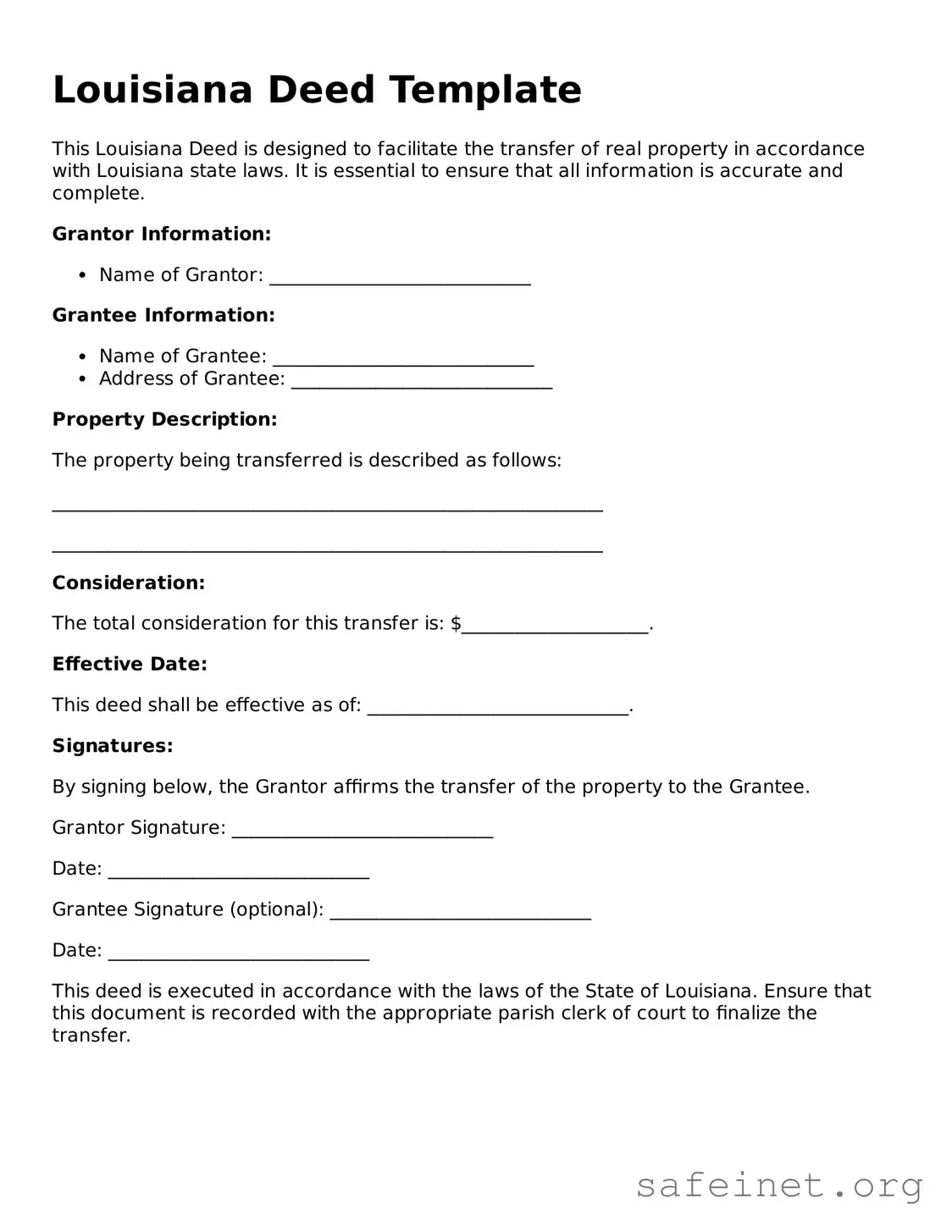
Louisiana Deed Template
This Louisiana Deed is designed to facilitate the transfer of real property in accordance with Louisiana state laws. It is essential to ensure that all information is accurate and complete.
Grantor Information:
Grantee Information:
Property Description:
The property being transferred is described as follows:
___________________________________________________________
___________________________________________________________
Consideration:
The total consideration for this transfer is: $____________________.
Effective Date:
This deed shall be effective as of: ____________________________.
Signatures:
By signing below, the Grantor affirms the transfer of the property to the Grantee.
Grantor Signature: ____________________________
Date: ____________________________
Grantee Signature (optional): ____________________________
Date: ____________________________
This deed is executed in accordance with the laws of the State of Louisiana. Ensure that this document is recorded with the appropriate parish clerk of court to finalize the transfer.
| Fact Name | Details |
|---|---|
| Governing Law | The Louisiana Deed form is governed by the Louisiana Civil Code, particularly Articles 474-515. |
| Purpose | This form is used to transfer ownership of real property from one party to another. |
| Types of Deeds | Common types include warranty deeds, quitclaim deeds, and special warranty deeds. |
| Required Signatures | Both the grantor (seller) and grantee (buyer) must sign the deed for it to be valid. |
| Notarization | The deed must be notarized to ensure its authenticity and legal standing. |
| Recording | To protect the interests of the parties, the deed should be recorded with the local parish clerk of court. |
| Property Description | A clear and accurate description of the property must be included in the deed. |
| Consideration | The deed should state the consideration, which is the amount paid for the property. |
| Tax Implications | Transfer taxes may apply, and it’s important to check local regulations regarding taxes on property transfers. |
| Revocation | Once executed and recorded, a deed cannot be easily revoked; it typically requires a new deed to reverse the transfer. |
Once the Louisiana Deed form is completed, it will need to be signed and notarized before it can be officially recorded with the appropriate parish clerk’s office. This ensures that the transfer of property ownership is legally recognized and documented. Below are the steps to fill out the form accurately.
What is a Louisiana Deed form?
A Louisiana Deed form is a legal document used to transfer ownership of real estate in the state of Louisiana. It outlines the details of the transaction, including the names of the parties involved, a description of the property, and any conditions or restrictions related to the transfer.
What types of Deeds are available in Louisiana?
In Louisiana, there are several types of deeds, including the Act of Sale, which is the most common for transferring property. Other types include Quitclaim Deeds, which transfer whatever interest the seller has without guarantees, and Warranty Deeds, which provide assurances regarding the title's validity.
Do I need a lawyer to prepare a Louisiana Deed form?
What information is needed to complete a Louisiana Deed form?
To complete a Louisiana Deed form, you will need the names and addresses of the buyer and seller, a legal description of the property, the sale price, and any specific terms of the agreement. It is also important to include the notary's information, as notarization is typically required.
How is a Louisiana Deed form executed?
The execution of a Louisiana Deed form involves signing the document in the presence of a notary public. Both the seller and the buyer should sign the deed. After signing, the notary will add their signature and seal, making the document legally binding.
Is a Louisiana Deed form recorded?
Yes, it is recommended to record the Louisiana Deed form with the local parish clerk of court. Recording the deed provides public notice of the property transfer and protects the buyer's ownership rights against future claims.
What are the costs associated with a Louisiana Deed form?
Costs can vary depending on several factors. There may be fees for notarization, recording the deed, and any legal assistance if you choose to hire a lawyer. Additionally, there may be transfer taxes imposed by the state or local government.
Can a Louisiana Deed form be revoked or changed?
Once a Louisiana Deed form is executed and recorded, it generally cannot be revoked or changed without the consent of both parties. If changes are necessary, a new deed may need to be created, or a corrective deed can be filed to address any issues.
Where can I find a Louisiana Deed form?
Louisiana Deed forms can be obtained from various sources, including legal stationery stores, online legal document services, or local government offices. It is important to ensure that the form you choose complies with Louisiana law.
Failing to include the correct names of all parties involved. It is crucial that the names of both the grantor (seller) and grantee (buyer) are accurately spelled and match their legal identification.
Not providing a complete legal description of the property. The description should clearly identify the property’s boundaries, and any missing details can lead to complications later on.
Leaving out the date of the transaction. This date is essential for establishing the timeline of ownership and can affect future legal matters.
Neglecting to sign the deed. All parties involved must sign the document; otherwise, it may be deemed invalid.
Overlooking the need for a notary public. A deed must be notarized to be legally binding in Louisiana, so ensure that a notary is present during the signing.
Using incorrect or outdated forms. Always use the most current version of the Louisiana Deed form to avoid any legal issues.
Not checking for prior liens or encumbrances. It’s important to ensure that the property is free from any legal claims that could affect ownership.
Failing to record the deed with the appropriate parish clerk. Recording the deed is essential for establishing public notice of the property transfer.
When completing a property transaction in Louisiana, several documents may accompany the Louisiana Deed form. Each document serves a specific purpose in ensuring the transaction is legally sound and properly recorded. Below is a list of commonly used forms and documents.
Each of these documents plays a crucial role in facilitating a smooth property transaction in Louisiana. Understanding their functions can help both buyers and sellers navigate the process effectively.
The Louisiana Act of Sale is a document that serves a similar purpose to the Louisiana Deed form. Both documents are used to transfer ownership of real property. However, the Act of Sale is more comprehensive, detailing the terms of the sale, including purchase price, financing arrangements, and any conditions or contingencies related to the transaction. It is often executed at the closing of a real estate transaction.
The Quitclaim Deed is another document comparable to the Louisiana Deed form. This type of deed transfers any interest the grantor may have in the property without making any guarantees about the title. While the Louisiana Deed form typically provides assurances regarding ownership and encumbrances, the Quitclaim Deed does not, making it a simpler and less formal option for transferring property rights.
A Warranty Deed is similar to the Louisiana Deed form in that it provides a guarantee of clear title to the buyer. This document assures the grantee that the property is free from any claims or liens, except those expressly stated in the deed. Both documents serve to protect the interests of the buyer, but the Warranty Deed offers more robust assurances than a standard Louisiana Deed.
The Special Warranty Deed is also related to the Louisiana Deed form. This document guarantees that the grantor has not caused any defects in the title during their ownership. While it provides some assurance to the buyer, it is less comprehensive than a full Warranty Deed. The Louisiana Deed form may not always offer the same level of protection, depending on its specific provisions.
The Bargain and Sale Deed is another document that resembles the Louisiana Deed form. This type of deed implies that the grantor has the right to transfer the property but does not guarantee a clear title. It is often used in transactions where the seller is not willing to provide full warranties. The Louisiana Deed form may include warranties that are absent in a Bargain and Sale Deed.
The Deed of Trust is a document that serves a different purpose but is related to property transactions. It is used to secure a loan by transferring the property title to a trustee until the loan is repaid. While the Louisiana Deed form focuses on the transfer of ownership, the Deed of Trust establishes a financial arrangement involving the property.
The Lease Agreement shares similarities with the Louisiana Deed form in that both involve real property transactions. However, a Lease Agreement grants temporary possession and use of the property rather than transferring ownership. While the Louisiana Deed form is a permanent transfer, a Lease Agreement typically has a specified duration and terms for renewal or termination.
The Assignment of Lease is another document that is somewhat similar to the Louisiana Deed form. This document allows a tenant to transfer their lease rights to another party. While the Louisiana Deed form deals with the transfer of ownership, the Assignment of Lease focuses on the transfer of lease obligations and rights, making it relevant in rental property situations.
The Easement Agreement is related to property rights but serves a different function. It grants one party the right to use a portion of another party's property for a specific purpose, such as access or utility installation. While the Louisiana Deed form transfers ownership, an Easement Agreement allows for shared use of the property without changing ownership.
Finally, the Power of Attorney can be considered similar in that it allows one individual to act on behalf of another in property transactions. While the Louisiana Deed form is executed to transfer property, a Power of Attorney enables someone to sign the deed or other related documents on behalf of the property owner. This can be particularly useful when the owner is unable to be present during the transaction.
When filling out the Louisiana Deed form, attention to detail is crucial. Here are some important dos and don'ts to keep in mind:
By following these guidelines, you can help ensure a smooth process when completing the Louisiana Deed form.
Understanding the Louisiana Deed form is essential for anyone involved in real estate transactions in the state. However, several misconceptions can lead to confusion. Here are five common misunderstandings:
This is not true. Louisiana has different types of deeds, such as warranty deeds and quitclaim deeds, each serving distinct purposes and offering varying levels of protection to the buyer.
While notarization is often required for a deed to be recorded, it is not strictly necessary for the deed to be legally valid. However, without notarization, proving the authenticity of the deed may become challenging.
This misconception overlooks the possibility of amending or revoking a deed under certain circumstances. It is essential to understand the legal processes involved in making changes to a deed.
While having legal representation can be beneficial, it is not a legal requirement for every property transfer. Individuals can handle simple transactions independently, though it is advisable to seek professional guidance for complex cases.
A deed does not automatically guarantee that the title is free from liens or other encumbrances. Buyers should conduct thorough title searches to ensure they are aware of any potential issues before completing the transaction.
Awareness of these misconceptions can help individuals navigate the complexities of real estate transactions in Louisiana more effectively.
When filling out and using the Louisiana Deed form, it is important to keep several key points in mind. The following takeaways can help ensure a smooth process: