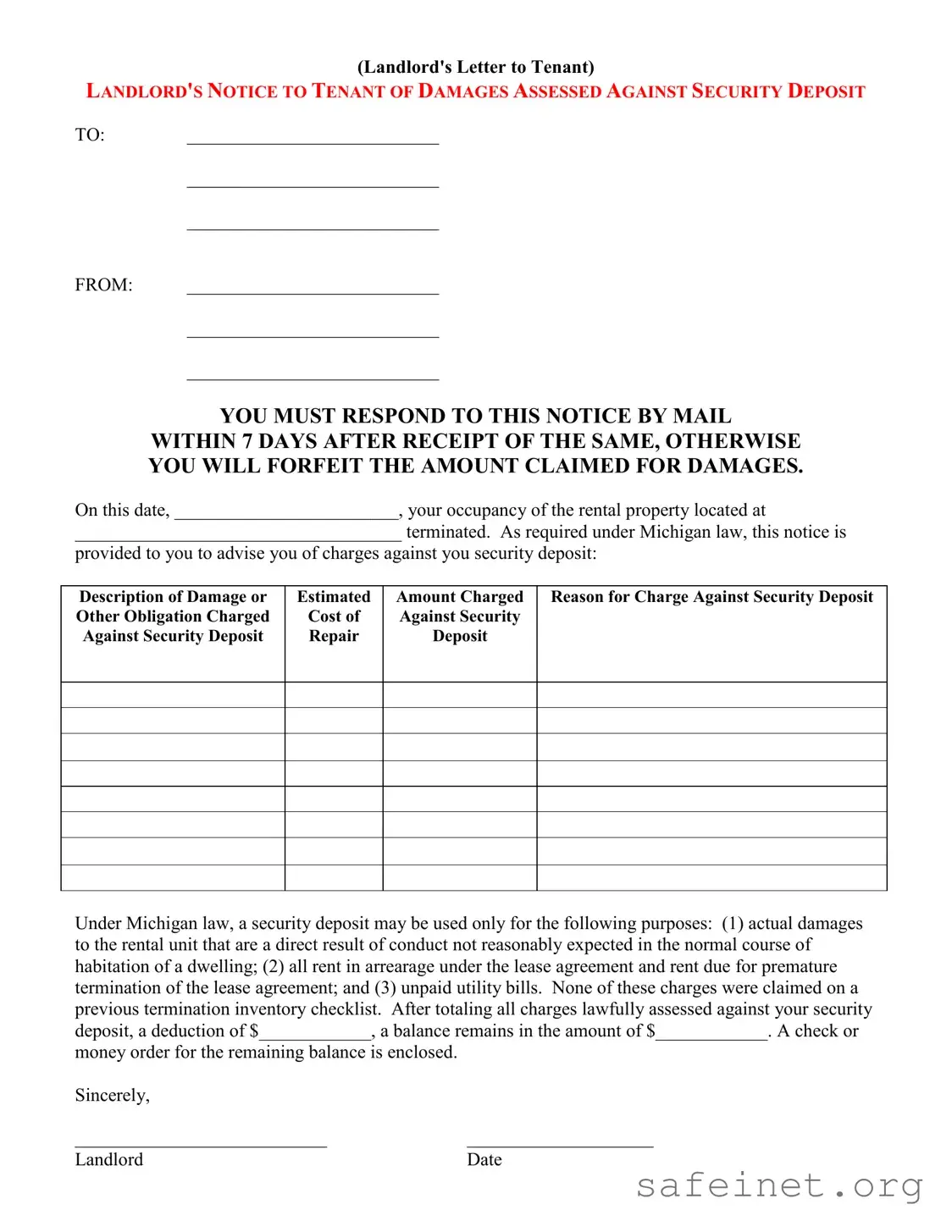
When a tenant moves out of a rental property, the landlord must assess any damages that may have occurred during the tenancy. To facilitate this process, the Landlord Damages Letter form serves as an essential communication tool. This form notifies the tenant of any charges that will be deducted from their security deposit due to damages or other obligations. It includes key details such as the tenant's and landlord's names, the date of occupancy termination, and a breakdown of the damages assessed. The form specifies that tenants must respond within seven days of receiving the notice to avoid forfeiting the claimed amount. Under Michigan law, security deposits can only be used for specific purposes, including actual damages, unpaid rent, and unpaid utility bills. The landlord must provide a clear description of the damage, the estimated cost, and ensure that none of these charges were previously documented in a termination inventory checklist. After calculating all lawful deductions, the form outlines the remaining balance, if any, and includes a check or money order for that amount. This structured approach not only keeps the process transparent but also helps maintain a cordial relationship between landlords and tenants.

(Landlord's Letter to Tenant)
LANDLORD'S NOTICE TO TENANT OF DAMAGES ASSESSED AGAINST SECURITY DEPOSIT
TO: ___________________________
___________________________
___________________________
FROM: ___________________________
___________________________
___________________________
YOU MUST RESPOND TO THIS NOTICE BY MAIL
WITHIN 7 DAYS AFTER RECEIPT OF THE SAME, OTHERWISE YOU WILL FORFEIT THE AMOUNT CLAIMED FOR DAMAGES.
On this date, ________________________, your occupancy of the rental property located at
___________________________________ terminated. As required under Michigan law, this notice is
provided to you to advise you of charges against you security deposit:
Description of Damage or |
Estimated |
Amount Charged |
Reason for Charge Against Security Deposit |
Other Obligation Charged |
Cost of |
Against Security |
|
Against Security Deposit |
Repair |
Deposit |
|
|
|
|
|
|
|
|
|
|
|
|
|
|
|
|
|
|
|
|
|
|
|
|
|
|
|
|
|
|
|
|
|
|
|
|
|
Under Michigan law, a security deposit may be used only for the following purposes: (1) actual damages to the rental unit that are a direct result of conduct not reasonably expected in the normal course of habitation of a dwelling; (2) all rent in arrearage under the lease agreement and rent due for premature termination of the lease agreement; and (3) unpaid utility bills. None of these charges were claimed on a previous termination inventory checklist. After totaling all charges lawfully assessed against your security deposit, a deduction of $____________, a balance remains in the amount of $____________. A check or
money order for the remaining balance is enclosed.
Sincerely, |
|
___________________________ |
____________________ |
Landlord |
Date |
| Fact Name | Details |
|---|---|
| Purpose of the Letter | This letter informs tenants of damages assessed against their security deposit after the termination of their lease. |
| Response Timeframe | Tenants must respond within 7 days of receiving the notice to avoid forfeiting the claimed amount for damages. |
| Legal Requirement | Under Michigan law, landlords are required to provide this notice to tenants regarding charges against their security deposit. |
| Permissible Charges | Security deposits can be used for actual damages, unpaid rent, and unpaid utility bills, as specified by law. |
| Previous Claims | The letter states that none of the charges were previously claimed on a termination inventory checklist, ensuring transparency. |
Once you have the Landlord Damages Letter form in front of you, the next step is to fill it out accurately. This form serves to inform the tenant about the damages assessed against their security deposit and outlines the necessary details for both parties. Completing it correctly ensures clarity and compliance with legal requirements.
What is the purpose of the Landlord Damages Letter form?
The Landlord Damages Letter form serves as a formal notification to tenants regarding any damages assessed against their security deposit. It outlines the specific damages, the estimated costs, and provides tenants with a clear understanding of the deductions made from their security deposit upon termination of their lease.
What information must be included in the letter?
The letter should include the names and addresses of both the landlord and the tenant, the date of lease termination, a detailed description of the damages, the estimated costs associated with those damages, and any other obligations charged against the security deposit. It must also state the remaining balance of the security deposit after deductions.
How long does a tenant have to respond to the notice?
Tenants are required to respond to the notice by mail within 7 days of receipt. Failing to do so may result in the forfeiture of the amount claimed for damages, meaning the tenant may lose their right to dispute the charges or recover any remaining balance.
What types of damages can be deducted from a security deposit?
Under Michigan law, deductions from a security deposit can only be made for actual damages to the rental unit that are not considered normal wear and tear, unpaid rent, or unpaid utility bills. It is important that these charges are documented and justified, as they cannot be claimed on a previous termination inventory checklist.
What should a tenant do if they disagree with the charges?
If a tenant disagrees with the charges outlined in the letter, they should respond within the 7-day timeframe. This response can include a dispute of the charges, along with any supporting evidence or documentation that may help clarify their position. Open communication with the landlord can often lead to a resolution.
What happens if the security deposit balance is not claimed?
If the tenant does not claim the remaining balance of the security deposit within the specified timeframe, the landlord may retain the amount. It is crucial for tenants to be proactive in addressing any issues related to their security deposit to ensure they receive any funds owed to them.
Neglecting to Respond in Time: One of the most critical mistakes is failing to respond to the notice within the specified 7-day period. If you miss this deadline, you may forfeit your right to contest the charges against your security deposit.
Inaccurate Information: Providing incorrect details, such as your name or the address of the rental property, can lead to confusion and delays. Ensure that all information is accurate and matches official documents.
Ignoring Required Documentation: Failing to include necessary supporting documents, like photos of the property or previous correspondence, can weaken your case. Always attach any relevant evidence that supports your position.
Overlooking the Purpose of the Security Deposit: Misunderstanding what the security deposit can be used for may lead to disputes. Remember, it should only cover damages, unpaid rent, or utility bills as specified by law.
When dealing with the aftermath of a rental agreement, landlords and tenants may need to refer to various forms and documents to ensure a smooth transition. Understanding these documents can help both parties navigate the situation more effectively and protect their rights. Below is a list of commonly used forms alongside the Landlord Damages Letter.
Utilizing these documents effectively can facilitate communication and help resolve any disputes that may arise after a tenant moves out. Both landlords and tenants should be proactive in keeping records and understanding their rights to ensure a fair process.
The first document similar to the Landlord Damages Letter is the Security Deposit Return Letter. This letter serves as a formal communication from the landlord to the tenant, detailing the return of the security deposit after the lease has ended. Like the Landlord Damages Letter, it outlines any deductions made from the deposit, providing a breakdown of damages or unpaid amounts. Both documents ensure transparency and accountability, allowing tenants to understand the financial implications of their tenancy.
Another related document is the Move-Out Inspection Report. This report is typically prepared by the landlord or property manager after the tenant vacates the premises. It lists the condition of the property and notes any damages or cleanliness issues. Similar to the Landlord Damages Letter, this report serves as a basis for any deductions from the security deposit. By documenting the property's condition, it helps to establish a fair assessment of damages and protects both parties' interests.
The Tenant's Notice of Dispute is also comparable. This document is used by tenants who wish to contest deductions made from their security deposit. It allows tenants to formally respond to the landlord's claims, providing their perspective on the damages cited. Like the Landlord Damages Letter, it emphasizes the importance of communication between landlords and tenants, ensuring that both sides have the opportunity to present their case.
The Lease Termination Letter is another document that shares similarities. This letter is sent by either the landlord or tenant to formally end the lease agreement. It often includes information about the return of the security deposit and any potential deductions. Both the Lease Termination Letter and the Landlord Damages Letter highlight the conclusion of the rental relationship and the financial responsibilities that follow.
The Final Account Statement is also relevant. This document outlines the final financial transactions between the landlord and tenant, including rent owed, security deposit deductions, and any other charges. It functions similarly to the Landlord Damages Letter by providing a clear summary of the financial obligations at the end of the tenancy. Both documents aim to clarify the financial standing of both parties.
The Repair Request Form is another document that bears resemblance. This form is used by landlords to request repairs from tenants during their occupancy. While it focuses on repairs needed during the tenancy, it shares the goal of documenting property conditions. Both the Repair Request Form and the Landlord Damages Letter emphasize the importance of maintaining the property and outline the responsibilities of the tenant regarding damages.
The Eviction Notice also shares some similarities. While primarily used to inform a tenant of their eviction, this document often includes information about any outstanding rent or damages that may affect the return of the security deposit. Like the Landlord Damages Letter, it serves to communicate important information regarding the tenant's obligations and the consequences of their actions.
Lastly, the Written Agreement for Repairs is comparable. This document is used when a landlord and tenant agree on specific repairs to be made before the end of the lease. It outlines the responsibilities of both parties and can impact the security deposit if damages are not addressed. Both this agreement and the Landlord Damages Letter emphasize the importance of clear communication and mutual understanding in maintaining the rental property.
When filling out the Landlord Damages Letter form, it’s important to be careful and thorough. Here are some guidelines to help you:
Following these steps can help ensure a smooth process. Clarity and accuracy are key in these situations.
Misconceptions about the Landlord Damages Letter form can lead to confusion for both landlords and tenants. Here are five common misunderstandings:
Understanding these misconceptions can help both landlords and tenants navigate the process more effectively and ensure compliance with legal requirements.
When filling out and using the Landlord Damages Letter form, keep these key points in mind: