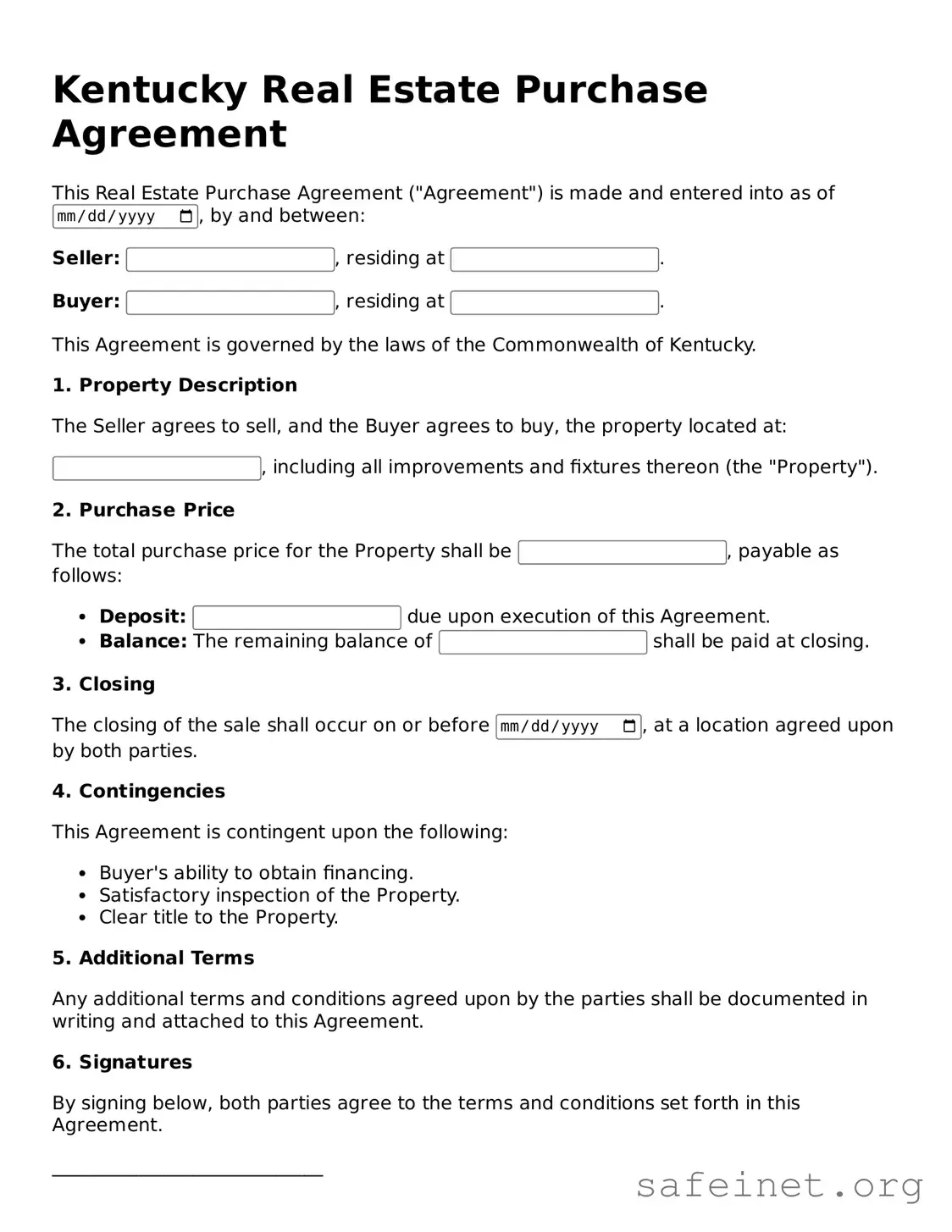
The Kentucky Real Estate Purchase Agreement is a crucial document that outlines the terms and conditions of a real estate transaction between a buyer and a seller. This form serves as a legally binding contract, detailing essential elements such as the purchase price, property description, and closing date. Additionally, it addresses contingencies, which are conditions that must be met for the sale to proceed, such as financing approval or satisfactory home inspections. The agreement also specifies the responsibilities of both parties, including disclosures and any potential repairs needed before the sale is finalized. Understanding this form is vital for anyone looking to navigate the complexities of real estate transactions in Kentucky, ensuring that all parties are on the same page and protecting their interests throughout the process.
Kentucky Real Estate Purchase Agreement
This Real Estate Purchase Agreement ("Agreement") is made and entered into as of , by and between:
Seller: , residing at .
Buyer: , residing at .
This Agreement is governed by the laws of the Commonwealth of Kentucky.
1. Property Description
The Seller agrees to sell, and the Buyer agrees to buy, the property located at:
, including all improvements and fixtures thereon (the "Property").
2. Purchase Price
The total purchase price for the Property shall be , payable as follows:
3. Closing
The closing of the sale shall occur on or before , at a location agreed upon by both parties.
4. Contingencies
This Agreement is contingent upon the following:
5. Additional Terms
Any additional terms and conditions agreed upon by the parties shall be documented in writing and attached to this Agreement.
6. Signatures
By signing below, both parties agree to the terms and conditions set forth in this Agreement.
_____________________________
Seller's Signature
Date:
_____________________________
Buyer's Signature
Date:
| Fact Name | Description |
|---|---|
| Governing Law | The Kentucky Real Estate Purchase Agreement is governed by Kentucky state law, specifically the Kentucky Revised Statutes related to real estate transactions. |
| Essential Elements | This agreement typically includes essential elements such as the purchase price, property description, and terms of financing. |
| Contingencies | Buyers often include contingencies, such as inspections and financing approval, to protect their interests during the transaction. |
| Disclosure Requirements | In Kentucky, sellers must provide certain disclosures about the property, including any known defects or issues. |
| Signature Requirements | The agreement must be signed by both the buyer and seller to be legally binding, ensuring that both parties agree to the terms. |
After you have gathered the necessary information, you are ready to fill out the Kentucky Real Estate Purchase Agreement form. This document is essential for outlining the terms of the real estate transaction between the buyer and the seller. Follow these steps carefully to ensure accuracy and completeness.
Once you have completed the form, review it carefully to ensure all information is accurate. Both parties should retain a copy for their records. The next steps involve negotiating any final terms and preparing for the closing process.
What is a Kentucky Real Estate Purchase Agreement?
A Kentucky Real Estate Purchase Agreement is a legally binding document that outlines the terms and conditions of a real estate transaction between a buyer and a seller. It specifies the property details, purchase price, contingencies, and closing procedures. This agreement serves to protect the interests of both parties involved in the sale.
What key elements should be included in the agreement?
The agreement should include essential details such as the names of the buyer and seller, the property address, the purchase price, earnest money deposit, financing terms, and any contingencies (like inspections or appraisals). Additionally, it should outline the closing date and any specific terms related to the sale, such as repairs or inclusions like appliances.
Is the Kentucky Real Estate Purchase Agreement required by law?
While it is not legally mandated to use a formal purchase agreement for real estate transactions in Kentucky, it is highly recommended. A written agreement provides clarity and legal protection for both parties. Without it, verbal agreements may lead to misunderstandings and disputes.
Can the agreement be modified after it is signed?
Yes, the Kentucky Real Estate Purchase Agreement can be modified after it is signed, but both parties must agree to any changes. Modifications should be documented in writing and signed by both the buyer and seller to ensure enforceability. This process helps prevent potential conflicts regarding the terms of the agreement.
What happens if one party breaches the agreement?
If one party breaches the agreement, the other party may have several options. They can seek specific performance, which means asking the court to enforce the agreement as written. Alternatively, they might pursue damages, which could include financial compensation for losses incurred due to the breach. The specific remedies available will depend on the nature of the breach and the terms outlined in the agreement.
Do I need a lawyer to complete the agreement?
While hiring a lawyer is not a requirement to complete a Kentucky Real Estate Purchase Agreement, it is advisable, especially for first-time buyers or sellers. An attorney can provide valuable guidance on the legal implications of the agreement, help ensure that all necessary terms are included, and assist in navigating any complex issues that may arise during the transaction.
Where can I find a Kentucky Real Estate Purchase Agreement template?
Templates for the Kentucky Real Estate Purchase Agreement can be found through various sources, including real estate websites, legal document providers, or local real estate associations. It is important to use a template that complies with Kentucky laws and regulations. Always review the template thoroughly and consider consulting a legal professional before finalizing any agreements.
Incorrect Property Description: One common mistake is failing to provide a complete and accurate description of the property. This includes the address, lot number, and any relevant details about the property boundaries. Omitting this information can lead to confusion and disputes later on.
Missing Signatures: All parties involved must sign the agreement. Sometimes, one party forgets to sign or assumes that their signature is not necessary. Without all required signatures, the agreement may not be legally binding.
Not Specifying Contingencies: Buyers often overlook the importance of including contingencies in the agreement. Contingencies protect the buyer's interests, such as financing or inspection requirements. Failing to include these can result in unexpected issues down the line.
Ignoring Deadlines: The agreement usually includes specific deadlines for various actions, such as inspections or closing dates. Missing these deadlines can lead to complications or even the cancellation of the agreement. It is essential to pay attention to these timelines.
When engaging in a real estate transaction in Kentucky, several additional forms and documents complement the Kentucky Real Estate Purchase Agreement. Each of these documents serves a specific purpose, ensuring that both buyers and sellers are protected throughout the process. Below is a list of commonly used forms that facilitate a smooth transaction.
Understanding these documents is essential for anyone involved in a real estate transaction. They not only facilitate the process but also protect the interests of both buyers and sellers. Familiarity with these forms can lead to a more efficient and successful real estate experience.
The Kentucky Real Estate Purchase Agreement form shares similarities with the Residential Purchase Agreement. Both documents outline the terms and conditions for purchasing a residential property. They specify the purchase price, financing details, and contingencies, ensuring both parties understand their obligations. Each agreement serves as a binding contract once signed, providing a clear framework for the transaction.
Another document similar to the Kentucky Real Estate Purchase Agreement is the Commercial Purchase Agreement. This form is used for transactions involving commercial properties. Like the residential version, it details the terms of the sale, including price and conditions. However, it also addresses specific aspects relevant to commercial real estate, such as zoning laws and lease agreements, which are not typically included in residential agreements.
The Option to Purchase Agreement is also comparable. This document gives a potential buyer the right to purchase a property within a specified timeframe. It outlines the terms under which the buyer can exercise this option, including the purchase price and duration. While it does not complete the sale, it creates a legal right for the buyer, similar to how the Purchase Agreement sets the stage for the transaction.
The Lease Purchase Agreement resembles the Kentucky Real Estate Purchase Agreement as well. This document allows a tenant to lease a property with the option to buy it later. It combines elements of leasing and purchasing, detailing the rental terms and the eventual sale conditions. Both agreements aim to protect the interests of the parties involved while providing a clear path to ownership.
The Seller Financing Agreement is another document that aligns with the Kentucky Real Estate Purchase Agreement. In this case, the seller provides financing to the buyer instead of involving a bank. This agreement outlines the terms of the loan, including interest rates and payment schedules. It ensures both parties are aware of their financial responsibilities, similar to how the Purchase Agreement delineates the sale terms.
Lastly, the Property Disclosure Statement is akin to the Kentucky Real Estate Purchase Agreement in that it is often part of the real estate transaction process. While the Purchase Agreement focuses on the sale terms, the Property Disclosure Statement provides crucial information about the property's condition. It informs the buyer of any known issues, helping them make an informed decision before finalizing the purchase.
When filling out the Kentucky Real Estate Purchase Agreement form, it's essential to approach the task with care. Here are some guidelines to help ensure that you complete the form accurately and effectively.
Things You Should Do:
Things You Shouldn't Do:
When dealing with real estate transactions in Kentucky, misunderstandings about the Real Estate Purchase Agreement form can lead to confusion. Here are eight common misconceptions:
Understanding these misconceptions can help you navigate the real estate process more effectively. Always consider seeking advice from professionals when dealing with legal documents.
Filling out the Kentucky Real Estate Purchase Agreement form is an important step in the home buying or selling process. Here are some key takeaways to keep in mind:
By following these key points, you can navigate the Kentucky Real Estate Purchase Agreement with confidence and clarity.