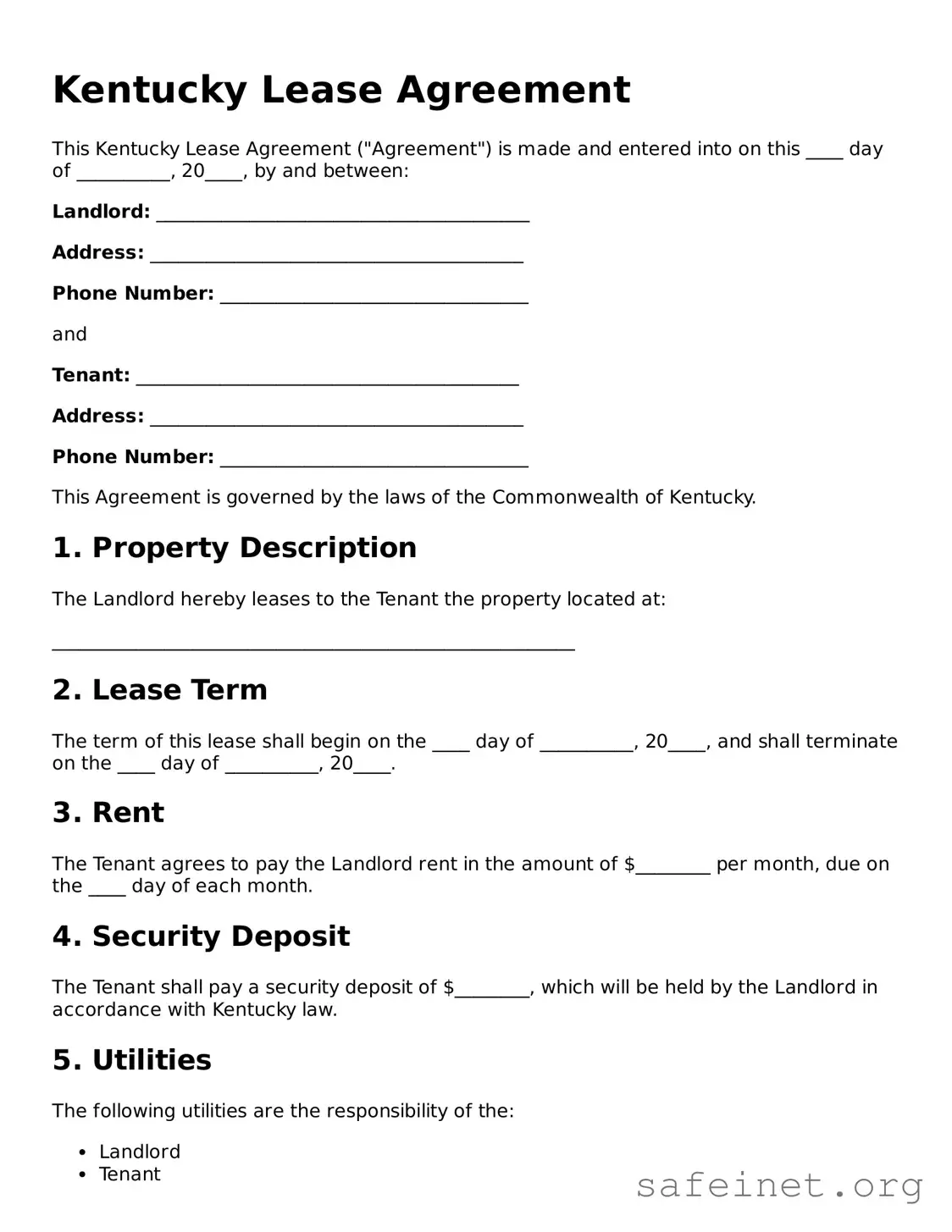
The Kentucky Lease Agreement form serves as a vital document for landlords and tenants entering into a rental arrangement. This form outlines the rights and responsibilities of both parties, ensuring clarity and protection throughout the lease term. It typically includes essential details such as the rental property address, lease duration, and the amount of rent due each month. Additionally, it addresses security deposits, maintenance responsibilities, and rules regarding pets or alterations to the property. By clearly defining these aspects, the lease agreement helps prevent misunderstandings and disputes. It is important for both landlords and tenants to review and understand the terms before signing, as this document will govern their relationship for the duration of the lease. Overall, the Kentucky Lease Agreement form is a foundational tool that fosters a smooth rental experience for everyone involved.
Kentucky Lease Agreement
This Kentucky Lease Agreement ("Agreement") is made and entered into on this ____ day of __________, 20____, by and between:
Landlord: ________________________________________
Address: ________________________________________
Phone Number: _________________________________
and
Tenant: _________________________________________
Address: ________________________________________
Phone Number: _________________________________
This Agreement is governed by the laws of the Commonwealth of Kentucky.
1. Property Description
The Landlord hereby leases to the Tenant the property located at:
________________________________________________________
2. Lease Term
The term of this lease shall begin on the ____ day of __________, 20____, and shall terminate on the ____ day of __________, 20____.
3. Rent
The Tenant agrees to pay the Landlord rent in the amount of $________ per month, due on the ____ day of each month.
4. Security Deposit
The Tenant shall pay a security deposit of $________, which will be held by the Landlord in accordance with Kentucky law.
5. Utilities
The following utilities are the responsibility of the:
6. Maintenance and Repairs
The Tenant agrees to maintain the premises in good condition and shall notify the Landlord of any needed repairs.
7. Termination
Either party may terminate this Agreement by providing written notice at least ____ days prior to the intended termination date.
8. Governing Law
This Agreement shall be governed by the laws of the Commonwealth of Kentucky.
9. Signatures
By signing below, both parties agree to the terms and conditions set forth in this Lease Agreement.
Landlord Signature: ___________________________ Date: ____________
Tenant Signature: ____________________________ Date: ____________
| Fact Name | Description |
|---|---|
| Governing Law | The Kentucky Lease Agreement is governed by Kentucky state law, specifically KRS Chapter 383. |
| Required Elements | The lease must include essential details such as the names of the parties, property description, and lease term. |
| Security Deposit | Landlords may require a security deposit, which is typically limited to one month's rent under Kentucky law. |
| Termination Notice | For month-to-month leases, a written notice of at least 30 days is required for termination by either party. |
Filling out the Kentucky Lease Agreement form requires careful attention to detail. Once completed, this form will serve as a legally binding document between the landlord and tenant, outlining the terms of the rental arrangement. Below are the steps to guide you through the process of filling out the form.
After completing these steps, both parties should keep a copy of the signed lease agreement for their records. This ensures that everyone is clear on the terms and conditions of the rental arrangement.
What is a Kentucky Lease Agreement form?
A Kentucky Lease Agreement form is a legal document that outlines the terms and conditions under which a landlord rents property to a tenant. This form typically includes details such as the rental amount, duration of the lease, responsibilities of both parties, and any rules regarding the property. It serves to protect the rights of both landlords and tenants by clearly stating expectations and obligations.
What should be included in a Kentucky Lease Agreement?
Key elements of a Kentucky Lease Agreement should include the names of the landlord and tenant, the address of the rental property, the lease term (length of the rental period), the amount of rent and due date, security deposit information, and maintenance responsibilities. Additionally, it may cover rules about pets, smoking, and any other specific policies that apply to the property. Clarity in these areas helps prevent misunderstandings later on.
How long is a typical lease in Kentucky?
In Kentucky, lease agreements can vary in length. Most commonly, leases are for one year, but they can also be month-to-month or for shorter or longer periods, depending on the needs of the landlord and tenant. A longer lease often provides stability for both parties, while a shorter lease may offer more flexibility. It’s essential to choose a duration that suits your situation.
Can a lease be terminated early in Kentucky?
Yes, a lease can be terminated early in Kentucky, but specific conditions must be met. If both the landlord and tenant agree to end the lease, they can do so without penalty. However, if a tenant wishes to break the lease unilaterally, they may face consequences unless there are valid reasons, such as a breach of the lease by the landlord or specific legal protections. It’s best to review the lease terms and consult local laws before taking action.
Failing to include all required information.
Many individuals overlook sections that need to be filled out completely, such as tenant names, property address, and lease term. This can lead to confusion and potential disputes later on.
Not specifying the rent amount clearly.
It's crucial to state the exact rent amount and the payment schedule. Ambiguities can create misunderstandings between landlords and tenants.
Ignoring the security deposit details.
People often forget to mention the amount of the security deposit and the conditions for its return. This can result in financial disputes when the lease ends.
Overlooking maintenance responsibilities.
Lease agreements should clearly outline who is responsible for maintenance and repairs. Failure to do so can lead to disagreements about upkeep.
Not including rules about pets.
Many landlords neglect to specify whether pets are allowed. This omission can lead to complications if a tenant brings a pet without prior approval.
Forgetting to include termination clauses.
It's important to outline the conditions under which either party can terminate the lease. Without this, tenants and landlords may find themselves in difficult situations.
Not reviewing the document for accuracy.
Finally, failing to proofread the lease agreement can lead to significant errors. Typos or incorrect information can create legal issues down the line.
When entering into a lease agreement in Kentucky, several additional documents often accompany the main lease form. These documents help clarify the terms of the lease, protect the rights of both parties, and ensure compliance with state laws. Below are some commonly used forms and documents that landlords and tenants may find beneficial.
These documents play a crucial role in the rental process, ensuring that both landlords and tenants have a clear understanding of their rights and responsibilities. By utilizing these forms, parties can foster a more transparent and harmonious rental experience.
A Rental Agreement is similar to a Lease Agreement in that both documents outline the terms under which a tenant can occupy a property. However, Rental Agreements are typically more flexible and often used for shorter timeframes, such as month-to-month arrangements. They detail the rent amount, payment due dates, and rules for the property, just like a Lease Agreement, but they may be easier to modify or terminate with shorter notice periods.
A Sublease Agreement allows a tenant to rent out their leased property to another person, with the original landlord's permission. This document is similar to a Lease Agreement because it also defines the terms of occupancy, including rent and duration. However, it differs in that it acts as a secondary agreement, where the original tenant remains responsible for the lease with the landlord while the subtenant occupies the space.
A Commercial Lease Agreement is used for business properties, such as offices or retail spaces. Like a residential Lease Agreement, it specifies terms like rent, duration, and responsibilities of both parties. However, it often includes additional clauses that address the unique needs of businesses, such as permitted use of the property, maintenance responsibilities, and zoning compliance.
A Roommate Agreement is a document that outlines the living arrangements between individuals sharing a rental property. Similar to a Lease Agreement, it covers rent, utilities, and shared responsibilities. However, it is more focused on the interpersonal dynamics and expectations among roommates, rather than the formal relationship with a landlord.
A Month-to-Month Lease is a type of rental agreement that continues on a monthly basis until either party decides to terminate it. It shares similarities with a standard Lease Agreement in terms of outlining rent and property rules, but it offers greater flexibility for tenants and landlords alike, allowing for easier adjustments to the terms or termination with short notice.
A Lease Option Agreement provides a tenant with the option to purchase the property at the end of the lease term. This document is similar to a Lease Agreement in that it sets out the terms of occupancy and rent. However, it adds an additional layer by including terms related to the potential sale of the property, giving tenants a chance to become homeowners.
A Rent-to-Own Agreement combines elements of a Lease Agreement and a purchase agreement. It allows tenants to rent a property with the intention of buying it later. Similar to a Lease Agreement, it specifies rent and property rules, but it also includes details about the purchase price and how rental payments may contribute toward the eventual purchase.
A Maintenance Agreement may be included alongside a Lease Agreement to clarify responsibilities for property upkeep. While a Lease Agreement outlines the basic terms of tenancy, a Maintenance Agreement specifically details who is responsible for repairs and maintenance tasks. Both documents work together to ensure that the property remains in good condition, protecting the interests of both the landlord and tenant.
When filling out the Kentucky Lease Agreement form, it's important to be careful and thorough. Here are some guidelines to help you navigate the process.
Things You Should Do:
Things You Shouldn't Do:
Understanding the Kentucky Lease Agreement form is crucial for both landlords and tenants. However, several misconceptions can lead to confusion and potential legal issues. Here are seven common misconceptions:
While it's always best to have a written lease for clarity, verbal agreements can also be binding in Kentucky. However, proving the terms of a verbal agreement can be challenging.
Lease agreements can vary significantly based on the specific terms negotiated between the landlord and tenant. Each agreement should reflect the unique circumstances of the rental arrangement.
Many leases include an automatic renewal clause, but not all do. It’s essential to read the lease carefully to understand the renewal terms and any notice requirements.
In Kentucky, landlords must provide reasonable notice before entering a tenant's property, except in emergencies. This protects the tenant's right to privacy.
Security deposits can be refundable, depending on the terms of the lease and the condition of the property when the tenant moves out. Landlords must return deposits within a specific timeframe unless deductions are justified.
While tenants have rights, withholding rent is typically only permissible under specific circumstances, such as unaddressed repairs or violations of the lease. Legal advice should be sought before taking such action.
While many terms can be negotiated, some may be dictated by local laws or property management policies. Understanding which terms are flexible is key to successful negotiations.
By addressing these misconceptions, both landlords and tenants can navigate the leasing process with greater confidence and clarity.
When filling out and using the Kentucky Lease Agreement form, there are several important points to keep in mind. Here are key takeaways that can help ensure a smooth leasing process:
By following these key points, you can create a comprehensive and clear lease agreement that protects the interests of both the landlord and the tenant.