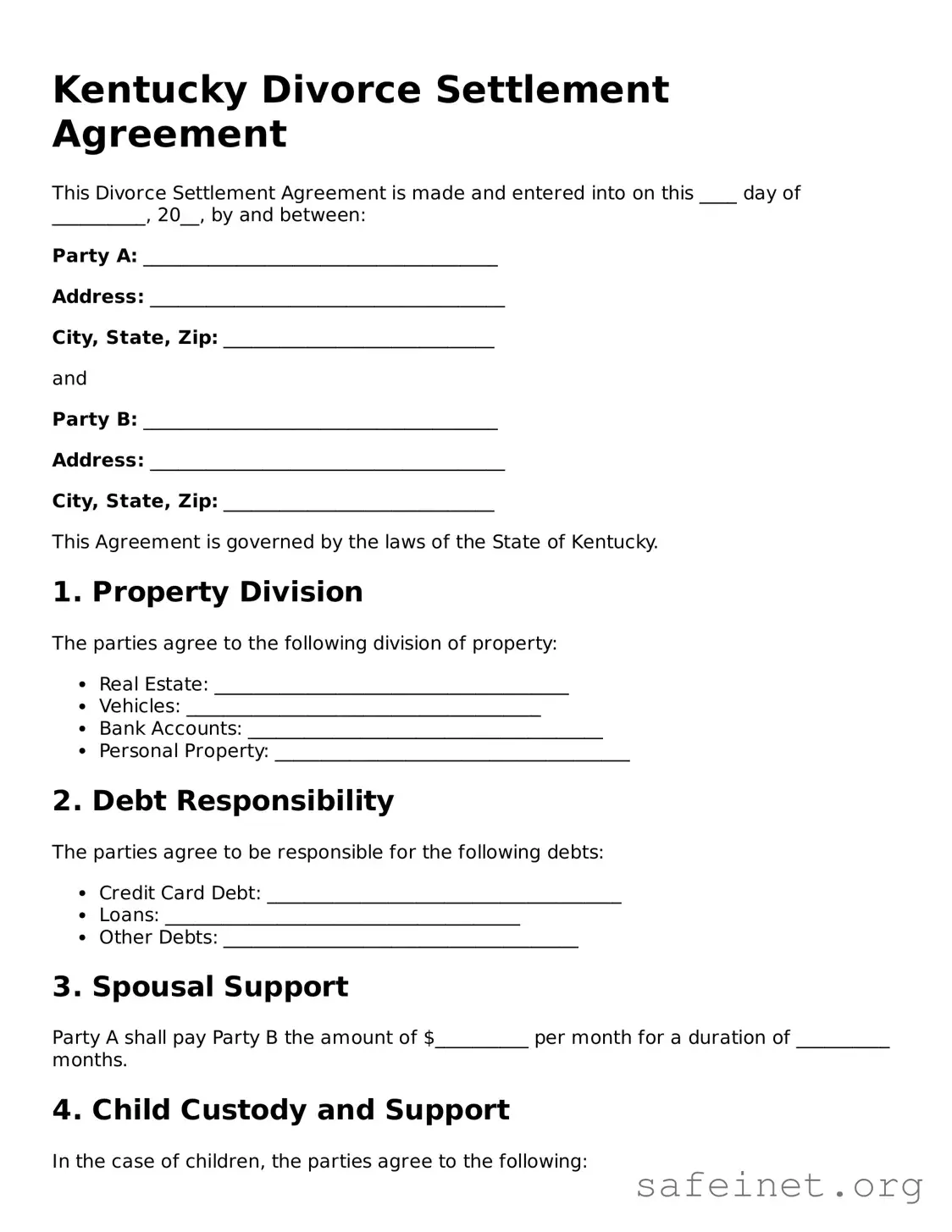
The Kentucky Divorce Settlement Agreement form plays a crucial role in the divorce process, serving as a comprehensive document that outlines the terms agreed upon by both parties. This form addresses various aspects of the divorce, including the division of marital property, spousal support, and child custody arrangements. By detailing these agreements, the form helps to ensure that both individuals have a clear understanding of their rights and responsibilities moving forward. It can also streamline the court's review process, as it provides a structured outline of the couple's decisions. Completing this form accurately is essential, as it can impact future legal obligations and the well-being of any children involved. Understanding the components of the form is vital for anyone navigating the complexities of divorce in Kentucky.
Kentucky Divorce Settlement Agreement
This Divorce Settlement Agreement is made and entered into on this ____ day of __________, 20__, by and between:
Party A: ______________________________________
Address: ______________________________________
City, State, Zip: _____________________________
and
Party B: ______________________________________
Address: ______________________________________
City, State, Zip: _____________________________
This Agreement is governed by the laws of the State of Kentucky.
1. Property Division
The parties agree to the following division of property:
2. Debt Responsibility
The parties agree to be responsible for the following debts:
3. Spousal Support
Party A shall pay Party B the amount of $__________ per month for a duration of __________ months.
4. Child Custody and Support
In the case of children, the parties agree to the following:
5. Miscellaneous Provisions
Both parties agree to the following terms:
IN WITNESS WHEREOF, the parties hereto have executed this Divorce Settlement Agreement as of the date first above written.
Party A Signature: _______________________________
Date: ______________________________________
Party B Signature: _______________________________
Date: ______________________________________
| Fact Name | Details |
|---|---|
| Governing Law | The Kentucky Divorce Settlement Agreement is governed by Kentucky Revised Statutes, specifically KRS Chapter 403. |
| Purpose | This form outlines the terms agreed upon by both parties regarding the dissolution of marriage, including asset division, child custody, and support obligations. |
| Filing Requirement | The completed agreement must be filed with the court as part of the divorce proceedings to be enforceable. |
| Mutual Agreement | Both spouses must voluntarily agree to the terms included in the settlement for it to be valid. |
| Modification | Any changes to the agreement after it has been filed require a formal modification process through the court. |
| Legal Representation | While not mandatory, it is highly recommended that both parties seek legal advice to ensure their rights are protected during the settlement process. |
Completing the Kentucky Divorce Settlement Agreement form is an essential step in finalizing the divorce process. After filling out this form, both parties will need to review it carefully before submission to ensure all information is accurate and agreed upon.
What is a Kentucky Divorce Settlement Agreement form?
The Kentucky Divorce Settlement Agreement form is a legal document that outlines the terms agreed upon by both parties during a divorce. This agreement typically includes details about asset division, child custody, child support, and alimony. It serves to formalize the arrangements made between spouses and is submitted to the court for approval.
Who needs to fill out this form?
Both spouses involved in the divorce need to fill out the Kentucky Divorce Settlement Agreement form. It is important that both parties agree to the terms laid out in the document. If there are children involved, the agreement must also address their needs and welfare.
What should be included in the agreement?
The agreement should include several key components. This includes the division of marital property and debts, arrangements for child custody and visitation, child support obligations, and any spousal support payments. Clarity in each section is crucial to avoid future disputes.
How is the agreement submitted to the court?
Once both parties have completed and signed the Kentucky Divorce Settlement Agreement form, it must be submitted to the court as part of the divorce proceedings. This usually occurs during the final hearing. The judge will review the agreement to ensure it is fair and in the best interest of any children involved.
Can the agreement be modified after it is approved?
Yes, the agreement can be modified after it is approved, but both parties must agree to the changes. If circumstances change significantly, such as a job loss or relocation, a petition may be filed with the court to modify the terms. It is advisable to document any changes formally to avoid misunderstandings.
What happens if one party does not comply with the agreement?
If one party fails to comply with the terms of the agreement, the other party may seek legal recourse. This can involve filing a motion with the court to enforce the agreement. The court can impose penalties or modify the agreement to ensure compliance.
Is legal assistance recommended when filling out this form?
While it is possible to fill out the Kentucky Divorce Settlement Agreement form without legal assistance, it is highly recommended to seek help from a qualified attorney. An attorney can provide guidance on the implications of the agreement and ensure that all legal requirements are met. This can help prevent future issues and ensure a fair settlement.
Inaccurate Personal Information: Many individuals fail to provide correct names, addresses, or other identifying details. This can lead to delays or even complications in the divorce process.
Omitting Assets or Debts: It's common for people to forget to include certain assets or debts. Every item should be accounted for to ensure a fair settlement.
Not Understanding Property Division: Misunderstanding how property division works can lead to unfavorable outcomes. Each party should be clear on what is considered marital property versus separate property.
Ignoring Child Support Guidelines: Failing to follow state guidelines for child support can result in disputes. It's essential to calculate support based on income and needs accurately.
Neglecting to Address Custody Arrangements: Custody arrangements should be clearly outlined. Vague terms can lead to confusion and conflict later on.
Not Seeking Legal Advice: Many people think they can handle the form on their own. However, consulting a legal expert can help avoid costly mistakes.
Failing to Review Before Submission: Rushing to submit the form without a thorough review can lead to errors. Always double-check for accuracy and completeness.
When navigating a divorce in Kentucky, several forms and documents often accompany the Divorce Settlement Agreement. Each of these documents plays a crucial role in ensuring a smooth legal process. Below is a list of commonly used forms that may be necessary.
Having these documents prepared and organized can significantly streamline the divorce process in Kentucky. Each form serves a specific purpose and contributes to a fair resolution for both parties involved.
The Kentucky Divorce Settlement Agreement form shares similarities with the Marital Settlement Agreement, which is commonly used in many states. Both documents outline the terms agreed upon by spouses regarding the division of assets, debts, and child custody arrangements. They serve to finalize the divorce process by ensuring that both parties have a clear understanding of their rights and responsibilities post-divorce.
Another document that resembles the Kentucky Divorce Settlement Agreement is the Separation Agreement. This document is often used by couples who wish to live apart but are not yet ready to divorce. Like the Divorce Settlement Agreement, it addresses issues such as property division, support obligations, and child custody, providing a framework for the couple during their separation period.
The Child Custody Agreement is also similar in nature. This document focuses specifically on the arrangements for the care and custody of children following a divorce. While the Divorce Settlement Agreement includes child custody provisions, a Child Custody Agreement delves deeper into visitation schedules and decision-making responsibilities, ensuring that both parents are on the same page regarding their children's welfare.
The Property Settlement Agreement is another related document. It specifically addresses the division of marital property and debts. In essence, while the Divorce Settlement Agreement covers a broader range of topics, the Property Settlement Agreement hones in on the financial aspects of the divorce, detailing how assets and liabilities will be split between the parties.
The Alimony Agreement, which outlines the terms of spousal support, is also akin to the Divorce Settlement Agreement. While the latter may include provisions for alimony, the Alimony Agreement focuses solely on the financial support one spouse will provide to the other post-divorce. This document specifies the amount, duration, and conditions of the support, ensuring clarity for both parties.
The Parenting Plan is another document that shares common elements with the Kentucky Divorce Settlement Agreement. This plan details how parents will raise their children after separation or divorce. While the Divorce Settlement Agreement includes custody arrangements, the Parenting Plan provides a more comprehensive outline of parenting responsibilities, including education, healthcare, and other important aspects of child-rearing.
The Financial Affidavit is similar as it provides a snapshot of each party's financial situation. This document is often used during divorce proceedings to disclose income, expenses, assets, and debts. It supports the negotiation process by ensuring that both parties have a clear understanding of each other's financial circumstances, which can impact decisions made in the Divorce Settlement Agreement.
The Joint Petition for Divorce is another document that aligns with the Divorce Settlement Agreement. This petition is filed when both spouses agree to the divorce and its terms. It often accompanies the Divorce Settlement Agreement, as it outlines the mutual consent of both parties to the divorce and the terms they have agreed upon regarding asset division and child custody.
The Final Judgment of Divorce is also closely related. This document is issued by the court once the divorce is finalized. It incorporates the terms of the Divorce Settlement Agreement and serves as the official record of the divorce, detailing the decisions made regarding property division, custody, and support obligations.
Lastly, the Consent Order is similar in that it is a court order that reflects an agreement made between the parties. This document can be used to enforce the terms of the Divorce Settlement Agreement, ensuring that both parties adhere to the agreed-upon terms. It provides legal backing to the agreement, making it enforceable in court if necessary.
When filling out the Kentucky Divorce Settlement Agreement form, it's essential to approach the task with care. Here are four important do's and don'ts to keep in mind:
This is not true. While the agreement often addresses child custody and support, it can also be used by couples without children. It outlines how assets and debts will be divided, regardless of whether children are involved.
Many people believe that the agreement is set in stone once both parties sign it. However, modifications can be made if both parties agree and the court approves the changes. Life circumstances can change, and the agreement can be adjusted accordingly.
This is a common misunderstanding. The Divorce Settlement Agreement details the terms of the divorce, while the divorce decree is the official court order that finalizes the divorce. The decree incorporates the agreement but serves a different purpose.
While some individuals may attempt to complete the agreement on their own, it is advisable to seek legal assistance. A lawyer can ensure that the agreement is fair, comprehensive, and compliant with Kentucky law, helping to avoid future disputes.
When navigating the Kentucky Divorce Settlement Agreement form, understanding the essential elements can significantly ease the process. Here are some key takeaways to keep in mind:
By keeping these points in mind, individuals can navigate the Kentucky Divorce Settlement Agreement form more effectively and ensure a smoother transition during this challenging time.