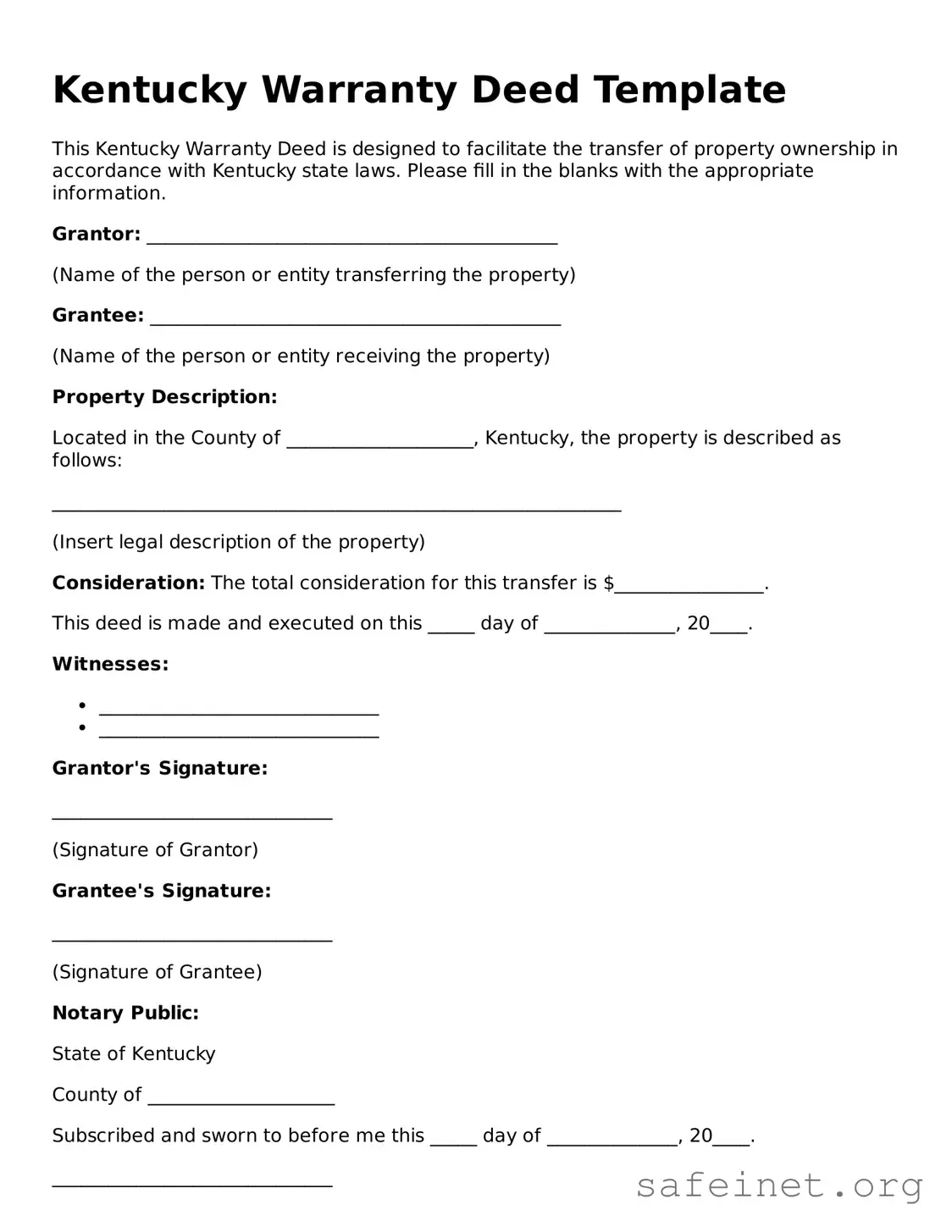
The Kentucky Deed form is a crucial legal document used in real estate transactions throughout the state. This form serves as a written record of the transfer of property ownership from one party to another. It includes essential details such as the names of the grantor (the person selling or transferring the property) and the grantee (the person receiving the property), along with a description of the property being transferred. Notably, the deed must be signed by the grantor, and in many cases, it requires notarization to ensure its validity. Additionally, the form may specify any conditions or restrictions related to the property, which can impact how it is used in the future. Understanding the components of the Kentucky Deed form is vital for anyone involved in a property transaction, as it helps protect the rights of both parties and provides clarity regarding ownership. Properly completing and filing this document is essential to ensure a smooth transfer of property and to avoid potential disputes down the line.
Kentucky Warranty Deed Template
This Kentucky Warranty Deed is designed to facilitate the transfer of property ownership in accordance with Kentucky state laws. Please fill in the blanks with the appropriate information.
Grantor: ____________________________________________
(Name of the person or entity transferring the property)
Grantee: ____________________________________________
(Name of the person or entity receiving the property)
Property Description:
Located in the County of ____________________, Kentucky, the property is described as follows:
_____________________________________________________________
(Insert legal description of the property)
Consideration: The total consideration for this transfer is $________________.
This deed is made and executed on this _____ day of ______________, 20____.
Witnesses:
Grantor's Signature:
______________________________
(Signature of Grantor)
Grantee's Signature:
______________________________
(Signature of Grantee)
Notary Public:
State of Kentucky
County of ____________________
Subscribed and sworn to before me this _____ day of ______________, 20____.
______________________________
(Signature of Notary Public)
My commission expires: ________________
This document should be recorded in the county clerk’s office where the property is located to ensure proper public notice of the transfer.
| Fact Name | Description |
|---|---|
| Governing Law | The Kentucky Deed form is governed by Kentucky Revised Statutes, Chapter 381. |
| Types of Deeds | Common types include Warranty Deed, Quitclaim Deed, and Special Warranty Deed. |
| Signing Requirements | Deeds must be signed by the grantor in the presence of a notary public. |
| Recording | Deeds should be recorded in the county where the property is located to ensure public notice. |
| Consideration | The deed must state the consideration, or value, exchanged for the property. |
| Legal Description | A precise legal description of the property must be included in the deed. |
After obtaining the Kentucky Deed form, it is essential to fill it out accurately to ensure a smooth transfer of property ownership. Once completed, the next steps will involve signing the document, having it notarized, and then recording it with the appropriate county office.
What is a Kentucky Deed form?
A Kentucky Deed form is a legal document used to transfer ownership of real property from one party to another within the state of Kentucky. This form details the parties involved, the property being transferred, and any conditions or restrictions that may apply. It is essential for ensuring that the transfer is legally recognized and protects the rights of both the buyer and seller.
What types of deeds are available in Kentucky?
In Kentucky, several types of deeds can be used, including warranty deeds, quitclaim deeds, and special warranty deeds. A warranty deed provides the highest level of protection to the buyer, guaranteeing that the seller has clear title to the property. A quitclaim deed transfers any interest the seller has in the property without any guarantees. Special warranty deeds offer a middle ground, providing some assurances about the seller's ownership during their period of ownership.
Do I need to notarize the Kentucky Deed form?
Yes, the Kentucky Deed form must be notarized to be legally valid. This means that a notary public must witness the signing of the document. Notarization helps prevent fraud and ensures that all parties understand the terms of the deed. After notarization, the deed should be recorded with the county clerk's office to provide public notice of the property transfer.
How do I fill out a Kentucky Deed form?
Filling out a Kentucky Deed form requires specific information. You will need to include the names and addresses of both the grantor (seller) and grantee (buyer), a legal description of the property, and the consideration (the price paid for the property). Ensure that all information is accurate and complete. If you have questions about the process, consulting with a real estate attorney can be beneficial.
What happens after I submit the Kentucky Deed form?
Once you submit the Kentucky Deed form to the county clerk's office, it will be recorded in the public records. This recording serves as official notice of the property transfer. It’s important to keep a copy of the recorded deed for your records. After the deed is recorded, the new owner can enjoy their property rights, while the previous owner relinquishes their claims.
Incorrect Property Description: Failing to provide a complete and accurate description of the property can lead to legal issues. Ensure that the legal description matches what is recorded in public records.
Missing Signatures: All necessary parties must sign the deed. Omitting a signature can invalidate the document, so double-check that everyone involved has signed.
Improper Notarization: The deed must be notarized correctly. If the notary does not follow proper procedures, the deed may not be accepted.
Wrong Type of Deed: Using the wrong type of deed can affect the rights being transferred. Understand whether a warranty deed, quitclaim deed, or another type is appropriate for your situation.
Failure to Record: After filling out the deed, it must be recorded with the county clerk's office. Not recording can lead to disputes over ownership.
Omitting Consideration: The deed should include the consideration, or payment, involved in the transaction. Leaving this out can raise questions about the legitimacy of the transfer.
When transferring property in Kentucky, the Deed form is just one of several important documents you may encounter. Each of these documents serves a specific purpose and helps ensure a smooth transaction. Here’s a list of other forms you might need to consider:
Understanding these documents can help you navigate the property transfer process more effectively. Each form plays a vital role in ensuring that the transaction is legally sound and that all parties are protected.
The Kentucky Deed form shares similarities with the Warranty Deed. A Warranty Deed provides a guarantee from the seller that they hold clear title to the property and have the right to sell it. This type of deed protects the buyer against any claims or disputes regarding ownership. Both documents serve the essential purpose of transferring property ownership, but the Warranty Deed offers additional assurances about the seller's title and the property's condition.
Another document akin to the Kentucky Deed is the Quitclaim Deed. Unlike the Warranty Deed, a Quitclaim Deed transfers any interest the seller may have in the property without making any guarantees. This means that if the seller does not actually own the property, the buyer receives nothing. While both deeds facilitate property transfers, the Quitclaim Deed is often used in situations where the parties know each other well, such as family transfers or divorces, and the buyer accepts the risk of title issues.
The Special Warranty Deed is also similar to the Kentucky Deed. This type of deed guarantees that the seller has not encumbered the property during their ownership but does not provide assurances about any claims or issues that may have existed before their ownership. Like the Kentucky Deed, it serves to transfer property, but the Special Warranty Deed limits the seller's liability for any title defects that arose prior to their ownership.
The Bargain and Sale Deed is another document that resembles the Kentucky Deed. This deed implies that the seller has the right to sell the property and may have some ownership interest, but it does not provide warranties against title defects. This means the buyer assumes more risk compared to a Warranty Deed. Both documents facilitate the transfer of property, but the Bargain and Sale Deed typically offers less protection for the buyer.
Additionally, the Grant Deed is similar to the Kentucky Deed in that it transfers ownership of real property. A Grant Deed guarantees that the property has not been sold to anyone else and that there are no undisclosed encumbrances. While both documents are used for property transfer, the Grant Deed offers some assurances to the buyer, albeit less comprehensive than those found in a Warranty Deed.
Finally, the Trustee's Deed is another document that shares characteristics with the Kentucky Deed. This type of deed is used when a property is transferred by a trustee, often during a foreclosure or bankruptcy proceeding. While it serves the same purpose of transferring ownership, the Trustee's Deed typically does not provide any warranties regarding the title. This means that buyers should be particularly cautious, as they may face more risks related to title issues compared to a standard Kentucky Deed.
When filling out the Kentucky Deed form, it’s important to ensure accuracy and compliance with legal requirements. Here’s a list of things to do and avoid:
Following these guidelines can help facilitate a smooth process when completing your Kentucky Deed form.
When it comes to the Kentucky Deed form, several misconceptions can lead to confusion for property owners and buyers alike. Understanding these misconceptions is essential for navigating the real estate landscape effectively. Here are eight common misunderstandings:
The Kentucky Deed form is the same for all property types. In reality, different types of deeds exist, such as warranty deeds and quitclaim deeds. Each serves a unique purpose and offers varying levels of protection and rights.
All deeds must be notarized to be valid. While notarization is common and often required for recording, certain deeds may not require it to be legally binding. Always check local regulations.
A deed transfer is the same as a title transfer. This is a misunderstanding. A deed transfers ownership, while a title is a legal concept that signifies ownership rights. They are related but not interchangeable.
You can complete a deed without legal assistance. Although it is possible to fill out a deed form independently, seeking legal advice can help prevent errors that could lead to disputes or complications later.
Only the seller needs to sign the deed. This is incorrect. Depending on the situation, all parties involved in the transaction may need to sign the deed to ensure its validity.
Once a deed is recorded, it cannot be changed. While it is true that changes to a recorded deed can be complicated, it is possible to correct errors or make amendments through specific legal processes.
Deeds are only relevant during the sale of property. Deeds play a crucial role even after a property is sold. They serve as official documentation of ownership and can be referenced in future transactions or disputes.
All deeds are public records. While many deeds are indeed public, certain circumstances may allow for confidentiality. Specific types of transactions or agreements may not be accessible to the public.
By clarifying these misconceptions, individuals can better navigate the complexities of property ownership and ensure a smoother transaction process in Kentucky.
When filling out and using the Kentucky Deed form, there are several important points to keep in mind: