The Kentucky Bill of Sale form serves as a crucial document in the transfer of ownership for various types of personal property, including vehicles, boats, and equipment. This form provides a written record of the transaction, detailing essential information such as the buyer's and seller's names, addresses, and contact information. It also includes a description of the item being sold, which may encompass details like the make, model, year, and identification numbers. Additionally, the form outlines the sale price and any terms or conditions agreed upon by both parties. By documenting the transaction, the Bill of Sale protects the interests of both the buyer and seller, ensuring clarity and legal validity. Furthermore, it can serve as proof of ownership and may be required for registration or titling purposes in Kentucky. Understanding the components and significance of this form is vital for anyone engaged in the buying or selling of personal property in the state.
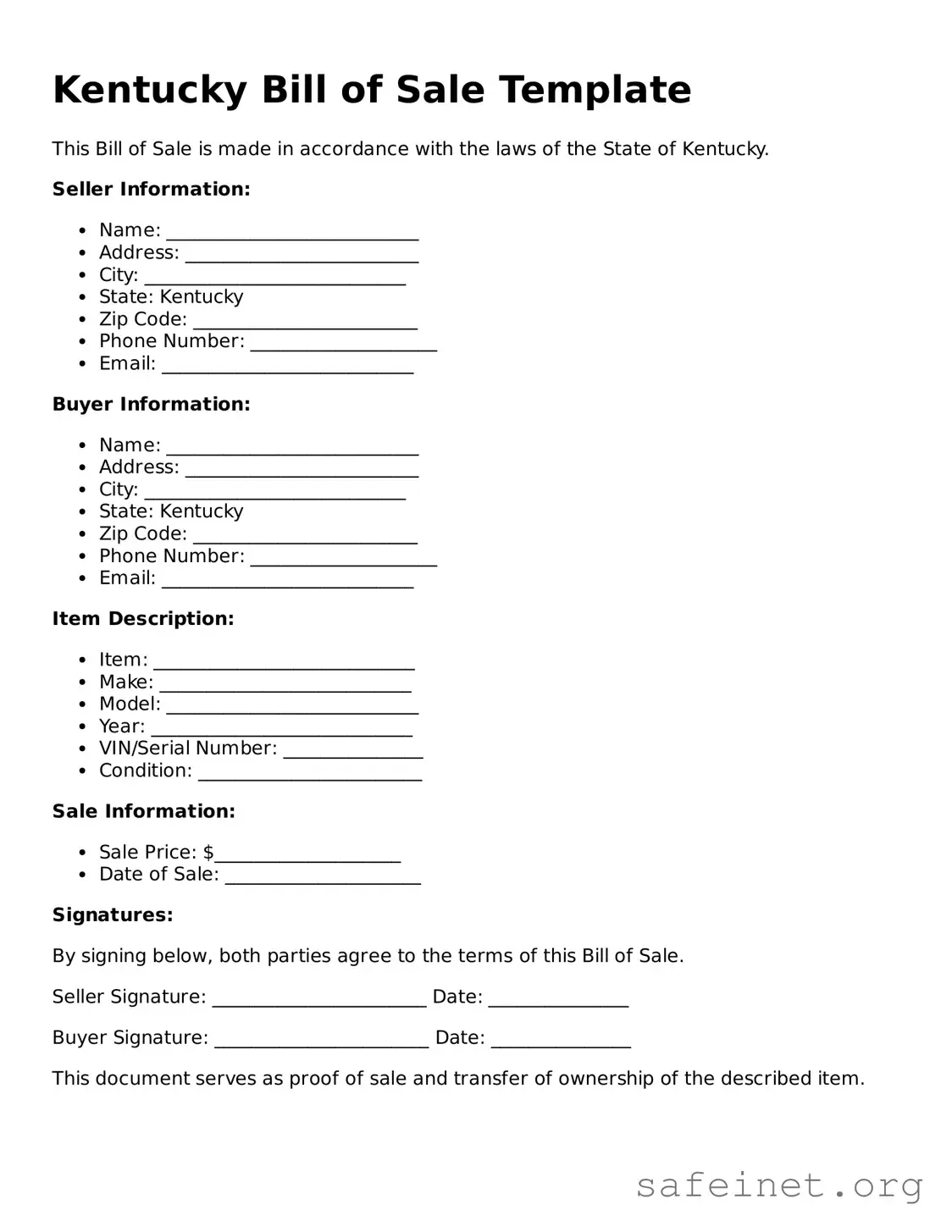
Kentucky Bill of Sale Template
This Bill of Sale is made in accordance with the laws of the State of Kentucky.
Seller Information:
Buyer Information:
Item Description:
Sale Information:
Signatures:
By signing below, both parties agree to the terms of this Bill of Sale.
Seller Signature: _______________________ Date: _______________
Buyer Signature: _______________________ Date: _______________
This document serves as proof of sale and transfer of ownership of the described item.
| Fact Name | Description |
|---|---|
| Purpose | The Kentucky Bill of Sale form is used to document the sale and transfer of personal property between a buyer and a seller. |
| Types of Property | This form can be used for various types of personal property, including vehicles, boats, and equipment. |
| Governing Law | The form is governed by Kentucky state law, specifically under KRS 186A.230 for vehicle sales. |
| Signatures Required | Both the seller and the buyer must sign the Bill of Sale to make it legally binding. |
| Date of Sale | The date of the transaction must be clearly indicated on the form to establish the timeline of the sale. |
| Consideration | The form should specify the amount paid for the property, known as consideration, to validate the transaction. |
| Notarization | While notarization is not mandatory, having the document notarized can provide additional legal protection. |
| Record Keeping | Both parties should retain a copy of the Bill of Sale for their records, as it serves as proof of the transaction. |
| Transfer of Ownership | The Bill of Sale facilitates the transfer of ownership and can be used to register the property with appropriate authorities. |
After obtaining the Kentucky Bill of Sale form, you are ready to fill it out. This document will serve as a record of the transaction between the buyer and seller. Ensure that all information is accurate and complete to avoid any potential issues in the future.
Once you have completed the form, keep a copy for your records. It’s also advisable to provide a copy to the buyer for their reference. This will help ensure that both parties have proof of the transaction.
What is a Kentucky Bill of Sale form?
A Kentucky Bill of Sale form is a legal document that records the transfer of ownership of personal property from one party to another. This form is essential for proving that a sale occurred and can be used for various types of transactions, including vehicles, boats, and other personal items. It includes details such as the names of the buyer and seller, a description of the item being sold, the sale price, and the date of the transaction.
Do I need a Bill of Sale for every transaction in Kentucky?
While not every transaction legally requires a Bill of Sale, it is highly recommended for significant purchases, especially vehicles. In Kentucky, a Bill of Sale is necessary for registering a vehicle with the Department of Motor Vehicles (DMV). Having this document protects both the buyer and seller by providing proof of the transaction, which can be important for tax purposes or in case of disputes.
What information should be included in a Kentucky Bill of Sale?
A comprehensive Kentucky Bill of Sale should include several key pieces of information. This includes the full names and addresses of both the buyer and seller, a detailed description of the item being sold (such as make, model, year, and VIN for vehicles), the sale price, and the date of the transaction. Additionally, both parties should sign the document to validate the agreement. Including any warranties or representations about the item can also be beneficial.
Can I create my own Bill of Sale, or do I need a specific form?
You can create your own Bill of Sale, as long as it contains all the necessary information and is signed by both parties. However, using a specific form can simplify the process and ensure that you don’t miss any important details. Many online resources provide templates tailored for Kentucky transactions, making it easy to create a valid Bill of Sale that meets state requirements.
Incomplete Information: One of the most common mistakes is not filling out all the required fields. Ensure that every section of the form is completed. Missing information can lead to delays or complications down the line.
Incorrect Dates: People often overlook the importance of entering the correct date of the transaction. A simple mistake here can create confusion about when ownership was transferred.
Not Notarizing: In Kentucky, some transactions may require notarization. Failing to have the document notarized when necessary can invalidate the Bill of Sale.
Inaccurate Descriptions: Providing a vague or incorrect description of the item being sold can lead to disputes. Always include detailed information such as make, model, year, and any identifying numbers.
Forgetting Signatures: A Bill of Sale must be signed by both the seller and the buyer. Neglecting to obtain signatures from both parties can render the document ineffective.
When engaging in a transaction that involves the transfer of ownership, particularly in Kentucky, several forms and documents may accompany the Bill of Sale. Each of these documents serves a specific purpose and helps ensure that the transaction is legally sound and transparent. Below is a list of commonly used documents alongside the Kentucky Bill of Sale.
Utilizing these documents in conjunction with the Kentucky Bill of Sale can help facilitate a smooth transaction. Each form plays a critical role in protecting the rights of both the buyer and the seller, ensuring that the transfer of ownership is clear and legally binding.
The Kentucky Bill of Sale form is similar to a Vehicle Bill of Sale. This document is specifically used for the transfer of ownership of a motor vehicle. It includes details such as the vehicle identification number (VIN), make, model, and year. Just like the general Bill of Sale, it serves as proof of the transaction and can be used for registration purposes with the state’s Department of Motor Vehicles.
Another similar document is the Boat Bill of Sale. This form is used when transferring ownership of a boat or watercraft. It contains information about the boat, such as the hull identification number, make, and model. Like the Kentucky Bill of Sale, it provides legal proof of the sale and may be required for registration with the relevant authorities.
The Firearm Bill of Sale is also comparable. This document is used for the sale or transfer of firearms. It includes details such as the make, model, and serial number of the firearm. Both the Firearm Bill of Sale and the Kentucky Bill of Sale serve to document the transfer of ownership and can help protect both the buyer and seller in case of disputes.
A Lease Agreement can be seen as similar in that it documents the terms of a rental transaction. While it is not a sale, it outlines the rights and responsibilities of both parties. Like the Bill of Sale, it provides a record of the agreement and can be used in legal situations to enforce terms or resolve disputes.
The Personal Property Bill of Sale is another related document. This form is used for the sale of personal items, such as furniture or electronics. It details the items being sold and the agreed-upon price. Similar to the Kentucky Bill of Sale, it serves as a receipt and proof of ownership transfer.
A Business Bill of Sale is relevant for transactions involving business assets. This document outlines the sale of business equipment or inventory. It includes specific details about the items sold and the terms of the sale. Like the Kentucky Bill of Sale, it formalizes the transfer of ownership and can protect both parties in the transaction.
Finally, the Real Estate Purchase Agreement shares similarities with the Kentucky Bill of Sale. This document is used when buying or selling real estate. It includes detailed information about the property and the terms of sale. Both documents are essential for legally documenting a transfer of ownership, although the Real Estate Purchase Agreement is typically more complex due to the nature of real estate transactions.
When filling out the Kentucky Bill of Sale form, it's important to follow certain guidelines to ensure the document is accurate and valid. Here are some dos and don'ts to keep in mind:
The Kentucky Bill of Sale form is often misunderstood. Here are six common misconceptions and clarifications regarding this important document:
Understanding these misconceptions can help ensure smooth and secure transactions in Kentucky.
When filling out and using the Kentucky Bill of Sale form, several important points should be considered to ensure a smooth transaction.