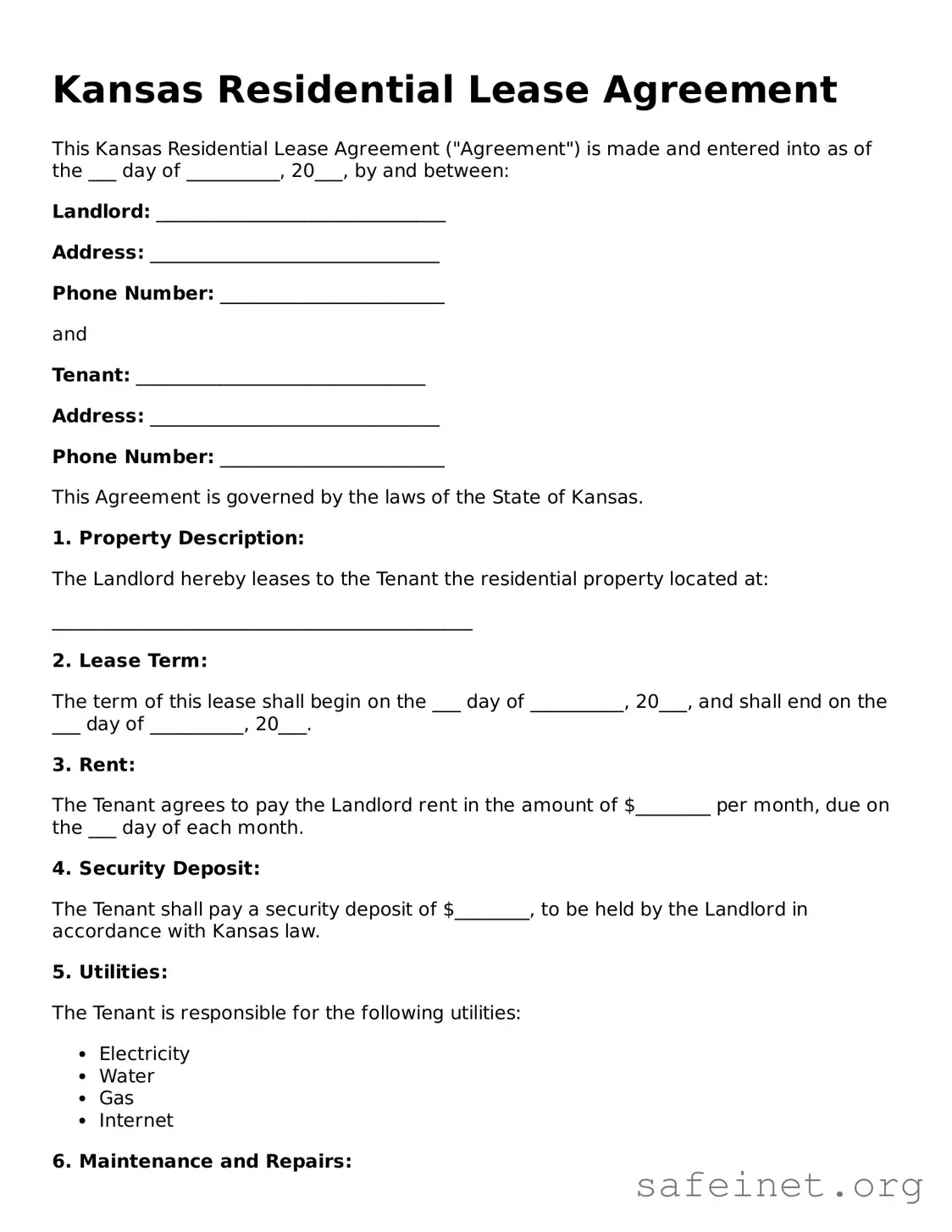
The Kansas Residential Lease Agreement form serves as a crucial document for both landlords and tenants, outlining the rights and responsibilities of each party in a rental arrangement. This form typically includes essential details such as the names of the parties involved, the rental property address, and the duration of the lease. It also specifies the amount of rent due, payment methods, and any security deposit requirements. Additionally, the agreement addresses important terms like maintenance responsibilities, rules regarding pets, and procedures for terminating the lease. By clearly delineating these aspects, the form aims to foster a transparent and fair relationship between landlords and tenants, minimizing the potential for disputes. Understanding this document is vital for anyone entering into a rental agreement in Kansas, as it lays the groundwork for a successful tenancy and helps ensure compliance with state laws.
Kansas Residential Lease Agreement
This Kansas Residential Lease Agreement ("Agreement") is made and entered into as of the ___ day of __________, 20___, by and between:
Landlord: _______________________________
Address: _______________________________
Phone Number: ________________________
and
Tenant: _______________________________
Address: _______________________________
Phone Number: ________________________
This Agreement is governed by the laws of the State of Kansas.
1. Property Description:
The Landlord hereby leases to the Tenant the residential property located at:
_____________________________________________
2. Lease Term:
The term of this lease shall begin on the ___ day of __________, 20___, and shall end on the ___ day of __________, 20___.
3. Rent:
The Tenant agrees to pay the Landlord rent in the amount of $________ per month, due on the ___ day of each month.
4. Security Deposit:
The Tenant shall pay a security deposit of $________, to be held by the Landlord in accordance with Kansas law.
5. Utilities:
The Tenant is responsible for the following utilities:
6. Maintenance and Repairs:
The Tenant agrees to keep the property in good condition. The Landlord will be responsible for major repairs unless caused by the Tenant’s negligence.
7. Alterations:
The Tenant shall not make any alterations to the property without the Landlord's written consent.
8. Termination:
Either party may terminate this Agreement by providing ___ days written notice prior to the end of the lease term.
9. Governing Law:
This Agreement shall be governed by the laws of the State of Kansas.
IN WITNESS WHEREOF, the parties hereto have executed this Kansas Residential Lease Agreement as of the date first above written.
Landlord Signature: _______________________________ Date: ___________
Tenant Signature: _______________________________ Date: ___________
| Fact Name | Description |
|---|---|
| Governing Law | The Kansas Residential Lease Agreement is governed by the Kansas Statutes, specifically K.S.A. 58-2540 et seq. |
| Parties Involved | The agreement involves two main parties: the landlord and the tenant. |
| Property Description | The lease must include a clear description of the rental property, including the address. |
| Lease Term | The duration of the lease should be specified, whether it is month-to-month or for a fixed term. |
| Rent Payment | The amount of rent and the due date must be clearly stated in the lease. |
| Security Deposit | Kansas law regulates the amount and handling of security deposits, typically not exceeding one month's rent. |
| Maintenance Responsibilities | The lease should outline the responsibilities of both the landlord and tenant regarding property maintenance. |
| Termination Notice | The agreement must specify the notice period required for termination, which varies based on the lease type. |
| Disclosures | Landlords must provide certain disclosures, such as lead-based paint information for properties built before 1978. |
| Modification Clause | Any changes to the lease agreement must be made in writing and signed by both parties. |
Filling out the Kansas Residential Lease Agreement form requires careful attention to detail. Each section must be completed accurately to ensure clarity between the landlord and tenant. Follow these steps to complete the form effectively.
After completing the form, review all entries for accuracy. Both the landlord and tenants should retain a copy of the signed agreement for their records.
What is a Kansas Residential Lease Agreement?
A Kansas Residential Lease Agreement is a legal document that outlines the terms and conditions between a landlord and a tenant for renting a residential property. It specifies the rights and responsibilities of both parties, including rent amount, duration of the lease, and maintenance obligations.
What are the key components of this lease agreement?
Key components include the names of the landlord and tenant, property address, lease term, rent amount and due date, security deposit details, maintenance responsibilities, and rules regarding pets and alterations. It may also address termination conditions and dispute resolution procedures.
How long is a typical lease term in Kansas?
Lease terms can vary widely but typically range from six months to one year. Some agreements may offer month-to-month options, allowing for greater flexibility. It’s important to clarify the lease duration in the agreement to avoid misunderstandings.
Can a landlord increase rent during the lease term?
Generally, a landlord cannot increase rent during the lease term unless the lease explicitly allows for it. Most leases fix the rent amount for the duration of the agreement. However, landlords can raise rent when the lease is renewed, provided they give proper notice as required by Kansas law.
What is the process for terminating a lease in Kansas?
To terminate a lease, either party must follow the notice requirements outlined in the lease agreement. For month-to-month leases, Kansas law typically requires a 30-day notice. For fixed-term leases, the tenant may need to wait until the end of the lease term unless there are legal grounds for early termination.
What happens if a tenant fails to pay rent?
If a tenant fails to pay rent, the landlord can initiate eviction proceedings after providing proper notice. Kansas law requires landlords to give tenants a written notice of non-payment, allowing them a specific time to pay before legal action is taken. It’s crucial for tenants to communicate with their landlords if they are facing financial difficulties.
Are there any specific laws that govern residential leases in Kansas?
Yes, Kansas has specific laws that govern residential leases, including the Kansas Residential Landlord and Tenant Act. This act outlines the rights and responsibilities of both landlords and tenants, covering issues like security deposits, repairs, and eviction procedures. Familiarizing yourself with these laws can help both parties understand their rights.
Incomplete Information: Many people forget to fill in all required fields. Leaving out essential details can lead to confusion later.
Incorrect Dates: Entering the wrong start or end dates for the lease can create significant issues. It’s crucial to double-check these dates.
Failure to Sign: A common oversight is not signing the agreement. Without signatures, the lease may not be legally binding.
Ignoring State Laws: Some individuals overlook specific Kansas laws that affect lease agreements. Familiarizing yourself with these laws is essential.
Missing Tenant Information: Landlords often forget to include all tenants’ names. This can complicate responsibilities and rights under the lease.
Not Specifying Rent Payment Details: Failing to clearly outline how and when rent is to be paid can lead to misunderstandings.
Omitting Maintenance Responsibilities: Not detailing who is responsible for maintenance and repairs can create disputes later on.
Neglecting to Review the Entire Document: Some people skim through the agreement without reading it fully. This can result in missing critical clauses.
The Kansas Residential Lease Agreement is an essential document for landlords and tenants, outlining the terms of their rental arrangement. In addition to this agreement, several other forms and documents may be utilized to ensure a smooth rental process. Below is a list of these commonly used documents.
Using these documents in conjunction with the Kansas Residential Lease Agreement helps create a clear and organized rental experience for both landlords and tenants. Proper documentation can prevent misunderstandings and protect the rights of all parties involved.
The Kansas Residential Lease Agreement form shares similarities with the standard Residential Lease Agreement used across many states. Both documents outline the terms of rental, including the duration of the lease, rental payments, and the responsibilities of both the landlord and tenant. They typically include clauses related to maintenance, repairs, and the process for addressing disputes. The primary purpose remains the same: to establish a legal framework that governs the landlord-tenant relationship.
Another document that bears resemblance is the Commercial Lease Agreement. While primarily designed for commercial properties, it also includes essential elements such as rental terms, maintenance responsibilities, and the duration of the lease. Both agreements aim to protect the rights of the parties involved and ensure that the property is used according to agreed-upon terms. However, the Commercial Lease may include additional clauses specific to business operations.
The Month-to-Month Rental Agreement is another related document. This type of agreement allows tenants to occupy a property without a long-term commitment, often renewing on a monthly basis. Similar to the Kansas Residential Lease Agreement, it outlines rental payment amounts and responsibilities. The flexibility of a month-to-month agreement contrasts with the fixed term typically found in a standard lease, but both serve to clarify the expectations of both parties.
A Lease Option Agreement is also similar, as it provides tenants the option to purchase the property after a specified period. This document includes terms related to rent, maintenance, and the purchase price, much like a traditional lease. The key distinction lies in the added provision that allows tenants to buy the property, making it a hybrid between leasing and purchasing.
The Sublease Agreement is another document that shares characteristics with the Kansas Residential Lease Agreement. This agreement allows a tenant to rent out their leased property to another party, known as the subtenant. It typically requires the original tenant to remain responsible for the lease terms, mirroring the obligations found in a standard lease. Both documents aim to protect the interests of the landlord while allowing for flexibility in occupancy.
A Roommate Agreement also resembles the Kansas Residential Lease Agreement in its focus on shared living arrangements. This document outlines the responsibilities of each roommate, including rent payments, utility obligations, and common area maintenance. While it is generally less formal than a lease, it serves a similar purpose in establishing clear expectations among cohabitants.
The Lease Purchase Agreement is akin to the Lease Option Agreement but is more binding in terms of the purchase commitment. This document outlines the terms of leasing a property with an obligation to buy at the end of the lease term. Like the Kansas Residential Lease Agreement, it includes details about rent, maintenance, and the timeline for the purchase, providing a clear structure for both renting and buying.
Finally, the Rental Application form is closely related, as it is often used in conjunction with lease agreements. This document collects essential information about potential tenants, including their rental history, income, and references. While it does not govern the terms of occupancy like the Kansas Residential Lease Agreement, it plays a critical role in the tenant selection process, ensuring that landlords make informed decisions based on the information provided.
When filling out the Kansas Residential Lease Agreement form, it’s essential to be thorough and accurate. This document outlines the terms of the rental relationship between landlords and tenants. Here are some important do's and don'ts to consider:
Following these guidelines can help ensure that your lease agreement is completed correctly and protects your rights as a tenant. Always remember, a well-filled lease can prevent misunderstandings in the future.
When it comes to the Kansas Residential Lease Agreement, there are several misconceptions that can lead to confusion for both landlords and tenants. Understanding these common misunderstandings can help ensure a smoother rental experience. Here are five prevalent misconceptions:
By dispelling these misconceptions, both landlords and tenants can approach their rental agreements with a clearer understanding of their rights and responsibilities.
When filling out and using the Kansas Residential Lease Agreement form, it is essential to understand several key aspects to ensure a smooth process for both landlords and tenants. Here are nine important takeaways:
By keeping these points in mind, both landlords and tenants can navigate the leasing process more effectively.