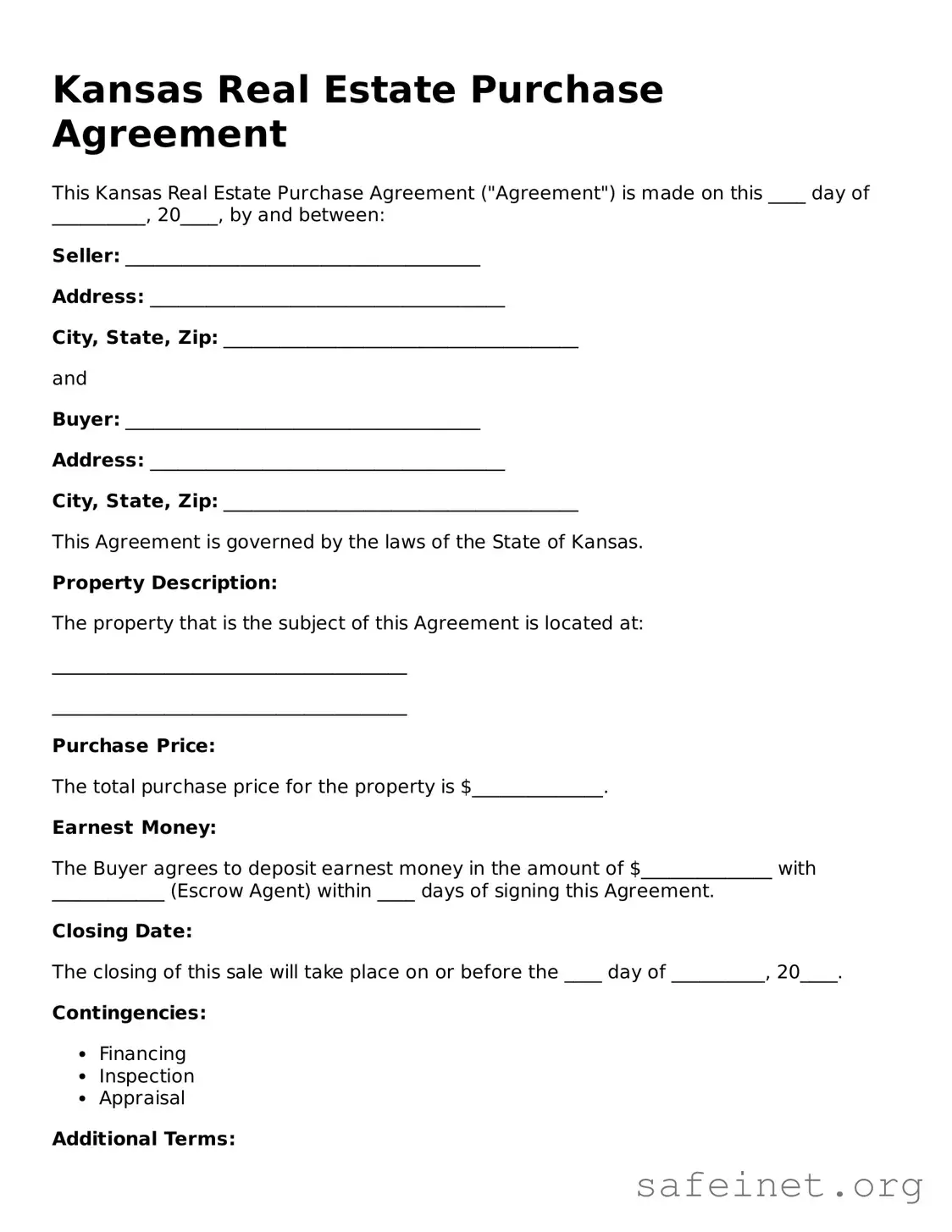
The Kansas Real Estate Purchase Agreement form is an essential document for anyone looking to buy or sell property in the state. This form outlines the terms and conditions of the sale, ensuring that both parties understand their rights and obligations. Key components include the purchase price, property description, and closing date. Additionally, it addresses contingencies, such as financing and inspections, which protect the interests of the buyer. The agreement also specifies how earnest money will be handled, providing reassurance to both the buyer and seller. By clearly defining these elements, the form helps facilitate a smooth transaction while minimizing potential disputes. Understanding this document is crucial for anyone involved in a real estate deal in Kansas.
Kansas Real Estate Purchase Agreement
This Kansas Real Estate Purchase Agreement ("Agreement") is made on this ____ day of __________, 20____, by and between:
Seller: ______________________________________
Address: ______________________________________
City, State, Zip: ______________________________________
and
Buyer: ______________________________________
Address: ______________________________________
City, State, Zip: ______________________________________
This Agreement is governed by the laws of the State of Kansas.
Property Description:
The property that is the subject of this Agreement is located at:
______________________________________
______________________________________
Purchase Price:
The total purchase price for the property is $______________.
Earnest Money:
The Buyer agrees to deposit earnest money in the amount of $______________ with ____________ (Escrow Agent) within ____ days of signing this Agreement.
Closing Date:
The closing of this sale will take place on or before the ____ day of __________, 20____.
Contingencies:
Additional Terms:
___________________________________________________________
___________________________________________________________
Signatures:
Seller's Signature: ___________________________ Date: ____________
Buyer's Signature: ___________________________ Date: ____________
This Agreement constitutes the entire understanding between the parties and supersedes all prior negotiations, representations, or agreements.
| Fact Name | Description |
|---|---|
| Governing Law | The Kansas Real Estate Purchase Agreement is governed by the laws of the State of Kansas. |
| Purpose | This form is used to outline the terms and conditions of a real estate transaction in Kansas. |
| Parties Involved | The agreement involves a buyer and a seller, both of whom must be clearly identified. |
| Property Description | A detailed description of the property being sold must be included in the agreement. |
| Purchase Price | The total purchase price of the property must be clearly stated in the agreement. |
| Earnest Money | The agreement typically includes a section on earnest money, which shows the buyer's commitment. |
| Closing Date | A specific closing date is usually set, indicating when the transaction will be finalized. |
| Contingencies | The form allows for contingencies, such as financing or inspection, to protect the buyer. |
Once you have the Kansas Real Estate Purchase Agreement form in hand, it's time to fill it out accurately. This document is essential for formalizing the terms of a real estate transaction. Following the correct steps will help ensure that all necessary details are included and that the agreement is clear for both parties involved.
After filling out the form, it’s important to review all entries for accuracy. If everything is in order, both parties can proceed with the next steps in the transaction process.
What is a Kansas Real Estate Purchase Agreement?
A Kansas Real Estate Purchase Agreement is a legal document that outlines the terms and conditions under which a buyer agrees to purchase a property from a seller. This agreement serves as a binding contract once both parties sign it, detailing important aspects such as the sale price, property description, and closing date.
What should be included in the agreement?
The agreement typically includes the names of the buyer and seller, a detailed description of the property, the purchase price, financing details, contingencies (like home inspections or financing approval), and the closing date. It may also address any personal property included in the sale, such as appliances or fixtures.
Is a Real Estate Purchase Agreement legally binding?
Yes, once both parties sign the agreement, it becomes legally binding. This means that both the buyer and seller are obligated to follow the terms outlined in the contract. If either party fails to comply, the other party may have legal grounds to seek enforcement or damages.
Can I make changes to the agreement after it is signed?
Changes can be made to the agreement, but both parties must agree to the modifications. It’s important to document any changes in writing and have both parties sign the revised agreement to ensure clarity and enforceability.
What happens if the buyer backs out of the deal?
If a buyer decides to back out of the deal without a valid reason, they may risk losing their earnest money deposit. However, if there are contingencies in place, such as failing a home inspection or not securing financing, the buyer may be able to back out without penalty.
Are there any contingencies I should consider?
Contingencies are important clauses that allow buyers to back out of the agreement under certain conditions. Common contingencies include home inspections, financing approvals, and appraisals. These protect the buyer's interests and provide an opportunity to address any issues that arise.
How long does the closing process take?
The closing process in Kansas typically takes 30 to 45 days after the purchase agreement is signed, but this can vary based on several factors, including the buyer's financing and any contingencies. It’s crucial to stay in communication with all parties involved to ensure a smooth closing.
Do I need a real estate agent to complete this agreement?
While it’s not legally required to have a real estate agent, it is highly recommended. An experienced agent can help you navigate the complexities of the agreement, ensure that all necessary terms are included, and provide guidance throughout the buying or selling process.
Where can I find a Kansas Real Estate Purchase Agreement form?
You can find a Kansas Real Estate Purchase Agreement form through various sources, including online legal document providers, real estate agencies, or local real estate boards. It’s essential to ensure that any form you use complies with Kansas laws and regulations.
Failing to include all necessary parties in the agreement. It is essential to list all buyers and sellers involved in the transaction. Omitting a party can lead to legal complications.
Not specifying the property address correctly. The agreement must contain the complete and accurate address of the property being sold. Any errors in this section can cause confusion and disputes later.
Neglecting to state the purchase price clearly. The price should be unambiguous and clearly stated in numerical and written form to avoid misunderstandings.
Overlooking contingencies. Buyers should include contingencies such as financing, inspections, or appraisals. Without these, buyers may find themselves obligated to proceed with a purchase that is not feasible.
Not addressing earnest money deposits. The agreement should specify the amount of earnest money and how it will be handled. This helps protect both the buyer's and seller's interests.
Failing to understand the closing date. The closing date should be clearly stated. If this is left vague, it can lead to delays and frustration for both parties.
Ignoring the need for signatures. Both parties must sign the agreement for it to be legally binding. Without signatures, the document holds no legal weight.
When engaging in a real estate transaction in Kansas, several forms and documents may accompany the Real Estate Purchase Agreement. These documents help clarify the terms of the sale, protect the interests of both parties, and ensure compliance with state regulations. Below is a list of commonly used forms that can enhance the purchasing process.
These documents play a vital role in the real estate transaction process. They help ensure that both buyers and sellers understand their rights and obligations, leading to a smoother closing experience. Always consider consulting with a professional to ensure that all necessary forms are correctly completed and submitted.
The Kansas Real Estate Purchase Agreement form shares similarities with the Residential Purchase Agreement. Both documents outline the terms and conditions for buying a home. They include details such as the purchase price, closing date, and any contingencies that must be met before the sale can be finalized. The Residential Purchase Agreement is often used in residential transactions, making it a common choice for buyers and sellers in the housing market.
Another document similar to the Kansas Real Estate Purchase Agreement is the Commercial Purchase Agreement. This form is used for the sale of commercial properties, such as office buildings or retail spaces. Like the Kansas Real Estate Purchase Agreement, it details the terms of the sale, including price and closing conditions. However, it may include additional clauses specific to commercial transactions, such as zoning requirements and tenant leases.
The Lease Purchase Agreement also resembles the Kansas Real Estate Purchase Agreement. This document allows a buyer to lease a property with the option to purchase it later. It includes terms for both the lease and the purchase, making it a hybrid agreement. Buyers can live in the property while working toward ownership, which can be beneficial for those who may not be ready to buy immediately.
The Option to Purchase Agreement is another related document. This agreement gives a buyer the right, but not the obligation, to purchase a property within a specified time frame. Similar to the Kansas Real Estate Purchase Agreement, it outlines the purchase price and terms. However, it provides flexibility for the buyer, as they can choose whether to proceed with the purchase.
The Seller Financing Agreement is also comparable. In this document, the seller acts as the lender, allowing the buyer to make payments directly to them instead of a bank. The terms of the loan, including interest rates and payment schedules, are outlined in this agreement. Like the Kansas Real Estate Purchase Agreement, it details the sale conditions but focuses more on the financing aspect of the transaction.
Finally, the Addendum to Purchase Agreement is similar in that it serves as an attachment to the main purchase agreement. This document can include additional terms or conditions that were not covered in the original agreement. It allows both parties to clarify or modify aspects of the transaction, ensuring that all necessary details are documented and agreed upon.
When filling out the Kansas Real Estate Purchase Agreement form, attention to detail is crucial. This document is a key part of any property transaction, and how you complete it can significantly impact the process. Here are some important dos and don'ts to keep in mind.
By following these guidelines, you can navigate the Kansas Real Estate Purchase Agreement with greater ease and confidence. Remember, this is an important step in your real estate journey, and taking the time to do it right will benefit you in the long run.
When it comes to the Kansas Real Estate Purchase Agreement form, several misconceptions often arise. These misunderstandings can lead to confusion for both buyers and sellers. Below is a list of seven common misconceptions, along with explanations to clarify each point.
Understanding these misconceptions can help buyers and sellers navigate the complexities of real estate transactions in Kansas more effectively. Being informed is key to making sound decisions and ensuring a smooth process.
When dealing with the Kansas Real Estate Purchase Agreement form, several important points should be considered to ensure a smooth transaction. Below are key takeaways to keep in mind:
By following these guidelines, individuals can navigate the Kansas Real Estate Purchase Agreement more effectively, leading to a smoother real estate transaction.