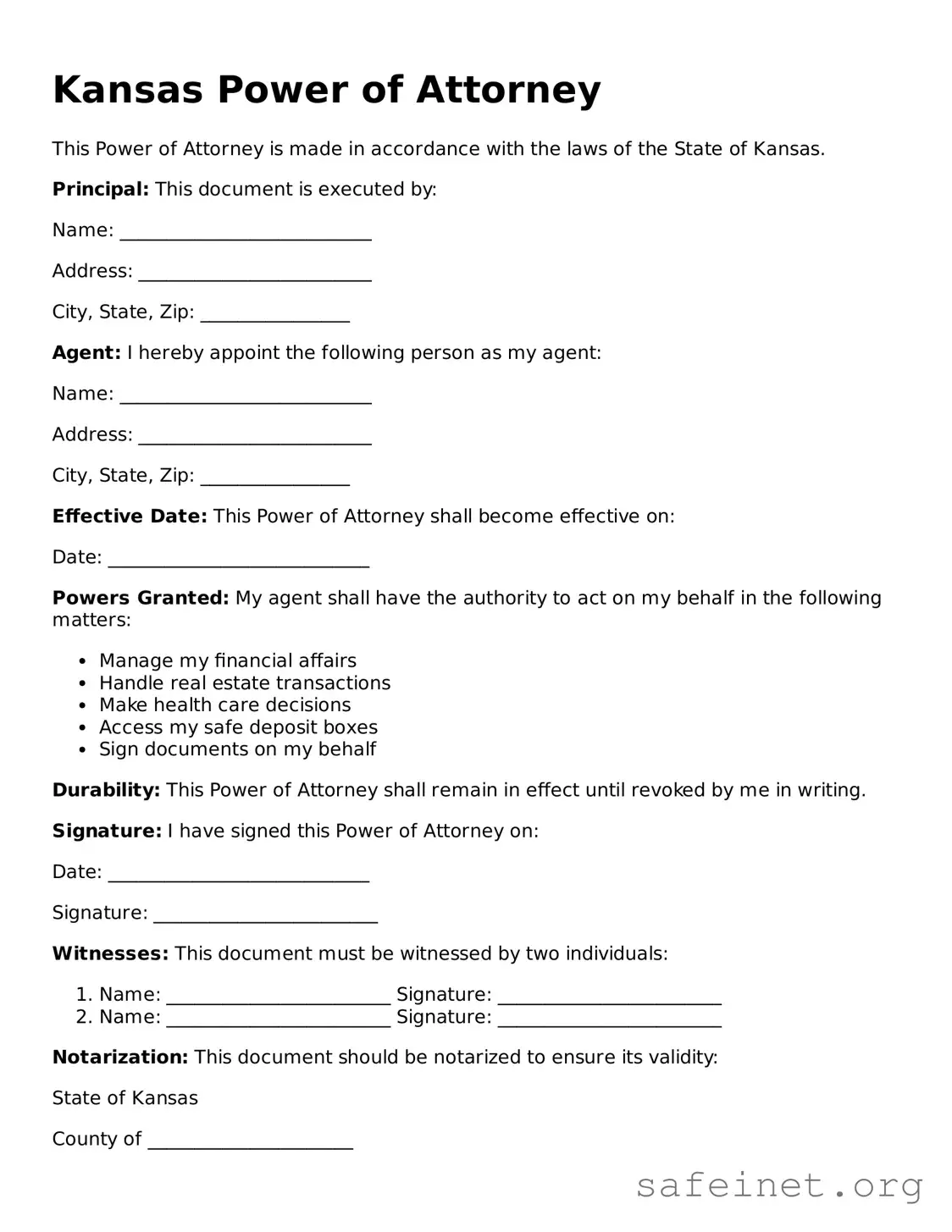
The Kansas Power of Attorney form is a crucial legal document that allows individuals to appoint someone they trust to make decisions on their behalf when they are unable to do so. This form can cover a range of responsibilities, including financial matters, healthcare decisions, and property management. By designating an agent, the principal ensures that their wishes are respected and that someone is empowered to act in their best interest. It is important to understand the different types of powers of attorney available in Kansas, such as durable and medical, as each serves distinct purposes. Additionally, the form must be properly executed to be valid, which involves specific signing and witnessing requirements. Understanding these key aspects will help individuals navigate the process with confidence, ensuring their rights and preferences are upheld in times of need.
Kansas Power of Attorney
This Power of Attorney is made in accordance with the laws of the State of Kansas.
Principal: This document is executed by:
Name: ___________________________
Address: _________________________
City, State, Zip: ________________
Agent: I hereby appoint the following person as my agent:
Name: ___________________________
Address: _________________________
City, State, Zip: ________________
Effective Date: This Power of Attorney shall become effective on:
Date: ____________________________
Powers Granted: My agent shall have the authority to act on my behalf in the following matters:
Durability: This Power of Attorney shall remain in effect until revoked by me in writing.
Signature: I have signed this Power of Attorney on:
Date: ____________________________
Signature: ________________________
Witnesses: This document must be witnessed by two individuals:
Notarization: This document should be notarized to ensure its validity:
State of Kansas
County of ______________________
Subscribed and sworn before me on this ____ day of __________, 20__.
Notary Public: ____________________
My commission expires: ____________
| Fact Name | Description |
|---|---|
| Definition | The Kansas Power of Attorney form allows an individual (the principal) to designate another person (the agent) to make decisions on their behalf regarding financial and legal matters. |
| Governing Law | This form is governed by the Kansas Statutes Annotated, specifically K.S.A. 58-6501 et seq. |
| Durability | A Kansas Power of Attorney can be durable, meaning it remains effective even if the principal becomes incapacitated, unless stated otherwise in the document. |
| Revocation | The principal can revoke the Power of Attorney at any time, provided they are competent to do so. A written notice of revocation should be delivered to the agent. |
Filling out the Kansas Power of Attorney form is a straightforward process that allows you to designate someone to act on your behalf. Follow these steps carefully to ensure the form is completed correctly.
Once the form is filled out and notarized, it is ready for use. Ensure your agent understands their responsibilities and keep the document in a safe place.
What is a Kansas Power of Attorney form?
A Kansas Power of Attorney form is a legal document that allows one person, known as the principal, to designate another person, called the agent or attorney-in-fact, to make decisions on their behalf. This can include financial, legal, and health-related matters. The form outlines the specific powers granted to the agent and can be tailored to meet the principal's needs.
What types of Power of Attorney are available in Kansas?
In Kansas, there are generally two main types of Power of Attorney: durable and non-durable. A durable Power of Attorney remains effective even if the principal becomes incapacitated, while a non-durable Power of Attorney is only valid while the principal is competent. Additionally, there are specific forms for health care decisions, which allow the agent to make medical choices if the principal is unable to do so.
How do I create a Power of Attorney in Kansas?
To create a Power of Attorney in Kansas, you must fill out the appropriate form, clearly stating your intentions and the powers you wish to grant your agent. It is essential to sign the document in the presence of a notary public. While it is not legally required to have witnesses, having them can provide additional assurance of the document's validity.
Can I revoke a Power of Attorney in Kansas?
Yes, you can revoke a Power of Attorney at any time as long as you are mentally competent. To do this, you should create a written revocation document, sign it, and notify your agent and any institutions or individuals who may have relied on the original Power of Attorney. It is advisable to keep a copy of the revocation for your records.
What should I consider when choosing an agent for my Power of Attorney?
When selecting an agent, consider their trustworthiness, reliability, and ability to make decisions in your best interest. It is also important to choose someone who understands your values and wishes. Discuss your decision with the potential agent to ensure they are willing to accept the responsibility and understand the scope of their authority.
Not specifying the powers granted. It’s important to clearly outline what authority the agent will have. Leaving this vague can lead to confusion and potential legal issues.
Failing to date the form. A date is crucial for determining when the Power of Attorney becomes effective. Without it, there may be questions about the validity of the document.
Not signing the form correctly. The principal must sign the document in the presence of a notary. If the signature is missing or improperly executed, the form may not be enforceable.
Choosing the wrong agent. Selecting someone who is not trustworthy or capable can lead to misuse of power. It’s essential to choose an individual who will act in your best interest.
Ignoring state-specific requirements. Each state has its own rules regarding Power of Attorney forms. Failing to adhere to Kansas-specific regulations can invalidate the document.
Not discussing the decision with the agent. Open communication is key. The principal should ensure that the agent understands their responsibilities and is willing to accept them.
When establishing a Power of Attorney in Kansas, there are several other forms and documents that may be beneficial to consider. These documents can help clarify intentions, provide additional authority, or address specific situations. Below is a list of common forms that often accompany a Power of Attorney.
Considering these additional documents alongside a Power of Attorney can help create a more comprehensive plan for managing health and financial decisions. Each document serves a unique purpose and can provide clarity and security for individuals and their families.
The Kansas Power of Attorney form shares similarities with the General Power of Attorney, which is a broader document allowing an individual to designate someone else to make decisions on their behalf. Like the Kansas version, a General Power of Attorney can grant authority over financial matters, property transactions, and other personal affairs. The key distinction lies in the scope of authority; the General Power of Attorney may be more expansive, while the Kansas form can be tailored to specific needs, ensuring that the principal’s preferences are respected.
Another related document is the Durable Power of Attorney. This form is particularly significant because it remains effective even if the principal becomes incapacitated. In contrast, a standard Power of Attorney may become invalid under such circumstances. This durability provides peace of mind for individuals who want their designated agent to continue managing their affairs when they can no longer do so themselves, similar to the provisions found in the Kansas Power of Attorney form.
The Medical Power of Attorney is another important document that complements the Kansas Power of Attorney. This form specifically allows an individual to appoint someone to make healthcare decisions on their behalf. While the Kansas Power of Attorney can encompass financial and legal matters, the Medical Power of Attorney focuses solely on medical choices. Both documents empower an agent to act in the principal's best interest, but they serve different aspects of personal decision-making.
A Living Will is also akin to the Kansas Power of Attorney, particularly in its function of expressing an individual’s wishes regarding medical treatment. While the Kansas form grants authority to an agent, a Living Will outlines specific preferences for end-of-life care. Both documents serve to ensure that an individual’s desires are honored, but they do so through different mechanisms. The Kansas Power of Attorney allows an agent to make decisions, while a Living Will communicates the principal's wishes directly.
The Revocable Trust shares some characteristics with the Kansas Power of Attorney, especially in terms of managing assets. A Revocable Trust allows an individual to place their assets into a trust that they can modify or revoke during their lifetime. Like the Kansas Power of Attorney, it provides a mechanism for asset management and can help avoid probate. However, a Revocable Trust operates differently in that it transfers ownership of assets to the trust, while the Kansas Power of Attorney allows an agent to manage assets without changing ownership.
The Guardianship document is another legal tool that may be compared to the Kansas Power of Attorney. Guardianship is established by a court to appoint someone to make decisions for an individual who is unable to do so. While the Kansas Power of Attorney allows individuals to choose their agent voluntarily, Guardianship is typically a more formal process requiring court involvement. Both documents aim to protect individuals who cannot manage their own affairs, but they do so through different means and levels of oversight.
Lastly, the Advance Healthcare Directive is similar to the Kansas Power of Attorney in that it combines elements of both a Medical Power of Attorney and a Living Will. This document allows individuals to specify their healthcare preferences and appoint an agent to make decisions if they become incapacitated. The Kansas Power of Attorney can include healthcare decisions, but the Advance Healthcare Directive is more comprehensive in addressing medical treatment preferences, ensuring that individuals’ wishes are clearly articulated and respected.
When filling out the Kansas Power of Attorney form, it is essential to follow specific guidelines to ensure that the document is valid and effective. Below are six recommendations that outline what you should and shouldn't do.
By adhering to these guidelines, individuals can help ensure that their Power of Attorney is effective and legally binding in Kansas.
Understanding the Kansas Power of Attorney form is essential for making informed decisions about your financial and medical affairs. However, several misconceptions can create confusion. Here’s a list of ten common misconceptions about this important document:
By clearing up these misconceptions, you can better navigate the complexities of the Kansas Power of Attorney form and ensure that your wishes are respected.
When considering the Kansas Power of Attorney form, it is essential to understand its implications and requirements. Here are some key takeaways to keep in mind: