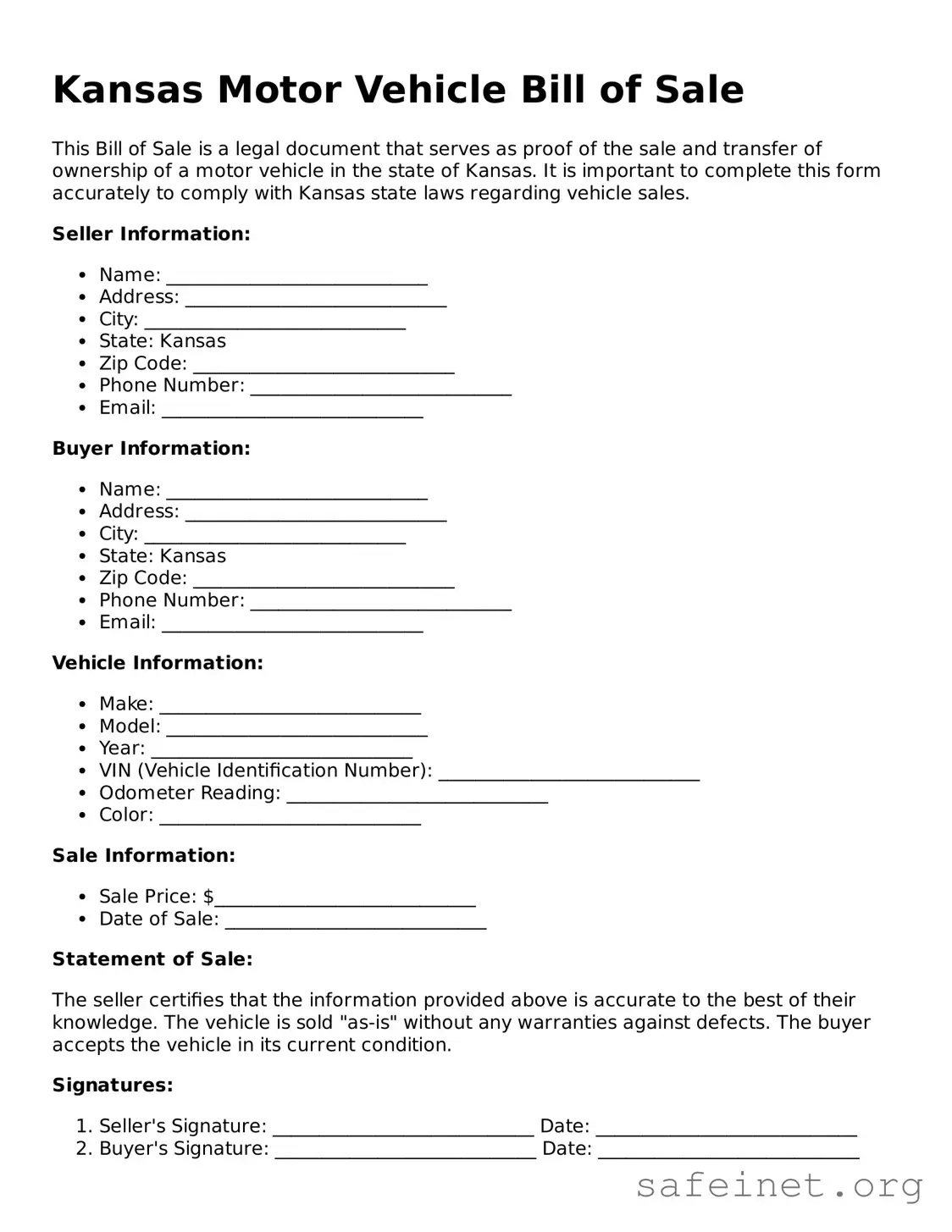
When it comes to transferring ownership of a vehicle in Kansas, the Motor Vehicle Bill of Sale form serves as a crucial document that facilitates this process. This form provides essential information about the vehicle, including its make, model, year, and Vehicle Identification Number (VIN), ensuring that both the buyer and seller have a clear understanding of the item being sold. Additionally, it captures the sale price, which is vital for tax purposes and helps establish the legitimacy of the transaction. Both parties must sign the document, which not only signifies their agreement but also protects their interests by documenting the terms of the sale. While the form is straightforward, it plays a significant role in ensuring a smooth transfer of ownership and can be a valuable reference in the event of future disputes or inquiries. Understanding the importance of this form is key for anyone involved in buying or selling a vehicle in Kansas.
Kansas Motor Vehicle Bill of Sale
This Bill of Sale is a legal document that serves as proof of the sale and transfer of ownership of a motor vehicle in the state of Kansas. It is important to complete this form accurately to comply with Kansas state laws regarding vehicle sales.
Seller Information:
Buyer Information:
Vehicle Information:
Sale Information:
Statement of Sale:
The seller certifies that the information provided above is accurate to the best of their knowledge. The vehicle is sold "as-is" without any warranties against defects. The buyer accepts the vehicle in its current condition.
Signatures:
This Bill of Sale should be retained by both the seller and the buyer for their records. It may be required for vehicle registration in Kansas.
| Fact Name | Description |
|---|---|
| Purpose | The Kansas Motor Vehicle Bill of Sale form is used to document the sale of a vehicle between a buyer and a seller. |
| Legal Requirement | This form is not legally required in Kansas, but it is highly recommended to protect both parties in a transaction. |
| Governing Laws | The sale of motor vehicles in Kansas is governed by K.S.A. 8-135 and K.S.A. 8-134. |
| Information Included | The form typically includes details such as the vehicle identification number (VIN), make, model, year, and sale price. |
| Signatures | Both the seller and buyer must sign the form to validate the transaction and acknowledge the terms of the sale. |
| Use for Title Transfer | The completed Bill of Sale can be used when applying for a new title with the Kansas Department of Revenue. |
| Record Keeping | It is advisable for both parties to keep a copy of the Bill of Sale for their records, as it serves as proof of the transaction. |
After obtaining the Kansas Motor Vehicle Bill of Sale form, you will need to complete it accurately to ensure a smooth transaction. This form is essential for documenting the sale of a vehicle between a buyer and a seller. Follow the steps below to fill it out correctly.
Once the form is completed, it is advisable for both parties to keep a copy for their records. This ensures that both the buyer and seller have documentation of the transaction for future reference.
What is a Kansas Motor Vehicle Bill of Sale?
The Kansas Motor Vehicle Bill of Sale is a legal document that records the sale of a vehicle from one party to another. It includes important details such as the vehicle's make, model, year, and Vehicle Identification Number (VIN), as well as the names and addresses of both the buyer and seller. This document serves as proof of the transaction and can be used for registration purposes.
Is a Bill of Sale required in Kansas?
While a Bill of Sale is not legally required to sell a vehicle in Kansas, it is highly recommended. This document provides a record of the transaction, which can protect both the buyer and seller in case of disputes or issues that arise after the sale.
What information is needed to complete the Bill of Sale?
To complete the Kansas Motor Vehicle Bill of Sale, you will need the following information: the seller's and buyer's full names and addresses, the vehicle's make, model, year, VIN, sale price, and the date of sale. Both parties should sign the document to make it valid.
Can I use a generic Bill of Sale form?
Yes, you can use a generic Bill of Sale form, but it is advisable to use the Kansas-specific form. The state form includes all necessary fields required for vehicle transactions in Kansas, ensuring that you meet state requirements.
Do I need to have the Bill of Sale notarized?
Notarization is not required for the Kansas Motor Vehicle Bill of Sale. However, having it notarized can add an extra layer of security and legitimacy to the transaction, which may be beneficial for both parties.
How do I obtain a copy of the Bill of Sale?
You can obtain a copy of the Kansas Motor Vehicle Bill of Sale from various sources, including the Kansas Department of Revenue website, local Department of Motor Vehicles (DMV) offices, or through legal stationery stores. Many online platforms also provide downloadable templates.
What should I do with the Bill of Sale after the sale?
After the sale, both the buyer and seller should keep a copy of the Bill of Sale for their records. The buyer will need it to register the vehicle in their name, while the seller should retain it as proof of the sale in case any issues arise later.
What if the vehicle has a lien on it?
If the vehicle has a lien, the seller must disclose this information to the buyer. The Bill of Sale should indicate the existence of the lien, and the seller should provide proof that the lien will be satisfied upon sale. This ensures the buyer is aware of any financial obligations associated with the vehicle.
Not including all required information. It's crucial to fill out every section of the form. Missing details can lead to delays or complications in the sale process.
Failing to provide accurate vehicle information. This includes the VIN (Vehicle Identification Number), make, model, and year. Incorrect information can create confusion and legal issues later.
Neglecting to sign the form. Both the buyer and seller must sign the Bill of Sale. Without signatures, the document is not valid.
Not dating the document. A Bill of Sale should always include the date of the transaction. This helps establish a timeline and can be important for legal purposes.
Overlooking the need for witnesses. In some cases, having a witness sign the form can add an extra layer of protection. This can be especially important if disputes arise.
Forgetting to keep copies. After filling out the form, both parties should retain a copy for their records. This ensures that everyone has proof of the transaction.
When completing a vehicle transaction in Kansas, several documents may be necessary alongside the Motor Vehicle Bill of Sale. These documents help ensure that the sale is legitimate and that both parties are protected throughout the process. Below is a list of commonly used forms.
Having these documents ready can streamline the transaction process and provide peace of mind for both the buyer and seller. Always check local requirements to ensure compliance with Kansas regulations.
The Kansas Motor Vehicle Bill of Sale form shares similarities with the general Bill of Sale, which is a document used in many states to transfer ownership of personal property. This general form typically includes details about the buyer and seller, a description of the item being sold, and the purchase price. Just like the Kansas form, it serves as proof of the transaction and can be used for various types of personal property, not just vehicles.
Another document that resembles the Kansas Motor Vehicle Bill of Sale is the Vehicle Title. While the title is an official document issued by the state that proves ownership, it often requires a bill of sale to complete the transfer process. Both documents contain essential information about the vehicle, such as the VIN, make, model, and year, and they are often used together to ensure a smooth transfer of ownership.
The Purchase Agreement is similar in that it outlines the terms of the sale between the buyer and seller. This document typically includes details such as the sale price, payment method, and any warranties or conditions related to the sale. Like the Kansas Bill of Sale, it serves as a legal record of the agreement and can be referenced in case of disputes.
The Odometer Disclosure Statement is another related document. This form is often required when selling a vehicle to confirm the mileage at the time of sale. Similar to the Kansas Motor Vehicle Bill of Sale, it helps protect both parties by providing an accurate record of the vehicle's condition and history. It is often included as part of the sale process to ensure compliance with federal regulations.
The Affidavit of Heirship is a document that can be used when a vehicle is inherited rather than purchased. This affidavit provides a legal declaration of the relationship between the deceased and the heir, facilitating the transfer of ownership without a formal title. Like the Kansas Bill of Sale, it is essential for establishing rightful ownership and can be used to update the vehicle's title.
The Release of Liability form is also akin to the Kansas Motor Vehicle Bill of Sale. This document protects the seller from future liabilities associated with the vehicle after the sale. Once completed, it serves as proof that the seller is no longer responsible for the vehicle, similar to how the bill of sale confirms the transfer of ownership.
The Vehicle Registration Application is another document that shares similarities. This form is required to register a vehicle with the state and typically requires information found in the bill of sale, such as the buyer's details and the vehicle's specifications. Both documents are crucial in the process of legally owning and operating a vehicle in Kansas.
The Salvage Title is relevant in cases where a vehicle has been damaged and declared a total loss by an insurance company. When such a vehicle is sold, a bill of sale is often needed to document the transfer of ownership. Both the salvage title and the bill of sale work together to ensure that the buyer is aware of the vehicle's history and condition before completing the purchase.
The Trade-In Agreement is another document that can be compared to the Kansas Motor Vehicle Bill of Sale. When a buyer trades in their old vehicle as part of the purchase of a new one, a trade-in agreement is created. This document outlines the terms of the trade, including the value of the trade-in vehicle, similar to how the bill of sale details the sale of a vehicle.
Lastly, the Lease Agreement can be considered similar in the context of vehicle transactions. While a lease is not a sale, it does involve the transfer of use rights for a vehicle. Both documents require specific information about the vehicle and the parties involved, and they establish the terms of the agreement, ensuring that both parties are clear on their rights and responsibilities.
When filling out the Kansas Motor Vehicle Bill of Sale form, it's important to follow certain guidelines to ensure the document is accurate and valid. Below is a list of things you should and shouldn't do during this process.
By following these guidelines, you can help ensure that the Bill of Sale is completed correctly and serves its intended purpose.
The Kansas Motor Vehicle Bill of Sale form is essential for documenting the sale of a vehicle. However, several misconceptions often arise regarding its use and requirements. Here are four common misconceptions:
While not legally required, a Bill of Sale is highly recommended. It serves as proof of the transaction and can help resolve any disputes that may arise later.
In Kansas, notarization is not a requirement for a Bill of Sale. However, having it notarized can add an extra layer of authenticity and may be beneficial in certain situations.
Both the seller and the buyer should sign the Bill of Sale. This mutual agreement protects both parties and confirms the details of the sale.
A Bill of Sale is not a title transfer. While it documents the sale, the title must be transferred separately to officially change ownership with the Kansas Department of Revenue.
When dealing with the Kansas Motor Vehicle Bill of Sale form, there are several important aspects to keep in mind. This document is essential for both buyers and sellers of motor vehicles in Kansas. Here are some key takeaways:
By following these guidelines, you can ensure a smooth transaction when buying or selling a vehicle in Kansas.