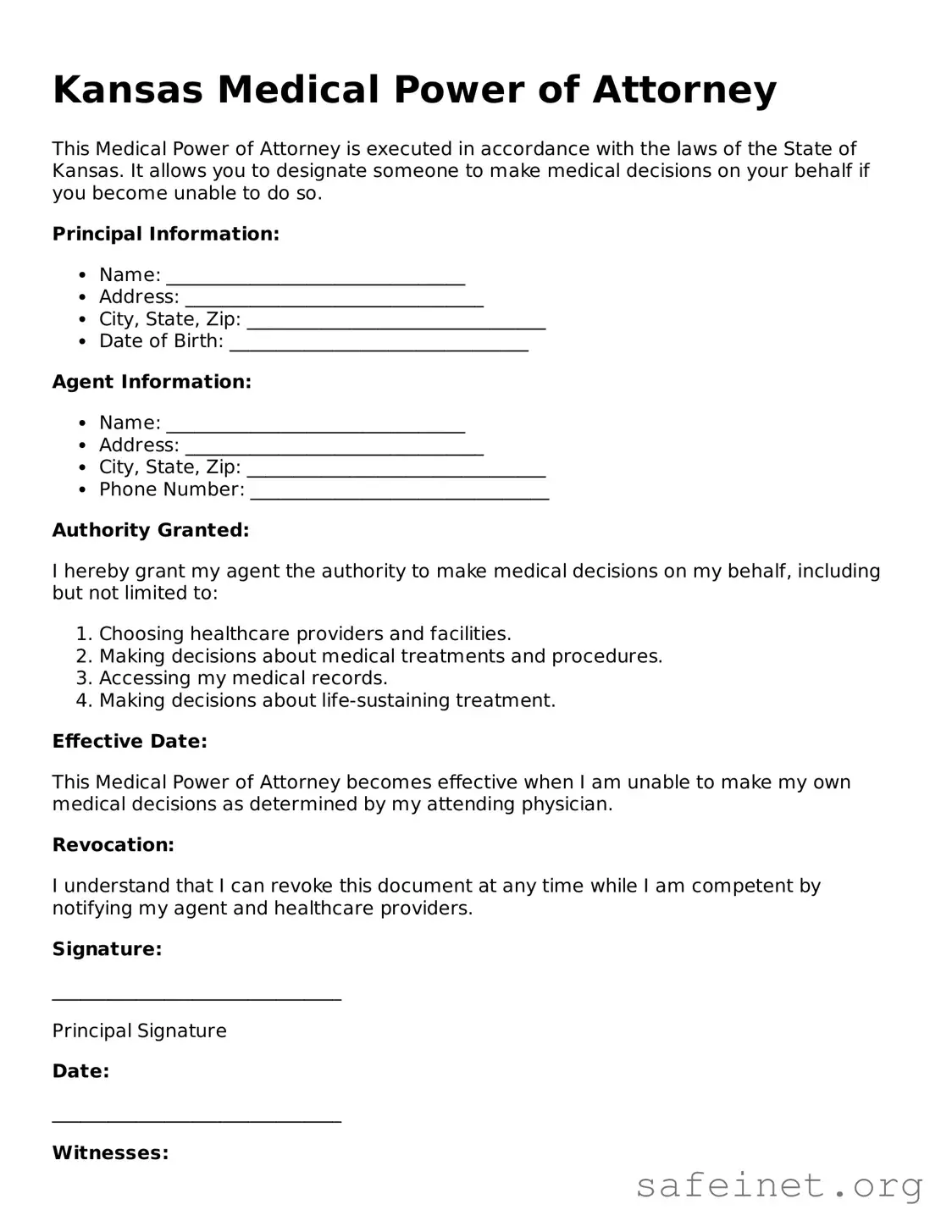
In Kansas, the Medical Power of Attorney form is a crucial document that empowers individuals to make important healthcare decisions on behalf of another person when they are unable to do so themselves. This form allows you to designate a trusted person—often referred to as an agent—to act in your best interests regarding medical treatment and care. It covers a wide range of decisions, from routine medical procedures to life-sustaining treatments, ensuring that your preferences are respected even if you cannot communicate them. By completing this form, you provide clear guidance to your healthcare providers and loved ones, alleviating the burden of decision-making during difficult times. Additionally, the form includes provisions for revocation and can be tailored to reflect your specific wishes. Understanding the significance of this document can help you take control of your healthcare future and ensure that your values and desires are honored when it matters most.
Kansas Medical Power of Attorney
This Medical Power of Attorney is executed in accordance with the laws of the State of Kansas. It allows you to designate someone to make medical decisions on your behalf if you become unable to do so.
Principal Information:
Agent Information:
Authority Granted:
I hereby grant my agent the authority to make medical decisions on my behalf, including but not limited to:
Effective Date:
This Medical Power of Attorney becomes effective when I am unable to make my own medical decisions as determined by my attending physician.
Revocation:
I understand that I can revoke this document at any time while I am competent by notifying my agent and healthcare providers.
Signature:
_______________________________
Principal Signature
Date:
_______________________________
Witnesses:
This document must be signed in the presence of two witnesses who are not related to the principal or the agent.
Notary Public:
State of Kansas, County of ________________________________
Subscribed and sworn before me this _____ day of ______________, 20__.
_______________________________
Notary Public Signature
My commission expires: ________________________________
| Fact Name | Details |
|---|---|
| Definition | A Kansas Medical Power of Attorney allows you to appoint someone to make medical decisions on your behalf if you are unable to do so. |
| Governing Law | This form is governed by the Kansas Statutes Annotated, specifically K.S.A. 65-28,100 et seq. |
| Eligibility | You must be at least 18 years old and mentally competent to create a Medical Power of Attorney in Kansas. |
| Agent Selection | You can choose anyone as your agent, but it’s best to select someone you trust to make healthcare decisions for you. |
| Durability | This power of attorney remains effective even if you become incapacitated. |
| Revocation | You can revoke your Medical Power of Attorney at any time, as long as you are mentally competent. |
| Witness Requirements | The form must be signed in the presence of two witnesses who are not related to you or your agent. |
| Notarization | Notarization is not required, but it can help confirm the validity of the document. |
| Healthcare Provider Obligations | Healthcare providers must follow the decisions made by your agent as long as they are within the scope of the authority granted. |
| Advance Directives | This form can be part of a broader advance directive, which may include living wills or other healthcare preferences. |
Filling out the Kansas Medical Power of Attorney form is an important step in designating someone to make healthcare decisions on your behalf if you become unable to do so. Follow these steps to ensure the form is completed accurately.
What is a Kansas Medical Power of Attorney?
A Kansas Medical Power of Attorney is a legal document that allows you to appoint someone to make healthcare decisions on your behalf if you become unable to do so. This person, known as your agent or attorney-in-fact, will have the authority to make medical decisions based on your wishes and best interests when you are incapacitated.
Who can be appointed as an agent in a Kansas Medical Power of Attorney?
You can choose any competent adult to serve as your agent. This can include family members, friends, or even a trusted advisor. However, it is important to select someone who understands your values and preferences regarding medical treatment. Additionally, certain healthcare providers cannot act as your agent to avoid potential conflicts of interest.
What decisions can my agent make under this document?
Your agent can make a wide range of healthcare decisions, including but not limited to, consenting to or refusing medical treatments, choosing healthcare providers, and making decisions about long-term care. They should act in accordance with your wishes, as expressed in the document or communicated to them verbally.
Do I need to have my Kansas Medical Power of Attorney notarized?
No, notarization is not required for a Kansas Medical Power of Attorney to be valid. However, the document must be signed by you and witnessed by two individuals who are not related to you or financially responsible for your healthcare. This helps ensure that the document is legitimate and reflects your true intentions.
Can I revoke my Kansas Medical Power of Attorney?
Yes, you can revoke your Medical Power of Attorney at any time as long as you are mentally competent. To do so, you should create a written revocation document and notify your agent and any healthcare providers who have a copy of your original document. This ensures that your wishes are clear and respected.
What happens if I don’t have a Medical Power of Attorney?
If you do not have a Medical Power of Attorney and become incapacitated, medical decisions may be made by family members or, in some cases, by the courts. This can lead to disagreements among family members and may not reflect your personal wishes regarding your healthcare. Establishing a Medical Power of Attorney helps ensure that your preferences are honored during critical times.
Not designating a specific agent. Individuals often forget to clearly name the person who will make medical decisions on their behalf. This can lead to confusion and disputes among family members.
Failing to update the form. Life circumstances change. People sometimes neglect to revise their Medical Power of Attorney when their health, relationships, or preferences evolve.
Overlooking witness requirements. Kansas law requires that the form be signed in the presence of two witnesses. Some individuals may not be aware of this requirement, which can invalidate the document.
Not specifying preferences for medical treatment. Leaving out details about desired medical treatments can lead to decisions that do not align with the individual’s values or wishes.
Using outdated forms. Medical Power of Attorney forms can change over time. Relying on an old version may result in non-compliance with current legal standards.
Failing to discuss the document with the designated agent. Without a conversation about the individual's wishes, the agent may not understand their preferences or may feel unprepared to make decisions.
The Kansas Medical Power of Attorney form is an essential document that allows individuals to designate someone to make medical decisions on their behalf if they become unable to do so. Along with this form, several other documents may be utilized to ensure comprehensive healthcare planning and decision-making. Below is a list of related forms and documents that are often used in conjunction with the Kansas Medical Power of Attorney.
Utilizing these forms and documents in conjunction with the Kansas Medical Power of Attorney can help ensure that an individual's healthcare preferences are respected and followed. Proper planning is essential for effective communication and decision-making in medical situations.
The Kansas Medical Power of Attorney form is similar to the Durable Power of Attorney. Both documents allow an individual to appoint someone else to make decisions on their behalf. However, while the Durable Power of Attorney can cover a wide range of financial and legal decisions, the Medical Power of Attorney is specifically focused on healthcare decisions. This distinction is crucial for individuals looking to ensure their medical preferences are respected in case they become incapacitated.
Another document that shares similarities is the Living Will. A Living Will outlines an individual's wishes regarding medical treatment in situations where they cannot communicate their preferences. While the Medical Power of Attorney designates a person to make decisions, the Living Will provides specific instructions on what treatments should or should not be administered. Together, these documents can create a comprehensive plan for medical care.
The Advance Healthcare Directive is also comparable. This document combines elements of both the Medical Power of Attorney and the Living Will. It allows individuals to appoint a healthcare agent while also detailing their medical treatment preferences. This dual approach ensures that the appointed agent understands the individual's wishes, providing clarity in critical situations.
The Healthcare Proxy is another similar document. Like the Medical Power of Attorney, it allows a person to designate someone to make healthcare decisions. However, the term "proxy" emphasizes the representative role of the appointed individual. This document is particularly useful in states that recognize it as a separate legal entity, ensuring that the appointed proxy has the authority to act on behalf of the individual.
The Do Not Resuscitate (DNR) order is also related, though it serves a more specific purpose. A DNR order instructs medical personnel not to perform CPR if the individual's heart stops or they stop breathing. While the Medical Power of Attorney can encompass broader healthcare decisions, a DNR focuses solely on resuscitation efforts, reflecting the individual's wishes regarding end-of-life care.
The Physician Orders for Life-Sustaining Treatment (POLST) form is another document with similar intent. It translates a patient’s healthcare preferences into actionable medical orders. While the Medical Power of Attorney allows someone to make decisions, the POLST provides clear instructions that healthcare providers must follow, ensuring that the patient’s wishes are honored in emergency situations.
The Mental Health Power of Attorney is also noteworthy. This document specifically addresses mental health decisions, allowing an individual to appoint someone to make choices related to mental health treatment. While the Medical Power of Attorney covers general healthcare, the Mental Health Power of Attorney focuses on the unique aspects of mental health care, which may require different considerations.
The Living Trust can be compared in terms of planning for future incapacity. Although primarily a financial document, a Living Trust can specify healthcare preferences and appoint a trustee who may also have a role in making medical decisions. This document emphasizes the importance of a holistic approach to estate and healthcare planning.
The Release of Information Authorization is relevant as well. This document allows individuals to authorize healthcare providers to share their medical information with designated persons. While the Medical Power of Attorney grants decision-making authority, the Release of Information focuses on the flow of medical information, which can be essential for the appointed agent to make informed choices.
Lastly, the Family Medical Leave Act (FMLA) documentation can be seen as related in the context of healthcare decision-making. While it does not directly involve appointing someone to make medical decisions, it provides employees the right to take leave for medical reasons, which may intersect with the decisions made under a Medical Power of Attorney. Understanding the FMLA can help families navigate the complexities of care and support during medical crises.
When filling out the Kansas Medical Power of Attorney form, it's essential to approach the process with care. This document allows you to designate someone to make medical decisions on your behalf if you become unable to do so. Here are ten important dos and don’ts to keep in mind:
By following these guidelines, you can ensure that your Kansas Medical Power of Attorney form is filled out correctly and reflects your healthcare wishes accurately.
When it comes to the Kansas Medical Power of Attorney form, misunderstandings can lead to confusion and potentially serious consequences. Below are five common misconceptions about this important legal document.
This is not true. While many people associate the Medical Power of Attorney with end-of-life situations, it actually covers a wide range of medical decisions. This document empowers your designated agent to make choices about your healthcare, even in situations where you may not be facing imminent death.
In reality, you have the right to update or revoke your Medical Power of Attorney at any time, as long as you are mentally competent. Life circumstances change, and your preferences may evolve; it’s important to keep your documents current.
This is a common belief, but it’s not entirely accurate. Without a formal Medical Power of Attorney, a spouse may not have the legal authority to make decisions on your behalf. To ensure that your wishes are honored, it’s best to designate a specific person through this document.
While both documents relate to healthcare decisions, they serve different purposes. A Living Will outlines your preferences for medical treatment in specific situations, while a Medical Power of Attorney appoints someone to make decisions for you if you cannot communicate your wishes.
This is misleading. In Kansas, a Medical Power of Attorney remains valid until you revoke it, but certain conditions may affect its enforceability, such as changes in your health status or changes in the law. Regularly reviewing your documents is a wise practice.
When it comes to filling out and using the Kansas Medical Power of Attorney form, understanding a few key points can make the process smoother. Here are some essential takeaways:
By following these key points, you can ensure that your Medical Power of Attorney accurately reflects your healthcare preferences and provides peace of mind for you and your loved ones.