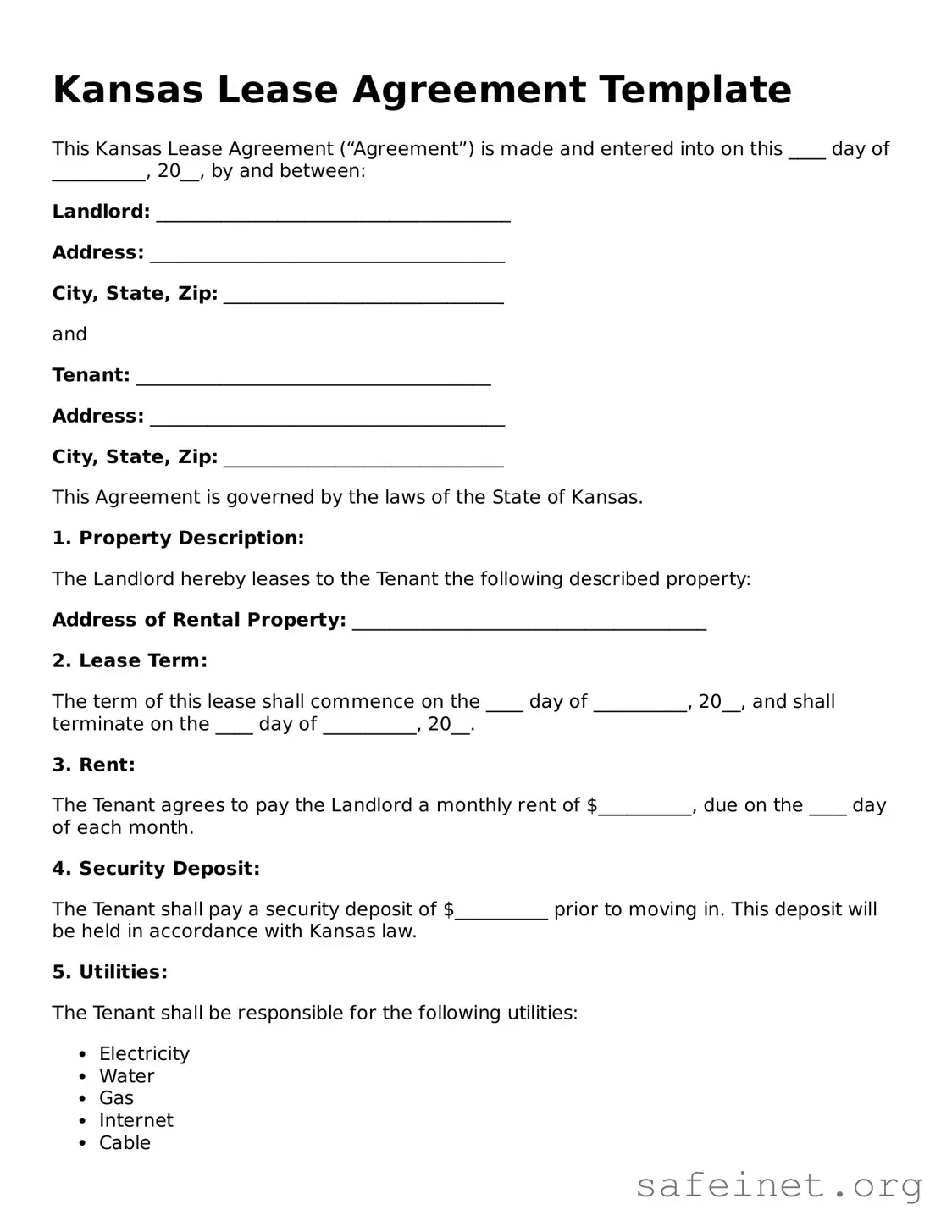
When renting a property in Kansas, having a well-structured lease agreement is essential for both landlords and tenants. This document outlines the terms and conditions of the rental arrangement, ensuring that both parties understand their rights and responsibilities. Key aspects of the Kansas Lease Agreement include the rental amount, payment due dates, and the duration of the lease, whether it’s a month-to-month or a fixed-term lease. Additionally, it addresses security deposits, maintenance responsibilities, and rules regarding pets or alterations to the property. The lease also includes provisions for terminating the agreement, which helps to protect both the landlord's investment and the tenant's living situation. Understanding these components can lead to a smoother rental experience and can prevent disputes down the line.
Kansas Lease Agreement Template
This Kansas Lease Agreement (“Agreement”) is made and entered into on this ____ day of __________, 20__, by and between:
Landlord: ______________________________________
Address: ______________________________________
City, State, Zip: ______________________________
and
Tenant: ______________________________________
Address: ______________________________________
City, State, Zip: ______________________________
This Agreement is governed by the laws of the State of Kansas.
1. Property Description:
The Landlord hereby leases to the Tenant the following described property:
Address of Rental Property: ______________________________________
2. Lease Term:
The term of this lease shall commence on the ____ day of __________, 20__, and shall terminate on the ____ day of __________, 20__.
3. Rent:
The Tenant agrees to pay the Landlord a monthly rent of $__________, due on the ____ day of each month.
4. Security Deposit:
The Tenant shall pay a security deposit of $__________ prior to moving in. This deposit will be held in accordance with Kansas law.
5. Utilities:
The Tenant shall be responsible for the following utilities:
6. Maintenance and Repairs:
The Tenant agrees to maintain the property in good condition. The Landlord will be responsible for major repairs, while the Tenant will handle minor repairs.
7. Use of Property:
The Tenant agrees to use the property solely for residential purposes and shall not engage in any illegal activities on the premises.
8. Termination:
Either party may terminate this Agreement by providing a written notice of ____ days prior to the desired termination date.
9. Governing Law:
This Agreement shall be governed by and construed in accordance with the laws of the State of Kansas.
10. Signatures:
By signing below, both parties agree to the terms and conditions outlined in this lease agreement.
Landlord Signature: ___________________________ Date: ____________
Tenant Signature: ___________________________ Date: ____________
| Fact Name | Description |
|---|---|
| Governing Law | The Kansas Lease Agreement is governed by the Kansas Statutes Annotated, specifically Chapter 58. |
| Parties Involved | The agreement typically involves a landlord and a tenant. |
| Duration | The lease can be for a fixed term or month-to-month, depending on the agreement. |
| Security Deposit | Kansas law allows landlords to charge a security deposit, which must be returned within 30 days after lease termination. |
| Rent Payment | The lease should specify the amount of rent, due date, and acceptable payment methods. |
| Maintenance Responsibilities | Typically, landlords are responsible for maintaining the property, while tenants must keep their units clean and undamaged. |
| Notice Requirements | Both parties must provide written notice for lease termination or non-renewal, usually 30 days in advance. |
| Default and Eviction | If a tenant fails to pay rent or violates lease terms, landlords may begin eviction proceedings under Kansas law. |
Filling out the Kansas Lease Agreement form is an important step in establishing a rental relationship. This process ensures that both the landlord and tenant understand their rights and responsibilities. Follow these steps to complete the form accurately.
What is a Kansas Lease Agreement?
A Kansas Lease Agreement is a legally binding contract between a landlord and a tenant. It outlines the terms and conditions under which a tenant can occupy a property. This document typically includes details about the rental amount, duration of the lease, maintenance responsibilities, and rules regarding the use of the property. Both parties must agree to the terms before signing the lease to ensure mutual understanding and compliance.
What are the key components of a Kansas Lease Agreement?
Key components include the names of the landlord and tenant, property address, lease duration, rental amount, payment terms, security deposit details, maintenance responsibilities, and rules regarding pets and subletting. Additionally, the agreement may specify conditions for termination and renewal. Each of these elements plays a crucial role in defining the relationship between the landlord and tenant.
How long is a typical lease term in Kansas?
Lease terms in Kansas can vary widely, but they often range from six months to one year. Some leases may be month-to-month, allowing for greater flexibility. It’s essential for both parties to agree on the lease term, as this affects rental stability and planning. Longer lease terms may offer security for tenants, while shorter terms can provide landlords with more options for adjusting rental rates.
Can a tenant break a lease in Kansas?
Breaking a lease in Kansas can have legal and financial consequences. Tenants may be able to terminate the lease early under specific circumstances, such as domestic violence or uninhabitable living conditions. However, tenants should review the lease terms for any penalties or requirements for notice. Communication with the landlord is crucial to find a mutually agreeable solution.
What happens if a tenant fails to pay rent?
If a tenant fails to pay rent, the landlord has the right to initiate eviction proceedings. Typically, the landlord must provide a written notice giving the tenant a specific timeframe to pay the overdue rent or vacate the property. It is important for tenants to communicate with their landlord if they are facing financial difficulties, as some landlords may be willing to negotiate payment plans or temporary relief.
Not Reading the Entire Agreement: Many individuals rush through the lease agreement, failing to read every section carefully. This can lead to misunderstandings about rights and responsibilities.
Missing Signatures: It's essential to ensure that all required parties sign the lease. A missing signature can render the agreement unenforceable.
Incorrect Dates: Entering the wrong lease start or end dates can cause confusion. Always double-check the dates before finalizing the document.
Not Specifying Rent Amount: Leaving the rent amount blank or writing it incorrectly can lead to disputes later. Ensure the rent is clearly stated.
Ignoring Maintenance Responsibilities: Failing to clarify who is responsible for maintenance and repairs can lead to conflicts. Be explicit about these duties in the agreement.
Overlooking Pet Policies: If pets are allowed, specify the types and any associated fees. Not addressing this can lead to issues with tenants or landlords later.
Neglecting to Include Utilities: Clearly outline which utilities are included in the rent. This prevents misunderstandings about additional costs.
Failing to Review Local Laws: Each state has its own rental laws. Not being aware of these can result in legal pitfalls. Always check local regulations before signing.
When entering into a lease agreement in Kansas, several additional forms and documents may be necessary to ensure clarity and legal compliance. Each of these documents serves a specific purpose and can help protect the rights of both landlords and tenants. Below is a list of commonly used forms that often accompany the Kansas Lease Agreement.
Having these documents ready can streamline the leasing process and help both landlords and tenants avoid misunderstandings. It's always wise to review each form carefully to ensure that all parties are aware of their rights and responsibilities.
A Rental Agreement is often compared to a Lease Agreement, as both documents outline the terms under which a tenant can occupy a property. However, a Rental Agreement typically covers shorter timeframes, such as month-to-month arrangements, while a Lease Agreement generally spans a longer duration, often a year or more. Both documents specify the rent amount, payment due dates, and responsibilities of both the landlord and tenant, but the flexibility of a Rental Agreement can make it more appealing for those seeking short-term housing solutions.
Another document similar to the Kansas Lease Agreement is the Commercial Lease Agreement. This type of lease is specifically designed for businesses renting commercial spaces, such as offices or retail stores. Like a residential lease, it outlines the terms of occupancy, including rent, duration, and maintenance responsibilities. However, a Commercial Lease often includes additional clauses related to business operations, such as permitted uses of the space and modifications to the property, which are tailored to meet the needs of commercial tenants.
A Sublease Agreement is also akin to a Lease Agreement, but it involves a situation where the original tenant rents out the property to another individual, known as the subtenant. This document must align with the terms of the original lease, ensuring that the landlord's rights are respected. Both agreements detail rent payments and responsibilities, but the Sublease Agreement introduces an additional layer of complexity, as it involves multiple parties and requires clear communication between the original tenant, the subtenant, and the landlord.
A Roommate Agreement can be compared to a Lease Agreement when multiple individuals share a rental property. While a Lease Agreement typically involves a single leaseholder, a Roommate Agreement outlines the specific responsibilities and expectations of each roommate. This document can cover rent distribution, shared utilities, and house rules, ensuring that all parties are on the same page. It serves to complement the Lease Agreement by addressing the interpersonal dynamics that can arise in shared living situations.
A Lease Purchase Agreement is similar to a Lease Agreement but includes an option for the tenant to purchase the property at the end of the lease term. This document combines elements of leasing and buying, allowing tenants to build equity while renting. The Lease Purchase Agreement specifies the purchase price and terms, in addition to the standard lease provisions. This arrangement can be beneficial for tenants who wish to eventually own their home but may not be ready to buy immediately.
Lastly, a Fixed-Term Lease is a specific type of Lease Agreement that sets a predetermined duration for the rental period, often lasting six months to a year. While it shares many similarities with other lease types, the Fixed-Term Lease provides stability for both landlords and tenants. It clearly defines the start and end dates, as well as the rent amount and conditions for renewal. This type of lease can be particularly advantageous for individuals seeking long-term housing, as it guarantees occupancy for the agreed-upon period.
When filling out the Kansas Lease Agreement form, it is important to approach the task carefully. Here are some guidelines to follow:
By following these guidelines, you can help ensure that your lease agreement is filled out correctly and serves its intended purpose.
When it comes to lease agreements in Kansas, there are several misconceptions that can lead to confusion for both landlords and tenants. Understanding these misunderstandings is crucial for ensuring a smooth rental experience. Here are five common misconceptions:
Understanding these misconceptions can empower both landlords and tenants to navigate lease agreements more effectively. Clear communication and knowledge of the law are key to a successful rental relationship.
When filling out and using the Kansas Lease Agreement form, there are several important aspects to consider. Below are key takeaways to ensure proper understanding and compliance.
Understanding these elements can help both landlords and tenants navigate their rights and responsibilities effectively.