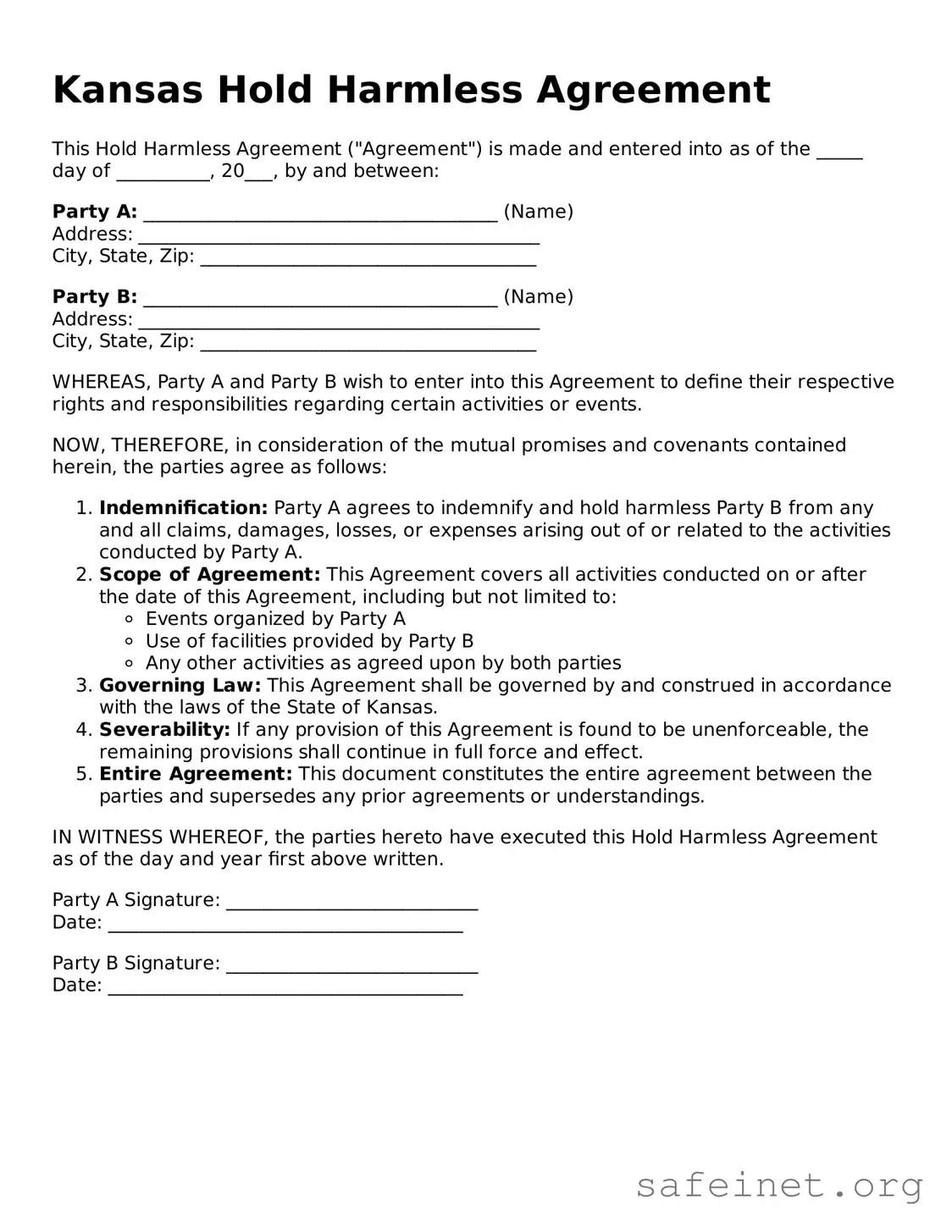
The Kansas Hold Harmless Agreement form is an important document designed to protect individuals and organizations from liability in various situations. This form allows one party to agree not to hold another party responsible for any injuries, damages, or losses that may occur during a specific activity or event. It is commonly used in settings such as sports events, community gatherings, or when engaging in activities on private property. By signing this agreement, participants acknowledge the risks involved and agree to waive their right to seek compensation for any incidents that may arise. Understanding the key components of this form is crucial for both parties involved, as it outlines the responsibilities and expectations clearly. Additionally, the form may include specific terms regarding the duration of the agreement, the scope of activities covered, and any necessary insurance requirements. Overall, the Kansas Hold Harmless Agreement serves as a vital tool for managing risk and fostering a safe environment for all participants.
Kansas Hold Harmless Agreement
This Hold Harmless Agreement ("Agreement") is made and entered into as of the _____ day of __________, 20___, by and between:
Party A: ______________________________________ (Name)
Address: ___________________________________________
City, State, Zip: ____________________________________
Party B: ______________________________________ (Name)
Address: ___________________________________________
City, State, Zip: ____________________________________
WHEREAS, Party A and Party B wish to enter into this Agreement to define their respective rights and responsibilities regarding certain activities or events.
NOW, THEREFORE, in consideration of the mutual promises and covenants contained herein, the parties agree as follows:
IN WITNESS WHEREOF, the parties hereto have executed this Hold Harmless Agreement as of the day and year first above written.
Party A Signature: ___________________________
Date: ______________________________________
Party B Signature: ___________________________
Date: ______________________________________
| Fact Name | Details |
|---|---|
| Purpose | The Kansas Hold Harmless Agreement form is designed to protect one party from liability for injuries or damages that may occur during a specific event or activity. |
| Parties Involved | This agreement typically involves two parties: the indemnitor (the party assuming the risk) and the indemnitee (the party being protected). |
| Governing Law | The agreement is governed by the laws of the State of Kansas. |
| Key Components | Essential components include a clear description of the event, the risks involved, and the specific liabilities being waived. |
| Enforceability | For the agreement to be enforceable, it must be signed voluntarily by both parties and should not contravene public policy. |
After obtaining the Kansas Hold Harmless Agreement form, it is essential to complete it accurately to ensure all necessary information is provided. This document may be used in various situations, and filling it out correctly helps establish clear terms between parties involved.
What is a Kansas Hold Harmless Agreement?
A Kansas Hold Harmless Agreement is a legal document that protects one party from liability for certain actions or events. In this agreement, one party agrees to assume responsibility for any potential risks or damages that may arise during a specific activity or event. This form is often used in various contexts, such as events, property use, or partnerships, to ensure that one party is not held financially responsible for the actions of another.
Who typically uses a Hold Harmless Agreement in Kansas?
This agreement is commonly utilized by organizations, businesses, and individuals engaging in activities that involve some level of risk. For example, event organizers may require participants to sign a Hold Harmless Agreement to protect themselves from claims related to injuries or damages that occur during the event. Similarly, property owners may use this agreement when allowing others to use their property for specific purposes.
Are there any legal requirements for a Hold Harmless Agreement in Kansas?
While there are no specific legal requirements for a Hold Harmless Agreement in Kansas, it is important for the document to be clear and concise. The agreement should outline the responsibilities of each party, the scope of the liability being waived, and any relevant details about the activity or event. It is advisable to have the agreement reviewed by a legal professional to ensure that it is enforceable and meets the needs of the parties involved.
Can a Hold Harmless Agreement be enforced in Kansas?
Yes, a Hold Harmless Agreement can be enforceable in Kansas, provided it is properly drafted and executed. Courts generally uphold these agreements as long as they are reasonable and do not violate public policy. However, certain limitations may apply. For instance, an agreement may not protect a party from liability for gross negligence or willful misconduct. Therefore, it is essential to understand the specific terms and conditions outlined in the agreement.
Incomplete Information: One of the most common mistakes is failing to fill out all required fields. Each section of the form is important, and missing information can lead to delays or even rejection of the agreement.
Incorrect Dates: Another frequent error involves entering the wrong dates. Ensure that the dates of the agreement and any relevant events are accurate. Inaccurate dates can create confusion about the timeline of responsibilities.
Not Understanding the Terms: Some individuals sign the agreement without fully grasping its implications. Take the time to read through the terms carefully. Understanding what you are agreeing to can prevent future disputes.
Failure to Include Signatures: A signature is essential for the validity of the agreement. Forgetting to sign, or not having all necessary parties sign, can render the document ineffective. Double-check that all required signatures are present.
Neglecting to Keep Copies: After submitting the form, individuals often forget to keep a copy for their records. Having a copy is crucial for reference in case any issues arise later. Always make sure to retain a signed version for your own files.
The Kansas Hold Harmless Agreement is an important document used to protect one party from legal liability for any injuries or damages that may occur during a specific event or activity. When utilizing this agreement, it is often beneficial to have additional forms and documents to ensure comprehensive coverage and clarity. Below are several commonly used documents that complement the Hold Harmless Agreement.
Having these additional documents on hand can enhance the effectiveness of the Kansas Hold Harmless Agreement. They provide clarity and ensure that all parties involved are aware of their rights and responsibilities. By using these forms together, you create a more secure and organized environment for any event or activity.
The Kansas Hold Harmless Agreement is similar to a Release of Liability form, which is often used in recreational activities. This document protects the organizer from claims resulting from injuries or damages that may occur during the activity. Like the Hold Harmless Agreement, it requires participants to acknowledge the risks involved and agree not to hold the organizer responsible for any mishaps. Both documents aim to minimize legal exposure and ensure that participants understand the potential hazards they face.
Another document that shares similarities is the Indemnity Agreement. This agreement is designed to protect one party from financial loss or damage caused by another party's actions. In essence, it shifts the burden of responsibility. Just like the Hold Harmless Agreement, an Indemnity Agreement requires one party to agree to cover the costs associated with claims or damages, creating a layer of protection for the other party.
The Waiver of Liability is also closely related. This document is often used in sports and recreational activities, where participants agree to waive their right to sue for injuries sustained during the event. It functions similarly to the Hold Harmless Agreement by requiring individuals to accept the risks involved and relinquish their right to pursue legal action against the organizers. Both documents serve to clarify the responsibilities of each party and protect against lawsuits.
A Participant Agreement is another document that shares characteristics with the Hold Harmless Agreement. This form outlines the terms and conditions that participants must adhere to while engaging in an activity. It often includes clauses that limit liability and require participants to acknowledge the risks involved. Like the Hold Harmless Agreement, it emphasizes the importance of understanding one’s responsibilities and the potential consequences of participation.
The Liability Release form is also relevant. This document is commonly used in various activities, from sports to events, where participants agree to release the organizers from any liability for injuries. It functions similarly to the Hold Harmless Agreement by ensuring that participants understand and accept the risks associated with their involvement. Both documents aim to protect the organizer while making sure participants are aware of their own responsibilities.
A Service Agreement can resemble the Hold Harmless Agreement in certain contexts, especially when it includes indemnity clauses. This document outlines the terms of service between two parties and may include provisions that protect one party from claims arising from the other’s actions. Like the Hold Harmless Agreement, it emphasizes the importance of mutual understanding and risk management in a contractual relationship.
The Non-Disclosure Agreement (NDA) may seem different, but it shares the underlying principle of protecting one party from potential risks. While NDAs focus on confidential information, they often include clauses that limit liability for breaches. This concept aligns with the Hold Harmless Agreement, which seeks to protect one party from legal repercussions resulting from the actions of another.
The Construction Contract often includes Hold Harmless provisions, especially in projects where one party may face risks due to another's actions. These clauses ensure that if one party is sued due to the actions of another, the responsible party agrees to cover the costs. This mirrors the essence of the Hold Harmless Agreement, where one party agrees to assume responsibility for certain risks.
Lastly, the Employment Agreement can contain indemnification clauses that resemble the Hold Harmless Agreement. These clauses may protect employers from liability related to employees' actions while performing their job duties. Both documents serve to clarify responsibilities and protect one party from potential legal claims arising from the actions of another.
When filling out the Kansas Hold Harmless Agreement form, it is important to follow specific guidelines to ensure accuracy and compliance. Here are ten things to consider:
By adhering to these guidelines, you can ensure that the Hold Harmless Agreement is completed correctly and effectively. This will help protect your interests and maintain clarity in the agreement.
The Kansas Hold Harmless Agreement form is often misunderstood. Here are ten common misconceptions about this form:
Understanding these misconceptions can help individuals and businesses make informed decisions when using the Kansas Hold Harmless Agreement form.
When it comes to using the Kansas Hold Harmless Agreement form, there are several important points to keep in mind. This form is designed to protect one party from legal liability in the event of accidents or injuries that may occur during certain activities. Here are some key takeaways to consider:
By following these guidelines, individuals can use the Kansas Hold Harmless Agreement form effectively and with confidence.