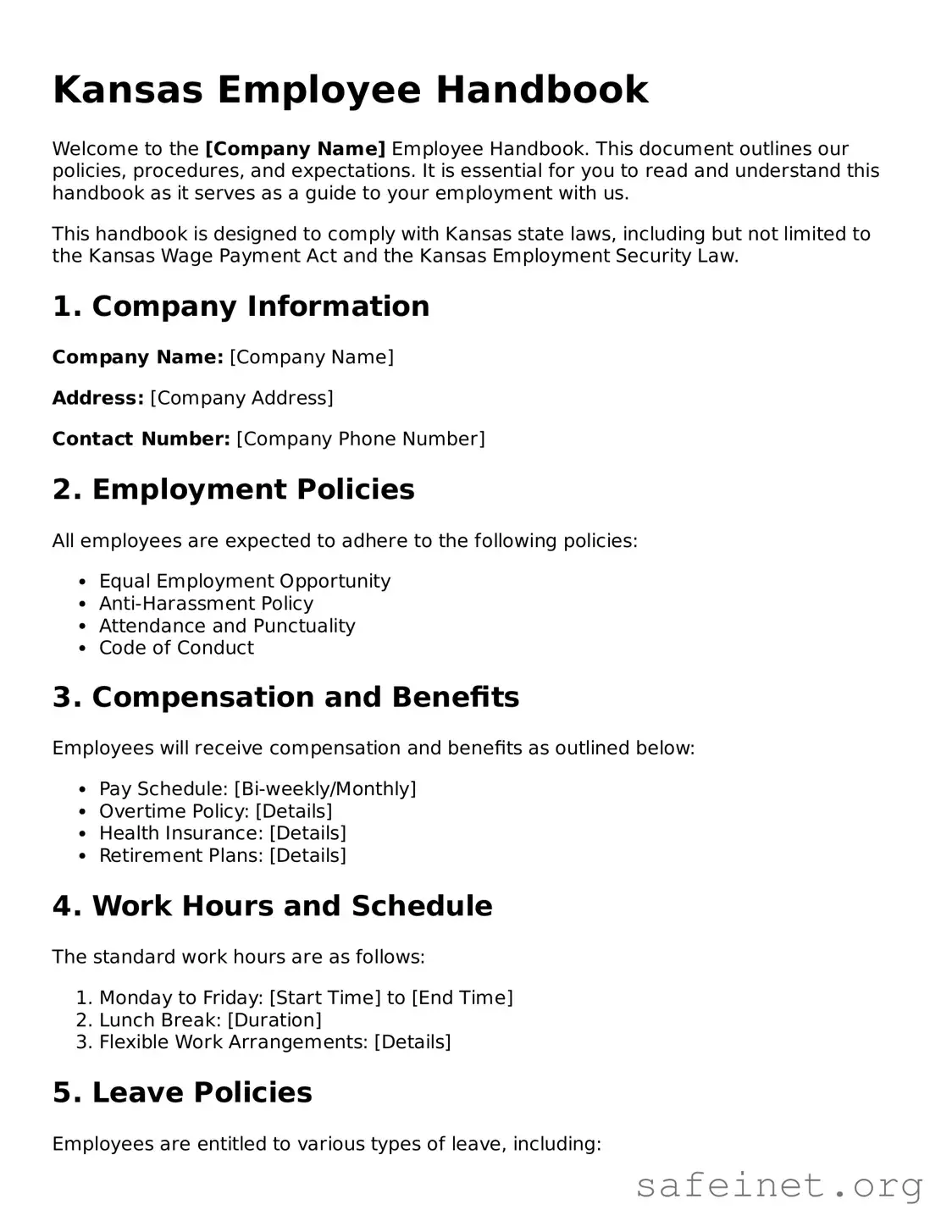
The Kansas Employee Handbook form serves as a vital resource for both employers and employees, outlining the essential policies and procedures that govern the workplace. This document typically includes critical information such as employee rights, workplace expectations, and the company’s code of conduct. Additionally, it addresses topics like attendance, dress code, and safety protocols, ensuring that all staff members are aware of their responsibilities and the standards they are expected to uphold. Furthermore, the handbook often details the procedures for reporting grievances, disciplinary actions, and the benefits provided by the employer, such as health insurance and leave policies. By clearly communicating these elements, the Kansas Employee Handbook not only fosters a positive work environment but also helps protect the rights of employees while providing a framework for consistent management practices.
Kansas Employee Handbook
Welcome to the [Company Name] Employee Handbook. This document outlines our policies, procedures, and expectations. It is essential for you to read and understand this handbook as it serves as a guide to your employment with us.
This handbook is designed to comply with Kansas state laws, including but not limited to the Kansas Wage Payment Act and the Kansas Employment Security Law.
1. Company Information
Company Name: [Company Name]
Address: [Company Address]
Contact Number: [Company Phone Number]
2. Employment Policies
All employees are expected to adhere to the following policies:
3. Compensation and Benefits
Employees will receive compensation and benefits as outlined below:
4. Work Hours and Schedule
The standard work hours are as follows:
5. Leave Policies
Employees are entitled to various types of leave, including:
6. Employee Conduct
All employees are expected to maintain a professional demeanor. This includes:
7. Disciplinary Procedures
In the event of policy violations, the following steps will be taken:
8. Acknowledgment of Receipt
By signing below, you acknowledge that you have received and understood the Kansas Employee Handbook.
Employee Name: _________________________
Employee Signature: ______________________
Date: ______________________
| Fact Name | Details |
|---|---|
| Purpose | The Kansas Employee Handbook serves as a guide for employees regarding company policies and procedures. |
| Governing Laws | Kansas labor laws govern the contents and requirements of the employee handbook. |
| Mandatory Policies | Employers are encouraged to include policies on anti-discrimination, harassment, and workplace safety. |
| At-Will Employment | The handbook should clarify the at-will employment status, indicating that either party can terminate employment at any time. |
| Employee Acknowledgment | Employees typically sign an acknowledgment form to confirm they have received and understood the handbook. |
| Updates | Employers should review and update the handbook regularly to ensure compliance with current laws and policies. |
| Confidentiality | Confidentiality policies regarding company information should be clearly stated in the handbook. |
| Accessibility | The handbook must be accessible to all employees, including those with disabilities. |
Filling out the Kansas Employee Handbook form is an important step in ensuring that you understand your rights and responsibilities as an employee. Follow these steps carefully to complete the form accurately.
What is the purpose of the Kansas Employee Handbook form?
The Kansas Employee Handbook form serves as a crucial document for employers and employees alike. It outlines the policies, procedures, and expectations within a workplace. This handbook can cover a variety of topics, including workplace conduct, employee benefits, and the rights and responsibilities of both parties. By having a clear and comprehensive handbook, employers can ensure that employees are informed about their rights and the company's expectations, which can help prevent misunderstandings and disputes in the future.
Who is required to have an Employee Handbook in Kansas?
While not every employer in Kansas is legally required to have an Employee Handbook, it is highly recommended for businesses of all sizes. Employers with a certain number of employees may be subject to specific labor laws that necessitate clear communication of policies. Additionally, having an Employee Handbook can help small businesses establish a professional environment and protect themselves from potential legal issues. Even if not mandated, creating a handbook can provide clarity and consistency in managing employee relations.
What should be included in the Kansas Employee Handbook?
A well-crafted Employee Handbook should include several key components. First, it should outline the company's mission and values to set the tone for workplace culture. Next, it should detail employment policies, including hiring practices, attendance requirements, and performance evaluations. Important sections on workplace safety, anti-discrimination policies, and procedures for reporting grievances are also essential. Additionally, the handbook should address employee benefits, such as health insurance, vacation time, and sick leave. Lastly, it is advisable to include a disclaimer stating that the handbook is not a contract and that policies may change at the employer's discretion.
How often should the Employee Handbook be updated?
Regular updates to the Employee Handbook are vital to ensure that it remains relevant and compliant with current laws. It is advisable to review the handbook at least once a year. Changes in employment laws, company policies, or organizational structure may necessitate revisions. When updates occur, employers should communicate these changes to employees promptly. This practice not only keeps employees informed but also demonstrates the employer's commitment to transparency and compliance with legal standards.
Can an Employee Handbook be used in legal disputes?
Yes, an Employee Handbook can play a significant role in legal disputes. If a conflict arises between an employee and employer, the handbook can serve as a reference point for the agreed-upon policies and procedures. Courts may look to the handbook to determine if the employer followed its own policies in handling a particular situation. However, it is important to ensure that the handbook is clear, consistent, and legally compliant. Ambiguities or contradictions within the document may weaken its effectiveness in legal matters.
Inaccurate Personal Information: Employees often provide incorrect details such as their name, address, or contact number. This can lead to complications in communication and record-keeping.
Failure to Read the Handbook: Many employees skip reading the handbook entirely. This can result in misunderstandings about company policies and procedures.
Not Signing the Acknowledgment: Some individuals forget to sign the acknowledgment section of the form. This signature is crucial as it confirms that the employee has received and understood the handbook.
Ignoring Deadlines: Employees may overlook submission deadlines for the handbook form. Late submissions can lead to delays in processing and potential disciplinary actions.
Neglecting to Update Information: Employees often fail to update their information when changes occur. This can include changes in marital status, dependents, or contact information.
When creating a comprehensive Kansas Employee Handbook, several other forms and documents can enhance clarity and compliance within the workplace. Each of these documents serves a specific purpose and can help ensure that both employers and employees understand their rights and responsibilities. Here are some essential forms to consider:
Incorporating these documents alongside the Kansas Employee Handbook can create a more organized and transparent workplace. Each form plays a vital role in fostering clear communication and ensuring that both employers and employees are informed and compliant with relevant laws and policies.
The Kansas Employee Handbook form shares similarities with the Employee Manual, which serves as a comprehensive guide for employees within a company. Like the handbook, the manual outlines company policies, procedures, and expectations. Both documents aim to provide clarity on workplace standards and promote a consistent understanding of employee rights and responsibilities. Additionally, the Employee Manual often includes sections on workplace conduct, benefits, and disciplinary actions, mirroring the structure of the Kansas Employee Handbook.
Another document that aligns closely with the Kansas Employee Handbook is the Orientation Guide. This guide is typically provided to new employees during their onboarding process. It introduces them to the company culture, mission, and values while also summarizing key policies. Similar to the handbook, the Orientation Guide seeks to ensure that employees are well-informed about their roles and the expectations placed upon them from the outset of their employment.
The Policy and Procedure Manual is yet another document that bears resemblance to the Kansas Employee Handbook. This manual delves into specific policies that govern various aspects of employment, such as leave policies, harassment prevention, and safety protocols. While the Employee Handbook provides a broad overview, the Policy and Procedure Manual offers detailed explanations, ensuring that employees have access to the information they need to navigate workplace situations effectively.
The Code of Conduct is a foundational document that aligns with the Kansas Employee Handbook in its focus on workplace behavior. This document outlines the ethical standards and behavioral expectations for employees. Like the handbook, the Code of Conduct emphasizes the importance of professionalism and integrity, providing employees with a framework to guide their actions and decision-making in the workplace.
Similar to the Kansas Employee Handbook is the Benefits Guide, which details the various benefits available to employees, such as health insurance, retirement plans, and paid time off. This guide complements the handbook by offering specific information about employee entitlements. Both documents aim to educate employees about their rights and available resources, fostering a supportive work environment.
The Training Manual also bears similarities to the Kansas Employee Handbook. This document typically outlines the training processes and expectations for employees, covering essential skills and knowledge required for their roles. While the handbook provides an overview of company policies, the Training Manual focuses on the practical aspects of employee development, ensuring that staff members are equipped to succeed in their positions.
The Performance Review Policy is another document that shares a connection with the Kansas Employee Handbook. This policy outlines the process and criteria for evaluating employee performance. Like the handbook, it emphasizes the importance of feedback and development, helping employees understand how their performance will be assessed and what is expected of them in terms of growth and improvement.
Finally, the Safety Manual is similar to the Kansas Employee Handbook in its focus on workplace safety and health regulations. This manual provides detailed information on safety protocols, emergency procedures, and reporting incidents. Both documents aim to create a safe work environment by informing employees of their responsibilities and the resources available to them in case of emergencies.
When filling out the Kansas Employee Handbook form, it’s important to follow certain guidelines to ensure accuracy and completeness. Here’s a list of things to do and avoid:
Understanding the Kansas Employee Handbook form can be tricky. Here are ten common misconceptions about it, along with clarifications to help you navigate this important document.
Many believe that creating an employee handbook is not necessary. However, having a handbook is beneficial as it sets clear expectations and guidelines for employees.
There is no one-size-fits-all handbook. Each business can tailor its handbook to fit its specific needs and culture.
Handbooks should be living documents. As laws and company policies change, regular updates are essential to keep the handbook relevant.
While the handbook outlines policies, it is not a contract. It serves as a guide for behavior and expectations rather than a legal agreement.
Assuming that employees will understand every policy without explanation can lead to confusion. Regular training and discussions about the handbook are important.
All employees should be familiar with the handbook. This knowledge helps ensure everyone is on the same page regarding workplace policies.
Small businesses benefit just as much from having a handbook. It helps establish a professional environment and clarifies expectations for all employees.
It is crucial to comply with Kansas laws when drafting the handbook. Ignoring these regulations can lead to legal issues down the line.
While the handbook should cover many policies, it cannot address every situation. Flexibility and common sense are also important in the workplace.
Distributing the handbook is just the beginning. Ongoing communication and training about its contents are necessary to ensure understanding and compliance.
By addressing these misconceptions, you can better understand the importance and function of the Kansas Employee Handbook form. It serves as a vital tool for both employers and employees in maintaining a positive workplace environment.
When filling out and using the Kansas Employee Handbook form, keep these key points in mind:
By following these guidelines, you can help ensure that the employee handbook serves its purpose effectively.