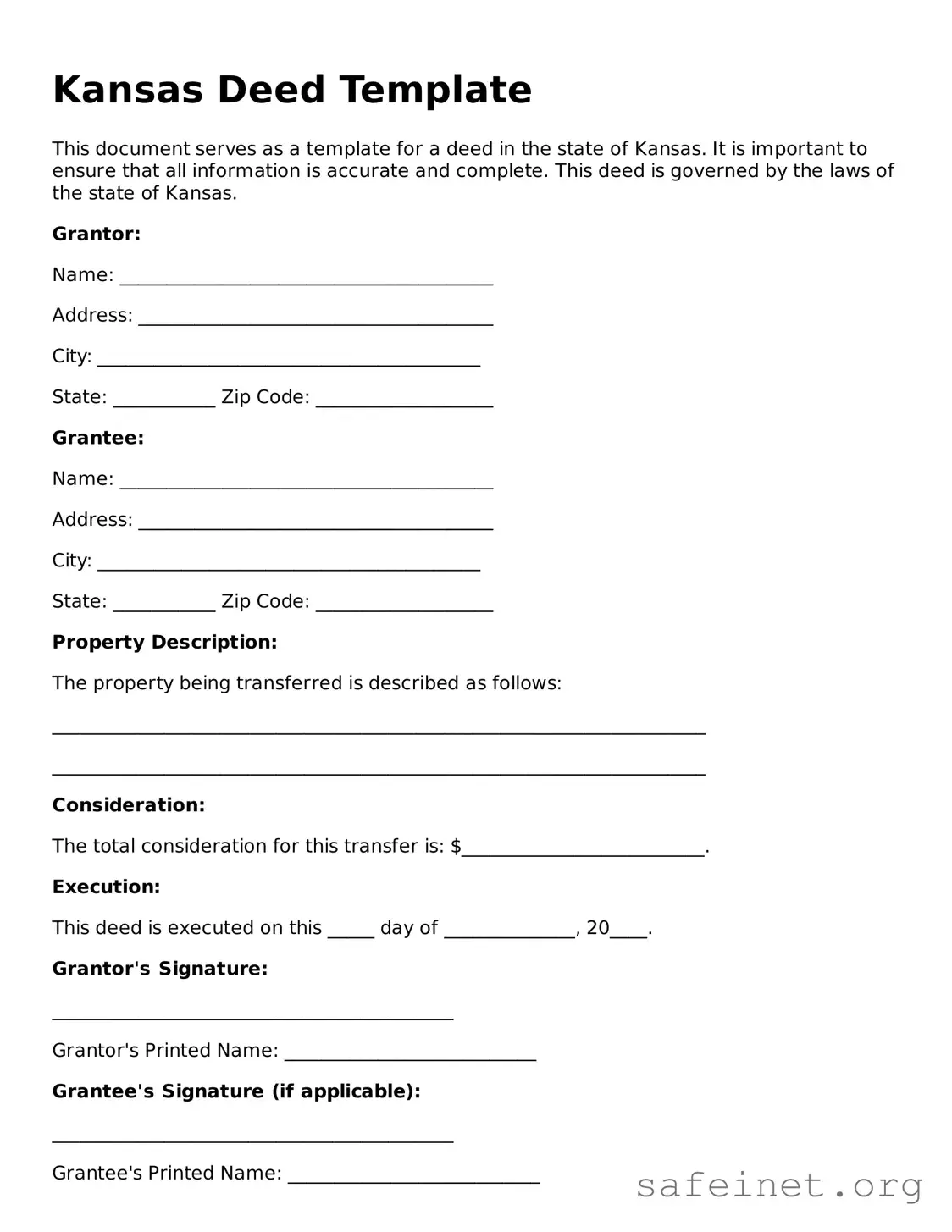
When engaging in real estate transactions in Kansas, understanding the Kansas Deed form is essential for both buyers and sellers. This legal document serves as a critical tool in transferring property ownership, ensuring that the transaction is recognized and enforceable. It outlines key details such as the names of the parties involved, a description of the property, and the terms of the transfer. The form also specifies the type of deed being used, whether it be a warranty deed, quitclaim deed, or another variation, each with its own implications for the parties. Additionally, the Kansas Deed form must be properly executed and notarized to be valid, safeguarding against potential disputes in the future. Familiarity with this form not only streamlines the process of property transfer but also provides peace of mind, knowing that all legal requirements are met. Understanding its components can make a significant difference in navigating the complexities of real estate transactions in the state.
Kansas Deed Template
This document serves as a template for a deed in the state of Kansas. It is important to ensure that all information is accurate and complete. This deed is governed by the laws of the state of Kansas.
Grantor:
Name: ________________________________________
Address: ______________________________________
City: _________________________________________
State: ___________ Zip Code: ___________________
Grantee:
Name: ________________________________________
Address: ______________________________________
City: _________________________________________
State: ___________ Zip Code: ___________________
Property Description:
The property being transferred is described as follows:
______________________________________________________________________
______________________________________________________________________
Consideration:
The total consideration for this transfer is: $__________________________.
Execution:
This deed is executed on this _____ day of ______________, 20____.
Grantor's Signature:
___________________________________________
Grantor's Printed Name: ___________________________
Grantee's Signature (if applicable):
___________________________________________
Grantee's Printed Name: ___________________________
Witness:
___________________________________________
Witness Printed Name: ___________________________
Notary Public:
State of Kansas
County of ______________________
Subscribed and sworn before me this _____ day of ______________, 20____.
___________________________________________
Notary Public Signature
My commission expires: ____________________
| Fact Name | Description |
|---|---|
| Governing Law | The Kansas Deed form is governed by the Kansas Statutes Annotated, specifically K.S.A. 58-2201 et seq. |
| Types of Deeds | Kansas recognizes several types of deeds, including warranty deeds, quitclaim deeds, and special warranty deeds. |
| Grantor and Grantee | The deed must clearly identify the grantor (seller) and the grantee (buyer) with their full legal names. |
| Legal Description | A precise legal description of the property must be included in the deed to ensure clarity and avoid disputes. |
| Signature Requirement | The grantor must sign the deed in the presence of a notary public for it to be valid. |
| Recording | To protect the interests of the grantee, the deed should be recorded with the local county register of deeds. |
| Transfer Tax | Kansas imposes a real estate transfer tax on the transfer of property, which must be paid at the time of recording. |
| Revocation | Once executed and delivered, a deed cannot be revoked unless specific legal conditions are met. |
| Title Insurance | It is advisable for the grantee to obtain title insurance to protect against any undisclosed claims or defects in title. |
Filling out the Kansas Deed form is an important step in transferring property ownership. After completing the form, you will need to ensure it is signed and notarized before submitting it to the appropriate county office for recording. This process helps protect your rights and ensures that the transaction is legally recognized.
What is a Kansas Deed form?
A Kansas Deed form is a legal document used to transfer ownership of real property in the state of Kansas. It serves as proof of the transfer and outlines the details of the transaction, including the names of the parties involved and a description of the property being transferred.
What types of deeds are available in Kansas?
In Kansas, there are several types of deeds, including warranty deeds, quitclaim deeds, and special warranty deeds. A warranty deed provides a guarantee that the seller holds clear title to the property and has the right to sell it. A quitclaim deed transfers any interest the seller may have in the property but does not guarantee that the title is clear. A special warranty deed offers limited protection, ensuring that the seller has not encumbered the property during their ownership.
How do I complete a Kansas Deed form?
To complete a Kansas Deed form, you will need to provide essential information such as the names of the grantor (seller) and grantee (buyer), the legal description of the property, and any relevant terms of the transfer. It is crucial to ensure that all information is accurate and that the form is signed by the grantor in the presence of a notary public.
Is a Kansas Deed form required to be notarized?
Yes, a Kansas Deed form must be notarized to be legally valid. The grantor must sign the deed in front of a notary public, who will then affix their seal. This step helps verify the identity of the grantor and ensures that the signing was done willingly and without coercion.
Where do I file a Kansas Deed form after it is completed?
Once the Kansas Deed form is completed and notarized, it should be filed with the Register of Deeds in the county where the property is located. This filing creates a public record of the property transfer and protects the rights of the new owner.
Are there any fees associated with filing a Kansas Deed form?
Yes, there are typically fees associated with filing a Kansas Deed form. These fees vary by county and may include recording fees, which are charged for the actual filing of the deed. It is advisable to check with the local Register of Deeds office for the specific fee structure.
Can I use a Kansas Deed form for any type of property?
A Kansas Deed form can be used for most types of real property, including residential, commercial, and agricultural properties. However, certain types of transactions, such as those involving government properties or specific legal circumstances, may require different forms or additional documentation.
What happens if I do not file the Kansas Deed form?
If you do not file the Kansas Deed form, the transfer of ownership may not be recognized legally. This could lead to complications in proving ownership, potential disputes, and issues when trying to sell or mortgage the property in the future. Filing the deed is a critical step in ensuring that your ownership rights are protected.
Can I revoke a Kansas Deed form after it has been filed?
Once a Kansas Deed form has been filed and the property transfer is complete, it cannot be revoked unilaterally. If you wish to reverse the transaction, you would need to execute another deed to transfer the property back to the original owner or to another party. This process may involve legal guidance to ensure it is done correctly.
Incorrect Names: Failing to use the full legal names of all parties involved can lead to issues. Nicknames or abbreviations should be avoided.
Missing Signatures: All required parties must sign the deed. Omitting a signature can invalidate the document.
Improper Notarization: Not having the deed properly notarized can result in it being rejected. Ensure a notary public is present during signing.
Incorrect Property Description: A vague or inaccurate description of the property can cause confusion. Use the legal description as stated in previous deeds or tax records.
Wrong Date: Entering the wrong date of execution can create complications. Double-check the date before finalizing the document.
Failure to Include Consideration: Not specifying the consideration, or payment, for the property can lead to legal disputes. Clearly state the amount or value exchanged.
Improper Format: Using a format that does not meet Kansas requirements can result in rejection. Follow the state’s guidelines closely.
Not Recording the Deed: Failing to record the deed with the appropriate county office can lead to ownership disputes. Always ensure the deed is filed.
Ignoring Local Laws: Not being aware of local regulations can cause issues. Research local laws and requirements before completing the deed.
Inconsistent Information: Providing conflicting information within the deed can create confusion. Ensure all details are consistent and accurate.
When engaging in property transactions in Kansas, several forms and documents often accompany the Kansas Deed form. Each of these documents serves a specific purpose and contributes to the overall process of transferring ownership. Understanding these forms can help ensure a smoother transaction.
By familiarizing oneself with these documents, individuals can navigate the complexities of property transactions with greater confidence. Each form plays a vital role in ensuring a clear and legally sound transfer of property ownership.
The Kansas Warranty Deed is similar to the Kansas Deed form in that it provides a guarantee of clear title to the property being transferred. When a seller uses a warranty deed, they assure the buyer that they hold the title free from any claims or encumbrances. This assurance protects the buyer against future disputes regarding ownership, making it a strong choice for property transactions.
The Quitclaim Deed is another document related to the Kansas Deed form. Unlike the warranty deed, a quitclaim deed transfers whatever interest the seller has in the property without any guarantees. This means the buyer receives no assurance about the title's status. It is often used among family members or in situations where the parties trust each other.
The Special Warranty Deed is also comparable to the Kansas Deed form. This type of deed offers limited protection to the buyer, as it only guarantees that the seller has not caused any title issues during their ownership. It differs from a full warranty deed, which covers the entire history of the property. Buyers should be aware of this limitation when considering a special warranty deed.
The Bargain and Sale Deed shares similarities with the Kansas Deed form as well. This deed implies that the seller has the right to sell the property but does not provide any warranties about the title. It is often used in foreclosure sales or tax lien sales, where the seller may not have complete information about the property's history.
The Grant Deed is another document that resembles the Kansas Deed form. A grant deed conveys ownership and typically includes two warranties: that the seller has not sold the property to anyone else and that the property is free from encumbrances made during the seller's ownership. This provides a moderate level of protection for the buyer.
The Deed of Trust is similar in that it involves property transfer, but it serves a different purpose. It secures a loan by transferring the property to a trustee, who holds it until the borrower pays off the loan. This document is crucial in real estate transactions that involve financing, ensuring that the lender has a claim to the property if the borrower defaults.
The Leasehold Deed, while not a direct transfer of ownership, is similar in that it conveys rights related to property. This document grants a tenant the right to use and occupy a property for a specified period. It outlines the terms of the lease and can include provisions for renewal or termination, making it essential for rental agreements.
The Executor’s Deed is akin to the Kansas Deed form in that it transfers property from a deceased person's estate to their heirs or beneficiaries. This deed is used when someone passes away and their property needs to be transferred according to their will or state law. It ensures that the rightful heirs receive the property without disputes.
The Mineral Deed is another document that resembles the Kansas Deed form. This deed specifically transfers rights to minerals or resources beneath the property, rather than the property itself. It is often used in real estate transactions involving land that has mineral rights, allowing the buyer to extract resources like oil or gas.
Finally, the Affidavit of Title is related to the Kansas Deed form as it provides a sworn statement regarding the ownership of the property. While it does not transfer property, it can accompany a deed to assure the buyer that the seller has the right to convey the property. This document adds an extra layer of assurance in real estate transactions.
When filling out the Kansas Deed form, it is essential to approach the task with care. Below are ten important dos and don'ts to consider:
Understanding the Kansas Deed form is essential for anyone involved in real estate transactions in the state. However, several misconceptions can lead to confusion. Here’s a list of common myths about the Kansas Deed form and the realities behind them:
Being aware of these misconceptions can help ensure that property transactions in Kansas proceed smoothly and legally. Always consider consulting a professional for guidance tailored to your situation.
When filling out and using the Kansas Deed form, there are several important points to keep in mind. Understanding these key takeaways can help ensure a smooth process.
By following these key takeaways, individuals can navigate the Kansas Deed form process more effectively and ensure that their property transfer is legally sound.