When engaging in the sale or transfer of personal property in Kansas, a Bill of Sale serves as a vital document to ensure that both parties are protected throughout the transaction. This form outlines essential details such as the names and addresses of the buyer and seller, a thorough description of the item being sold, and the agreed-upon purchase price. Additionally, it may include information about the condition of the item, any warranties or guarantees, and the date of the transaction. By documenting these elements, the Bill of Sale not only provides a clear record of the exchange but also helps to prevent potential disputes that may arise in the future. Whether you are selling a vehicle, furniture, or any other personal property, utilizing a Bill of Sale can streamline the process and offer peace of mind for both parties involved.
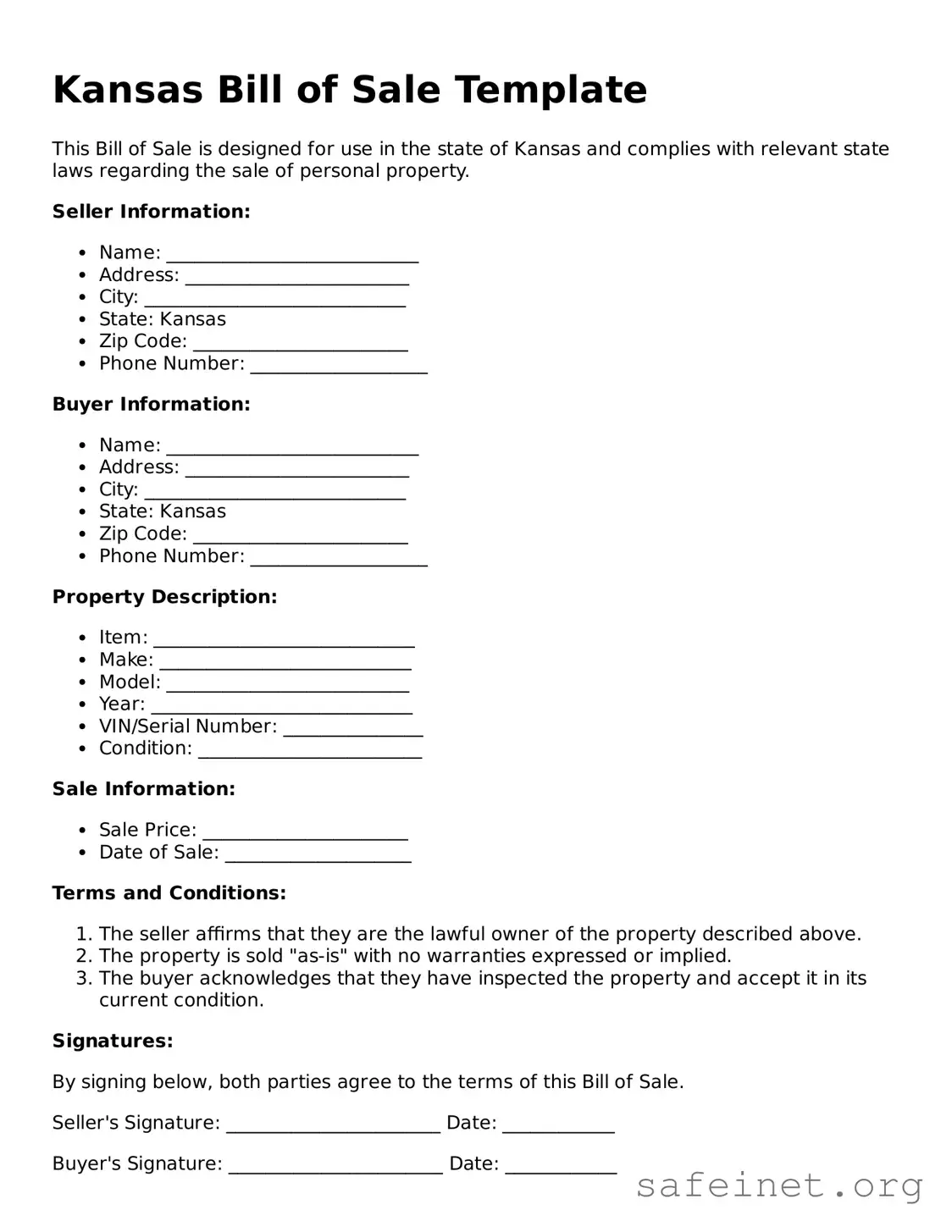
Kansas Bill of Sale Template
This Bill of Sale is designed for use in the state of Kansas and complies with relevant state laws regarding the sale of personal property.
Seller Information:
Buyer Information:
Property Description:
Sale Information:
Terms and Conditions:
Signatures:
By signing below, both parties agree to the terms of this Bill of Sale.
Seller's Signature: _______________________ Date: ____________
Buyer's Signature: _______________________ Date: ____________
This document serves as a legal record of the transaction between the buyer and seller.
| Fact Name | Description |
|---|---|
| Purpose | A Kansas Bill of Sale serves as a legal document to transfer ownership of personal property from one person to another. |
| Requirements | The form typically requires the names and addresses of both the buyer and seller, a description of the item, and the sale price. |
| Governing Law | The Kansas Bill of Sale is governed by the Kansas Statutes Annotated, specifically K.S.A. 84-9-102. |
| Notarization | Notarization is not required for all types of Bill of Sale, but it can provide additional legal protection. |
| Types of Property | This form can be used for various types of personal property, including vehicles, boats, and equipment. |
After obtaining the Kansas Bill of Sale form, you are ready to fill it out accurately. This document will serve as a record of the transaction between the buyer and seller. Ensuring that all necessary information is provided will help facilitate a smooth transfer of ownership.
What is a Kansas Bill of Sale form?
A Kansas Bill of Sale form is a legal document that records the transfer of ownership of personal property from one party to another. It serves as proof of the transaction and outlines the details of the sale, including the buyer, seller, item description, and sale price. This form is commonly used for vehicles, boats, and other tangible items in Kansas.
When is a Bill of Sale required in Kansas?
A Bill of Sale is not always required by law in Kansas, but it is highly recommended for significant transactions, especially for vehicles and boats. It provides protection for both the buyer and seller by documenting the sale details. Additionally, certain transactions, such as vehicle registrations, may require a Bill of Sale for proper title transfer.
What information should be included in a Kansas Bill of Sale?
A comprehensive Kansas Bill of Sale should include the following information: the names and addresses of both the buyer and seller, a detailed description of the item being sold (including make, model, year, and VIN for vehicles), the sale price, the date of the transaction, and any warranties or conditions of the sale. Both parties should sign and date the document to validate the agreement.
Is a Bill of Sale legally binding in Kansas?
Yes, a Bill of Sale is legally binding in Kansas, provided it includes all necessary information and is signed by both parties. It acts as a contract that can be enforced in court if either party fails to uphold their end of the agreement. However, it is important to note that the Bill of Sale does not guarantee the condition of the item sold unless explicitly stated.
Can a Bill of Sale be used for a vehicle in Kansas?
Yes, a Bill of Sale can be used for vehicles in Kansas. In fact, it is often required when transferring ownership of a vehicle. The form should include the vehicle's make, model, year, VIN, and odometer reading at the time of sale. Both the buyer and seller should retain a copy of the Bill of Sale for their records, and the buyer will need it for vehicle registration.
Do I need to have the Bill of Sale notarized in Kansas?
No, notarization is not required for a Bill of Sale in Kansas. However, having the document notarized can add an extra layer of authenticity and may be beneficial if any disputes arise in the future. It is advisable to keep a signed copy for both parties, regardless of notarization.
Where can I obtain a Kansas Bill of Sale form?
Kansas Bill of Sale forms can be obtained from various sources. Many legal websites offer downloadable templates that can be customized to fit specific needs. Additionally, local government offices, such as the Department of Revenue or county clerk’s office, may provide official forms. It is essential to ensure that the form used complies with Kansas state laws.
Incomplete Information: One common mistake is failing to provide all necessary details. This includes the names and addresses of both the buyer and seller, as well as a complete description of the item being sold. Omitting any of this information can lead to confusion or disputes later on.
Incorrect Item Description: Accurately describing the item is crucial. Sellers sometimes provide vague descriptions or leave out important details such as the make, model, year, and condition. This can result in misunderstandings regarding what is being sold.
Not Including Payment Details: It is essential to specify the payment amount and method. Some individuals neglect to indicate whether the payment is in cash, check, or another form. This omission can create issues regarding the transfer of ownership.
Failure to Sign: A Bill of Sale is not valid without signatures from both parties. Sometimes, individuals forget to sign the document or do not have the necessary witnesses present. This can invalidate the agreement and complicate the transaction.
When completing a transaction in Kansas, especially for the sale of personal property, several documents may accompany the Kansas Bill of Sale form. Each document serves a specific purpose, ensuring that both parties have a clear understanding of the transaction and that all legal requirements are met. Below is a list of commonly used forms and documents.
Having these documents prepared and organized can facilitate a smoother transaction process. Each form plays a vital role in protecting the interests of both the buyer and the seller, ensuring that all aspects of the sale are properly documented.
The Kansas Bill of Sale form is similar to a Vehicle Bill of Sale. This document specifically records the transfer of ownership for a motor vehicle. It includes essential details such as the vehicle identification number (VIN), make, model, and the sale price. Just like the Kansas Bill of Sale, it serves as proof of the transaction and protects both the buyer and seller by documenting the terms of the sale.
Another document comparable to the Kansas Bill of Sale is the Boat Bill of Sale. This form is used when transferring ownership of a boat. It includes information about the boat, such as the hull identification number, make, model, and year. Both documents fulfill the same purpose: to provide a legal record of the sale and ensure that the buyer has clear title to the property being purchased.
The Firearm Bill of Sale is also similar. This document is used when buying or selling firearms. It captures details like the make, model, and serial number of the firearm. Like the Kansas Bill of Sale, it serves as a record of the transaction and may help ensure compliance with state and federal laws regarding firearm ownership.
A Personal Property Bill of Sale is another relevant document. This form is used for the sale of personal items, such as furniture or electronics. It outlines the items being sold, the sale price, and the parties involved. Both this document and the Kansas Bill of Sale aim to provide clarity and legal protection for both parties in the transaction.
The Equipment Bill of Sale is similar as well. This form is specifically designed for the sale of equipment, such as machinery or tools. It includes details about the equipment, its condition, and the agreed sale price. Both documents serve to formalize the transfer of ownership and protect the interests of both the buyer and seller.
The Real Estate Bill of Sale is another comparable document. Although it is often used in conjunction with a property deed, it details the sale of personal property included in a real estate transaction. This can include appliances or fixtures. Both forms ensure that the transfer of ownership is documented and legally binding.
The Lease Agreement can also bear similarities to the Kansas Bill of Sale in certain contexts. While it primarily governs the rental of property, it may include provisions for the sale of property at the end of the lease term. Both documents outline terms and conditions, ensuring that all parties are aware of their rights and responsibilities.
The Warranty Deed is another document that can be likened to the Kansas Bill of Sale. While primarily used to transfer real estate, it provides a guarantee that the seller has clear title to the property. Like the Bill of Sale, it serves as a legal record of the transaction and protects the buyer's interests.
Lastly, the Affidavit of Title is similar in that it verifies the ownership of property being sold. This document is often used in conjunction with a Bill of Sale to affirm that the seller has the legal right to sell the property. Both documents work together to ensure that the transaction is legitimate and legally sound.
When filling out the Kansas Bill of Sale form, it’s important to be careful and thorough. Here’s a list of things you should and shouldn’t do to ensure everything goes smoothly.
Taking your time and following these guidelines can help avoid potential issues down the road.
Understanding the Kansas Bill of Sale form can be challenging, and several misconceptions often arise. Here are five common misunderstandings that may cause confusion.
Many people believe that a Bill of Sale is only required for the sale of vehicles. In reality, this document can be used for a variety of transactions, including the sale of personal property, boats, and even livestock. It serves as proof of the transfer of ownership for any valuable item.
Another misconception is that a Bill of Sale does not require notarization. While it is not mandatory in Kansas, having a notary public witness the signing can provide an extra layer of security and legitimacy. This can be particularly important in disputes over ownership.
Some individuals think that the Bill of Sale primarily protects the seller's interests. However, it also safeguards the buyer by documenting the terms of the sale and confirming that the item was sold in a specific condition. This can be crucial if issues arise later.
Many assume that the Bill of Sale is a complicated legal document that requires extensive legal knowledge to complete. In truth, it is often a straightforward form that can be filled out with basic information about the transaction. Clear and concise details are usually sufficient.
Lastly, some people believe that a Bill of Sale is only necessary for high-value transactions. However, it is wise to use a Bill of Sale for any significant purchase, regardless of the item's value. This ensures that both parties have a clear record of the transaction.
Being aware of these misconceptions can help individuals navigate the process of buying and selling items in Kansas with greater confidence and clarity.
When dealing with the Kansas Bill of Sale form, there are several important points to keep in mind. This document serves as a record of the transfer of ownership for personal property. Below are key takeaways that will guide you through the process.
By following these guidelines, you can ensure that the Kansas Bill of Sale form is filled out correctly and serves its intended purpose effectively.