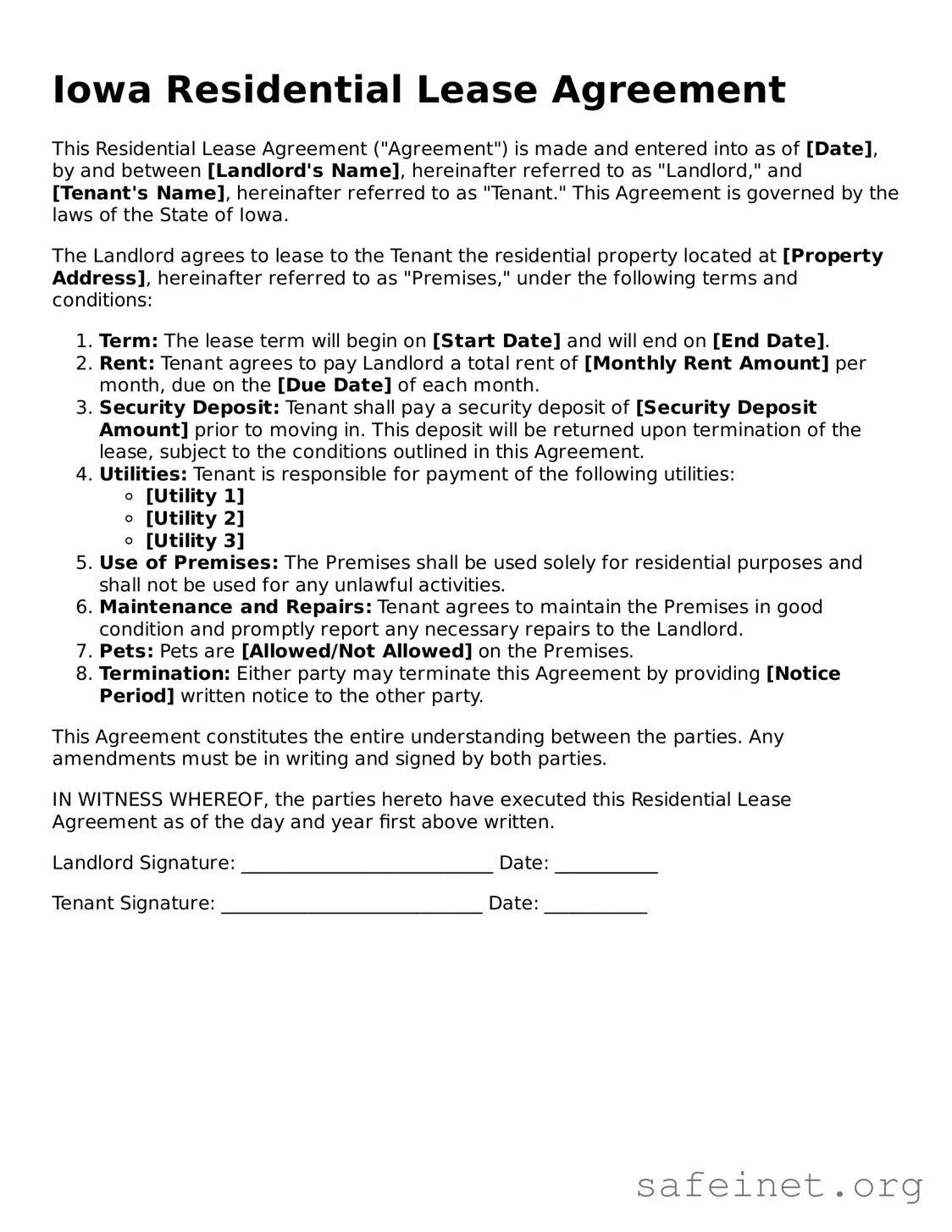
When renting a home in Iowa, having a clear and comprehensive Residential Lease Agreement is essential for both landlords and tenants. This document serves as a binding contract that outlines the terms and conditions of the rental arrangement. Key aspects typically included in the agreement are the duration of the lease, the amount of rent due, and the responsibilities of both parties regarding maintenance and repairs. Additionally, the agreement often specifies rules about pets, smoking, and the use of common areas. Security deposits, late fees, and procedures for terminating the lease are also crucial components that help protect the interests of both the landlord and the tenant. By clearly defining these elements, the Iowa Residential Lease Agreement fosters a transparent and respectful relationship between both parties, ensuring that everyone understands their rights and obligations throughout the rental period.
Iowa Residential Lease Agreement
This Residential Lease Agreement ("Agreement") is made and entered into as of [Date], by and between [Landlord's Name], hereinafter referred to as "Landlord," and [Tenant's Name], hereinafter referred to as "Tenant." This Agreement is governed by the laws of the State of Iowa.
The Landlord agrees to lease to the Tenant the residential property located at [Property Address], hereinafter referred to as "Premises," under the following terms and conditions:
This Agreement constitutes the entire understanding between the parties. Any amendments must be in writing and signed by both parties.
IN WITNESS WHEREOF, the parties hereto have executed this Residential Lease Agreement as of the day and year first above written.
Landlord Signature: ___________________________ Date: ___________
Tenant Signature: ____________________________ Date: ___________
| Fact Name | Details |
|---|---|
| Governing Law | The Iowa Residential Lease Agreement is governed by Iowa Code Chapter 562A. |
| Parties Involved | The agreement typically involves a landlord and a tenant. |
| Property Description | The lease must include a clear description of the rental property. |
| Lease Term | The duration of the lease, whether month-to-month or fixed-term, must be specified. |
| Rent Payment | The agreement should outline the amount of rent and the payment due date. |
| Security Deposit | Iowa law limits the security deposit to a maximum of two months' rent. |
| Termination Conditions | Conditions for terminating the lease must be clearly stated in the agreement. |
Filling out the Iowa Residential Lease Agreement form is an important step in establishing a rental arrangement. This document outlines the terms and conditions agreed upon by both the landlord and the tenant. Properly completing the form ensures that both parties understand their rights and responsibilities.
After completing the form, it is advisable to review it thoroughly for accuracy. Both parties should retain a copy for their records to ensure clarity and compliance with the agreed terms.
What is an Iowa Residential Lease Agreement?
The Iowa Residential Lease Agreement is a legally binding document that outlines the terms and conditions between a landlord and a tenant for renting residential property. This agreement specifies the rights and responsibilities of both parties, including the duration of the lease, rental payment details, maintenance obligations, and rules regarding the use of the property.
How long is the typical lease term in Iowa?
Lease terms in Iowa can vary, but they are often set for one year. However, landlords and tenants can agree to shorter or longer terms, such as month-to-month agreements or multi-year leases. It is important for both parties to clearly define the lease duration in the agreement to avoid any misunderstandings.
What should be included in the Iowa Residential Lease Agreement?
A comprehensive Iowa Residential Lease Agreement should include several key elements: the names of the landlord and tenant, property address, lease term, rent amount and due date, security deposit details, maintenance responsibilities, and rules regarding pets or smoking. Additionally, it is advisable to include provisions for handling disputes and the process for terminating the lease.
Can a landlord increase the rent during the lease term?
Generally, a landlord cannot increase the rent during the lease term unless the lease specifically allows for it. For month-to-month leases, landlords must provide proper notice, typically 30 days, before implementing a rent increase. Tenants should review their lease agreement to understand any provisions related to rent increases.
What happens if a tenant wants to break the lease early?
If a tenant wishes to break the lease early, they may face penalties as outlined in the lease agreement. It is important for tenants to communicate with their landlord about their intentions. In some cases, landlords may allow an early termination if the tenant provides sufficient notice and finds a suitable replacement tenant. Always refer to the lease for specific terms regarding early termination.
Incomplete Information: Many people forget to fill out all required fields. Missing names, addresses, or dates can lead to confusion later.
Not Reading the Terms: Some individuals rush through the agreement without understanding the terms. This can result in unexpected obligations or restrictions.
Incorrect Dates: Entering the wrong lease start or end dates is a common mistake. This can affect the tenant's rights and responsibilities.
Failure to Specify Rent Amount: Leaving out the rent amount or payment details can create disputes. Clarity is essential to avoid misunderstandings.
Ignoring Maintenance Responsibilities: Some forget to outline who is responsible for repairs and maintenance. This can lead to frustration later on.
Not Including Pet Policies: If pets are allowed or not, this should be clearly stated. Omitting this can cause issues between landlords and tenants.
Neglecting Signatures: Failing to sign the lease or having all parties sign can invalidate the agreement. All signatures are necessary for the lease to be enforceable.
When entering into a rental agreement, having the right documents can make the process smoother for both landlords and tenants. Along with the Iowa Residential Lease Agreement, several other forms and documents are commonly used. Each serves a specific purpose and helps clarify the terms of the rental arrangement. Here’s a brief overview of these essential documents.
By understanding these documents, both landlords and tenants can navigate their rental agreements with confidence. Having the right paperwork not only helps in establishing clear expectations but also fosters a positive rental experience for everyone involved.
The Iowa Commercial Lease Agreement is a document that outlines the terms and conditions for renting commercial property. Similar to the Residential Lease Agreement, it specifies the duration of the lease, the amount of rent, and the responsibilities of both the landlord and tenant. However, it focuses on properties intended for business use, which may include additional clauses related to business operations and zoning regulations.
The Iowa Month-to-Month Rental Agreement provides flexibility for both landlords and tenants. Like the Residential Lease Agreement, it includes basic terms such as rent amount and property description. However, it allows either party to terminate the lease with short notice, making it suitable for those who need temporary housing arrangements.
The Iowa Sublease Agreement allows a tenant to rent out their leased property to another person. This document shares similarities with the Residential Lease Agreement in that it outlines terms like rent and duration. However, it also requires the original tenant to obtain permission from the landlord, ensuring that all parties are informed and in agreement.
The Iowa Lease Extension Agreement is used when a tenant wishes to extend their current lease. Similar to the Residential Lease Agreement, it includes terms regarding rent and duration. This document formalizes the continuation of the lease, preventing any misunderstandings about the terms of occupancy after the initial lease period ends.
The Iowa Rental Application form is an important preliminary document that collects essential information from prospective tenants. While it does not function as a lease agreement, it serves a similar purpose by assessing the suitability of applicants. It includes questions about income, rental history, and references, which help landlords make informed decisions.
The Iowa Lease Termination Notice is a document that formally notifies a tenant of the landlord's intent to terminate a lease. This document shares similarities with the Residential Lease Agreement in that it must adhere to specific timeframes and conditions. It ensures that both parties are aware of the end of the rental relationship and the expectations for vacating the property.
The Iowa Rent Receipt is a document that provides proof of payment for rent. While it is not a lease agreement, it is related in that it confirms the tenant's compliance with the terms outlined in the Residential Lease Agreement. It serves as a record for both the landlord and tenant, detailing the amount paid and the date of payment.
The Iowa Security Deposit Agreement outlines the terms regarding the security deposit required by landlords. Similar to the Residential Lease Agreement, it specifies the amount of the deposit and the conditions under which it may be withheld. This document protects both parties by clarifying expectations related to property damage and return of funds.
The Iowa Roommate Agreement is designed for individuals sharing a rental property. While it is not a formal lease, it addresses issues such as rent payment, shared responsibilities, and conflict resolution. Like the Residential Lease Agreement, it aims to establish clear expectations among all parties involved, ensuring a harmonious living environment.
When filling out the Iowa Residential Lease Agreement form, it’s important to approach the process with care. Below are some essential dos and don’ts to consider.
Following these guidelines will help ensure that your lease agreement is filled out correctly and that you understand your rights and responsibilities as a tenant.
Understanding the Iowa Residential Lease Agreement form is crucial for both landlords and tenants. However, several misconceptions can lead to confusion. Here are ten common misconceptions:
Being aware of these misconceptions can help both landlords and tenants navigate their agreements more effectively. Always consider consulting a legal professional for specific questions or concerns.
Filling out and using the Iowa Residential Lease Agreement form is a crucial step for both landlords and tenants. Understanding the key components can help ensure a smooth rental experience. Here are some important takeaways:
By paying attention to these key aspects, both landlords and tenants can create a clear and effective lease agreement that protects their rights and responsibilities.