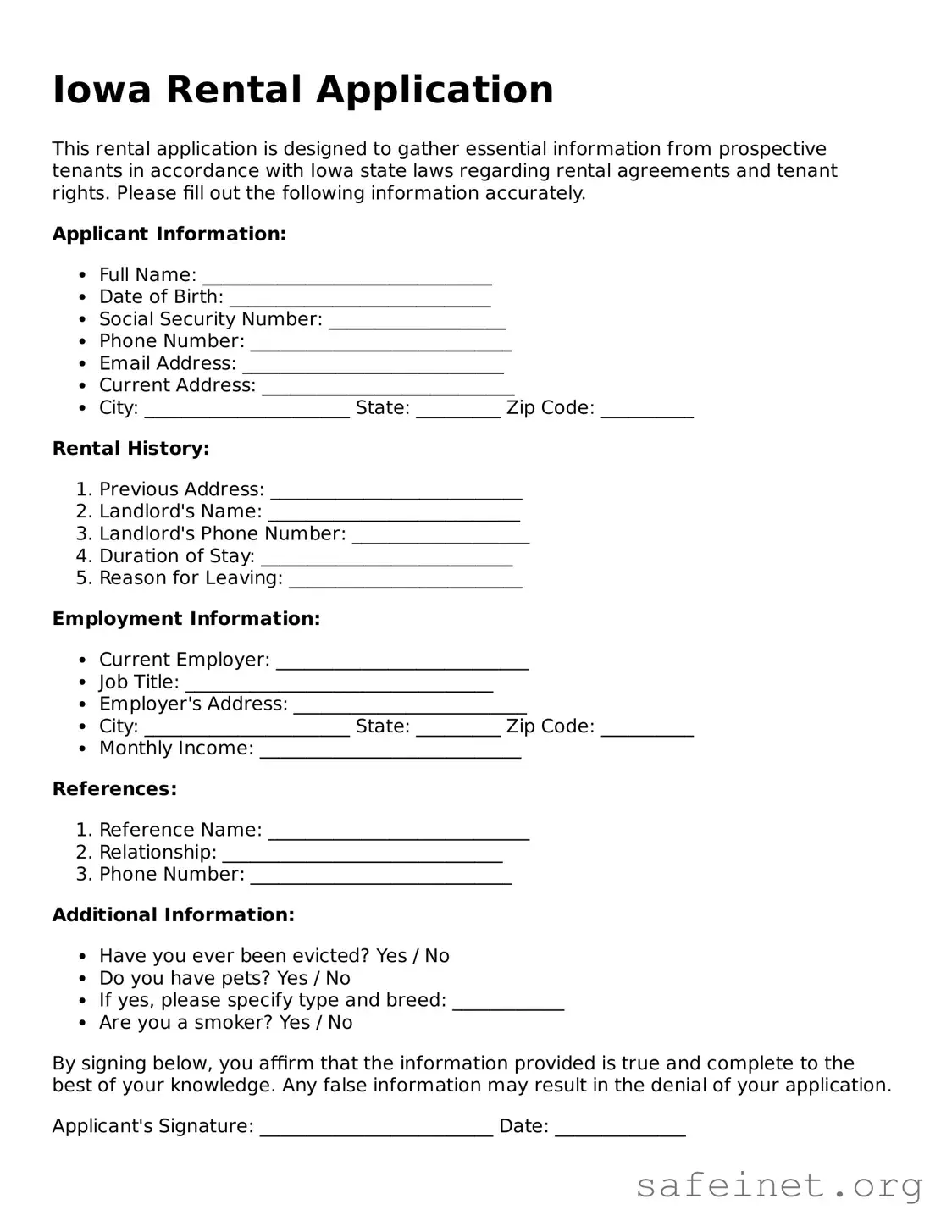
When seeking a rental property in Iowa, prospective tenants encounter the Iowa Rental Application form, a crucial document that serves multiple purposes in the leasing process. This form typically requests essential personal information, including the applicant's name, contact details, and social security number. Additionally, it often requires employment history, income verification, and references from previous landlords to help landlords assess the applicant's reliability and suitability. Applicants may also need to disclose any prior evictions or criminal history, providing landlords with a clearer picture of their rental background. Understanding the components of this application is vital for both tenants and landlords, as it helps streamline the rental process and establishes a foundation for a successful landlord-tenant relationship. By familiarizing oneself with the form, applicants can better prepare their information and increase their chances of securing the desired rental property.
Iowa Rental Application
This rental application is designed to gather essential information from prospective tenants in accordance with Iowa state laws regarding rental agreements and tenant rights. Please fill out the following information accurately.
Applicant Information:
Rental History:
Employment Information:
References:
Additional Information:
By signing below, you affirm that the information provided is true and complete to the best of your knowledge. Any false information may result in the denial of your application.
Applicant's Signature: _________________________ Date: ______________
| Fact Name | Description |
|---|---|
| Purpose | The Iowa Rental Application form is used by landlords to screen potential tenants for rental properties. |
| Information Required | Applicants typically provide personal information, rental history, employment details, and references. |
| Application Fee | Landlords may charge an application fee to cover the costs of background checks and processing the application. |
| Fair Housing Compliance | The application process must comply with the Fair Housing Act, ensuring no discrimination based on protected classes. |
| Data Privacy | Landlords must handle personal information with care, adhering to privacy laws and regulations. |
| Governing Laws | The Iowa Rental Application is governed by Iowa Code Chapter 562A, which covers residential landlord-tenant relationships. |
| Approval Process | After reviewing applications, landlords typically notify applicants of their approval or denial within a specified timeframe. |
| Security Deposit | Upon approval, landlords may require a security deposit, which is usually held until the lease ends. |
After obtaining the Iowa Rental Application form, you will need to complete it accurately to provide potential landlords with necessary information. This process involves gathering personal details, employment history, and references. Follow the steps below to ensure that your application is filled out correctly.
Once you have filled out the form, review it carefully for any errors or missing information before submitting it to the landlord or property management company.
What is the purpose of the Iowa Rental Application form?
The Iowa Rental Application form is designed to help landlords assess potential tenants. By collecting essential information about an applicant's background, financial stability, and rental history, this form aids in making informed decisions about who to rent to. It serves as a crucial first step in the tenant screening process.
What information do I need to provide on the application?
When filling out the Iowa Rental Application, you will typically need to provide personal details such as your full name, contact information, and Social Security number. Additionally, you may be asked to disclose your employment history, income, and references. It is important to be honest and thorough, as inaccuracies can lead to complications in the approval process.
Is there a fee associated with the Iowa Rental Application?
Many landlords charge an application fee to cover the costs of processing the application, including background checks and credit reports. This fee can vary widely depending on the landlord or property management company. Be sure to ask about any fees before submitting your application, so you can prepare accordingly.
How long does it take to process the application?
The processing time for an Iowa Rental Application can vary based on several factors, including the landlord’s policies and the completeness of your application. Generally, you can expect a response within a few days to a week. If there are delays, it may be due to the need for additional information or verification of your background.
Can I apply for multiple rental properties at once?
Yes, you can apply for multiple rental properties simultaneously. However, keep in mind that each application may require a separate fee and documentation. It’s advisable to communicate your intentions to each landlord to ensure transparency and avoid any misunderstandings during the application process.
What happens if my application is denied?
If your application is denied, the landlord is typically required to provide a reason for the denial. Common reasons may include poor credit history, insufficient income, or negative rental references. You have the right to request this information, which can help you understand any issues and improve your chances in future applications.
Can I appeal a denial decision?
Incomplete Information: Many applicants fail to provide all required details. Missing sections can lead to delays in processing. Always double-check that every field is filled out accurately.
Incorrect Contact Information: Providing outdated or incorrect phone numbers and email addresses can hinder communication. Ensure that your contact details are current and clearly written.
Failure to Disclose Relevant History: Some applicants overlook the importance of sharing their rental history or any past evictions. Transparency is key; landlords appreciate honesty and are more likely to consider your application favorably.
Omitting References: Not including personal or professional references can weaken an application. References help landlords assess your reliability as a tenant. Choose individuals who can speak positively about your character and responsibility.
Neglecting to Sign: Forgetting to sign the application is a common mistake. An unsigned application is often considered invalid. Always review your application before submission to ensure that you have signed where necessary.
When renting a property in Iowa, the rental application form is just one of several important documents that landlords and tenants may encounter. Each of these forms serves a specific purpose in the rental process, helping to clarify expectations and protect the rights of both parties. Below is a list of commonly used forms that often accompany the Iowa Rental Application.
Understanding these forms can significantly enhance the rental experience for both landlords and tenants. By ensuring that all parties are informed and protected, the rental process can proceed smoothly and with mutual respect.
The Iowa Rental Application form shares similarities with the standard Lease Agreement. Both documents are essential in the rental process. The Lease Agreement outlines the terms and conditions under which a tenant may occupy a property, including rent amount, duration, and responsibilities. Like the Rental Application, it requires detailed information about the tenant, ensuring that landlords can assess suitability and enforce rules effectively.
Another document that resembles the Iowa Rental Application is the Tenant Background Check Authorization form. This document allows landlords to obtain information about a potential tenant's credit history, criminal record, and rental history. Just as the Rental Application collects personal and financial details, the Background Check Authorization ensures that landlords have a comprehensive view of a tenant's background before making a rental decision.
The Rental Reference Letter is also similar to the Iowa Rental Application. This letter, often provided by previous landlords or employers, offers insights into a tenant's reliability and character. While the Rental Application asks for references, the Rental Reference Letter serves as a more formal endorsement of the applicant's suitability, helping landlords make informed decisions based on past experiences.
The Income Verification Document parallels the Iowa Rental Application in its purpose to assess a tenant’s financial stability. This document typically includes pay stubs, bank statements, or tax returns, confirming the applicant's ability to pay rent. Both documents focus on financial information, allowing landlords to evaluate whether an applicant can meet their rental obligations.
Lastly, the Move-In Checklist is another document that shares characteristics with the Iowa Rental Application. While the Rental Application collects initial information about the tenant, the Move-In Checklist details the condition of the rental property at the start of the lease. It serves as a record to prevent disputes over damages later on, ensuring both parties are aware of the property's state when the tenant moves in.
When filling out the Iowa Rental Application form, it is essential to approach the task with care and attention to detail. Here are some important do's and don'ts to keep in mind:
Following these guidelines will help ensure a smoother application process and increase your chances of securing the rental property you desire.
When it comes to the Iowa Rental Application form, several misconceptions can lead to confusion for both landlords and prospective tenants. Understanding these misconceptions is crucial for a smooth rental process.
By addressing these misconceptions, both landlords and tenants can approach the rental application process with greater clarity and confidence.
When filling out and using the Iowa Rental Application form, consider the following key takeaways:
These steps can enhance your chances of securing a rental property in Iowa.