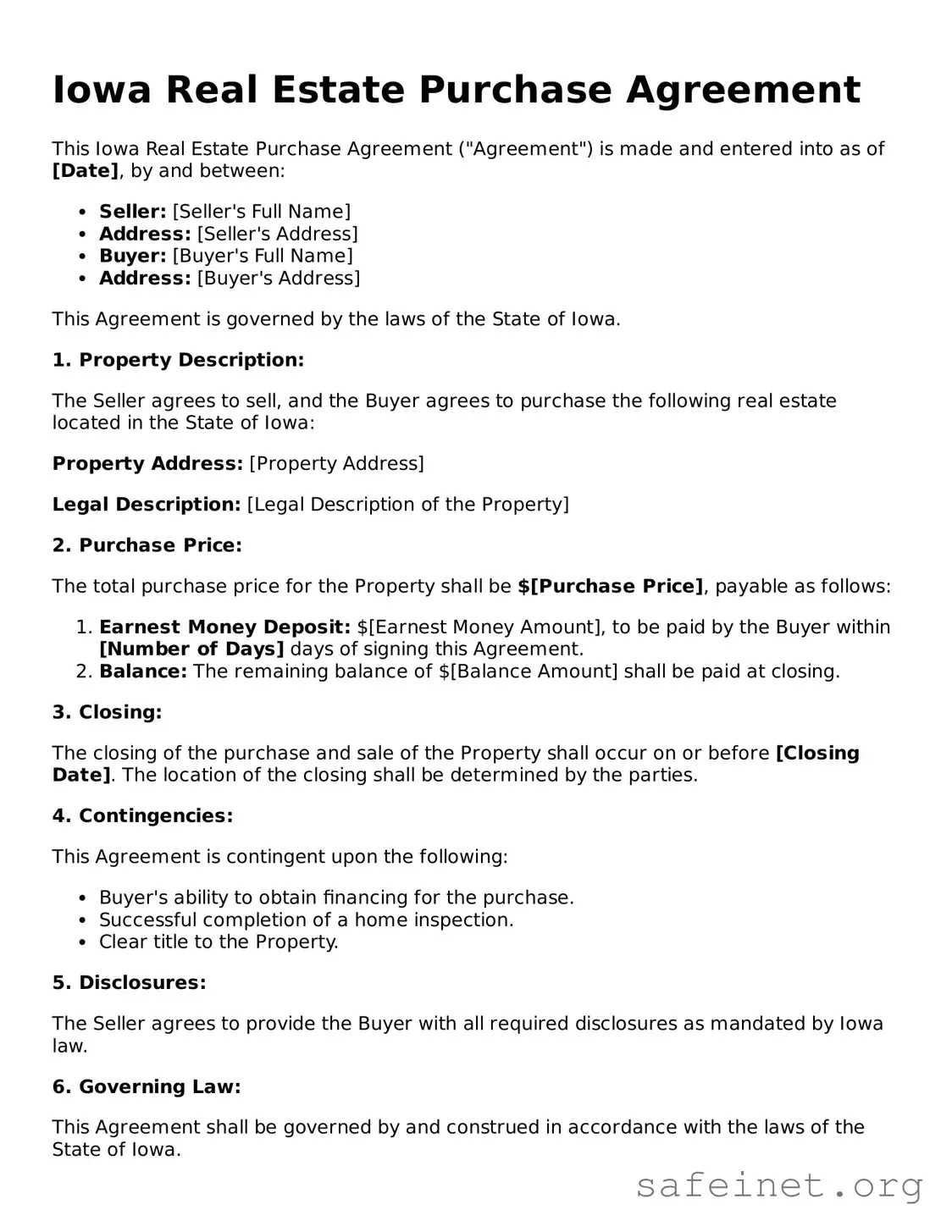
The Iowa Real Estate Purchase Agreement form is a crucial document in the home buying process. It outlines the terms and conditions under which a buyer agrees to purchase a property from a seller. This form typically includes essential details such as the purchase price, the property description, and the closing date. Additionally, it addresses contingencies that may affect the sale, such as financing or inspections. Both parties will find sections dedicated to earnest money deposits, which show the buyer's commitment, and provisions for handling disputes. Understanding this form is vital for anyone involved in a real estate transaction in Iowa, as it helps protect the interests of both buyers and sellers. A well-completed agreement can lead to a smoother transaction and minimize potential conflicts down the road.
Iowa Real Estate Purchase Agreement
This Iowa Real Estate Purchase Agreement ("Agreement") is made and entered into as of [Date], by and between:
This Agreement is governed by the laws of the State of Iowa.
1. Property Description:
The Seller agrees to sell, and the Buyer agrees to purchase the following real estate located in the State of Iowa:
Property Address: [Property Address]
Legal Description: [Legal Description of the Property]
2. Purchase Price:
The total purchase price for the Property shall be $[Purchase Price], payable as follows:
3. Closing:
The closing of the purchase and sale of the Property shall occur on or before [Closing Date]. The location of the closing shall be determined by the parties.
4. Contingencies:
This Agreement is contingent upon the following:
5. Disclosures:
The Seller agrees to provide the Buyer with all required disclosures as mandated by Iowa law.
6. Governing Law:
This Agreement shall be governed by and construed in accordance with the laws of the State of Iowa.
7. Signatures:
IN WITNESS WHEREOF, the parties hereto have executed this Agreement as of the date first above written.
Seller's Signature: ___________________________ Date: _______________
Buyer's Signature: ___________________________ Date: _______________
| Fact Name | Description |
|---|---|
| Governing Law | The Iowa Real Estate Purchase Agreement is governed by the laws of the State of Iowa. |
| Parties Involved | The agreement typically involves a buyer and a seller, who are both legal entities or individuals. |
| Property Description | A detailed description of the property being sold is included, specifying its location and boundaries. |
| Purchase Price | The purchase price of the property is clearly stated, along with any required earnest money deposit. |
| Contingencies | Common contingencies may include financing, inspections, and appraisal conditions that must be satisfied. |
| Closing Date | The agreement specifies a closing date, which is when the transfer of ownership is finalized. |
| Signatures Required | Both parties must sign the agreement to make it legally binding, indicating their acceptance of the terms. |
Once you have the Iowa Real Estate Purchase Agreement form in front of you, it’s time to start filling it out. This form is essential for formalizing the sale of a property. Carefully completing it ensures that all parties understand the terms of the agreement. Follow these steps to fill out the form accurately.
After completing the form, review it carefully to confirm that all information is accurate. Once verified, you can proceed with the next steps in the real estate transaction process, such as submitting the agreement to the relevant parties or agents involved.
What is an Iowa Real Estate Purchase Agreement?
The Iowa Real Estate Purchase Agreement is a legally binding document used in real estate transactions in Iowa. It outlines the terms and conditions under which a buyer agrees to purchase a property from a seller. This agreement includes essential details such as the purchase price, property description, and any contingencies that must be met for the sale to proceed.
What are the key components of the agreement?
Several critical components make up the Iowa Real Estate Purchase Agreement. These include the names of the buyer and seller, a detailed description of the property, the purchase price, the closing date, and any contingencies. Contingencies might involve financing, inspections, or the sale of the buyer's current home. Additionally, the agreement may specify any personal property included in the sale, such as appliances or fixtures.
Is the agreement legally binding?
Yes, once both parties sign the Iowa Real Estate Purchase Agreement, it becomes a legally binding contract. This means that both the buyer and seller are obligated to adhere to the terms outlined in the agreement. It is crucial for both parties to fully understand the terms before signing to avoid any potential disputes later on.
Can the agreement be modified after signing?
Modifications to the Iowa Real Estate Purchase Agreement can be made, but both parties must agree to any changes. This is typically done through an addendum, which is a document that outlines the specific changes. Both the buyer and seller must sign the addendum for it to be valid. It's essential to keep all parties informed and document any changes to ensure clarity throughout the transaction.
What happens if one party fails to fulfill their obligations?
If one party does not meet their obligations as outlined in the agreement, the other party may have the right to seek legal remedies. This could include enforcing the contract, seeking damages, or even terminating the agreement. It's important for both parties to understand their rights and responsibilities to avoid potential legal issues.
Do I need a lawyer to complete this agreement?
While it is not legally required to have a lawyer to complete the Iowa Real Estate Purchase Agreement, consulting with one can be beneficial. A legal professional can provide guidance on the terms of the agreement, ensure that all necessary disclosures are made, and help protect your interests throughout the transaction. Many people choose to work with a real estate agent who is familiar with the process and can assist in preparing the agreement.
Incomplete Information: One common mistake is failing to provide all necessary details. Buyers and sellers must ensure that names, addresses, and property descriptions are fully completed. Missing information can lead to confusion or disputes later on.
Incorrect Property Description: Accurately describing the property is crucial. Many individuals make the error of using vague terms or outdated information. It is important to refer to the official property records to ensure precision.
Ignoring Contingencies: Some buyers overlook the importance of including contingencies. These are conditions that must be met for the sale to proceed, such as financing or inspection contingencies. Omitting these can leave buyers vulnerable.
Not Understanding Terms: Many people sign the agreement without fully understanding its terms. It is essential to review each clause carefully. If any part is unclear, seeking clarification is advisable before proceeding.
Failure to Sign or Date: Lastly, a simple yet significant mistake is neglecting to sign or date the agreement. This oversight can render the document invalid. Both parties must ensure that their signatures are present and that the date reflects when the agreement was finalized.
When engaging in a real estate transaction in Iowa, several documents accompany the Real Estate Purchase Agreement. Each of these documents plays a crucial role in ensuring that the transaction proceeds smoothly and legally. Below is a list of commonly used forms and documents that buyers and sellers may encounter.
Understanding these documents can help both buyers and sellers navigate the real estate process more effectively. Each form serves a specific purpose, contributing to the overall clarity and legality of the transaction.
The Iowa Real Estate Purchase Agreement form shares similarities with the Residential Purchase Agreement, commonly used in various states. Both documents outline the terms and conditions under which a buyer agrees to purchase a residential property. They typically include details such as the purchase price, closing date, and contingencies. The Residential Purchase Agreement also emphasizes the rights and obligations of both parties, ensuring that both the buyer and seller are aware of their commitments throughout the transaction.
Another document akin to the Iowa Real Estate Purchase Agreement is the Commercial Purchase Agreement. While primarily focused on commercial properties, it serves a similar purpose by detailing the terms of sale. Both agreements cover essential elements like the property description, payment terms, and conditions for closing. However, the Commercial Purchase Agreement may include additional clauses specific to commercial transactions, such as zoning compliance and lease agreements.
The Lease Purchase Agreement is another related document. This agreement allows a tenant to lease a property with the option to purchase it later. Like the Iowa Real Estate Purchase Agreement, it includes terms regarding the purchase price and conditions for exercising the purchase option. This document is particularly useful for individuals who may not be ready to buy immediately but wish to secure a property for future purchase.
Additionally, the Option to Purchase Agreement bears resemblance to the Iowa Real Estate Purchase Agreement. This document grants a buyer the exclusive right to purchase a property within a specified timeframe. Similar to the purchase agreement, it outlines the terms of the sale, including the price and duration of the option. The Option to Purchase Agreement provides flexibility for buyers who may need time to finalize financing or make decisions.
The Seller Financing Agreement is another document that parallels the Iowa Real Estate Purchase Agreement. In this scenario, the seller acts as the lender, allowing the buyer to make payments directly to them rather than securing a mortgage from a bank. Both agreements detail the purchase price, payment terms, and any contingencies. This arrangement can be beneficial for buyers who may face challenges obtaining traditional financing.
The Real Estate Sales Contract also shares common features with the Iowa Real Estate Purchase Agreement. This contract serves as a legally binding agreement between the buyer and seller, outlining the terms of the sale. Key components include the purchase price, property description, and closing date. Both documents aim to protect the interests of both parties and ensure a clear understanding of the transaction.
The Exclusive Right to Sell Agreement is another document that is similar in nature. While it primarily pertains to the listing of a property for sale, it establishes a formal relationship between the seller and a real estate agent. Both agreements include terms regarding the sale process and the responsibilities of each party. The Exclusive Right to Sell Agreement can facilitate a smoother transaction, as it outlines how the property will be marketed and sold.
The Buyer’s Agency Agreement is also relevant in this context. This document formalizes the relationship between a buyer and their real estate agent, detailing the agent's duties in representing the buyer's interests. Similar to the Iowa Real Estate Purchase Agreement, it includes terms regarding compensation and the duration of the agency relationship. This agreement ensures that buyers receive guidance and support throughout the purchasing process.
Lastly, the Counteroffer form is a document that frequently accompanies the Iowa Real Estate Purchase Agreement. When the seller wishes to propose changes to the initial offer, a counteroffer is issued. This document outlines the new terms, such as price adjustments or additional contingencies. It serves as a negotiation tool, allowing both parties to reach a mutually agreeable arrangement before finalizing the sale.
When filling out the Iowa Real Estate Purchase Agreement form, careful attention to detail is essential. Here are some key dos and don’ts to consider:
By following these guidelines, you can help ensure that your Real Estate Purchase Agreement is filled out correctly, reducing the likelihood of misunderstandings or disputes later on.
The Iowa Real Estate Purchase Agreement form is an essential document in property transactions, but several misconceptions surround it. Understanding these misconceptions can help buyers and sellers navigate the process more effectively.
By addressing these misconceptions, individuals can approach the Iowa Real Estate Purchase Agreement with greater confidence and clarity.
When filling out and using the Iowa Real Estate Purchase Agreement form, several key points should be considered to ensure a smooth transaction. Below are important takeaways:
These points can help both buyers and sellers navigate the process effectively, reducing potential misunderstandings and legal issues.