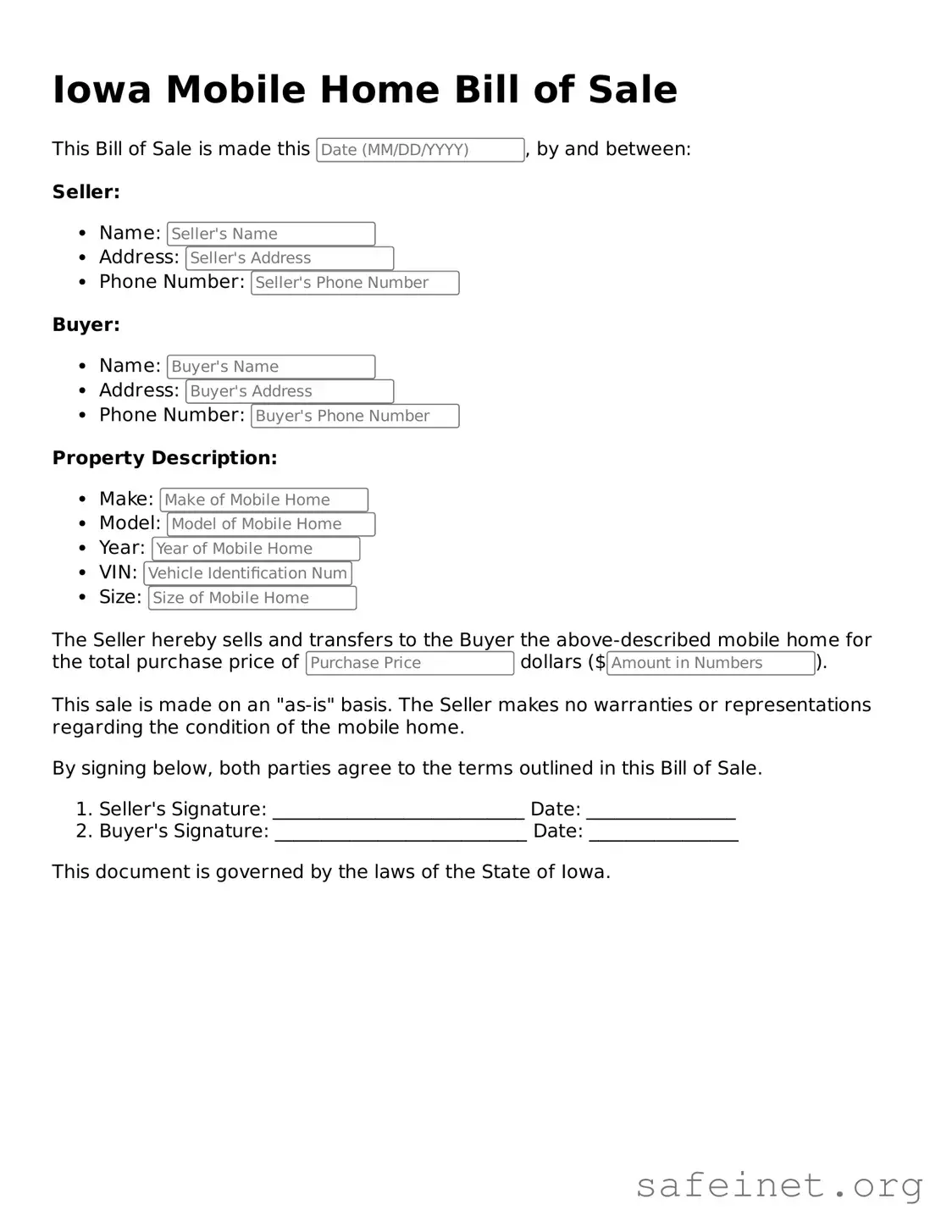
When it comes to buying or selling a mobile home in Iowa, having the right documentation is crucial to ensure a smooth transaction. The Iowa Mobile Home Bill of Sale form serves as a vital tool in this process, providing both the buyer and seller with a clear record of the sale. This form typically includes essential details such as the names and addresses of both parties involved, a description of the mobile home being sold—including its make, model, and identification number—and the agreed-upon sale price. Additionally, the form often contains space for any warranties or disclosures, ensuring that both parties are fully aware of the condition of the mobile home. By using this form, individuals can protect their interests and facilitate a transparent exchange, ultimately leading to a more secure and organized transfer of ownership.
Iowa Mobile Home Bill of Sale
This Bill of Sale is made this , by and between:
Seller:
Buyer:
Property Description:
The Seller hereby sells and transfers to the Buyer the above-described mobile home for the total purchase price of dollars ($).
This sale is made on an "as-is" basis. The Seller makes no warranties or representations regarding the condition of the mobile home.
By signing below, both parties agree to the terms outlined in this Bill of Sale.
This document is governed by the laws of the State of Iowa.
| Fact Name | Description |
|---|---|
| Purpose | The Iowa Mobile Home Bill of Sale form is used to document the sale and transfer of ownership of a mobile home in Iowa. |
| Governing Law | This form is governed by Iowa Code Chapter 555B, which outlines the regulations regarding mobile home transactions. |
| Parties Involved | The form requires information from both the seller and the buyer, including names and addresses. |
| Mobile Home Details | Specific details about the mobile home, such as the make, model, year, and Vehicle Identification Number (VIN), must be included. |
| Consideration | The purchase price or consideration for the mobile home must be clearly stated in the form. |
| Signatures | Both the seller and the buyer must sign the form to validate the transaction, ensuring mutual agreement on the sale. |
After obtaining the Iowa Mobile Home Bill of Sale form, you will need to provide specific information to complete it. This form is essential for transferring ownership of a mobile home and ensures that both the seller and buyer have a clear record of the transaction. Follow the steps below to fill out the form accurately.
What is a Mobile Home Bill of Sale in Iowa?
A Mobile Home Bill of Sale is a legal document that transfers ownership of a mobile home from one party to another in Iowa. This form serves as proof of the transaction and includes essential details such as the names of the buyer and seller, the description of the mobile home, and the sale price. It is important for both parties to retain a copy for their records.
Why is a Bill of Sale necessary for mobile homes?
A Bill of Sale is necessary for mobile homes to ensure a clear transfer of ownership. This document protects both the buyer and seller by providing evidence of the transaction. It can also be useful in future dealings, such as registering the mobile home with the state or applying for financing.
What information should be included in the Iowa Mobile Home Bill of Sale?
The Iowa Mobile Home Bill of Sale should include several key pieces of information. This includes the full names and addresses of both the buyer and seller, a detailed description of the mobile home (including make, model, year, and identification number), the sale price, and the date of the transaction. Additionally, both parties should sign and date the document to validate the sale.
Is the Bill of Sale required to be notarized in Iowa?
No, notarization is not a requirement for the Mobile Home Bill of Sale in Iowa. However, having the document notarized can add an extra layer of authenticity and may be beneficial if there are any disputes in the future. It is always a good practice to ensure that both parties are in agreement and that the document is properly executed.
What should I do after completing the Bill of Sale?
After completing the Mobile Home Bill of Sale, both the buyer and seller should keep a signed copy for their records. The buyer may need to present this document when registering the mobile home with the Iowa Department of Transportation or when applying for financing. It is also advisable to follow up with any necessary paperwork related to ownership transfer, such as title transfer, if applicable.
Can I use a generic Bill of Sale form for my mobile home transaction?
While it is possible to use a generic Bill of Sale form, it is recommended to use a specific Mobile Home Bill of Sale form designed for Iowa transactions. This ensures that all necessary details are included and that the document complies with state regulations. Using a tailored form can help prevent potential legal issues down the line.
What if there are issues after the sale is completed?
If issues arise after the sale, such as disputes over the condition of the mobile home or disagreements about the sale terms, the Bill of Sale can serve as a critical piece of evidence. It is important to communicate openly with the other party to resolve any concerns. If necessary, seeking legal advice may be beneficial to understand your rights and options based on the terms outlined in the Bill of Sale.
Missing Information: One common mistake is not filling out all required fields. It’s essential to provide complete details about the mobile home, including the make, model, year, and Vehicle Identification Number (VIN). Leaving out even one piece of information can cause delays or issues during the transfer.
Incorrect Signatures: Another frequent error is not having the proper signatures. Both the seller and buyer need to sign the form. If either party forgets to sign, the document may not be valid. Always double-check for signatures before submitting.
Not Including the Sale Price: People often forget to specify the sale price of the mobile home. This is a crucial detail, as it affects tax calculations and the overall legality of the sale. Make sure to include the agreed-upon price clearly.
Overlooking Date and Location: Finally, some individuals overlook the importance of including the date and location of the sale. This information is vital for record-keeping and can help prevent disputes later. Always remember to fill in these details.
When transferring ownership of a mobile home in Iowa, the Mobile Home Bill of Sale form is a crucial document. However, it is often accompanied by other forms and documents to ensure a smooth transaction and to comply with state regulations. Here is a list of some important documents that are typically used alongside the Mobile Home Bill of Sale.
Having these documents prepared and organized can facilitate a smoother transaction when buying or selling a mobile home in Iowa. It ensures that both parties are protected and that all legal requirements are met, ultimately making the process more efficient and less stressful.
The Iowa Mobile Home Bill of Sale form shares similarities with the Vehicle Bill of Sale. Both documents serve as proof of transfer of ownership from one party to another. In the case of a vehicle, the form typically includes details such as the make, model, year, and Vehicle Identification Number (VIN). Likewise, the Mobile Home Bill of Sale outlines the specifics of the mobile home, including its identification number, dimensions, and any relevant details about the transaction. Both forms protect the interests of the buyer and seller by documenting the sale, which can be crucial for future reference or legal matters.
Another document akin to the Iowa Mobile Home Bill of Sale is the Boat Bill of Sale. This form is used to record the sale of a watercraft, similar to how the Mobile Home Bill of Sale records the sale of a mobile home. Each document requires pertinent information about the item being sold, such as the hull identification number for boats and the serial number for mobile homes. Both forms facilitate the transfer of ownership and may also include warranties or disclosures about the condition of the item, ensuring that both parties are aware of their rights and responsibilities.
The Real Estate Purchase Agreement also bears resemblance to the Mobile Home Bill of Sale in that both documents formalize a sale and transfer of property. While the Real Estate Purchase Agreement is typically used for traditional homes and land, it outlines terms such as the purchase price, contingencies, and closing date. Similarly, the Mobile Home Bill of Sale contains essential details about the transaction, such as the agreed sale price and any conditions tied to the sale. Both documents aim to protect the interests of the parties involved and provide a clear record of the transaction.
Additionally, the Personal Property Bill of Sale is similar to the Iowa Mobile Home Bill of Sale in its function of documenting the sale of personal property. This form can be used for various items, from furniture to equipment, and includes details about the item being sold, such as its condition and price. Just as the Mobile Home Bill of Sale outlines specifics about the mobile home, the Personal Property Bill of Sale ensures that the buyer receives a clear title to the item, protecting both parties in the event of disputes.
Finally, the Lease Agreement can be compared to the Mobile Home Bill of Sale, particularly when the mobile home is being rented rather than sold. A Lease Agreement outlines the terms under which a tenant can occupy a property, detailing the rental amount, duration, and responsibilities of both the landlord and tenant. While the Mobile Home Bill of Sale focuses on ownership transfer, both documents establish legal relationships and expectations between parties, ensuring clarity and reducing the potential for misunderstandings.
When filling out the Iowa Mobile Home Bill of Sale form, attention to detail is crucial. Here’s a list of five important dos and don’ts to keep in mind:
Misconception 1: The Iowa Mobile Home Bill of Sale is only necessary for transactions involving new mobile homes.
This is not true. The Bill of Sale is required for both new and used mobile homes. It serves as a formal record of the sale, regardless of the home's age.
Misconception 2: A Bill of Sale is not legally binding in Iowa.
In fact, a properly completed Bill of Sale is a legally binding document in Iowa. It provides proof of ownership transfer and can be used in disputes or for registration purposes.
Misconception 3: The form can be filled out by anyone without specific requirements.
While the form can be completed by either the buyer or seller, certain information must be included for it to be valid. This includes details such as the names of the parties, the mobile home's identification number, and the purchase price.
Misconception 4: The Bill of Sale is the only document needed for transferring ownership.
This is misleading. While the Bill of Sale is important, other documents may also be required, such as a title transfer form. Buyers should check local regulations to ensure all necessary paperwork is completed.
When dealing with the Iowa Mobile Home Bill of Sale form, it is essential to understand the key elements that ensure a smooth transaction. Here are seven important takeaways:
By following these guidelines, individuals can ensure that their use of the Iowa Mobile Home Bill of Sale form is effective and legally sound.